
Scaling New Heights: Rock Climbing in Southern Idaho
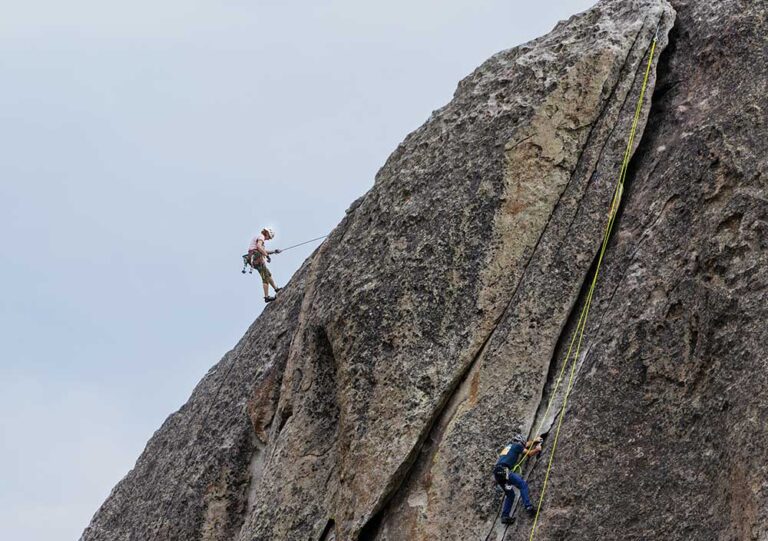
For most children, mobility begins with crawling, followed by walking, and then most likely by climbing. Onto the bed and up the back of the couch. Outdoors on playground equipment and, inevitably, up a tree or onto a roof.
“When you’re a kid, you’re just drawn to climbing things,” says Erik Leidecker, owner of Sawtooth Mountain Guides in Stanley, Idaho. “There is something about climbing that is just hardwired into people.”
In This Article
Southern Idaho: A Rock Climber’s Paradise
That makes the Southern Idaho region a great place to be. The area is covered in rock-climbing opportunities, from parts of the Snake River Canyon as it runs through Twin Falls to the City of Rocks National Reserve and Castle Rocks State Park in Almo near the Utah border.
“This area is becoming more and more of a destination for rock climbers because of the number and the variety of climbs we have,” says Rebecca Wildman, vice chair of the Southern Idaho Climbing Coalition (SICC). “There are around 300 established climbs in the immediate Twin Falls area, and more than 1,000 climbs between City of Rocks and Castle Rocks. It’s just a great area for world-class climbing.”
Dierkes Lake and Shoshone Falls: Climbing Close to Town
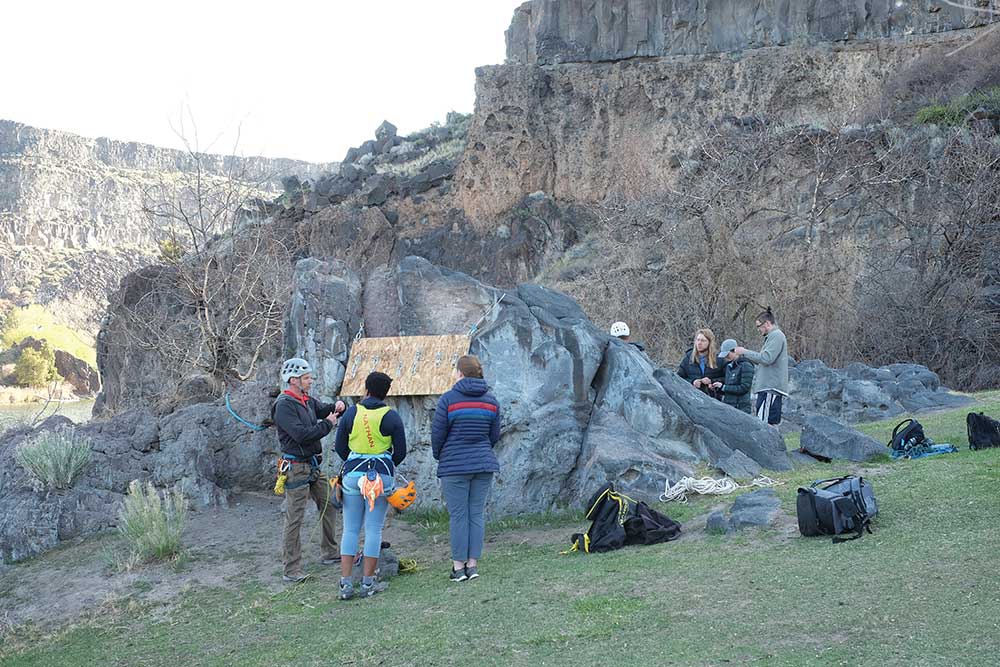
And some of it is incredibly convenient. For example, Dierkes Lake Park and Shoshone Falls Park are popular climbing destinations, and both are located approximately 7 miles from downtown Twin Falls. But don’t let that proximity to the city fool you. The quality of climbing is high enough that those are the sites of two major annual events: the Over the Falls Climbing Competition at Shoshone (hosted by the SICC) and the Dierkes Boulderfest.
Hundreds of climbers descend on Castle Rocks and City of Rocks each August for the Idaho Mountain Festival, a four-day retreat with meals and entertainment. During the winter, several locations in Southern Idaho are suitable for ice-climbing, though conditions vary depending on the weather.
“When it’s cold enough, there are some really high-quality venues in a variety of places for ice climbing,” Leidecker says. “There is a type of climbing suitable for everybody, depending upon your experience and risk tolerance.”
Gemstone Climbing Center: Learn the Ropes
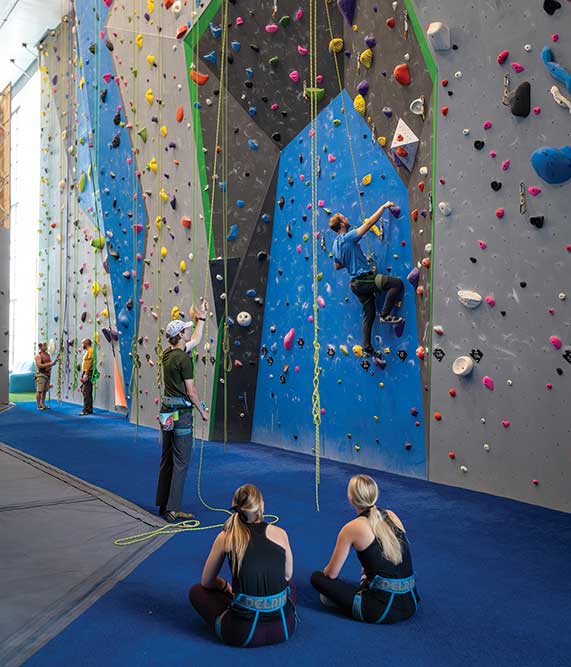
Of course, rock climbing isn’t an activity like tossing a Frisbee or shooting a basketball where you can just go outside and get started. Some basic knowledge and training are required, which is where Gemstone Climbing Center comes in. Located in downtown Twin Falls, Gemstone is a place where newcomers — including children — can safely learn about the sport.
“You can’t just say, ‘I’m going to start rock climbing,’ and not know anything about it,” says Gemstone manager Kim DePew. “You need to know about the shoes and the harness and the rope. So, people can come here and learn in a more controlled environment.
“We do a lot of stuff with families and children. But we also have some pretty serious climbers who come here to train or when the weather is bad. These are people who climb things I would never dream about climbing.”
Having climbers with such diverse levels of experience all in one place works well, DePew says, because climbing is the type of sport that, by its nature, helps develop a sense of community.
“Climbers have to work together, so they’re always willing to help other climbers,” DePew says. “If you’re new to climbing, the best thing to do is come in, take some classes and start talking with people. You’re going to find a friend.”
Taking Those First Steps
Once you learn the basics, then it’s time to hit the ground climbing. Wildman recommends the website mountainproject.com as an easy way to discover established climbing routes in the area along with their levels of difficulty. She says shops such as Magic Valley Gear Exchange can help as well.
After that, the rest is up to the climber and the surrounding Southern Idaho landscape. Because as Leidecker says, “There’s a lot of rock around here.”
Bring on the Cold
When the temperature drops in Southern Idaho, things heat up for winter sports in the region.
There’s adventure — then there’s Southern Idaho-style adventure. Here are three thrilling winter sports you can find in the Magic Valley:
Kite Skiing
This extreme sport features “snowkiters” who use racing-foil kites to catch the wind and propel them to glide on snow or ice at high speeds. Many enthusiasts also practice jumps and big-air stunts. One of Southern Idaho’s most popular kite skiing sites is along wide-open spaces west of Fairfield on the west side of Camas Prairie.
Snowmobiling
Only 3,500 snowmobiles are registered in Southern Idaho, so there is plenty of room to ride the hundreds of miles of snowy winter trails. A couple of good spots with groomed terrains are Diamondfield Jack and Howell Canyon, and various other trails also have lodging and restaurant choices.
Ice Climbing
Billed as “a winter pastime for the very brave,” ice climbing is a daredevil sport where adventurers use picks and spikes to scale frozen waterfalls once winter temperatures reach the teens or lower. The Snake River Canyon has four established crags for ice climbers, while the most popular climbing routes in the City of Rocks are Scot’s Blessing and Bath Rock.
– Kevin Litwin
Get to Know Southern Idaho
Want to learn more about living and working in Twin Falls and Southern Idaho? Check out the latest edition of Livability Southern Idaho.