

Wedgewood-Houston, Nashville: Creative. Industrial. Evolving.
Wedgewood-Houston, often referred to as “WeHo,” is one of Nashville’s most rapidly transforming neighborhoods. Located just south of downtown Nashville and The Gulch, this former industrial district has emerged as a thriving hub for art, design, and maker culture. Historically defined by its factories, warehouses, and rail lines, WeHo has retained its gritty, authentic character while welcoming a wave of adaptive reuse projects, galleries, distilleries, and modern residential developments. It is a neighborhood in flux, where long-time residents live alongside newcomers, and where welding shops sit next to craft cocktail bars. For those seeking a neighborhood that feels like a creative workshop rather than a polished suburb, Wedgewood-Houston offers a unique and energetic sense of place.
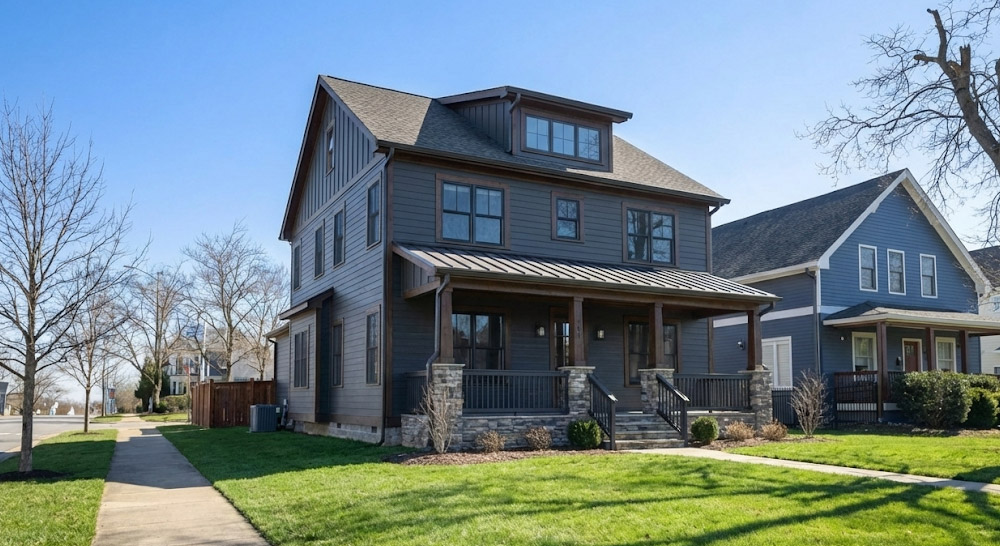
Overall Vibe & Lifestyle
The vibe in Wedgewood-Houston is artistic, communal, and unpretentious. It feels less “finished” than the Gulch or Germantown, which is exactly part of its appeal. The lifestyle here is driven by the maker movement; residents are just as likely to be welding sculptures or distilling whiskey as they are working in tech or health care. A typical weekend might involve browsing the monthly WeHo Art Crawl, grabbing nachos at Bastion, or meeting friends for a drink at Never Never.
The social scene is vibrant but relaxed. Instead of crowded honky-tonks, you’ll find laid-back patios, brewery taprooms, and coffee shops that double as community living rooms. The neighborhood fosters a strong sense of creative collaboration, with spaces that serve as anchors for local artisans. It’s a place where the process of making things — whether it’s art, food, or music — is celebrated daily.
Safety & Walkability
Walkability in Wedgewood-Houston is improving rapidly but varies by street. The core area around the intersection of Fourth Avenue South and Chestnut Street is highly walkable, with sidewalks connecting major dining and entertainment spots. However, as a former industrial zone, some peripheral streets still lack consistent pedestrian infrastructure. The neighborhood is generally safe, with a strong community presence and active businesses keeping eyes on the street.
The presence of the Nashville SC stadium (Geodis Park) nearby at the Fairgrounds adds a layer of event-day foot traffic and energy. Residents should be aware that the area is still transitioning, meaning construction sites and active industrial traffic are part of the daily landscape. Lighting and sidewalk improvements are ongoing as new developments come online.
Natural & Built Environment
The built environment of WeHo is its most distinctive feature. It is a patchwork of low-slung brick warehouses, Quonset huts, and corrugated metal sheds, interspersed with vacant lots and new, modern mid-rise apartments. This industrial legacy gives the neighborhood a textured, raw aesthetic that stands in stark contrast to the glass towers of downtown.
Green space is less abundant here than in residential neighborhoods like Sylvan Park, but it is growing. Fort Negley Park, located on the neighborhood’s northern edge, offers a massive, historic green space with walking paths and panoramic views of the city skyline. The Fairgrounds Nashville to the south provides open space and hosts events ranging from flea markets to soccer matches. The neighborhood’s topography is relatively flat, making it easy to navigate by bike.
Design & Architecture
Architecturally, Wedgewood-Houston is a study in adaptive reuse. Developers and architects have embraced the existing industrial fabric, converting old factories into trendy offices, restaurants, and residential lofts. The May Hosiery Mills complex is a prime example, turning a historic sock factory into a mixed-use destination with retail and office space.
New construction tends to mimic this industrial aesthetic, utilizing brick, steel, and large windows to blend with the historic context. Residential streets feature a mix of older, modest cottages and new “tall-skinny” infill homes that maximize vertical space on narrow lots. The result is a visually eclectic neighborhood where the grit of the past is carefully preserved alongside the polish of the present.
Housing at a Glance
Housing in WeHo offers a diverse range of options, though inventory can be tight due to high demand. The market includes renovated historic cottages, modern townhomes with rooftop decks, and industrial-style apartments. Unlike the exclusively single-family nature of other neighborhoods, WeHo offers a true mix of density. You can find a standalone house with a yard just blocks away from a sleek condo building. Prices have risen significantly as the neighborhood’s popularity has surged, but it generally offers a different value proposition — focused on character and proximity — compared to more traditional suburbs.
| Metric | Description |
|---|---|
| Type | Mix of older single-family homes, newer infill, townhomes, and expanding condo/apartment inventory. |
| Age | Older residential stock plus significant newer development. |
| Styles | Older cottages + contemporary infill + newer multifamily. |
| Size & Layout | Wide range depending on original homes vs. new construction. |
| Lot Sizes | Smaller urban lots with new projects maximizing existing parcels. |
Real Estate Snapshot
The real estate market in Wedgewood-Houston reflects the neighborhood’s transition from an industrial and residential district into a mixed-use area with ongoing redevelopment. Sales activity includes a combination of older single-family homes, renovated properties, townhomes, and newer multifamily units, with pricing often influenced by building age, condition, and proximity to commercial corridors. Inventory levels and competition can vary by property type, particularly between attached housing and detached homes. Because development patterns differ from block to block, market conditions are best evaluated at the property level rather than assumed to be uniform across the entire neighborhood.
| Metric | Summary |
|---|---|
| Market Demand | Growing and competitive due to redevelopment and central location. |
| Inventory | Increasing through infill and mixed-use development. |
| Buyer Profile | Professionals, creatives, and buyers seeking emerging urban neighborhoods. |
| Pricing Context | Variable; ranges from renovated cottages to newer mid-rise units. |
| Investment Pattern | Mix of owner-occupied homes and redevelopment-driven investment activity. |
Find a Home in Wedgewood Houston
See if Wedgewood Houston has your perfect new space in Nashville
Amenities & Local Conveniences
Amenities in Wedgewood-Houston are unique and often independently owned. The neighborhood is a destination for craft beverages, home to Diskin Cider, Nashville’s first cidery, and Nashville Barrel Company, which offers premium whiskey tastings. For coffee and remote work, Humphreys Street Coffee is a community favorite that also operates as a social enterprise employing local youth.
Dining options are among the most exciting in the city. Bastion offers a dual experience: a casual bar with incredible nachos on one side and a tiny, reservation-only chef’s tasting counter on the other. Aba Nashville serves upscale Mediterranean in an elegant atmosphere. While there isn’t a large chain grocery store directly within the neighborhood’s borders, residents are a short drive from the Kroger on Eighth Avenue or the Whole Foods in The Gulch.
Schools & Education
Wedgewood-Houston is served by Metro Nashville Public Schools (MNPS), with zoning typically falling into the Glencliff or Hillsboro clusters depending on the specific address. Fall-Hamilton Elementary is a local school that has seen increasing community support and partnerships. As with all urban neighborhoods, school assignments vary by address and should be verified using MNPS district maps.
For higher education and enrichment, the neighborhood is incredibly well-positioned. It is adjacent to the Adventure Science Center, a major educational asset for families. Additionally, Belmont University and Trevecca Nazarene University are both within a very short driving distance, bringing students and academic resources into the area’s orbit.
Commuting & Location
WeHo’s location is strategic and central. Sitting just south of the I-65/I-40 split, it offers immediate interstate access, making commutes to the airport, Franklin, or other parts of Nashville efficient. The neighborhood is less than a 10-minute drive to downtown, and eager cyclists can ride into the city center relatively easily.
The impending development of transit corridors along Fourth Avenue and Nolensville Pike aims to improve bus connectivity. For now, most residents rely on cars or rideshare services, though the compact nature of the neighborhood encourages walking for local trips. The proximity to the Fairgrounds also means easy access to major events without the need for long-distance travel.
| Destination | Approximate Drive Time* |
|---|---|
| Downtown Nashville / CBD | 5-12 min |
| Nashville Int’l Airport (BNA) | 12-20 min |
| Belmont University | 5-12 min |
Quirks & Perks
The defining quirk of Wedgewood-Houston is the WeHo Art Crawl. Held on the first Saturday of every month, this event sees dozens of galleries and studios open their doors to the public, creating a street-party atmosphere that draws art lovers from all over the region. Galleries like David Lusk Gallery and Coop Gallery are pillars of this scene, showcasing contemporary art in stunning industrial spaces.
Another perk is the neighborhood’s “hidden” feel. Despite being minutes from Broadway, it feels tucked away. This sense of discovery – finding a gem behind a warehouse door – is the essence of living in Wedgewood-Houston. The Flamingo Cocktail Club and Jackalope Brewing Co. add to the eclectic mix of nightlife and social spots, all capped by the exclusive vibe of Soho House Nashville.
Explore Nashville Neighborhoods
Note on imagery: Images marked “AI Generated” are visuals to illustrate the neighborhood homes, atmosphere and architectural style. To protect homeowner privacy, these images are artistic representations and do not depict specific existing properties.