
Hudson County, NJ, Is a Global Hub for Business Growth
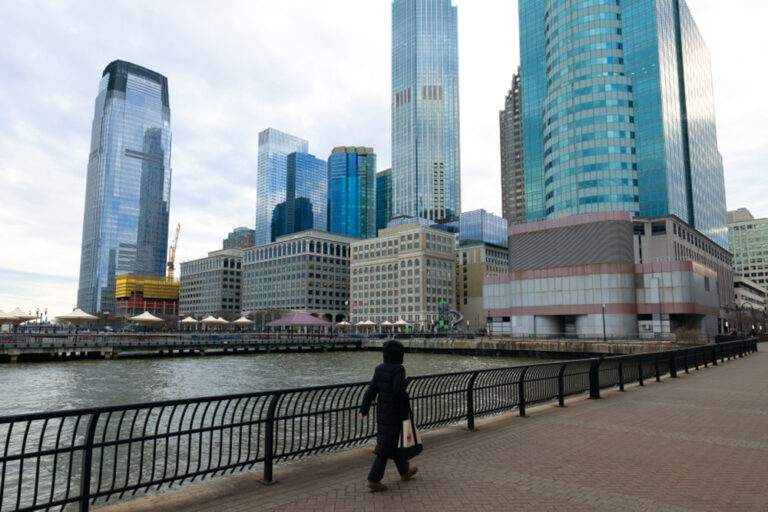
Hudson County sits at the crossroads of opportunity. Geographically the smallest and most densely populated county in New Jersey, it has transformed from an industrial base into a magnet for finance, film production and innovation-driven businesses.
From investment firm Goldman Sachs’ Jersey City tower to a massive new film production campus in Bayonne, companies are discovering what local leaders have long known: Hudson County delivers.
In This Article
Competitive Edge
“Hudson County, New Jersey, is literally the center of the universe,” says Emory A. Edwards, president and CEO of the Hudson County Chamber of Commerce. “We are central to a marketplace that serves about 20 million people with access to international airports, ports, rail and roads. We have fantastic infrastructure and access to talent serving many sectors.”
That positioning drives results. Edwards says the county has transitioned into a powerhouse for high-value services and creative industries, with finance, insurance and real estate forming the core of the county’s economy. Recent growth has come from significant spikes in other industries, including arts and the film industry, health care and logistics.
This economic surge is fueled by a demographic engine that is uniquely global.
“The world lives here, creating a rich mix of cultures and traditions,” Edwards says. “Population density creates a strong business environment by concentrating customers, talent and resources, which drives high demand and operational efficiency.”
For businesses, that means readily available talent without extensive searching.
“Businesses do not need to look far to find a wide range of talent to serve all of their needs,” Edwards says.
Wall Street West
Jersey City’s waterfront on the Hudson River – known as Wall Street West – emerged in the 1980s when financial firms began relocating from Manhattan, attracted by lower costs and available space.
Goldman Sachs anchors this presence with 30 Hudson Street, a 42-story tower housing employees involved in real estate, technology, operations and administrative functions.
Other major institutions followed, including Citigroup, Fidelity Investments and the Depository Trust & Clearing Corp.
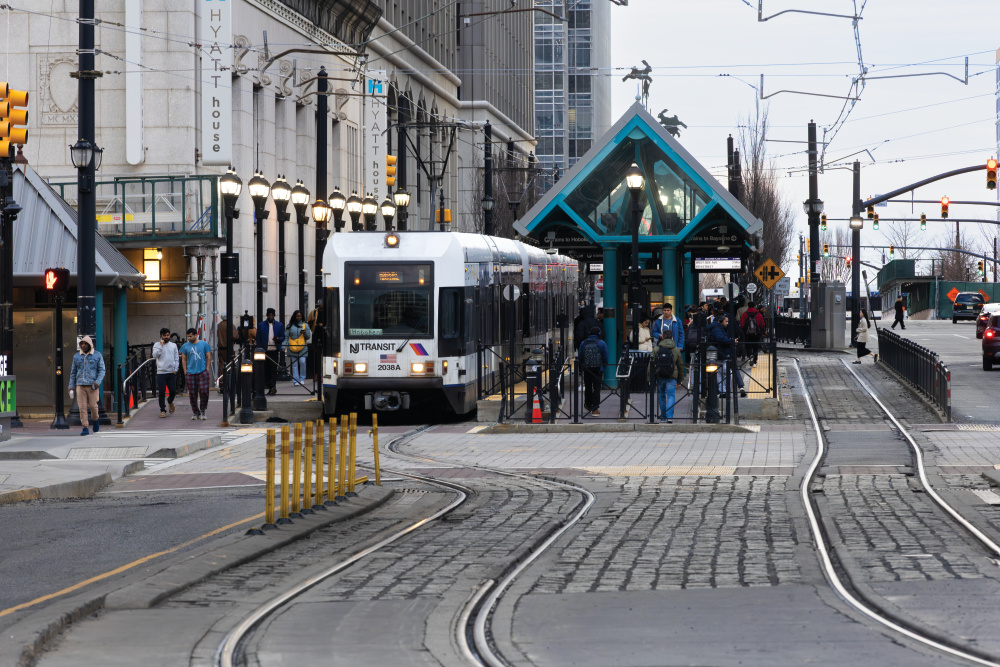
Today, Wall Street West employment represents one-third of all private sector jobs in Jersey City. The draw remains consistent: lower real estate costs, 10- to 20-minute commutes via PATH trains or ferries, and access to the same talent pool without Manhattan overhead.
Building for Tomorrow
While finance established Hudson County’s business credentials, newer developments showcase its range.
Kearny Point, for one, represents adaptive reuse at scale. The 130-acre site – once home to the Federal Shipbuilding and Drydock Co., which produced nearly 450 vessels between 1917 and 1948, now houses more than 330 businesses.
“Kearny Point offers an unusually broad and flexible range of facilities designed to meet businesses where they are,” says Michael Meyer, president of Hugo Neu Realty Management with which the office and coworking facility is affiliated. The campus includes everything from large-format industrial buildings to coworking spaces, with most prebuilt and move-in ready.
More than 50% of Kearny Point businesses are woman-owned or minority-owned. Tenants range from Japanese apparel retailer Uniqlo to solo entrepreneurs. Film and television production has emerged as a major sector, with more than 260,000 square feet at Kearny Point dedicated to soundstages and production facilities – one of New Jersey’s largest such concentrations.
The 1888 Studios development in Bayonne takes that creative economy momentum further. The 1.6 million-square-foot campus will be the largest purpose-built film and television production facility in the Northeast when it opens in 2028. The project, named after the year famed New Jersey inventor Thomas Edison patented the motion picture camera, features 23 sound stages on 58 acres.
The complex, which is expected to create 4,300 jobs, takes advantage of its location within the union-mandated 25-mile studio zone from Columbus Circle. This fact, combined with New Jersey’s competitive tax credits, positions the space to serve productions that need proximity to New York without Manhattan costs.
Edwards sees these projects as part of Hudson County’s continued evolution.
“Our economic future remains bright due to our prime location, diverse growth sectors, continued development and supportive ecosystem,” he says. “Hudson County may be geographically small, but we pack a lot of punch.”
Hudson County Talent, Location & Collaboration
Hudson County has emerged as one of New Jersey’s most dynamic destinations for high-growth firms and major employers – driven by three enduring advantages: talent, location and collaboration.
Talent comes first. More than 40% of Hudson County residents are foreign-born, creating one of the most diverse and multilingual workforces in the nation. That diversity is reinforced by a strong higher-education ecosystem – including Hudson County Community College, New Jersey City University, Stevens Institute of Technology and Saint Peter’s University – that supplies employers with a steady pipeline of skilled graduates and industry-aligned training programs.
Location and infrastructure amplify that talent. Hudson County sits at the crossroads of rail, road, air and seaport access, connecting businesses to a consumer market of more than 20 million people across the New York metropolitan region. PATH trains, NJ Transit, major highways, Newark Liberty International Airport and active port facilities position the county as a logistical hub for finance, technology, health care, logistics and distribution companies scaling both regionally and globally.
Equally important is an ecosystem built on partnership. The Hudson County Economic Development Corp., working closely with County Executive Craig Guy, provides businesses with access to capital, technical help, workforce development and retention support. This public-private approach has strengthened the economic climate – shifting from organic growth to strategic, inclusive expansion.