Education in Rock Hill, SC: Top Schools, Colleges & Lifelong Learning
As the largest city in York County and home to one of South Carolina’s most respected public universities, Rock Hill offers educational opportunities that extend far beyond traditional K-12 schooling. From nationally recognized elementary programs and innovative public schools to career training and higher education, learning is woven into the fabric of the community.
For families considering a move to Rock Hill, education is often one of the city’s strongest quality-of-life advantages. Students benefit from a diverse range of public, private, and charter schools, as well as higher education options. At the same time, adults have access to workforce training, professional certifications, and continuing education opportunities.
The city is home to public-school choice programs, two public charter schools, private-school options, a career and technology center, a public university, an HBCU, and a technical college with direct ties to regional employers.
That range gives residents several ways to build an education plan around a student’s interests, goals and stage of life. A child can begin in a neighborhood elementary school, move into language immersion, arts, Montessori or STEAM programming, earn college credit or technical credentials in high school, and continue into a local two- or four-year college without leaving Rock Hill.
For families considering a move, the important questions go beyond school rankings. Attendance zones, application deadlines, transportation, and the location of specialized programs can all affect which options are practical for a particular neighborhood.
Education at a Glance
| Category | Rock Hill Options |
| Public school district | Rock Hill Schools |
| Specialized public programs | Language immersion, arts integration, Montessori, accelerated studies, International Baccalaureate, inquiry-based learning, and STEAM |
| Public charter schools | York Preparatory Academy and Legion Collegiate Academy |
| Private schools | Westminster Catawba Christian School and St. Anne Catholic School |
| Four-year colleges | Winthrop University and Clinton College |
| Technical and community college | York Technical College |
| Adult and workforce education | Rock Hill Adult Education, York Tech workforce programs, and Winthrop continuing education |
K-12 Education
Public Schools
Rock Hill Schools operates 24 schools, including elementary, middle, and high schools, a preschool center, and the Applied Technology Center. Most students attend a school assigned according to their home address. Still, the district also maintains seven Program Options that allow families to apply for a specialized course of study outside the traditional neighborhood-school model.
Those options are one of the district’s most distinctive features. Cherry Park Elementary School of Language Immersion introduces students to Spanish or French through an immersion model. At the same time, Northside Elementary School of the Arts incorporates visual and performing arts into the school day. Sunset Park Center for Accelerated Studies provides an advanced academic setting, and Ebenezer Avenue Elementary includes inquiry and Montessori pathways.
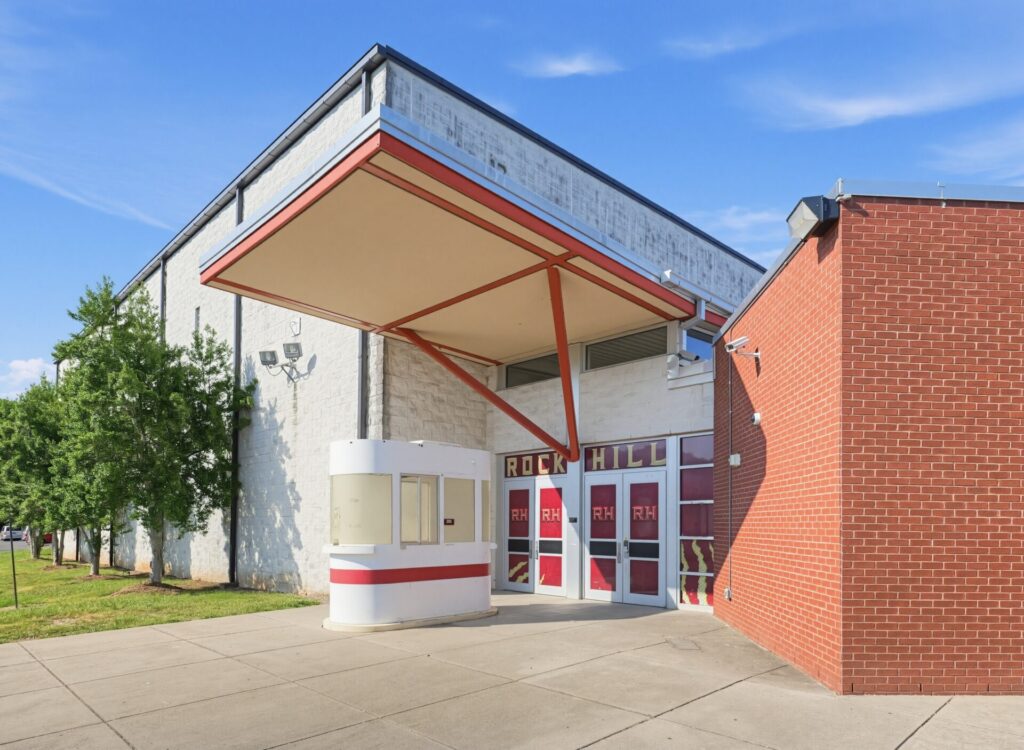
Specialized programs continue beyond elementary school. Saluda Trail Middle School and South Pointe High School form part of the district’s STEAM pathway, while Rock Hill High School offers the International Baccalaureate Diploma Program. This structure allows some students to pursue a particular academic interest across multiple grade levels rather than treating it as a single elective or short-term experience.
The city’s three comprehensive high schools, Northwestern, Rock Hill and South Pointe, also offer Advanced Placement, honors, dual-credit, fine arts, athletics and career-focused coursework. Dual-credit classes may count toward both high school graduation and a college credential, although transfer policies vary by institution.
Career and technical education is concentrated at the Applied Technology Center on West Main Street. Programs cover fields such as automotive technology, construction, culinary arts, cosmetology, digital design, electricity, health science, horticulture, logistics, and welding. Work-based learning can add internships, apprenticeships, and other employer-connected experiences to classroom instruction.
Rock Hill Schools and York Technical College added another pathway in August 2025 with the opening of Middle College at York Tech. Participating students work toward a high school diploma and a full associate degree simultaneously, reducing the distance between high school, college, and career preparation.
Magnet and Charter Schools
Rock Hill does not use “magnet school” as the primary label for its specialized district programs. Instead, families apply through the Program Options system. The seven choices include accelerated studies, arts integration, International Baccalaureate, inquiry, language immersion, Montessori, and STEAM.
Program Options are open to students who live within the Rock Hill Schools attendance area, but placement is not automatic. Families must enroll with the district, submit a separate application, and participate in a lottery when demand exceeds the number of available seats. That makes the timing of the application important for anyone considering a move specifically for one of these programs.
York Preparatory Academy provides another route. The tuition-free public charter school serves students from kindergarten through grade 12 at a campus on Golden Gate Court. Its K-12 structure allows students to remain within one school community through graduation, while its high school pathway emphasizes preparation for both college and employment. Enrollment is open to eligible South Carolina students, with a lottery used when applications exceed available places.
Legion Collegiate Academy serves high school students from its Long Meadow Road campus. The public charter school centers its academic model on a rigorous curriculum, competitive athletics, and the opportunity to earn up to 2 years of college credit in high school. Because it is a stand-alone high school rather than part of Rock Hill Schools, families should review its application, scheduling, and transportation arrangements separately.
Private Schools
Westminster Catawba Christian School is one of Rock Hill’s largest private-school options. The Christian school serves students through grade 12, with elementary and secondary grades divided between its lower- and upper-school programs. Smaller classes, college-preparatory academics, fine arts, athletics and Christian instruction shape the school’s approach.
St. Anne Catholic School offers a smaller parish-school environment for students in grades K3-7. Founded in 1951, the school approaches education through a Catholic framework that includes academics, faith formation, and development of the whole student. Its Bird Street location places it south of downtown and relatively close to several established residential areas.
Private schools set their own tuition, admissions, financial aid, and transportation policies. Families comparing them should also ask about grade-level openings, student support, extended care, and how religious instruction is incorporated into the school day.
Higher Education
Four-Year Colleges
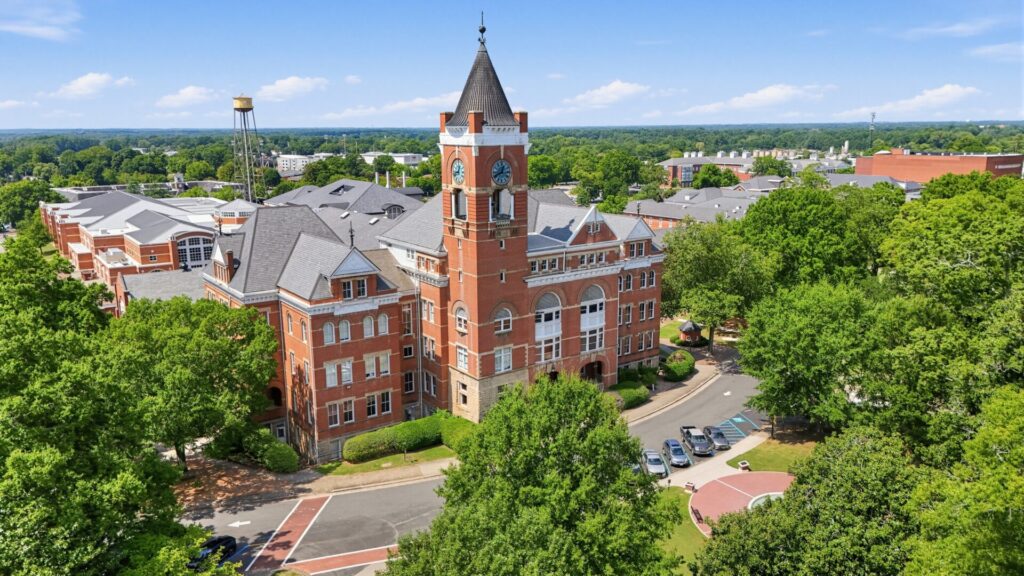
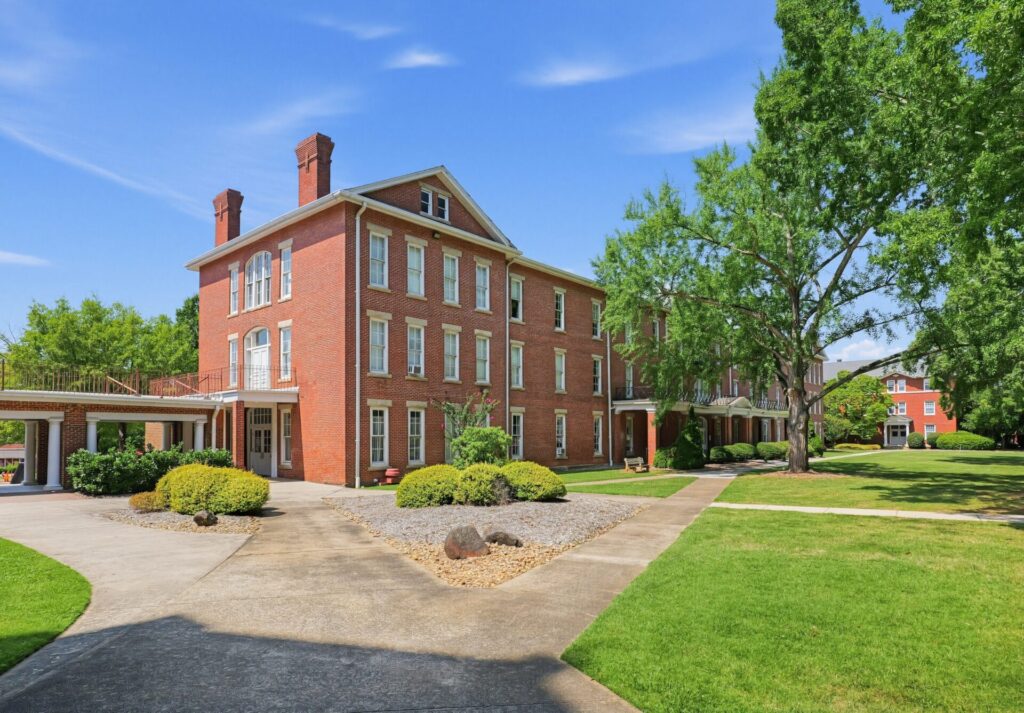
Winthrop University is the largest higher education institution in Rock Hill and one of the city’s most visible anchors. Its historic campus sits close to downtown, where university students and employees contribute to nearby housing, businesses, arts programming, and community events.
Enrollment reached 5,287 students in fall 2025, the university’s highest total since 2019. Winthrop offers undergraduate and graduate programs through colleges focused on arts and sciences, business and technology, education and leadership, and visual and performing arts. Courses are available in campus-based, online, and hybrid formats.
The university’s connection to the local school system is increasingly direct. A Business and Leadership dual-enrollment partnership allows qualifying juniors from Northwestern, Rock Hill, and South Pointe high schools to complete up to 36 Winthrop credit hours over two years. Students spend part of the day on the Winthrop campus before returning to their high schools.
Winthrop also functions as a cultural and recreational resource for residents who are not enrolled. Division I athletics, theater, music, galleries, lectures and other campus events bring the university into the city’s daily life.
Clinton College offers a different kind of four-year experience. Founded in 1894, the private HBCU has a much smaller campus and a mission rooted in academic access, faith, service and leadership. Its location near downtown and the Knowledge Park area also keeps students connected to the broader city.
Bachelor’s degree options include biology, business administration, cybersecurity, elementary education, health care administration, interdisciplinary studies, music, nursing and religious studies. Clinton also offers associate degrees, minors, and certificate programs in fields such as public health, information systems, forensic science, entrepreneurship, and banking and finance. A fully online general MBA is scheduled to begin in fall 2026.
The college’s scale may appeal to students looking for a close-knit setting and more direct access to instructors and campus support. The B.E.A.R. Summer Bridge program, for example, allows newly admitted students to complete English, math, and computer courses while earning 9 credits toward graduation.
Community Colleges and Technical Schools
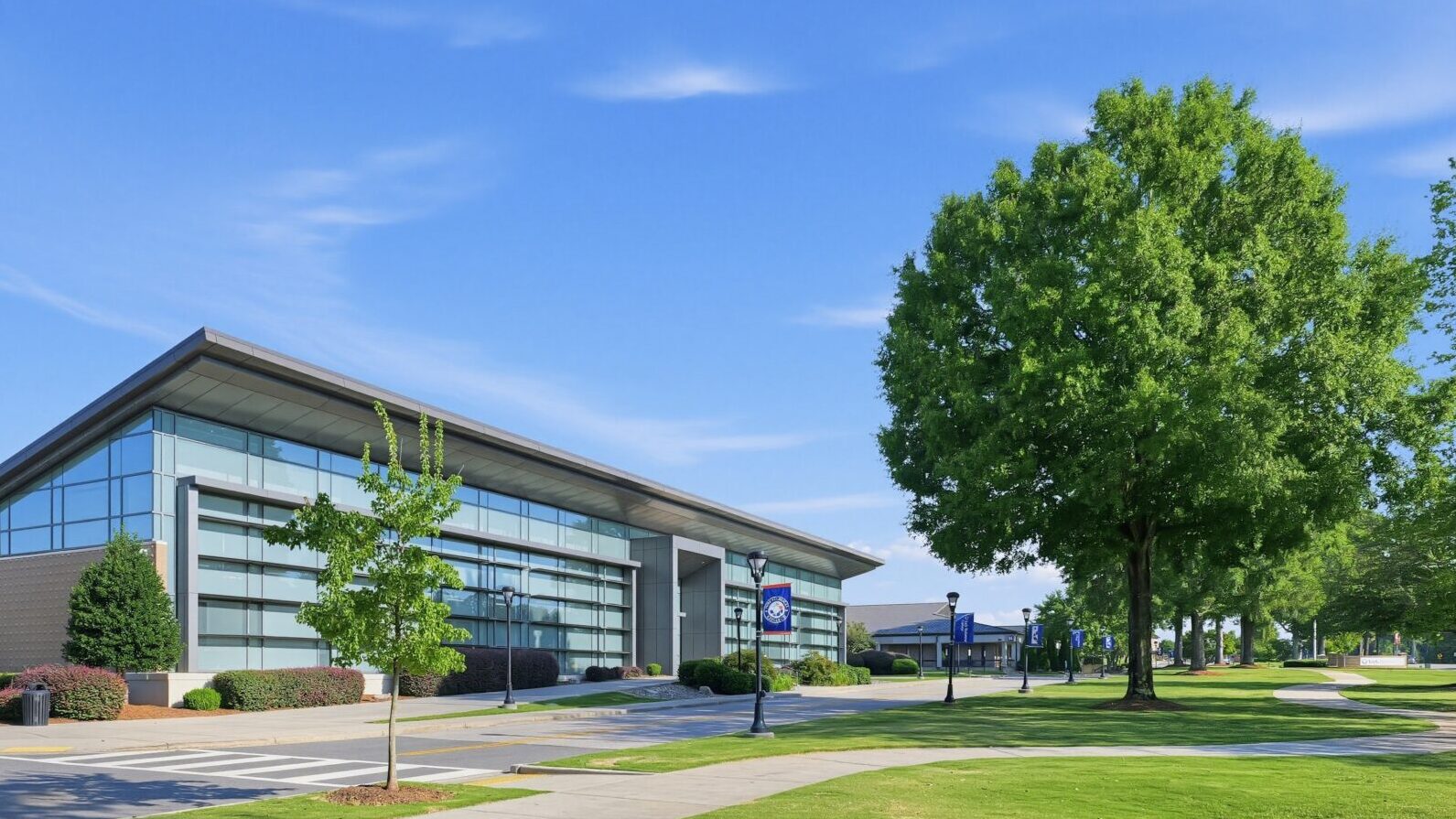
York Technical College serves approximately 5,000 students each year from its main campus on South Anderson Road and other regional locations. More than 100 programs lead to associate degrees, diplomas, and certificates, giving students both university-transfer and career-focused routes.
Its role in Rock Hill is especially practical. Programs connect directly to regional demand in health and human services, business and computer technology, industrial and engineering technology, construction, public safety, and skilled trades. A student may begin with general education courses designed for transfer or train for work in nursing, information technology, automotive service, HVAC, industrial maintenance, or another technical field.
York Tech’s partnerships with local high schools make it part of both the K-12 system and the college landscape. Dual enrollment, Middle College and the Fast Track to Winthrop program create several ways to earn college credit early and continue toward an associate or bachelor’s degree.
Short-term credentials are another important part of the college’s mission. Some programs prepare students for work in health care, manufacturing, construction, public safety, and information technology without requiring a full two-year degree.
Continuing Education and Workforce Training
Adults who need to complete a high school credential can begin with Rock Hill Adult Education. The program offers GED preparation, adult basic education, and English for Speakers of Other Languages, with in-person instruction, tutoring, and test-preparation resources available to GED students.
York Tech’s Workforce and Economic Development division serves adults who want to enter a new field, update an existing skill or complete employer-specific training. Programs include business and professional development, health and safety, industrial trades, transportation, and logistics. The college also develops customized training for organizations, tying workforce education directly to the needs of area employers.
Winthrop’s Continuing and Professional Education offerings range from one-day courses to programs lasting several weeks. Face-to-face, hybrid, and fully online formats make the programs more accessible to working adults, and some lead to continuing education units, certificates, or digital badges.
Together, these programs create a ladder rather than a single track. A resident can prepare for a GED, learn English, complete a short-term credential, transfer into a degree program, or return later for professional development without having to start over in a disconnected system.
Map of Education in Rock Hill
Neighborhood Scouting
Consider the Commute
A school’s address can be as important as its academic offerings.
Students in traditional public schools are generally assigned based on their home address, so families should confirm attendance zones directly with Rock Hill Schools rather than relying on a neighborhood name or a real estate listing. A Rock Hill mailing address may also extend beyond the boundaries a buyer expects, making district verification an essential early step.
Choice programs create a second layer of geography. A family may live close to one elementary school while a child attends language immersion, arts, or Montessori programming on the other side of the city. Charter and private schools maintain their own schedules and transportation policies, and high school students may travel between a home campus, the Applied Technology Center, York Tech, and Winthrop for specialized classes.
The practical test is not mileage alone. Families should drive prospective routes during actual arrival and dismissal periods and consider how the trip fits with work, child care, after-school activities, and the schedules of other children in the household.
Plan a Scouting Trip
The most useful education scouting trip begins before arriving in Rock Hill. Identify the zoned schools for each prospective address, then narrow the choices to programs the student is actually eligible for. Check application windows, lottery requirements, grade levels, and whether transportation is provided.
Once in town, tour the zoned school as well as any serious charter, private, or Program Option alternatives. Ask how specialized programs operate day-to-day, not just how they are described online. Class sizes, student support, extracurricular schedules, extended care and the transition between grade levels may matter as much as a program’s name.
Older students should visit the Applied Technology Center, York Tech, Winthrop, or Clinton based on their likely path. Comparing a technical lab, a small HBCU campus, and a larger public university in person can clarify differences that are difficult to understand from a list of degree programs.
Finally, repeat the routes at the times the household would actually use them. Rock Hill offers an unusually broad education network for a city of its size. Still, the best choice is the one that works academically and logistically from the neighborhood a family plans to call home.
Education Connects to Life in Rock Hill
Rock Hill’s strongest education asset is not a single school or institution. It is the number of connections between them.
District specialty programs begin in the early grades. High school students can move into technical education, apprenticeships, or dual enrollment. York Tech provides both employment credentials and transfer routes, while Winthrop and Clinton offer distinctly different four-year settings. Adults can reenter the system through GED preparation, short-term training, degree completion, or continuing education.
For residents, that creates room to change direction without leaving the community. Education in Rock Hill supports children choosing their first academic interests, teenagers weighing college against skilled work, adults returning to school, and employers seeking people trained in the fields that shape the local economy.