
How Mardi Gras Became a Mobile, AL, Tradition
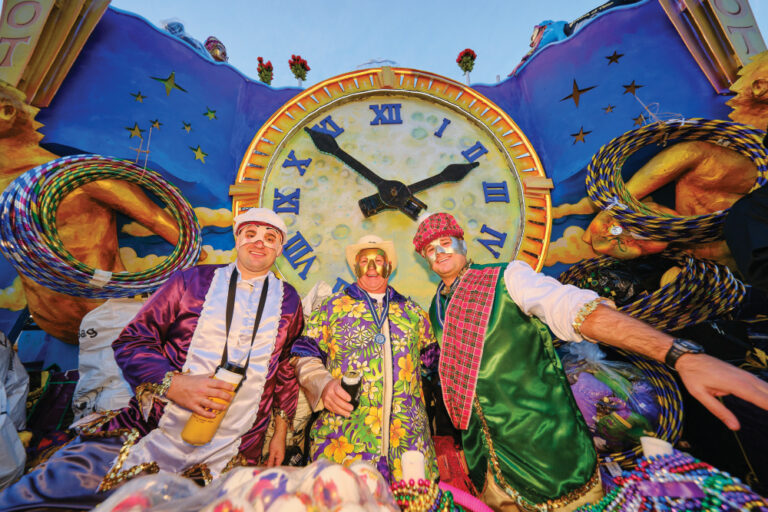
It’s a big, easy assumption that North America’s Mardi Gras celebrations started in New Orleans. But ask any South Alabamian, and they’ll let you know Mobile was first all the way back in 1703.
“‘Mardi Gras started in Mobile’ is as common a phrase in this region as ‘Roll Tide’ and other variations of college loyalty expressions you hear,” says Ashley Rains, senior public relations and communications manager for Visit Mobile. “It is completely part of our community’s personality.”
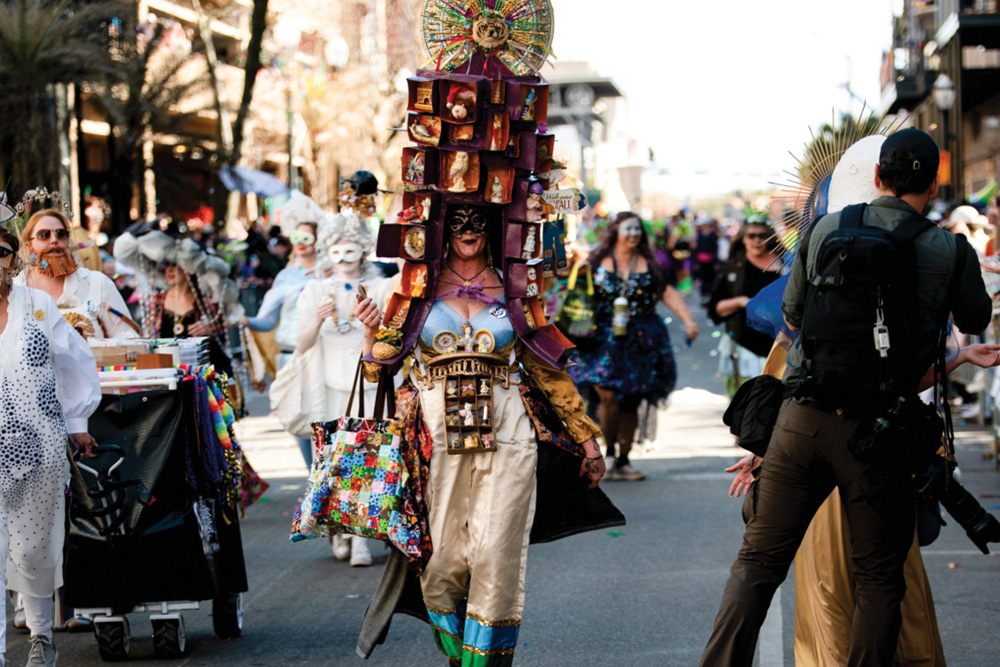
Mardi Gras – the celebration that marks the Tuesday before the 40 days of Lent ahead – remains a cultural and economic cornerstone for Mobile. The Carnival season is a multimillion-dollar economic engine that supports thousands of local jobs through tourism and hospitality.
Through parades, balls, cuisine and simply the animated spirit of the Carnival season, Mobile’s Mardi Gras honors the festival’s French roots and the artistry of mystic societies while continuing to adapt to the times, says Cartledge W. Blackwell, curator and historian of the Mobile Carnival Museum.
“Carnival is organic,” Blackwell says. “It responds to the times, while remaining true to tradition. The greatest change is also the most defining change. Each and every year, Carnival in Mobile evolves to embrace more and more of Mobile’s diverse population.”
The Roots of the Revelry
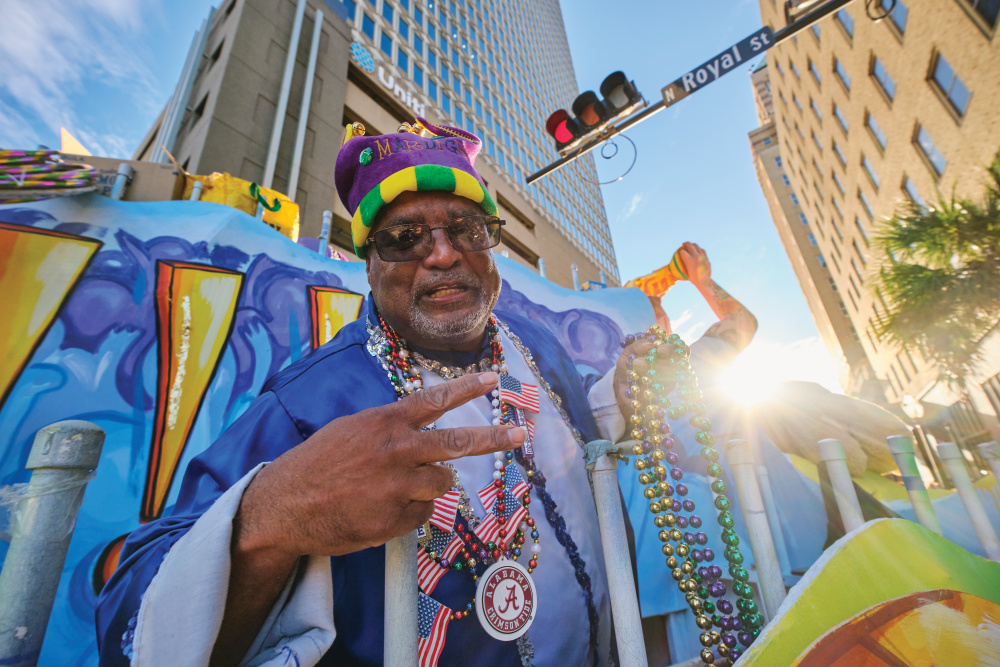
When that first Mardi Gras celebration happened, Mobile was part of the French territory. It wasn’t until the 1830s that Mobile’s modern celebrations began with the founding of the first mystic society and impromptu processions on New Year’s Eve.
“By the end of the decade, there was a parade featuring floats pulled by mules with costumed maskers whose attire was coordinated to the theme,” Blackwell says, adding the themes carried into balls in the 1840s.
Celebrations died down during the Civil War. Then in 1866, a man named Joe Cain led a rowdy march through the city, leading to a revival of Mardi Gras in Mobile that’s still commemorated.
“Joe Cain Day is celebrated on the Sunday before Fat Tuesday, or Mardi Gras Day,” Rains says. “Today, you can follow the black-veiled and weeping Merry Widows as they pine over Joe Cain’s grave, each claiming ‘Joe loved me best,’ before gathering at his original home for a street party. Then, take to the streets for the parade, lovingly called The People’s Procession.”
A Modern-Day Masterpiece
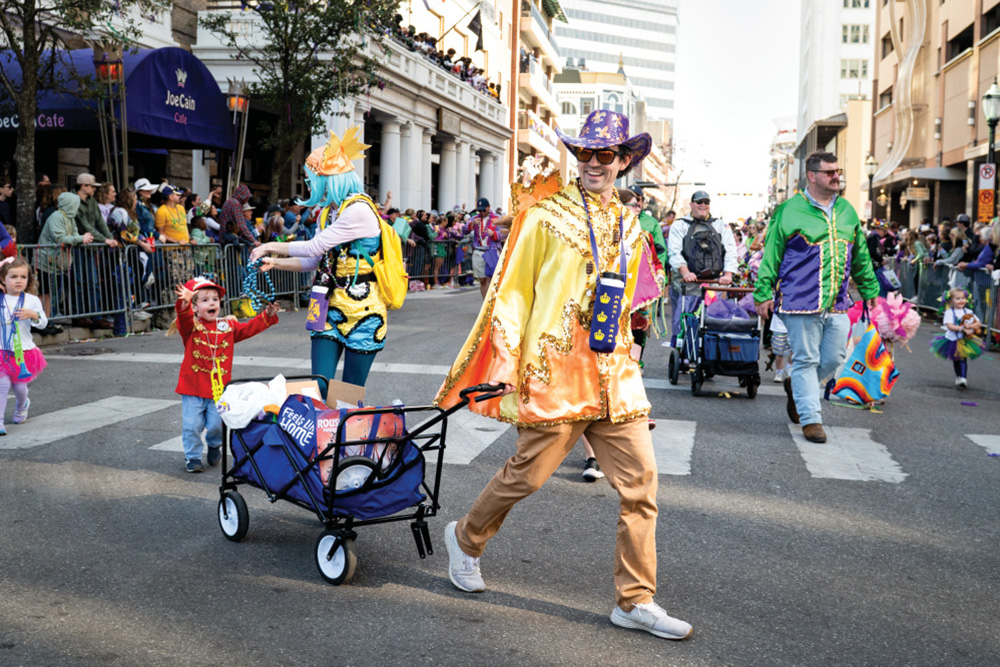
Mobile’s Mardi Gras celebrations have evolved and added new traditions over the years, such as the throwing of MoonPies from parade floats. Now, it’s unimaginable to think of Mobile without Mardi Gras.
Today’s Carnival celebrations draw between 1.5 million and 2 million revelers to the parades and festivities each year. Recent economic impact studies have found that Mardi Gras has a roughly $300 million impact on the local economy.
“What is not included in that number is the local businesses and organizations for which Mardi Gras is a year-round industry,” Rains says. “There are costume and royal regalia designers, float construction companies, event planners and others who work exclusively for and around Mardi Gras.”
The sheer amount of spectacle can make it difficult for people to choose their favorite part of Mardi Gras in Mobile. But for Blackwell, it has to be the parades.
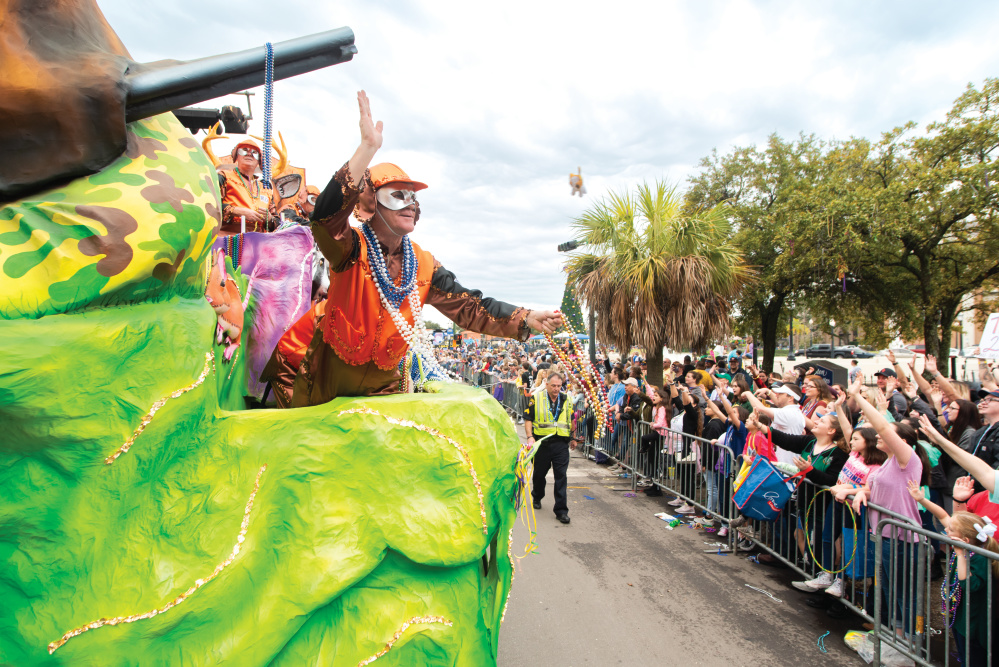
“The experience of being with people you care about while enjoying a spectacle that combines the fine, literary and performing arts in an accessible – and fun – way is magical,” he says.
As a native Mobilian, Rains has several favorite aspects, from Joe Cain Day to making signs for people parading with their mystic organization. But simply celebrating with family and friends on the same street corner where they’ve gathered since before she can remember remains a core component year after year.
“We live in the most eclectic, culturally inspired city,” Rains says. “And I love that the pomp, circumstance and general over-the-top Mardi Gras celebration is just one piece of our history and traditions.”
Royal Treat
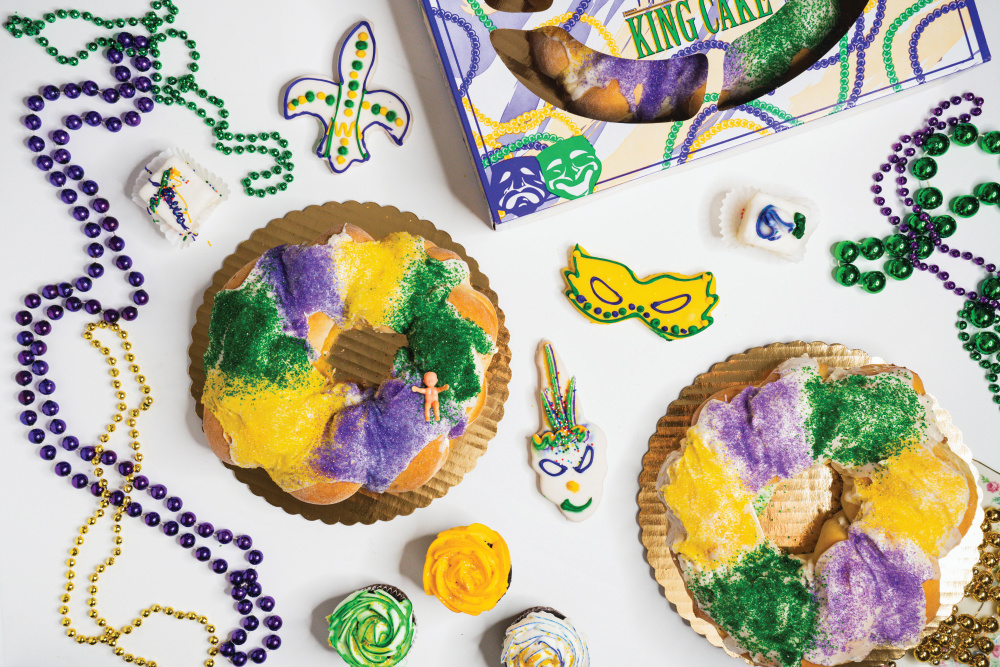
If Mardi Gras is the heart of Mobile, then king cakes are certainly the heart of Mardi Gras. You’ll find these tasty, ring-shaped confections – decorated in purple, green and yellow – everywhere during Mardi Gras season and beyond. And every baker has their own special recipe. This traditional treat is so iconic here that it rates its own in an annual competition, the King Cake-off.
Some of Mobile’s best king cakes come from Sweet Cree’s Bakery and Pollman’s Bake Shop.
“Sweet Cree’s king cake is not just king cake; it’s more of an experience,” says manager Diana Trombley. “Our owner, Candis Coleman, is an amazing baker. The secret is her baking atmosphere, which is filled with music. She sings, she prays and she believes each cake is a deposit of goodness.”
Vance McCoy owns Pollman’s Bake Shop, the landmark bakery that first made king cakes in Mobile and was the 2024 Cake-off winner in the traditional category. When McCoy bought the bakery three years ago, he began updating and upgrading its king cakes, using “a special kind of flour and all kinds of fillings, cream cheese and spices nobody else uses,” he says. “We use no preservatives, no additives of any kind. This is not the kind of king cake that sits out on the kitchen table for a month.”
Get to Know Mobile, AL
Want to learn more about living and working in Mobile, AL? Check out the new edition of Livability Mobile – Coastal Alabama.