

Greater Chattanooga Workforce Development Builds Career Pathways
When companies weigh where to invest, expand or establish roots, they look beyond available sites and infrastructure. Among the many deciding factors, a community’s ability to deliver a skilled workforce is at the top of the list.
In Greater Chattanooga, that ability is taking shape in classrooms, labs and training spaces, where educators and employers are connecting students with career pathways tied to local industries.
Regional partners – including Chattanooga State Community College, Hamilton County Schools and the PIE Innovation Center – are working directly with local employers to build a strong education-to-career pipeline that matches student ambitions with industry demand.
In This Article
Future-Ready Workforce
For Blake Freeman, chief academic officer at Hamilton County Schools, the work begins long before a student applies for a job.
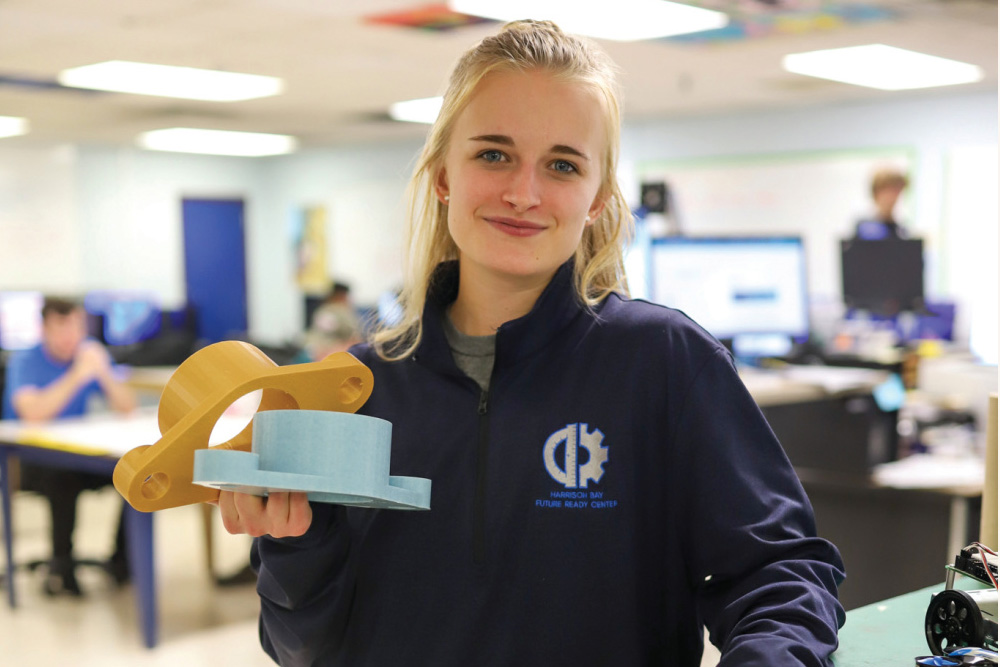
At Hamilton County Schools, Future Ready Institutes and Pathways function as small learning communities within high schools that blend traditional academics with career-focused learning, aligning classroom education directly with the region’s high-growth job sectors.
“It’s about creating opportunities for students who want to explore a career they’re interested in,” Freeman says. “We offer a closer look into what that industry entails, what it looks like and what level of education is required to move into that field.”
Offered at 17 area high schools and two Future Ready Centers, the programs connect students with industry professionals through pathway-based learning in fields including healthcare, information technology, engineering and advanced manufacturing.
Through workplace visits, conversations with professionals and hands-on experiences, students bridge classroom learning with real-world opportunities. Teachers also participate in externships, going directly into local worksites and bringing industry insights back to their classrooms.
The result? Students graduate with the technical skills needed to thrive within various industries and the communication, resilience and collaboration skills to become assets in their communities.
“We don’t just want students to be good employees,” Freeman says. “We need them to be resilient learners, effective communicators and community oriented.”

A ‘Field of Dreams’ for Local Industry
Creating pathways for secondary and postsecondary students has become a defining feature of Greater Chattanooga’s workforce strategy.
At the PIE Innovation Center in Bradley County, students from Bradley Central and Walker Valley high schools combine academics with technical training and industry-recognized credentials while remaining enrolled at their home schools.
Principal Brittany Cannon describes the center as a launching pad for students. “We look at the PIE Center almost like an interstate, with many exit ramps,” Cannon says. “Students can go directly into the workforce, attend a technical school, enroll in community college, pursue a four-year degree or enter the military.”
Wacker – a German multinational chemical company – has been a longtime supporter of the PIE Innovation Center, helping expose local educators to Germany’s apprenticeship system and supporting the center by constructing Wacker Commons, a multiuse facility for community events, career fairs, recruitment and recreation.
Every program is guided by postsecondary and industry partners like Wacker, creating a curriculum that reflects the skills employers need while remaining flexible as industries evolve.
For other local employers like SK Food Group, that infrastructure helps reduce talent risk and strengthens the region’s economic development pitch, Cannon says.
“I call it our field of dreams,” Cannon says. “Companies come to us because they hear and see the pipeline that we’re developing.”
Strategic Partnerships
Wacker’s investment extends beyond Bradley County.
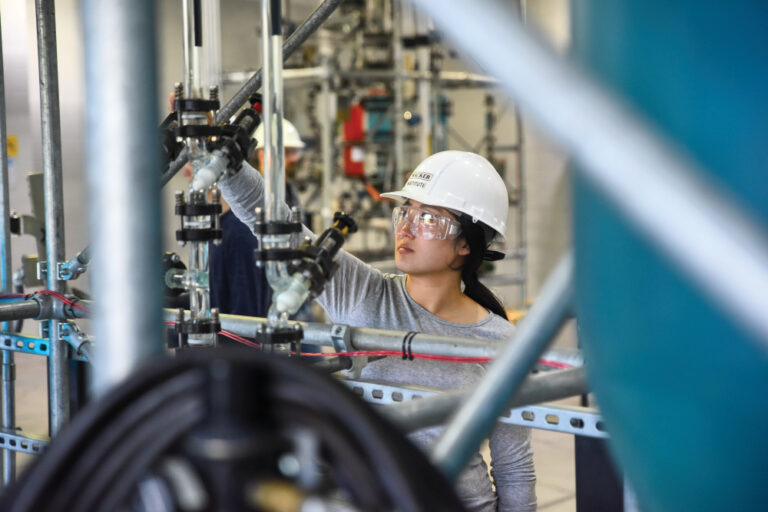
Its partnership with Chattanooga State Community College to create the Wacker Institute has produced some of the region’s top chemical process-engineering technicians.
At the institute, students train in a state-of-the-art pilot plant and gain exposure to chemical operations, electrical and instrumentation systems, and mechanical maintenance. The model blends classroom instruction with practical experience, giving graduates the confidence and technical fluency to step into high-skill manufacturing roles across the region.
It’s all part of the region’s larger strategy of providing opportunities for students and highly skilled talent pools for employers.
For companies considering investment in Greater Chattanooga, Freeman shares this message: “We’re ready to partner with you.”
“We want to hear how we can continue to help prepare students t o be successful in their lives,” Freeman says. “Education breaks cycles of poverty and creates hope. We want all students to thrive and experience a future without limits.”
Connecting Residents, Employers and Community
When One Chattanooga Works launched in April 2026, its first task was defining what workforce development means for the region. Now, Andrew Hudson, the City of Chattanooga’s director of workforce development strategy, hopes that definition will help align the 77 organizations across Hamilton County that help prepare residents for employment.
Created through a partnership between the City of Chattanooga and The Enterprise Center, One Chattanooga Works serves as a workforce matchmaker connecting residents ages 25 to 54 with jobs, career training and support services.
The initiative defines workforce development as equipping individuals with the skills necessary to meet current and predicted local job market demands by prioritizing training with the highest job placement rate, informed by local labor market data and demand that creates a thriving economy for all.
“It’s a simple definition, but there’s a lot to unpack,” he says. “What it really points to is viewing workforce development as a process.”
Community developers identified key functions that local partners can fill: job placement, support services, professional development, career exploration and exposure, and work readiness.
An important piece of that strategy is One Chattanooga Works, a new website serving as the central hub for job seekers, employers and workforce providers. It matches applicants with positions they qualify for while recommending training opportunities.
“Workforce development is the human-centered side of economic development,” he says. “It’s not just about the number of jobs. We’re going to be intentional about creating opportunity for people to be prepared for those jobs and building value in our local economy.”
