
Bridgemore Village, Thompson’s Station, TN: Upscale Homes With Room to Breathe
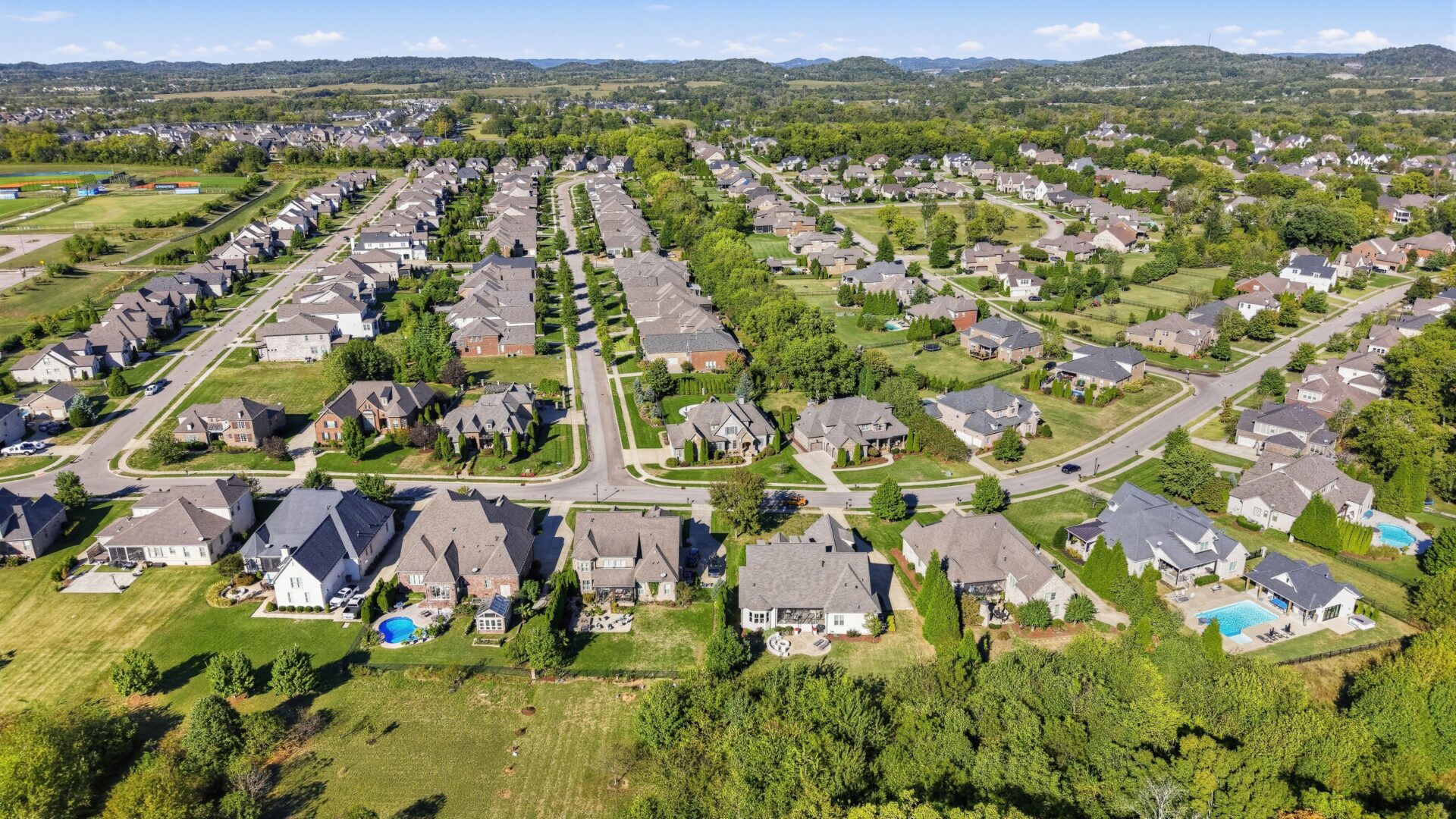
Bridgemore Village occupies a comfortable middle ground in Thompson’s Station, Tennessee. It has the polish and amenities of a planned community, but its larger lots and substantial custom and semi-custom homes keep it from feeling like a typical high-density subdivision.
Families make up a large share of the neighborhood, but Bridgemore Village also appeals to professionals looking for a long-term home. Residents get access to Williamson County Schools, a community pool and a quiet setting among the area’s rolling hills.
Franklin, Spring Hill and the I-65 corridor are all within reach, though this is still a place where driving is part of the daily routine.
Overall Vibe & Lifestyle
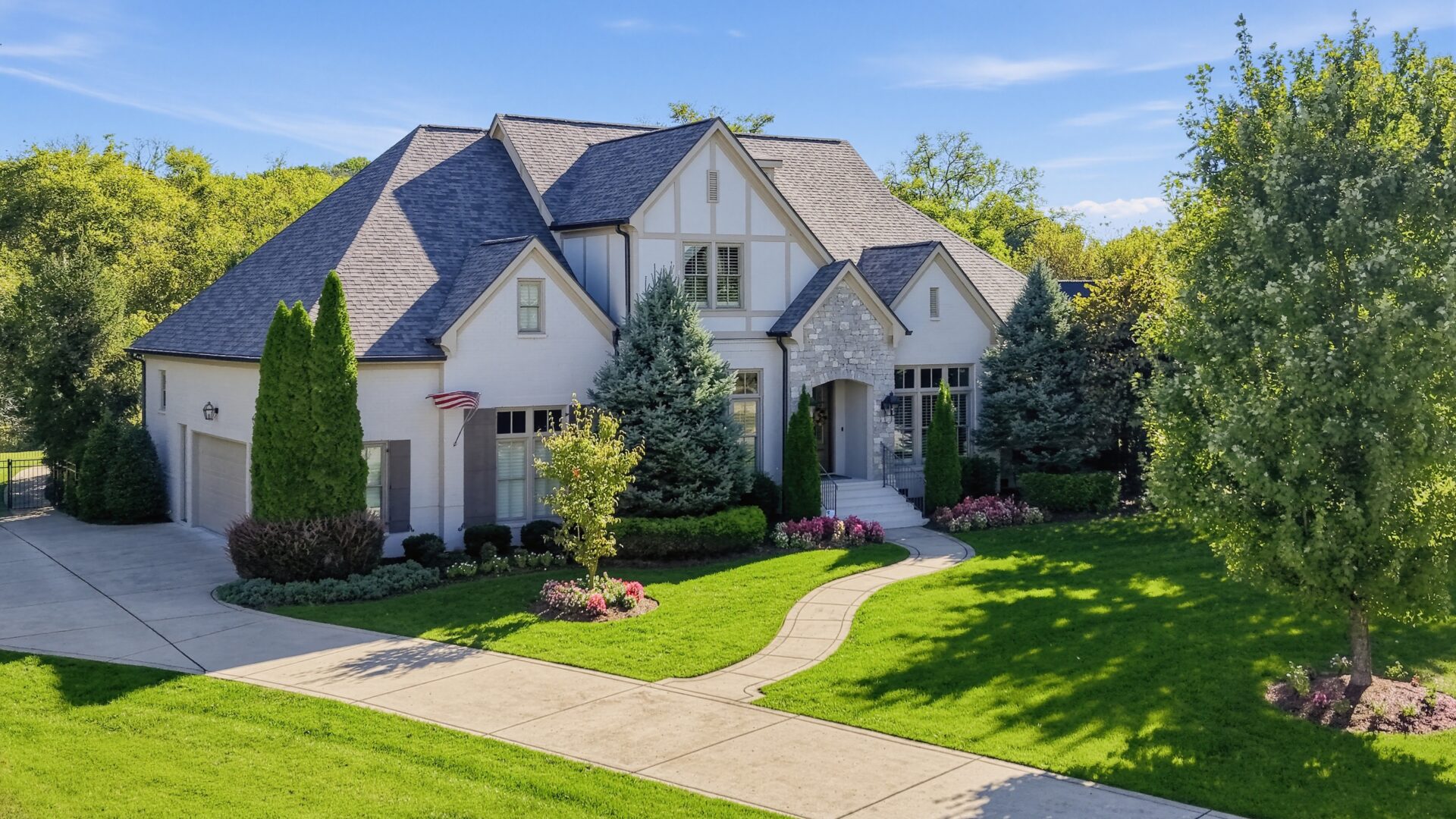
Bridgemore Village feels established, residential and a little more private than Thompson’s Station’s busiest master-planned developments. Homes have enough breathing room to create a sense of separation, but they aren’t so spread out that residents rarely see one another.
A walk through the neighborhood reveals a mix of families outside with their children, residents exercising and golf carts making their way between nearby houses. Activity picks up around the pool in summer, but most streets remain peaceful. There’s a social community here if you want it, though homeowners don’t have to participate in every neighborhood gathering to feel comfortable.
The size and quality of the houses also give Bridgemore Village a long-term character. Many homes have flexible rooms, guest suites and enough space to accommodate changing needs. This is less of a stepping-stone neighborhood and more of a place where buyers expect to stay through several stages of life.
Safety & Walkability
Bridgemore Village is removed from major commercial roads, so it doesn’t contend with the amount of through traffic found in more centrally located neighborhoods. Most vehicles entering the development belong to residents, visitors or service providers.
Sidewalks make it possible to walk within much of the community, whether residents are exercising, visiting neighbors or heading to the pool. Walkability outside the neighborhood is more limited. Restaurants, grocery stores and most services require a car.
One unusual advantage is the proximity of Thompson’s Station Elementary School and Thompson’s Station Middle School to portions of the community. Depending on the section and exact address, some families may be close enough to walk, bike or use a golf cart for school trips. Other sections are farther away, so buyers shouldn’t assume the same arrangement applies throughout Bridgemore Village.
As with any neighborhood, buyers should evaluate individual streets at different times of day. Homes near community amenities may experience more seasonal activity, while interior streets and cul-de-sacs tend to feel quieter.
Natural & Built Environment
Bridgemore Village was developed around the rolling landscape that defines much of Thompson’s Station. Changes in elevation, mature tree lines and open green areas soften the neighborhood’s suburban layout. The terrain also helps separate groups of homes, preventing the community from looking like one uninterrupted grid of rooftops.
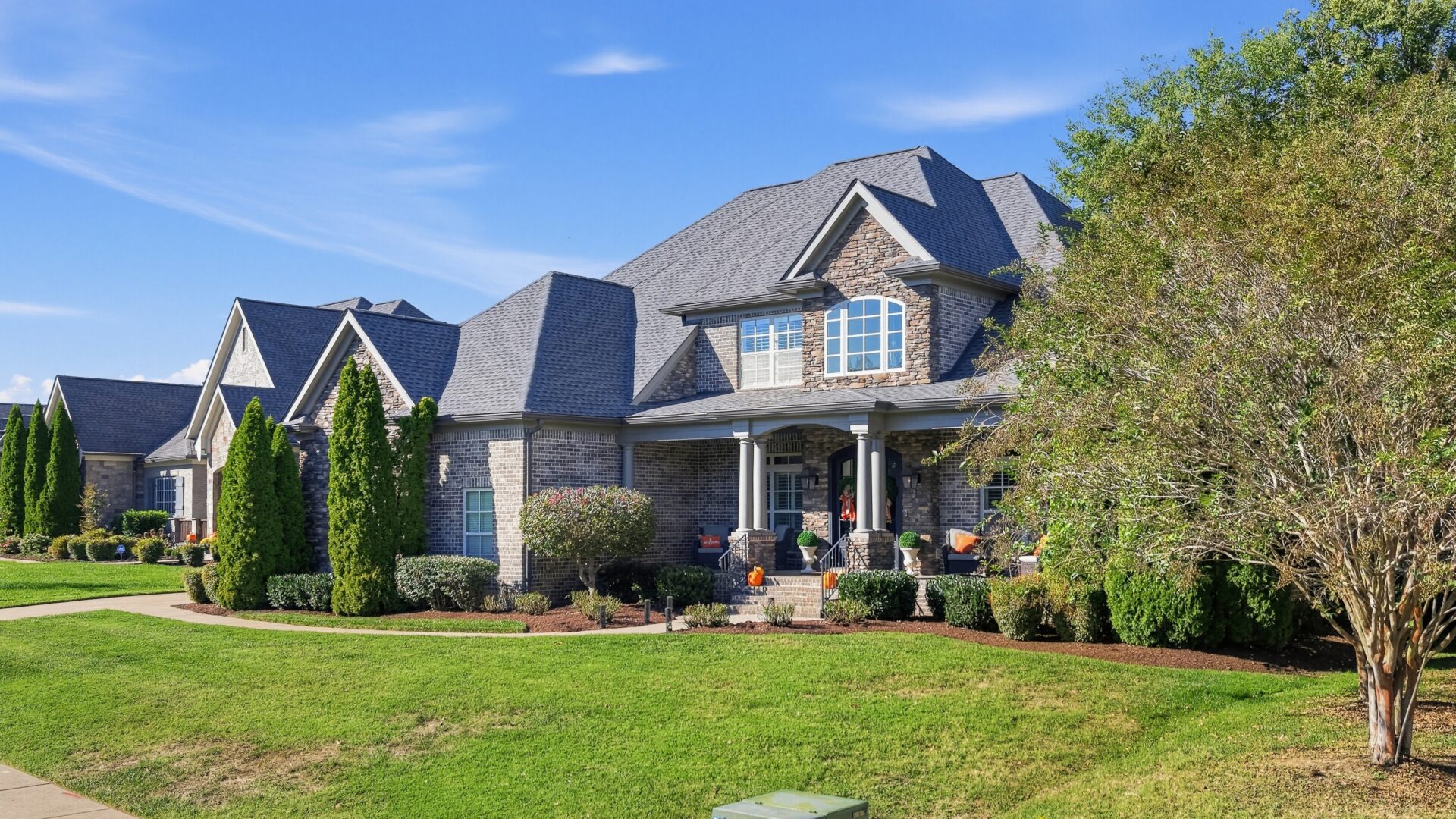
Landscaping is generally well maintained, and many homeowners have expanded on the original plantings around their properties. Established sections benefit from fuller trees and shrubs, giving the streets a more settled appearance than recently completed developments.
Lots are generous by planned-community standards. They don’t provide the freedom or privacy of a multi-acre property, but many offer enough room for outdoor kitchens, covered patios, play equipment and usable backyards. Some properties sit on or near half-acre parcels, while others are more compact.
Buyers should pay attention to topography when touring. A sloped backyard may provide attractive views or additional separation from neighboring homes, but it can also affect how much of the lot is easily usable.
GET UP TO
$5000 BACK IN MOVING COSTS
Hi, I'm Shawn Riggs. Buy your home with me, and Livability.com will help cover your move with the Livability Moving Advantage. Let me guide you home and save up to $5000.
Find Out HowDesign & Architecture
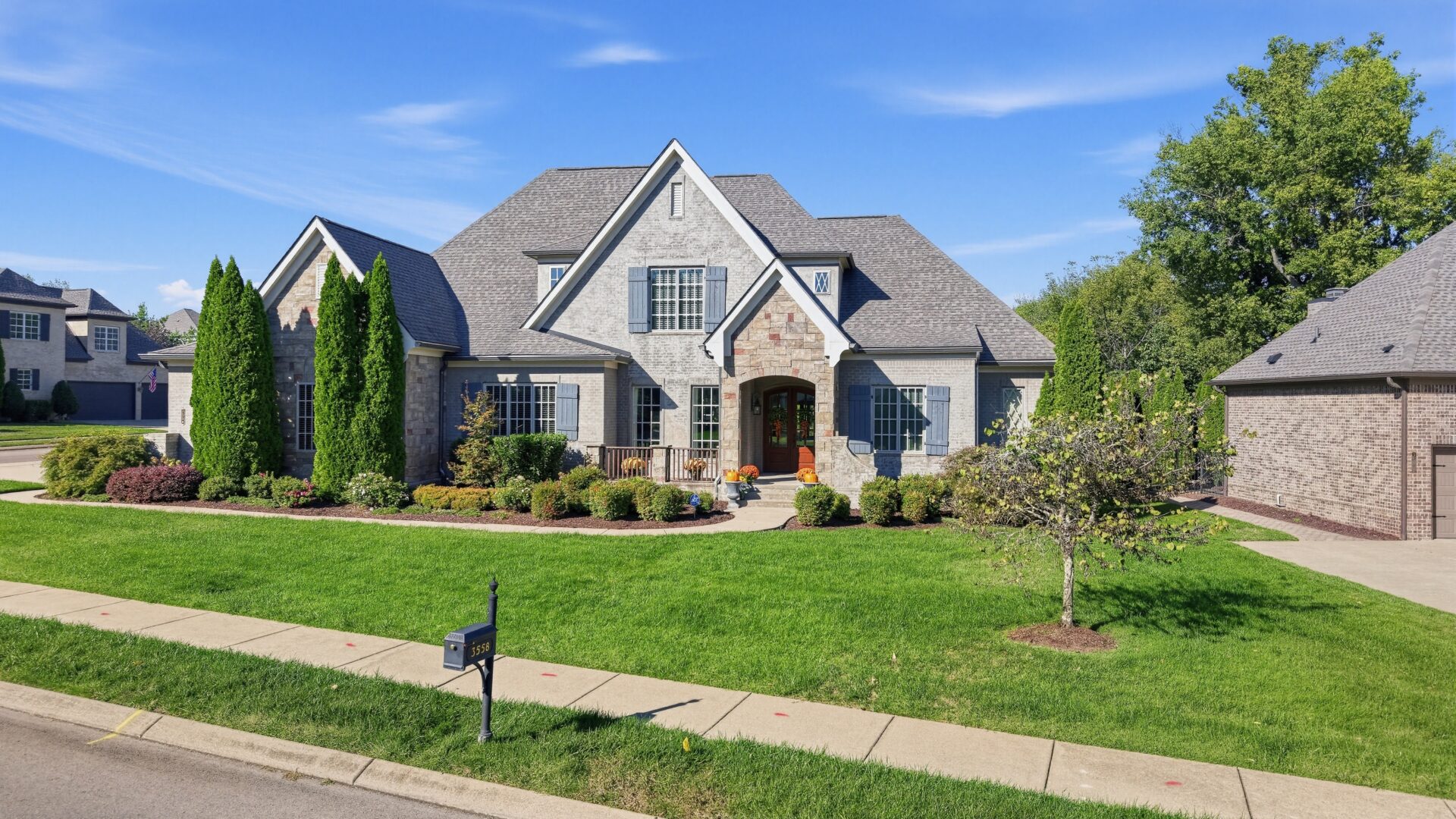
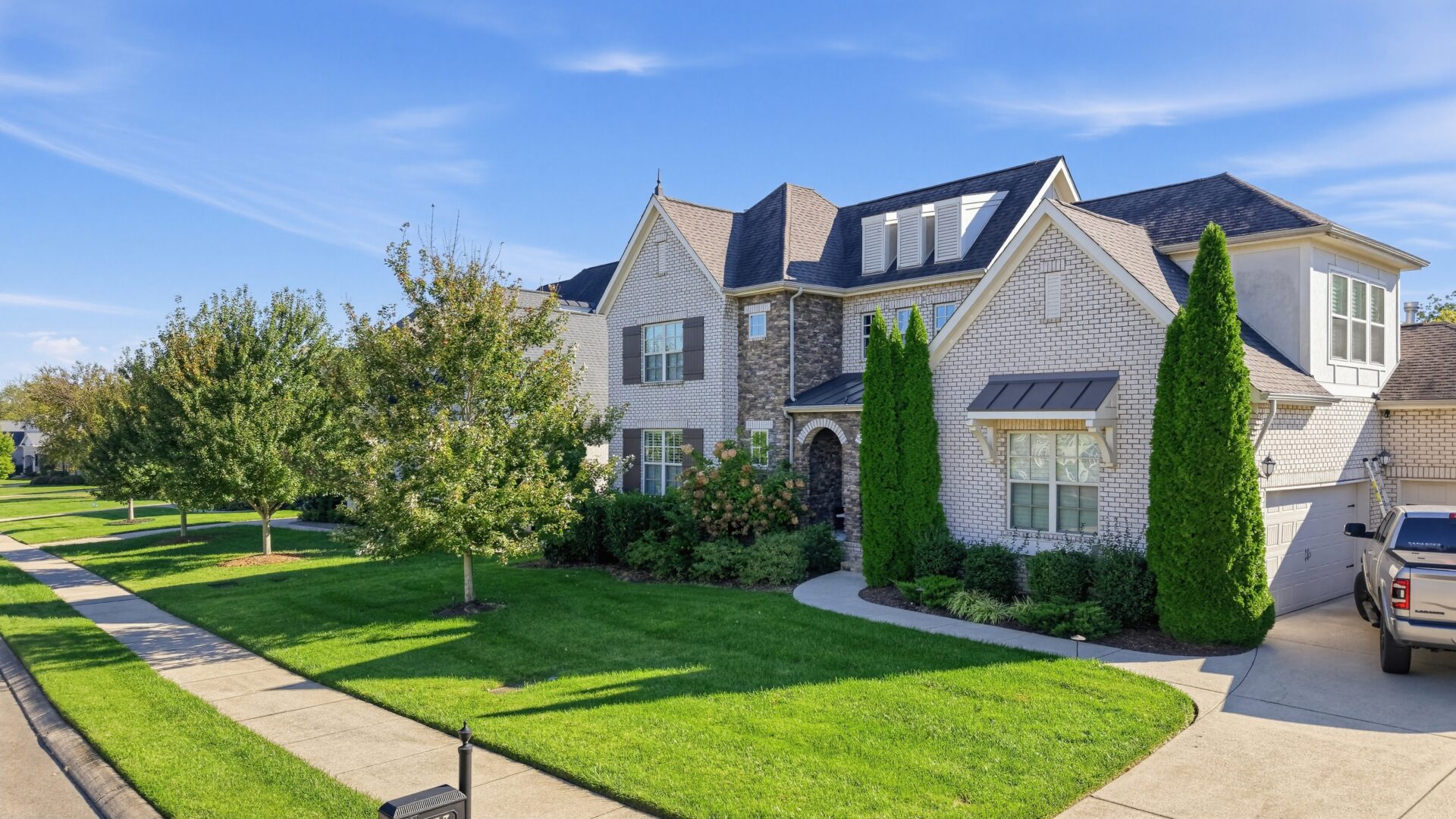
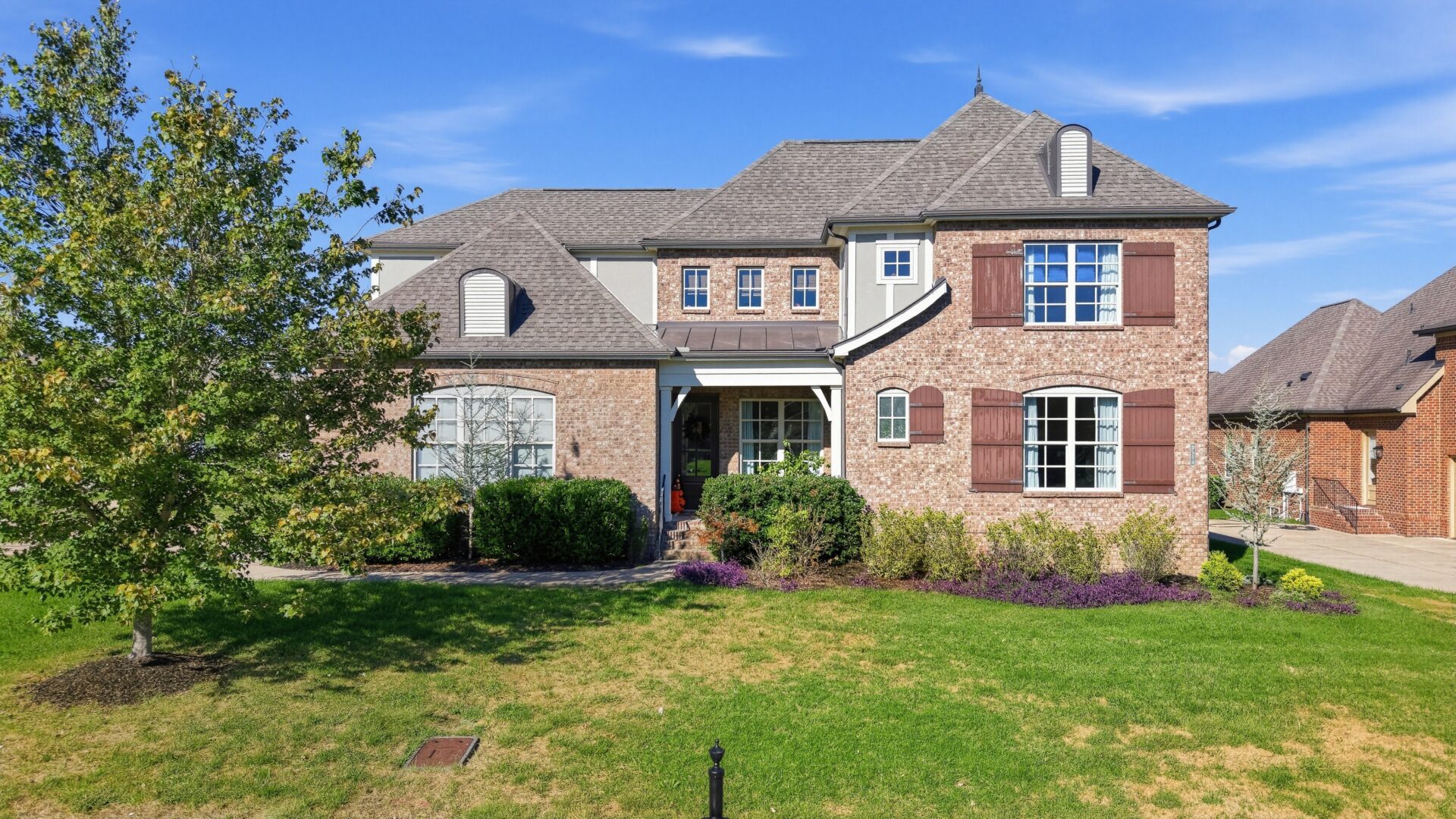
Bridgemore Village is known for substantial detached houses rather than townhomes or small-lot cottages. Brick, stone and fiber-cement siding appear frequently, often combined on the same exterior. Architectural styles lean traditional, with Craftsman and European-inspired details incorporated into some homes.
The neighborhood was developed over multiple phases and includes work from several builders. That creates more architectural variety than buyers will find in communities constructed by a single production builder. Rooflines, porches, window arrangements and exterior materials change from one property to the next, even though the neighborhood maintains a consistent upscale character.
Inside, many homes have four or five bedrooms, multiple bathrooms and more than one gathering area. Open kitchens, large islands, fireplaces, home offices and bonus rooms are common. Depending on the age and builder, buyers may also encounter formal dining rooms, first-floor guest suites, media rooms and separate spaces that can accommodate multigenerational households.
Garages generally hold two or three vehicles, although configurations vary. Homes on larger or premium lots may include expanded driveways, side-entry garages or additional storage.
Housing at a Glance
| Category | What Buyers Can Expect |
|---|---|
| Primary housing type | Detached single-family homes |
| General character | Upscale custom and semi-custom construction |
| Common home size | Approximately 2,400 to more than 6,000 square feet |
| Typical bedrooms | Three to six, with four or five especially common |
| Lot pattern | Larger suburban lots, including some around a half-acre or more |
| Exterior materials | Brick, stone and fiber-cement siding |
| Common features | Bonus rooms, home offices, covered patios and two- or three-car garages |
| Community structure | HOA-managed |
| Construction period | Primarily late 2000s through the early 2020s |
Real Estate Snapshot
Bridgemore Village occupies the upper end of the Thompson’s Station housing market. Its homes tend to be larger than those in the area’s high-volume subdivisions, and the neighborhood contains relatively little entry-level inventory.
The market within Bridgemore Village isn’t completely uniform. A moderately sized home on a smaller interior lot competes in a different category than a newer custom house with extensive upgrades and considerable square footage. Construction quality, lot size, outdoor living improvements and renovation history can all affect a property’s position.
Established resales make up much of the inventory. That gives buyers the opportunity to find completed landscaping, window treatments, fencing and outdoor improvements that may not be included with new construction. The other side of that equation is maintenance. Roofs, heating and cooling systems, appliances and exterior finishes can be at different points in their life cycles depending on when the home was built.
Turnover can be limited, especially for particular lot types or home sizes. Buyers with highly specific requirements may need to wait for a suitable property rather than expecting several comparable homes to be available at once.
Before purchasing, review the HOA documents, property survey and improvement records. Larger yards sometimes contain fences, pools, patios or drainage features that deserve a closer look during inspections and due diligence.
Amenities & Local Conveniences
Bridgemore Village has a community pool that becomes a central gathering place during warm weather. It’s one of the neighborhood’s biggest social amenities, particularly for families who want recreation close to home without maintaining a private pool.
Sidewalks and common green spaces support walking, jogging and informal outdoor time. The neighborhood doesn’t have the enormous amenity package of a resort-style development, but its facilities are appropriate for the community’s quieter, more residential personality.
Sarah Benson Park is normally a short drive away, but the park is currently closed while Thompson’s Station builds a new accessible playground and completes related improvements. The town expects construction to finish by the end of 2026. In the meantime, Preservation Park offers trails that climb through wooded and open areas to elevated views of Thompson’s Station.
Residents usually divide everyday errands between Spring Hill and Franklin. Spring Hill is convenient for groceries, pharmacies, casual dining and household services. Franklin and CoolSprings provide a much broader selection of restaurants, shopping, entertainment and medical care.
Downtown Thompson’s Station has a much smaller commercial footprint. That’s part of its appeal, but it means residents shouldn’t expect every need to be covered within town limits. Bridgemore Village provides neighborhood walkability, not a walk-to-dinner lifestyle.
Schools & Education
Bridgemore Village is served by Williamson County Schools, one of the primary reasons families consider Thompson’s Station. The district offers academic, athletic, arts and career-focused programs across its schools, along with advanced coursework at the high-school level.
Thompson’s Station Elementary School and Thompson’s Station Middle School sit beside the community, making them unusually visible parts of daily neighborhood life. School proximity is a practical advantage for families, although the walking distance depends on the home’s section and the available route.
High-school assignments may vary by address. Recent property records most often associate Bridgemore Village homes with Summit High School, though some have been connected with Independence High School. Since Williamson County continues to grow and adjusts attendance boundaries when needed, buyers should confirm all assignments directly with the district before making a housing decision.
Families interested in private education can look toward Franklin, Brentwood and the surrounding Nashville area. Columbia State Community College has a Williamson Campus in Franklin, while several colleges and universities are located in Nashville within commuting distance.
Commuting & Location
Bridgemore Village is located off Thompson’s Station Road East, with access to nearby routes such as Columbia Pike, Lewisburg Pike, I-840 and I-65. The neighborhood isn’t directly beside the interstate, but residents can reach the regional road network without traveling through downtown Franklin.
| Destination | Approximate Drive | What to Know |
|---|---|---|
| Downtown Thompson’s Station | 5-10 minutes | Close to parks, community events and the town’s small business district |
| Spring Hill | 10-15 minutes | A practical destination for groceries, restaurants and daily services |
| Downtown Franklin | 20-25 minutes | Offers extensive dining, shopping, entertainment and local events |
| CoolSprings | 20-30 minutes | Major employment, retail and medical hub along I-65 |
| Downtown Nashville | 40-50 minutes | Feasible for commuters, but congestion can add time |
| Nashville International Airport | 40-50 minutes | Travel time varies considerably with traffic |
Commute times can change quickly during rush hour. The drive into Nashville is manageable for some residents, especially those on hybrid schedules, but doing it five days a week requires more patience. Bridgemore Village is particularly convenient for people working in Spring Hill, Franklin, CoolSprings or elsewhere in southern Williamson County.
Bridgemore Village Neighborhood Map
Quirks & Perks
One of Bridgemore Village’s most distinctive advantages is the combination of school proximity and larger homes. Families can get the space associated with an upscale suburban neighborhood without necessarily putting the elementary and middle schools several miles away.
Its phases also have slightly different personalities. Some sections feel more established and wooded, while newer streets have updated floor plans and younger landscaping. Buyers who like the neighborhood generally benefit from touring several sections instead of evaluating it based on the first available listing.
Golf carts are part of the local rhythm, particularly for short trips within the community and, where routes permit, school transportation. That contributes to the friendly neighborhood atmosphere, but owners still need to follow town rules and HOA requirements.
The hilly terrain is another perk with a caveat attached. Elevation changes create attractive streetscapes and occasional views, but they can produce sloped driveways and yards. One home may have a flat backyard suitable for a pool, while another may be better suited to a deck overlooking the landscape.
Neighborhood Logistics
Bridgemore Village has a homeowners association that oversees common areas and community standards. Buyers should review the current governing documents for information about dues, exterior changes, fencing, pools, parking, rentals and other property uses. Requirements may differ between phases or recorded sections.
Thompson’s Station doesn’t provide municipal curbside trash service. Residents generally arrange collection through an HOA-associated or private provider. The Williamson County Convenience Center near Sarah Benson Park accepts household trash and recycling from county residents.
Homes are served by utilities available in Thompson’s Station, but buyers should confirm the provider and service arrangement for the exact property. This is especially important for sewer service, internet options and any irrigation systems.
The community’s larger houses also bring practical ownership considerations. Landscaping, exterior maintenance and utility costs may be higher than they would be in a smaller home or townhome. Buyers moving from a more compact property should budget for the house they’ll actually maintain, not only the space they’ll gain.
Bridgemore Village works best for people who want an upscale home, neighborhood amenities and a close connection to Williamson County’s schools without moving into Franklin or Brentwood. It’s quiet but not isolated, social without feeling overly busy and spacious without becoming a rural acreage community.
Note on imagery: Images marked “AI Generated” are visuals to illustrate the neighborhood homes, atmosphere and architectural style. To protect homeowner privacy, these images are artistic representations and do not depict specific existing properties.