
Robins Air Force Base and Partners Drive Defense Innovation
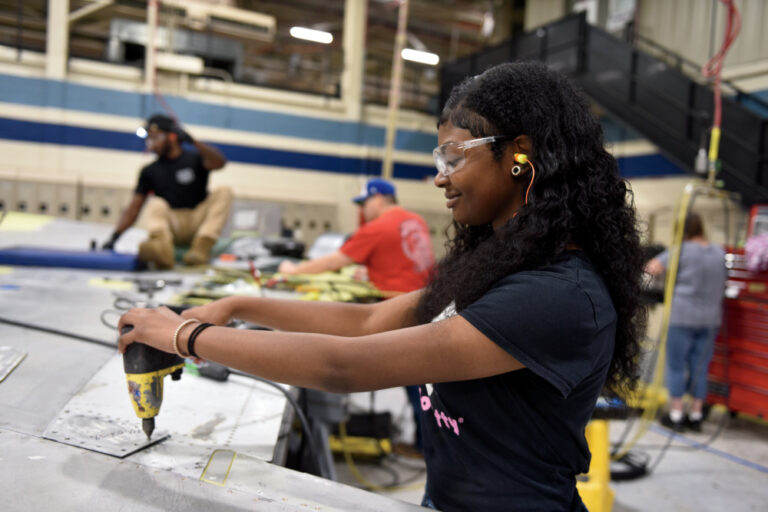
Robins Air Force Base isn’t just a military installation; it’s a dynamic engine of innovation, propelling the entire Robins Region of Georgia into the forefront of defense technology.
With a workforce of over 23,000 military and civilian personnel, Robins AFB is a vital hub for maintaining, repairing and overhauling critical aircraft and systems for the U.S. Air Force.
But beyond its operational role, Robins AFB brings brilliant minds together to tackle the complex challenges facing the modern defense landscape. The collaboration between Robins AFB, the Mercer Engineering Research Center (MERC) and industry leaders like KIHOMAC is creating a powerful synergy, driving innovation and shaping the future of defense technology.
“Robins Air Force Base is proud to call Middle Georgia our home, and working together with community stakeholders is vital to our success,” says Col. Deedrick Reese, Robins Installation commander. “Cultivating strong partnerships ensures shared success among Team Robins and those community partners we view as extensions of Team Robins. Our missions demand expertise in engineering and science, supported by educational partnerships that strengthen our workforce and provide student opportunities.”
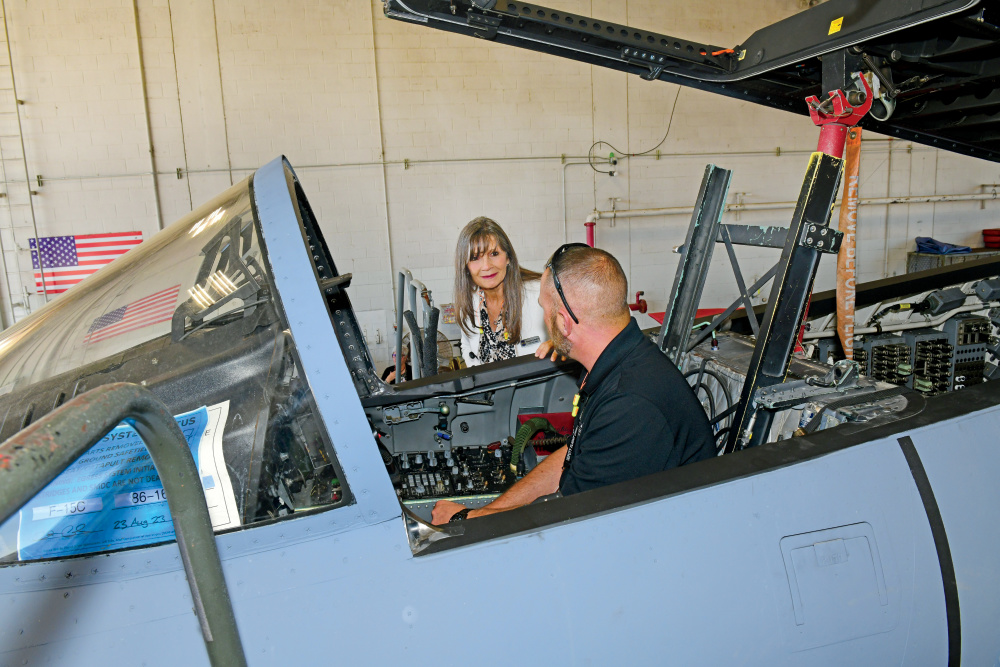
Robins is home to the Warner Robins Air Logistics Complex, responsible for the maintenance and modernization of critical aircraft like the C-130 Hercules and the F-15 Eagle. These projects require creative solutions to complex engineering problems.
To extend the lifespan of the workhorse aircraft C-130, Robins engineers collaborate with MERC to develop advanced solutions for aircraft sustainment, such as predictive maintenance technologies that use artificial intelligence and machine learning to anticipate equipment failures before they occur. This partnership not only enhances the readiness of the Air Force fleet but also reduces costs and downtime.
Robins is also embracing digital engineering to streamline processes and enhance collaboration. By creating digital twins of aircraft and systems, engineers can simulate repairs and upgrades before implementation, reducing costs and accelerating development timelines. This digital transformation is fostering a culture of innovation and efficiency.
Bridging the Gap
“In an era of increasing cyber threats, MERC plays a crucial role in translating theoretical concepts into tangible solutions,” says Jim Hundley, senior director of engineering and programs.
MERC has allocated significant resources to develop a lab with enhanced cyber capabilities related to realistic cyber warfare testing including intrusion detection, malware and suspicious or malicious activity to improve cybersecurity of USAF aircraft.
In addition, its work includes developing cutting-edge AI/ machine learning tools utilizing large language models. For example, Hundley says, MERC developed AeroBERT, a large language model for the C-130 that provides the USAF with the ability to schedule corrective actions before failures occur, avoid unnecessary maintenance, and increase aircraft reliability and readiness.
“MERC has also investigated new technologies, processes and materials that inhibit and/or control corrosion formation on USAF aircraft and equipment,” he says.
Emphasis was placed on materials, the chemical aspects of corrosion, corrosion assessment/prevention, protective coatings, and materials testing and evaluation.
“MERC identified seven technology areas for immediate relief of corrosion maintenance costs,” he says. “The research done by MERC’s corrosion teams alongside Mercer University’s Chemistry Department is laying the groundwork for a fundamental change in the way the USAF inspects aircraft.”
Technological Advancement
Strategic investments from industry leaders like KIHOMAC further solidify the region’s position as a hub of defense innovation. Its 130,000-square-foot facility (opening in 2026) plans to focus on providing engineering, data analytics, manufacturing (metals, wiring, composite), and rotary wing aircraft maintenance repair and overhaul service capabilities to the region.
As a global aerospace and defense company known for its expertise in aircraft maintenance, modification and technology integration, KIHOMAC continues to accelerate the development of commercial and defense technologies.
“We are thrilled to bring this new facility to Warner Robins,” says Ki Ho Kang, CEO and founder of KIHOMAC. “This community represents the spirit of hard work and resilience, and we’re honored to contribute to the region’s growth.”
KIHOMAC’s investments in specialized manufacturing capabilities, like advanced machining, provide critical support for reproducing components for aging defense systems.
“If you can imagine, if you own a classic car ’66 Mustang, and all of a sudden you need a new carburetor, where do you get those?” Ki Ho says. “These are the kind of problems that airplanes have.”
Ki Ho says the ability to prototype and manufacture custom parts enables Robins AFB to respond quickly to mission requirements.
Get to Know the Robins Region
Want to learn more about living and working in the Robins Region? Check out the latest edition of Livability Robins Region, Georgia.