

Country Club District, Kansas City, MO: Historic. Planned. Cohesive.
The Country Club District is one of Kansas City, Missouri’s most iconic residential areas, spanning a collection of neighborhoods south of downtown and centered around the city’s most recognizable commercial hub, the Country Club Plaza. Developed beginning in the early 1900s by J.C. Nichols, the district is widely regarded as one of the first master-planned suburban communities in the United States.
Designed with a cohesive vision that integrated residential streets, landscaped boulevards, and nearby commercial centers, the Country Club District established a model for neighborhood planning that influenced suburban development nationwide. Today, it remains one of Kansas City’s most desirable areas, known for its historic homes, mature tree canopy, and close proximity to parks, cultural institutions, and the Plaza’s dining and shopping scene.
Overall Vibe & Lifestyle
Life in the Country Club District blends residential calm with immediate access to one of Kansas City’s most active lifestyle centers. Residents often structure their routines around the nearby Country Club Plaza, where dining, shopping, and seasonal events create a consistent flow of activity.
The surrounding residential streets, however, maintain a quieter atmosphere defined by established homes and landscaped blocks. This balance allows residents to move easily between neighborhood living and a more urban, walkable experience anchored by the Plaza.
Because of its central location, the district also provides convenient access to Midtown, downtown Kansas City, and major cultural destinations, making it a practical choice for those who want proximity without living directly in the urban core.
Safety & Walkability
The Country Club District is one of Kansas City’s more walkable residential areas, particularly in neighborhoods closest to the Plaza. Sidewalk-lined streets, interconnected blocks, and proximity to parks support walking as part of daily routines.
The Plaza itself functions as a pedestrian-friendly destination, with connected streets, public art, and outdoor gathering spaces that encourage walking between shops, restaurants, and nearby residential areas.
Boulevard systems and nearby trails also connect portions of the district to surrounding neighborhoods, supporting both recreational walking and longer-distance biking routes.
Natural & Built Environment
The district’s landscape reflects its early planned development, with curving streets, landscaped medians, and a mature tree canopy that defines much of the area’s visual character.
Nearby green spaces play a major role in daily life. Jacob L. Loose Park, located just west of the Plaza, provides walking paths, open lawns, a lake, and one of the region’s most recognized rose gardens. The broader Kansas City park and boulevard system also connects the district to additional green spaces throughout the city.
Architecturally, the district maintains a consistent, cohesive feel shaped by early 20th-century planning and long-term preservation.
Design & Architecture
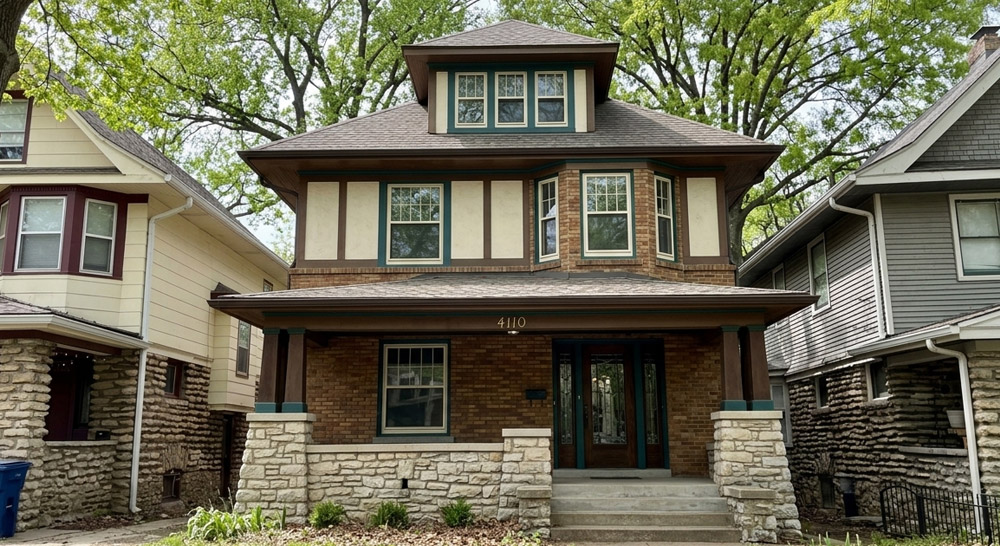
Homes throughout the Country Club District were largely built between the 1910s and 1940s and reflect a range of historic architectural styles. Common designs include Tudor Revival, Colonial Revival, and traditional brick homes, many of which feature detailed masonry, pitched roofs, and original craftsmanship.
The district is known for its architectural consistency, with homes designed to complement one another within a planned streetscape. Features such as front porches, stonework, and mature landscaping contribute to a cohesive residential environment that has remained largely intact over time.
Find a Home in Country Club District
See if Country Club District has your perfect new space in Kansas City
Housing at a Glance
| Metric | Description |
|---|---|
| Type | Primarily single-family homes with some condos and apartments near the Plaza. |
| Size & Layout | Typically 1,500 to 4,000+ square feet. |
| Interior & Exterior Features | Brick and stone exteriors, historic detailing, and mature landscaping. |
Real Estate Snapshot
| Metric | Summary |
|---|---|
| Market Demand | Consistently high due to location, historic character, and Plaza proximity. |
| Inventory | Limited turnover, especially in established sections. |
| Buyer Profile | Professionals, families, and buyers seeking historic homes. |
| Pricing Context | Upper tier within Kansas City residential markets. |
| Investment Pattern | Long-term stability with continued reinvestment in historic properties. |
Homes in the district often retain original architectural features while incorporating modern updates, contributing to sustained demand.
Amenities & Local Conveniences
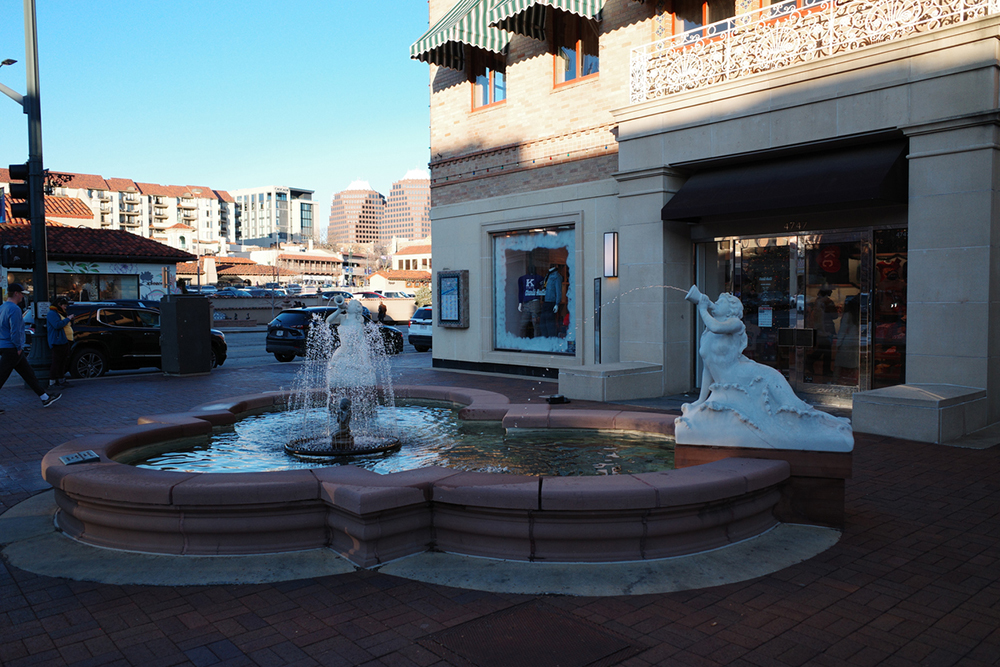
Amenities in the Country Club District are anchored by the Country Club Plaza, one of the most significant retail and dining destinations in the Midwest and a defining feature of daily life in the neighborhood.
The Plaza functions as more than a shopping district — it operates as a walkable lifestyle center where residents regularly dine, shop, and spend time outdoors. Streets are lined with locally recognized restaurants such as Gram & Dun, known for its patio overlooking Brush Creek, and The Classic Cup Café, a long-standing brunch and café destination. Additional dining ranges from upscale steak and seafood restaurants to casual cafés and dessert spots, creating a concentration of options within a compact, pedestrian-friendly area.
Retail within the Plaza includes a mix of national brands and locally owned boutiques, along with specialty shops, galleries, and service-oriented businesses. Seasonal programming plays a major role in the area’s identity, including the Plaza Art Fair and the annual holiday lighting ceremony, both of which draw large crowds and serve as recurring community events.
Beyond the Plaza, nearby corridors along Main Street and Ward Parkway provide additional everyday conveniences, including grocery stores, fitness studios, and neighborhood services. Residents also benefit close proximity to cultural institutions such as Nelson-Atkins Museum of Art and Kemper Museum of Contemporary Art, both located within a short drive or bike ride.
Outdoor recreation is readily accessible at Jacob L. Loose Park, which offers walking trails, open green space, a lake, and one of the region’s most recognized rose gardens.
Together, these amenities create a highly connected environment where dining, shopping, recreation, and cultural experiences are integrated into daily routines, distinguishing the Country Club District from more typical residential neighborhoods.
Cultural destinations are also close by. The Nelson-Atkins Museum of Art and the Kemper Museum of Contemporary Art sit just north of the Plaza, adding to the district’s access to established arts institutions.
Schools & Education
The Country Club District is served primarily by Kansas City Public Schools, with additional access to charter and private education options throughout the surrounding area. Nearby schools include a mix of public programs, charter schools, and long-established private institutions within a short drive of the district.
Because attendance zones and enrollment options can vary by address, families should confirm school assignments using the Kansas City Public Schools school locator tool before making housing decisions.
Commuting & Location
| Destination | Approximate Drive Time |
|---|---|
| Country Club Plaza | 0-5 minutes |
| Downtown Kansas City | 10-15 minutes |
| Crossroads Arts District | 10-15 minutes |
| Kansas City International Airport | 25-30 minutes |
| Swope Park | 10-15 minutes |
Major routes such as Ward Parkway, Main Street, and Brush Creek Boulevard provide direct connections to key areas across Kansas City.
Map of Things To Do in Country Club District, Kansas City
Quirks & Perks
One of the most distinctive aspects of the Country Club District is its role in shaping suburban development in the United States. Its early master-planned design, integration of residential and commercial spaces, and emphasis on aesthetics set a precedent that influenced communities nationwide.
Another defining feature is the immediate access to the Country Club Plaza, which functions not just as a shopping district but as a year-round gathering place with events, public art, and seasonal programming that contribute to the neighborhood’s identity.
Neighborhood Logistics
The Country Club District operates within Kansas City, MO, with municipal services, including police, fire protection, and infrastructure maintenance, provided by the city.
Unlike newer subdivisions, the district comprises multiple historic neighborhoods rather than a single HOA-managed community. Some areas have neighborhood associations, but large-scale homeowners associations are uncommon.
Daily errands, dining, and entertainment are easily handled within the Plaza and surrounding commercial corridors, while the residential streets maintain a quieter, established atmosphere. The result is a neighborhood environment that combines historic planning, architectural consistency, and immediate access to one of Kansas City’s most recognizable destinations.
Explore Kansas City Neighborhoods
Note on imagery: Images marked “AI Generated” are visuals to illustrate the neighborhood homes, atmosphere and architectural style. To protect homeowner privacy, these images are artistic representations and do not depict specific existing properties.