Living in Belmont, NC
Explore Things To Do, Cost of Living, Top Restaurants and More
Why You’ll Love Living in Belmont, NC
Thinking about living in Belmont, North Carolina? This growing Gaston County city combines a walkable historic downtown, river and Lake Wylie access, a private college and a convenient location near Charlotte.
Belmont began as a railroad and textile town, and the compact center still reflects that history in its brick storefronts, mill-era neighborhoods, and community institutions. Today, restaurants, independent shops, new housing, and public events bring steady activity to Main Street.
The city also has an outdoor identity that is unusual for a close-in Charlotte suburb. The Catawba River, Lake Wylie, Daniel Stowe Conservancy and a growing trail network put paddling, biking, walking and gardens within easy reach.
Belmont’s population was estimated at 16,415 in 2025, large enough to support useful amenities but small enough for residents to feel connected to a recognizable community.
Belmont offers a small-city atmosphere without giving up access to the Charlotte metropolitan economy.
Downtown is one of the city’s strongest everyday assets. Residents can walk between restaurants, coffee shops, boutiques, Stowe Park, and seasonal events in a district that feels active but not overwhelming.
Outdoor recreation is woven into the community rather than confined to one destination. Riverfront parks, mountain bike trails, botanical gardens, neighborhood green space and Lake Wylie create options for both quick outings and full weekends.
Belmont Abbey College adds cultural, educational, and architectural character, while a new hospital and established local organizations make the city increasingly self-sufficient.
Housing ranges from older homes near downtown to porch-forward planned communities and gated waterfront properties, giving buyers several distinct versions of Belmont life.
Quick Facts About Belmont, NC
- Average Commute
- 25 minutes
- Median Home Value
- $410,620
- Median Household Income
- $159,505
- Total Population
- 18,728
- Median Property Tax
- $3,332
- Median Monthly Rent
- $1,307
Where Is Belmont, NC?
Belmont is located in eastern Gaston County, approximately 15 miles west of Uptown Charlotte and just south of I-85 at Exit 27.
The city sits between the Catawba River and the South Fork Catawba River, with Lake Wylie along its southern side. Nearby communities include Cramerton, McAdenville, Mount Holly, Lowell, and Gastonia. I-85 provides the primary route toward Charlotte and Charlotte Douglas International Airport.
That position makes Belmont practical for commuters while preserving direct access to Gaston County employers, small downtowns, parks, and waterfront recreation. As anywhere in the Charlotte region, travel times can change substantially during rush hour.
Map of Belmont, NC
Where to Live in Belmont
Belmont’s neighborhoods range from historic streets near downtown to newer planned communities and waterfront enclaves near Lake Wylie.
McLean is a master-planned area on the city’s southern side near Daniel Stowe Conservancy and Lake Wylie. Its communities offer newer homes and a more suburban setting with recreation close by.
Eagle Park emphasizes front porches, tree-lined streets and traditional architecture in a location convenient to central Belmont. Reflection Pointe is a gated Lake Wylie community with waterfront homesites, a clubhouse, pool, courts, walking paths and a community beach.
Closer to downtown, buyers may find bungalows, cottages, renovated older homes, townhomes and infill construction. Prices, homeowners association rules, school assignments and access to the water vary, so prospective residents should compare each neighborhood on its own terms.
Local Weather and Climate
Belmont has a humid subtropical climate with four recognizable seasons.
Summers are hot and humid, with afternoon temperatures commonly reaching the upper 80s and 90s. Thunderstorms are frequent during the warmer months, and residents should expect a long season for air conditioning.
Winters are generally mild, although short cold snaps, light snow, and occasional ice are possible. Spring brings flowering trees and rapidly warming days, while fall is often comfortable and colorful.
Rain falls throughout the year, supporting Belmont’s gardens and green landscape. The long outdoor season allows residents to use trails, parks, and the rivers nearly every month.
Average Temperatures
71 high / 49 low
Average Annual Rainfall
42 in
Average Annual Snowfall
3 in
Things To Do
Belmont’s attractions center on its historic downtown, gardens, college campus, parks and community events.
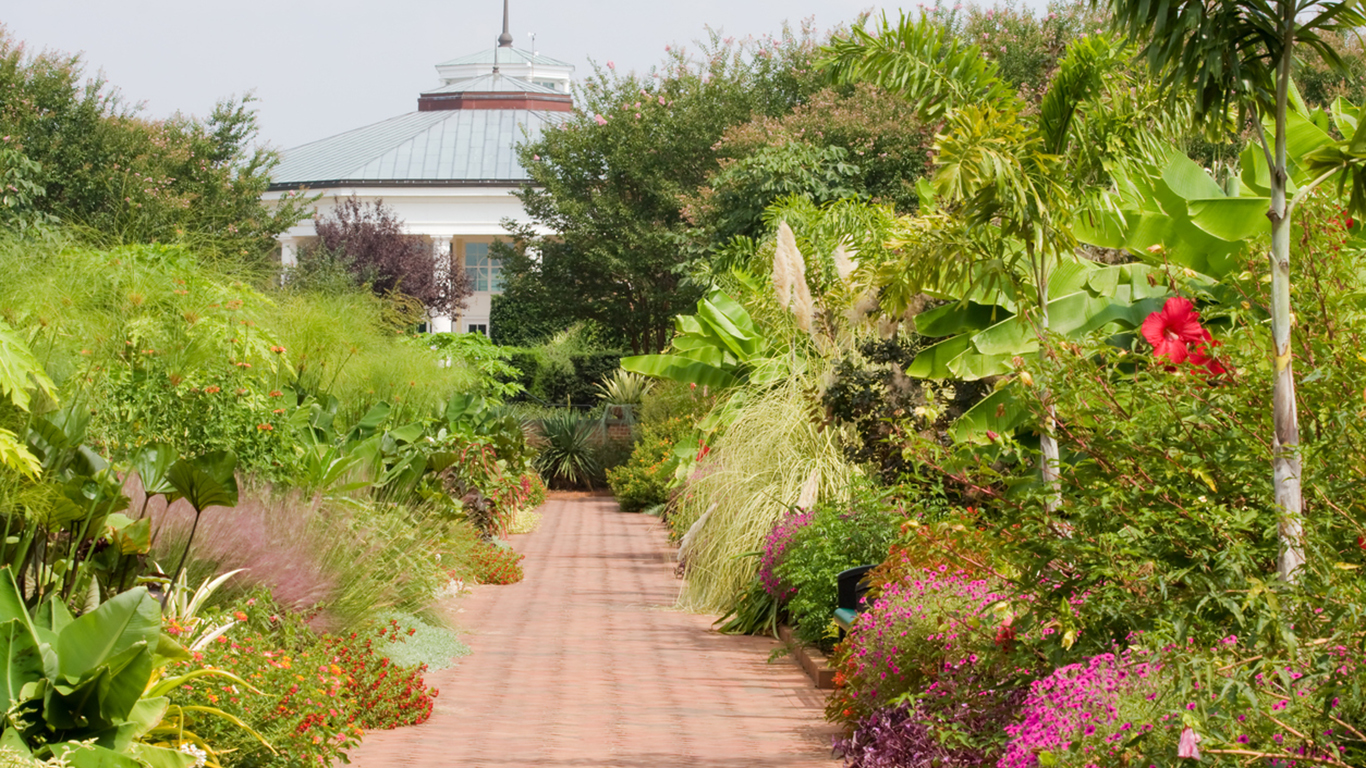
Daniel Stowe Conservancy, home to Daniel Stowe Botanical Garden, combines cultivated gardens, seasonal displays, educational programs, a cafe, and more than eight miles of public trails. It is one of the city’s signature destinations.
Downtown visitors can follow the Trains on Main public art trail, browse local shops, visit the Belmont Historical Society, or relax in Stowe Park. At Belmont Abbey College, the basilica and historic campus provide another distinctive place to explore.
Annual and recurring events include the Garibaldi Festival, Friday Night Live, Movies in the Park, BooFest, and holiday celebrations. Downtown businesses operated by Holy Angels – including Cherubs Cafe and Market on Main – pair a local outing with a social mission.
Outdoor Life and Green Space
Belmont’s location between rivers and beside Lake Wylie gives outdoor recreation an important role in the city’s identity.
Kevin Loftin Riverfront Park provides Catawba River access, trails, picnic areas and a launch point for kayaking and paddleboarding. It is one of the most direct ways to experience the river that helped shape the area.
Rocky Branch Park spans approximately 55 acres between Belmont and Cramerton. A main trail and single-track routes support walking, running, and mountain biking as part of the Carolina Thread Trail network.
Stowe Park serves as downtown Belmont’s green gathering space with a playground, short walking paths, an amphitheater and room for concerts and festivals. Neighborhood parks provide additional everyday play space.
South of downtown, the Stowe Connector and Duke Kimbrell Trail expand the walking and biking network around Daniel Stowe Conservancy and along Lake Wylie. Boating and fishing add even more options for residents with access to the lake.
Food, Drink, and Neighborhood Flavor
Belmont’s dining scene is concentrated enough to explore on foot downtown but varied enough to support breakfast, date nights, casual meals and late-afternoon drinks.
Nellie’s Southern Kitchen is known for Southern comfort food and live music, while The String Bean combines a neighborhood restaurant with a market and butcher counter.
Old Stone Steakhouse occupies Belmont’s former police station and jail, giving its dining room a memorable connection to local history. Honeycomb Cafe and Two Chicks Sandwiches and Scoops cover breakfast, lunch, sweets and easygoing meals.
Jekyll & Hyde Taphouse and Grill adds a theatrical pub setting, and Cherubs Cafe serves sandwiches, salads and baked goods while supporting Holy Angels‘ mission.
The common thread is a restaurant culture that feels closely tied to the city. Historic buildings, independent ownership, sidewalk activity and community events make eating out part of the broader downtown experience.
Economy and Jobs
Belmont’s economy has moved well beyond the textile industry that shaped its early growth.
Healthcare, education, retail, restaurants, professional services, construction, hospitality, and public-sector work now contribute to the local employment base. Access to I-85 also connects residents and businesses to the larger Charlotte regional market.
Major local institutions include CaroMont Health, Belmont Abbey College, and Holy Angels, a nonprofit that supports children and adults with intellectual developmental disabilities and operates several mission-driven downtown businesses.
Independent shops, restaurants, medical practices, and service businesses benefit from downtown activity and continued residential growth. Tourism connected to Daniel Stowe Conservancy, Lake Wylie, and community events adds another layer to the local economy.
Many Belmont residents commute to jobs in Charlotte, the airport area, Gastonia, and other nearby employment centers. That mix allows households to combine a smaller hometown setting with access to a broad metropolitan job market.
Learning and Education
Belmont residents have access to public schools, specialized programs, dual enrollment, and a four-year college within the city.
Public school students are served by Gaston County Schools, which offers traditional campuses, magnet and academy options, Career and Technical Education, Advanced Placement courses, and opportunities to earn college credit.
Schools located in Belmont include Belmont Central Elementary School, Belmont Middle School, and South Point High School. Belmont Middle includes arts, athletics, career exploration, and select high school credit courses.
South Point High offers fine arts, Career and Technical Education, Navy JROTC, athletics, and College Now dual-enrollment pathways through Gaston College. Families should verify current attendance boundaries and program admission requirements directly with the district.
Belmont Abbey College, founded by Benedictine monks in 1876, is a private Catholic liberal arts college offering undergraduate and graduate programs. Its historic campus, monastery, and Mary Help of Christians Basilica are central to Belmont’s educational and cultural identity.
Healthcare
Belmont now has a full-service hospital within the city, a significant addition to its day-to-day infrastructure.
CaroMont Regional Medical Center-Belmont opened in January 2025 near I-85. The 54-bed hospital includes a 24-hour emergency department, inpatient care, surgery, maternity services, imaging, and diagnostic services.
CaroMont Health also operates physician practices and outpatient services throughout Gaston County. Routine care is available from local primary care, dental, rehabilitation, and specialty providers in Belmont and neighboring communities.
For additional specialized treatment, residents can reach CaroMont Regional Medical Center in Gastonia and major Charlotte-area systems such as Atrium Health and Novant Health.
The Soul of the City
Belmont’s character comes from the way it layers new growth onto a strong sense of place.
The city developed around the railroad and textile mills; by the 1930s, more than 20 mills operated in the area. Brick commercial buildings, mill villages, and railroad references still make that history visible.
Belmont Abbey adds another enduring influence. The college, monastery, and basilica connect the city to a Benedictine tradition that dates to 1876 and gives Belmont an identity unlike most Charlotte suburbs.
At the same time, new neighborhoods, a modern hospital, trail investments and a lively restaurant scene show a city adapting to rapid regional growth. Organizations such as Holy Angels keep service and inclusion at the center of local life.
The result is a community that feels historic without being frozen in the past – a place where residents can walk downtown, reach Charlotte, paddle a river, and still recognize the institutions that hold the city together.
Belmont, NC Frequently Asked Questions (FAQ)
Belmont is known for its historic downtown, Belmont Abbey College, Daniel Stowe Conservancy, Lake Wylie and Catawba River access, and its railroad and textile heritage.
Belmont can be a strong fit for residents who want a walkable small-city center, outdoor recreation, varied neighborhoods, and access to Charlotte. Housing costs, commute traffic and neighborhood rules should be weighed against those advantages.
Belmont is approximately 15 miles west of Uptown Charlotte. The trip can be relatively short in light traffic, but I-85 and airport-area congestion can lengthen peak-hour commutes.
Residents can explore downtown shops and restaurants, attend festivals, visit Daniel Stowe Conservancy or Belmont Abbey College, bike at Rocky Branch Park, paddle from Kevin Loftin Riverfront Park, and enjoy Lake Wylie.
Yes. The U.S. Census Bureau estimated Belmont’s population at 16,415 in 2025, an increase of 9.4% from its 2020 population base, while new housing and public investments continue to reshape the city.