Downtown and West Avenue District, Kannapolis, NC: A Walkable Mixed-Use Core
Downtown Kannapolis and the West Avenue District form Kannapolis, North Carolina’s most concentrated mixed-use neighborhood. Apartments, townhomes and older detached houses sit near the North Carolina Research Campus, Atrium Health Ballpark, the Amtrak station and a growing collection of restaurants and entertainment venues.
The district was rebuilt after the decline of Cannon Mills, with Kannapolis using former mill property to create public spaces, new housing and a modern employment center. Today, downtown offers the city’s strongest park-once lifestyle: Residents can walk from home to dinner, baseball, movies, concerts or the train station. Grocery shopping, schools and most jobs elsewhere in the region still require a car.
Overall Vibe and Lifestyle
Daily life is shaped by public activity. Cannon Ballers baseball fans fill the sidewalks on summer evenings, concerts bring crowds to the Swanee Theatre, and restaurants and bars keep West Avenue active after the research campus workday ends.
The pace changes considerably by time and season. Weekday mornings can feel quiet, while baseball games, festivals, concerts and Friday or Saturday evenings bring more pedestrians, music and traffic. Residents gain immediate access to entertainment but live closer to fireworks, amplified sound, deliveries and temporary road closures.
The district is best suited to people who value activity and convenience more than a large private yard. It works particularly well for North Carolina Research Campus employees and others who can walk to work.
Walkability and Mobility
Downtown offers the most practical walkability in Kannapolis. Wide sidewalks and marked crossings connect central apartment buildings with restaurants, West Avenue Park, Atrium Health Ballpark, the Gem and Swanee theaters, City Hall, the research campus and the Amtrak station.
Walkability is strongest from VIDA, Stadium Lofts, 200 Main and other housing inside the mixed-use core. Pennant Square and surrounding residential streets remain close to downtown, although the route may include larger crossings or less consistent sidewalks.
Residents can complete many recreational trips without a car, but most still drive for full grocery runs, school transportation, medical appointments, and employment outside central Kannapolis. The free West Avenue Express operates on selected evenings from spring through December, connecting downtown parking areas with West Avenue destinations.
Natural and Built Environment
Public space is integrated directly into downtown streets. West Avenue Park encompasses West Avenue and portions of surrounding streets rather than occupying a separate fenced parcel. Fountains, urban swings, stages, a putting green, dining areas, public art, and landscaped seating create small gathering places throughout the district.
Atrium Health Ballpark is similarly connected to the neighborhood. The stadium faces downtown businesses and apartments instead of sitting behind a large, isolated parking area. The North Carolina Research Campus adds formal lawns and institutional architecture beside the entertainment district.
Residents seeking larger recreational spaces can reach Village Park, Veterans Park and the Bakers Creek Greenway from downtown. The neighborhood itself, however, is defined by structured urban landscaping rather than wooded buffers or extensive natural space.
Design and Architecture
Downtown architecture reflects Kannapolis’ textile history and recent redevelopment. Older commercial blocks feature brick storefronts and compact buildings, while the restored Gem Theatre preserves its marquee, balcony, and Art Deco character. The Swanee Theatre represents adaptive reuse, transforming another historic movie house into a live-performance venue.
New housing follows a contemporary urban format. VIDA provides studios through three-bedroom apartments with a pool, fitness center and shared outdoor spaces. Stadium Lofts offers studios through two-bedroom apartments directly beside the ballpark, while 200 Main adds 97 studio, one- and two-bedroom residences with ground-floor retail and modern shared amenities. Pennant Square contains multistory townhomes with rear-loading garages.
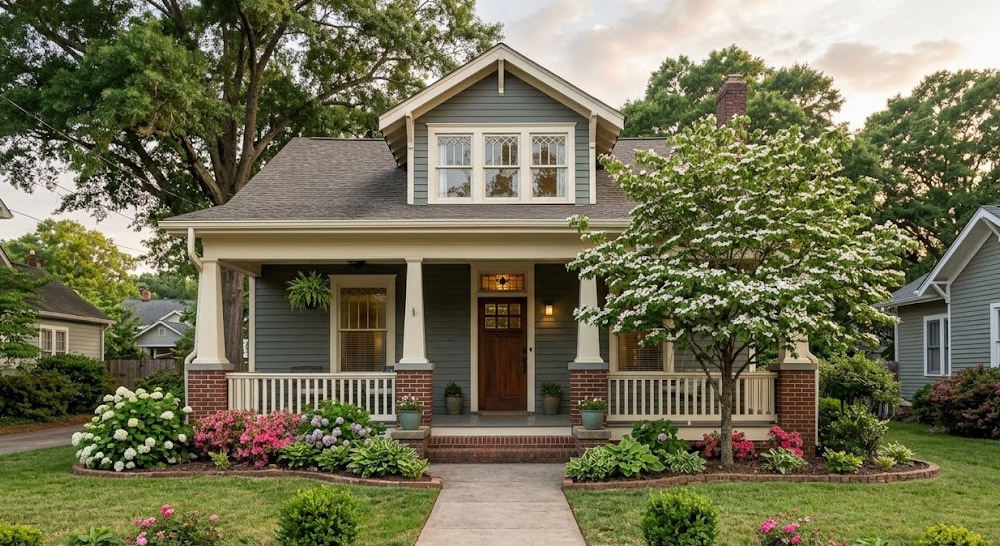
Older cottages, mill-era houses, and brick ranches remain on surrounding residential streets, adding detached-home options within reach of downtown.
Housing at a Glance
Downtown housing combines historic detached homes with a wave of contemporary apartments and townhomes built during the 2020s.
| Metric | Description |
|---|---|
| Property types | Apartments, multistory townhomes, and older detached houses. |
| Construction period | Historic housing and commercial buildings alongside major residential development from the 2020s. |
| Common styles | Contemporary apartments, urban townhomes, cottages, mill-era houses, and brick ranches. |
| Typical features | Open layouts, in-unit laundry, shared amenities, controlled access, balconies, garages, patios, or small yards. |
| Community structure | Building- or association-specific management without a districtwide HOA. |
Real Estate Snapshot
Downtown is primarily a rental market. VIDA, Stadium Lofts and 200 Main provide the district’s broadest housing availability, with building amenities, views, floor plans and parking arrangements differentiating the options.
Ownership opportunities are less consistent. Pennant Square townhomes enter the market through resale, while detached houses vary considerably in age, layout and condition. Demand is shaped less by lot size than by walkability, modern amenities and proximity to West Avenue activity.
| Metric | Summary |
|---|---|
| Market demand | Supported by walkability, downtown entertainment, modern housing, and research-campus employment. |
| Inventory | Rental availability is broader than ownership inventory. |
| Housing range | Studios and larger apartments, multistory townhomes, and older detached houses. |
| Pricing context | Building amenities, views, parking, private outdoor space, renovation quality, and location shape pricing. |
| Ownership considerations | Fees, parking, pet policies, maintenance, and outdoor space vary by building or property type. |
Amenities and Local Conveniences
Atrium Health Ballpark is downtown’s most visible attraction, hosting Kannapolis Cannon Ballers baseball games, fireworks and community events. The Gem Theatre shows movies in a restored single-screen setting, while the Swanee Theatre presents concerts, productions and other live programming.
West Avenue’s restaurants and social venues include Chophouse 101, Towel City Tavern, The Bank Food Hall, Sabor Latin Street Grill, Old Armor Beer Company, Tipsy Hare Ciderworks and West Loop Local. Editions Coffee Shop and Bookstore and My Sister’s Place Ice Cream & Fudge add useful daytime and family-oriented stops. Kingpin Underground provides duckpin bowling beneath the brewery and cidery complex.
The seasonal Kannapolis Farmers Market brings produce, meat, eggs, baked goods and prepared food to the district. Downtown shops concentrate on books, gifts, local merchandise and specialty retail rather than major household shopping. A full-service grocery store is not currently located within the immediate West Avenue core.
Kannapolis’ downtown social district allows drinks purchased from participating businesses to be carried in approved containers within designated public areas.
Schools and Education
Kannapolis City Schools serve most central Kannapolis properties. Elementary assignments vary within the district, while A.L. Brown High School serves the city’s public high school students. Families should confirm the assignment for the exact address using the district’s current school information.
The Kannapolis branch of the Cabarrus County Public Library System is located near downtown and provides children’s, teen and adult programming. Rowan-Cabarrus Community College maintains facilities connected with workforce and technical education, while the North Carolina Research Campus hosts university-affiliated scientific programs and the college’s Advanced Technology Center.
Commuting and Location
Downtown sits west of Interstate 85 and immediately north of Concord. Main Street, Cannon Boulevard, Dale Earnhardt Boulevard and Lane Street connect the district with surrounding neighborhoods and regional routes.
The Kannapolis Amtrak Station is the neighborhood’s most distinctive transportation asset. Piedmont and Carolinian trains connect Kannapolis with Charlotte, Salisbury, Greensboro, Durham, Cary and Raleigh, with the Carolinian continuing to destinations farther north.
Times vary with traffic, construction, weather, downtown events and the home’s exact location.
| Destination | Approximate Drive Time |
|---|---|
| Atrium Health Ballpark and West Avenue | Walkable from central downtown housing |
| Kannapolis Amtrak Station | Walkable from much of the district |
| Interstate 85 | 5-12 minutes |
| Atrium Health Cabarrus | 10-20 minutes |
| Uptown Charlotte | 30-50 minutes |
| Charlotte Douglas International Airport | 35-55 minutes |
Map of Things To Do in Downtown and West Avenue District, Kannapolis
Quirks and Perks
Downtown’s most distinctive feature is that the streetscape itself functions as a public park. Residents encounter fountains, swings, stages and gathering areas as part of an ordinary walk rather than entering a separate recreational facility.
Passenger rail is another unusual advantage. Few suburban Charlotte neighborhoods allow residents to walk from home to an Amtrak platform and travel directly to Charlotte or Raleigh.
The ballpark provides entertainment and a strong neighborhood identity, but nearby residents also experience game-night crowds, lights, announcements and fireworks. A stadium-facing apartment can feel festive during the season and considerably less quiet than a courtyard- or street-facing unit.
Neighborhood Logistics
Downtown does not have one homeowners association or shared management system. Apartment policies, required fees, parking arrangements, package services, pet rules and amenity access depend on the individual building.
Pennant Square has its own association structure, while detached houses operate more like conventional residential properties. Public parking is distributed among street spaces, surface lots and downtown decks, with procedures sometimes changing during games and major events.
Residents should expect periodic street closures, heavier pedestrian traffic and event noise. In exchange, they gain the ability to walk directly into Kannapolis’ restaurants, public spaces, entertainment venues and passenger-rail network.
Explore Kannapolis Neighborhoods
Note on imagery: Images marked “AI Generated” are visuals to illustrate the neighborhood homes, atmosphere and architectural style. To protect homeowner privacy, these images are artistic representations and do not depict specific existing properties.