

Forest Park and Jackson Park, Kannapolis, NC: Established Central Neighborhoods
Forest Park and Jackson Park are established residential areas east of central Kannapolis, North Carolina. Older detached houses, mature trees, neighborhood schools and rental properties place residents close to Downtown Kannapolis, Cannon Boulevard, Lane Street and Interstate 85 without putting them directly inside the West Avenue entertainment district.
These are separate areas rather than one formally defined subdivision. Boundaries vary among maps and real estate platforms, and no single homeowners association governs the combined neighborhood. Housing, sidewalks and street character can change within a few blocks, but the areas share a practical location and an established residential feel.
Overall Vibe and Lifestyle
Daily life is organized around residential streets, elementary schools and public amenities rather than a private clubhouse. Forest Park Elementary and Jackson Park Elementary bring school-day activity to nearby blocks, while downtown restaurants, baseball and entertainment remain a short drive away.
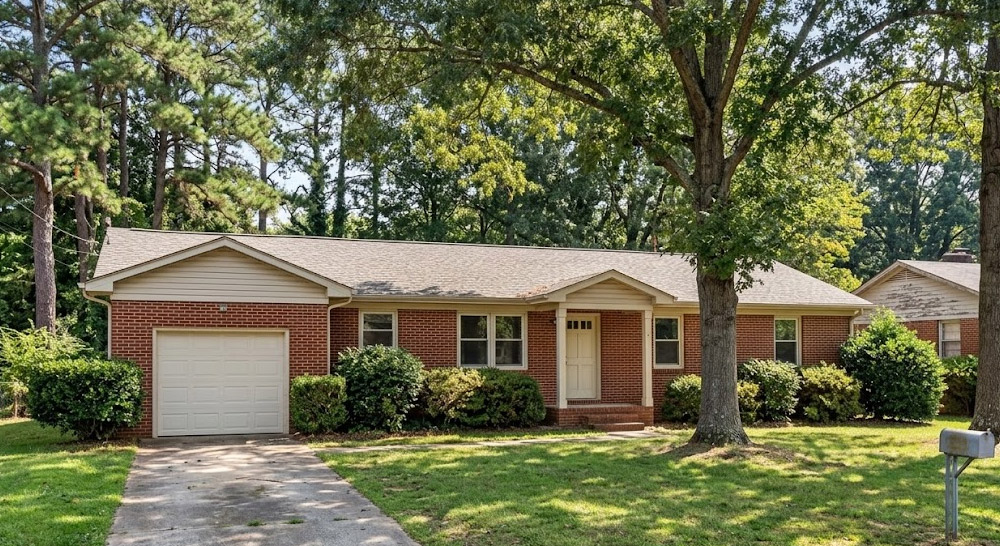
The neighborhoods feel less coordinated than newer master-planned communities. Houses were built and renovated at different times, and individual landscaping, fencing and exterior choices create a varied streetscape. Residents gain more architectural individuality but fewer shared amenities or neighborhood-wide standards.
Forest Park and Jackson Park suit households that value a central location, manageable lots and established surroundings. They also support a mix of owners and renters, producing a broader housing environment than a subdivision designed around one type of property.
Walkability and Mobility
Walking is primarily recreational or school-oriented. Some streets have sidewalks, short setbacks and straightforward connections to nearby schools. Others have incomplete pedestrian infrastructure or require crossings along busier roads.
Kannapolis has identified additional pedestrian facilities and warning signs near Forest Park Elementary in its Safety Action Plan, but proposed improvements should not be treated as completed infrastructure.
Jackson Park has a useful public-transportation connection. Rider Transit’s Blue Route stops at Jackson Park/McCombs and connects with A.L. Brown High School, the Kannapolis Amtrak station, the YMCA and Senior Center, U.S. 29 shopping and the Rider Transit Center in Concord. Most errands and regional trips still require a car.
Natural and Built Environment
Mature trees and established residential plantings distinguish Forest Park and Jackson Park from recently cleared developments. Conventional front and rear yards create separation between houses, while wooded edges and older landscaping provide shade on selected streets.
The built environment reflects development over multiple decades. Compact one-story homes may share a block with larger houses, duplexes, apartments or newer infill construction. Lots vary in slope, tree cover and setback, giving the area a less uniform appearance than a planned subdivision.
Green space comes primarily from private yards, school grounds and nearby public parks. The neighborhoods do not contain a private lake, golf course or association-owned trail system.
Design and Architecture
One-story brick ranches are among the most common housing styles. Other properties include cottages, traditional frame houses, split-level homes, manufactured housing, duplexes, townhomes and newer infill residences.
Older houses often have two to four bedrooms, divided living areas, modest kitchens, carports and conventional yards. Renovated homes may feature opened kitchens, updated bathrooms and converted porches or carports. Newer construction generally introduces open layouts, larger kitchens and more bathrooms.
Exterior materials include brick, painted masonry, vinyl siding and fiber cement. Outdoor spaces may include covered porches, decks, patios, fenced yards and detached storage buildings. Garages are less consistent than in newer suburban communities, with many properties relying on carports or driveways.
Housing at a Glance
Housing in Forest Park and Jackson Park spans several decades of construction and a wide mix of property types.
| Metric | Description |
|---|---|
| Property types | Detached houses, manufactured homes, duplexes, townhomes, and apartments. |
| Construction period | Developed across multiple decades, with older housing and newer infill. |
| Common styles | Brick ranches, cottages, traditional frame houses, split-level homes, and contemporary infill. |
| Typical features | Divided or renovated open layouts, porches, carports, patios, fenced yards, and mature landscaping. |
| Community structure | No combined HOA; individual attached communities or subdivisions may have separate management. |
Real Estate Snapshot
Forest Park and Jackson Park generally provide more modestly scaled housing than many newer Kannapolis communities. Smaller detached houses, duplexes and apartments create several entry points, while renovated homes and new infill offer updated alternatives.
Availability is property-specific because the neighborhood boundaries are informal and the housing mix is broad. A renovated ranch, an older cottage and a newer attached residence may appeal to different households even when located near one another.
| Metric | Summary |
|---|---|
| Market demand | Supported by central Kannapolis access, established housing, and varied property types. |
| Inventory | Usually limited and highly dependent on property type and exact location. |
| Housing range | Compact detached houses through renovated homes, infill construction, townhomes, and apartments. |
| Pricing context | Size, updates, parking, bedroom count, lot setting, and proximity to schools or downtown shape pricing. |
| Ownership considerations | HOA obligations are uncommon for older detached homes but may apply to attached or infill communities. |
Amenities and Local Conveniences
Forest Park Elementary and Jackson Park Elementary function as neighborhood anchors. School grounds and youth activities create regular community activity, while marked walking routes provide nearby opportunities for exercise.
Walter M. Safrit Park offers a playground, picnic shelter, softball fields, a full-size soccer field and a half-mile paved walking path. Village Park is a larger family destination with playgrounds, a splash pad, carousel, Rotary Express Train and amphitheater programming.
Downtown Kannapolis is close enough for routine use rather than occasional day trips. Residents can attend Cannon Ballers games at Atrium Health Ballpark, watch movies at the Gem Theatre, see performances at the Swanee Theatre or visit West Avenue’s restaurants and public spaces.
Cannon Boulevard, Lane Street and U.S. 29 provide grocery stores, pharmacies, casual dining and everyday services. The commercial environment is vehicle-oriented, but residents do not need to cross the full city for routine errands. Atrium Health Cabarrus in neighboring Concord provides the nearest major hospital.
Schools and Education
Kannapolis City Schools serves the core Forest Park and Jackson Park areas. Likely assignments include Forest Park Elementary or Jackson Park Elementary, Kannapolis Middle School’s separate sixth-grade and seventh- and eighth-grade campuses, and A.L. Brown High School. Families should confirm assignments directly with the district.
Jackson Park Elementary offers Global Studies and Spanish Dual Language Immersion programs. Magnet participation requires an application, and space may be limited. Forest Park Elementary emphasizes whole-child development through academic instruction, relationships and an inclusive school environment.
Rowan-Cabarrus Community College maintains workforce and technical-education facilities in Kannapolis, including the Advanced Technology Center at the North Carolina Research Campus.
Commuting and Location
The neighborhoods sit near central and eastern Kannapolis, with convenient access to Downtown Kannapolis, Interstate 85 and Concord. The location is particularly practical for employment in Kannapolis, downtown Concord and along the interstate corridor.
The Blue Route provides an alternative for selected local trips from the Jackson Park side, including connections to the Amtrak station and Rider Transit Center.
Travel times vary with school traffic, construction, interstate conditions and the property’s exact location.
| Destination | Approximate Drive Time |
|---|---|
| Downtown Kannapolis and West Avenue | 5-10 minutes |
| Interstate 85 | 5-12 minutes |
| Atrium Health Cabarrus | 10-20 minutes |
| Downtown Concord | 15-25 minutes |
| Uptown Charlotte | 30-50 minutes |
| Charlotte Douglas International Airport | 35-55 minutes |
Map of Things To Do in Forest Park and Jackson Park, Kannapolis
Quirks and Perks
The most useful perk is the balance between residential separation and downtown access. Residents can reach baseball, restaurants, concerts and community events within minutes without living directly beside the ballpark, nightlife or downtown festivals.
Public transit is another unusual advantage for suburban Kannapolis. The Jackson Park/McCombs stop provides a direct connection with the Amtrak station, high school, YMCA and shopping along U.S. 29.
The area’s variety is also part of its identity. Smaller ranches, cottages, rentals and new infill can occupy nearby blocks, creating more housing choice but less architectural consistency. Informal neighborhood boundaries mean that property addresses are more reliable than listing labels when distinguishing Forest Park from Jackson Park.
Neighborhood Logistics
Forest Park and Jackson Park do not share a master homeowners association or private amenity system. Older detached houses generally operate independently, while townhomes, apartments and newer infill communities may have their own management or association structures.
Parking varies by property. Some homes have garages or carports, while others use private driveways or limited street parking. Blocks closest to the elementary schools experience more traffic during arrival and dismissal.
The neighborhoods’ practical appeal comes from their central location, established housing and access to public parks, schools, transit and downtown Kannapolis rather than private recreation or a uniform community design.
Explore Kannapolis Neighborhoods
Note on imagery: Images marked “AI Generated” are visuals to illustrate the neighborhood homes, atmosphere and architectural style. To protect homeowner privacy, these images are artistic representations and do not depict specific existing properties.