
University of New Hampshire Is Making Waves in the Seafood Industry
Sponsored by: University of New Hampshire
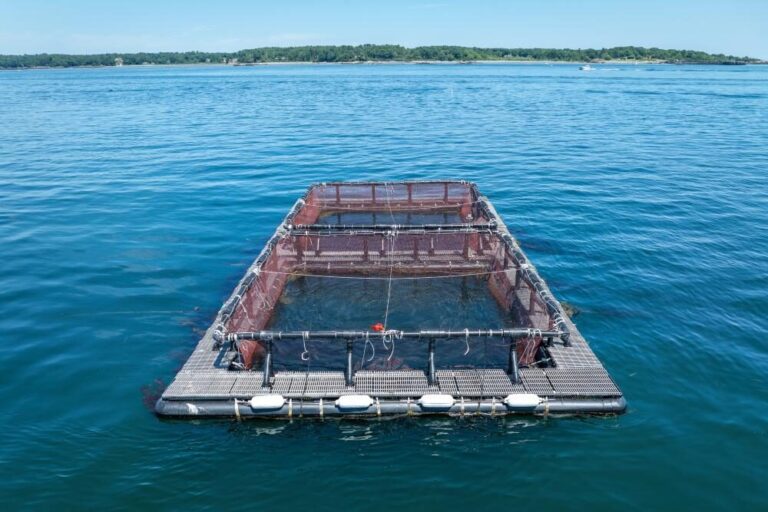
In recent years, New Hampshire’s seafood industry has been dominated by lobster fishing and oyster aquaculture. But the University of New Hampshire (UNH) is making waves with the production of a new aquaculture commodity – steelhead trout.
“At UNH, we’re trying to break ground on community-based seafood production at the grassroots level,” says David Fredriksson, professor of Ocean Engineering and director of Sustainable Seafood Systems at UNH. “Fifty years ago, the largest fisheries were pollock, lobster and cod. Now lobster is pretty much the only fishery in the area, which indicates the need for more aquaculture.”
In 2023 after years of preliminary work, a team from UNH launched a small fish production system called the AquaFort – a small floating pen in Portsmouth Harbor – where they began production of steelhead trout, a type of rainbow trout. Now in its third year of production, the system is producing up to 20,000 pounds of steelhead trout annually.
“We hope to make around $100,000 a year from the steelhead trout, and that’s only 4,000 fish,” Fredriksson says. “We sell it to local restaurants, and we have a smoked product too. We are trying to diversify the seafood products available in New Hampshire.”
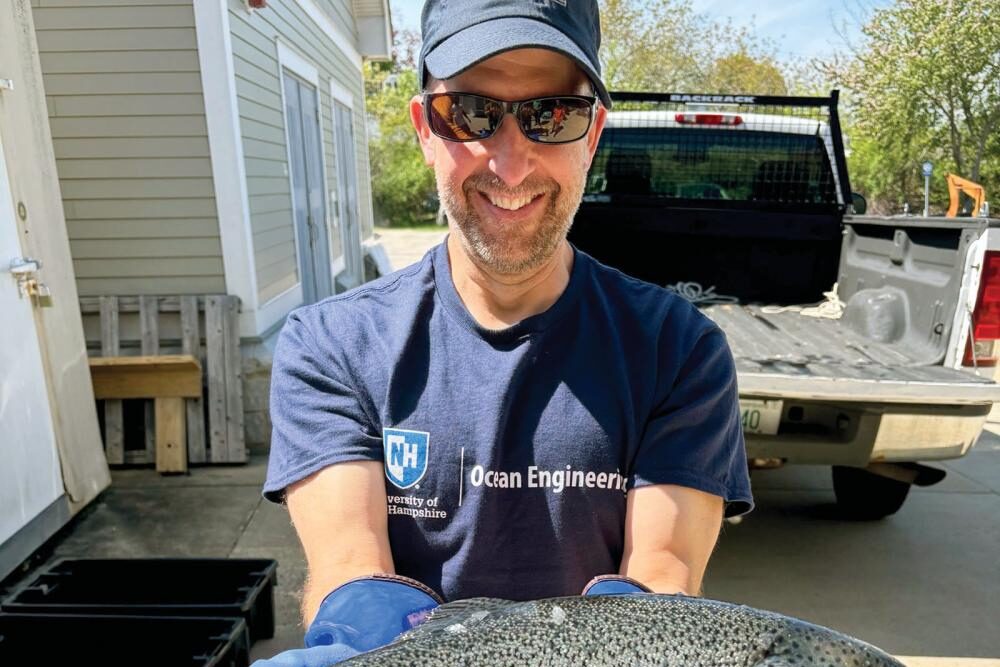
UNH staff members monitor and feed the trout daily alongside graduate students and undergraduate students taking courses in Ocean Engineering and Marine Biology. Students in the business college are also getting involved with marketing and distribution of the trout.
“We are open to having students of all backgrounds involved because it’s a multidisciplinary effort,” Fredriksson says. “We’re also working with the Sustainability Institute here at UNH to look at life cycle analysis of the trout and other sustainable practices.”
In its first three years, the program has already caught the attention of coastal universities in other states. UNH is now transferring their sustainable seafood techniques to the Gulf Coast by working with the Dauphin Island Sea Laboratory and the University of Southern Mississippi.
“We just put in a new AquaFort south of Mobile Bay with a focus on Gulf species including red drum, oysters and a red seaweed called gracilaria,” Fredriksson says. “It’s the same scale of operation we have at UNH, but the species, culture, seafood distribution and products will be different.”
In future years, the program will have a global impact by expanding abroad to areas where there is food insecurity.
“We’re just getting started,” Fredriksson says.
For more information about the University of New Hampshire, visit unh.edu.
Get to Know Greater Portsmouth, New Hampshire
Want to learn more about living and working in the Greater Portsmouth, NH, area? Check out the latest edition of Livability Greater Portsmouth, New Hampshire.