
SC Governor’s School for Agriculture at John de la Howe Prepares the Next Generation of Ag Professionals

South Carolina’s agricultural industry is a cornerstone of the state’s economy, and the SC Governor’s School for Agriculture at John de la Howe is preparing the next generation of leaders to ensure its future success. Nestled on more than 1,300 acres in McCormick County, this state-funded residential high school is setting a high standard for agriculture education in Western South Carolina and beyond.
Seeds of Success
“Our mission is to provide quality agriculture education that will enable students to become the state’s future leaders in agribusiness, business and education,” says Kinsley Miller, director of outreach for SC Governor’s School for Agriculture at John de la Howe. “Students receive hands-on training in agriculture, agribusiness, forestry, land management, food science and more. All of this is focused on meeting the needs of modern farms and growing the future leaders in South Carolina’s largest industry.”

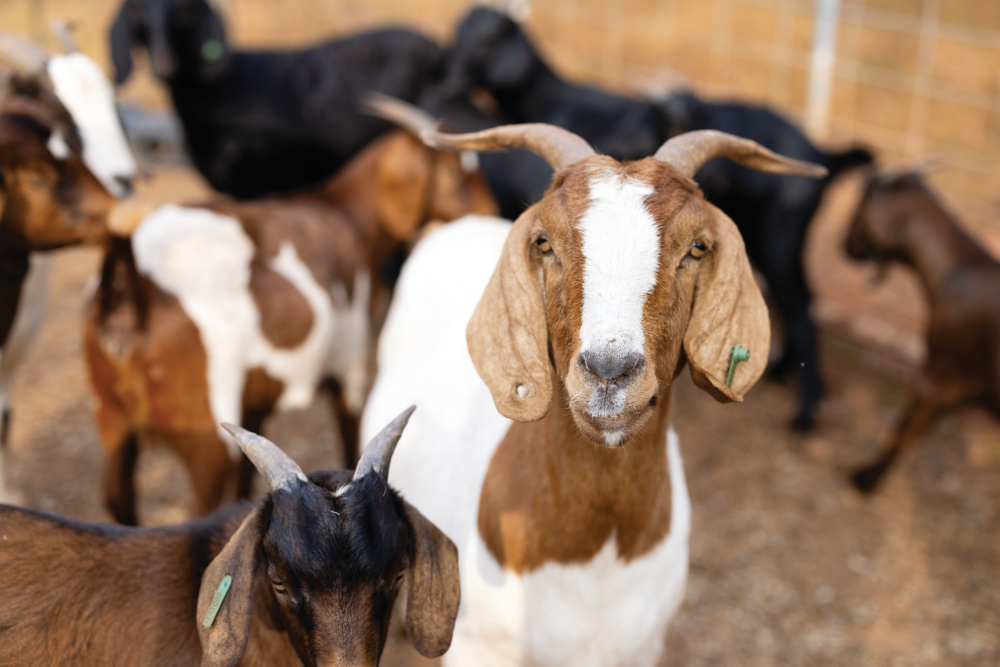
The Governor’s School for Agriculture at John de la Howe is the first statewide program of its kind in the nation, and Miller says what truly sets it apart from other schools is its immersive approach to education, which integrates practical, experiential learning with rigorous academic coursework. The school’s campus includes timberland, pastureland and cropland, which serve as a living, working classroom. The school also boasts a new high-tech greenhouse and student-run farm store.
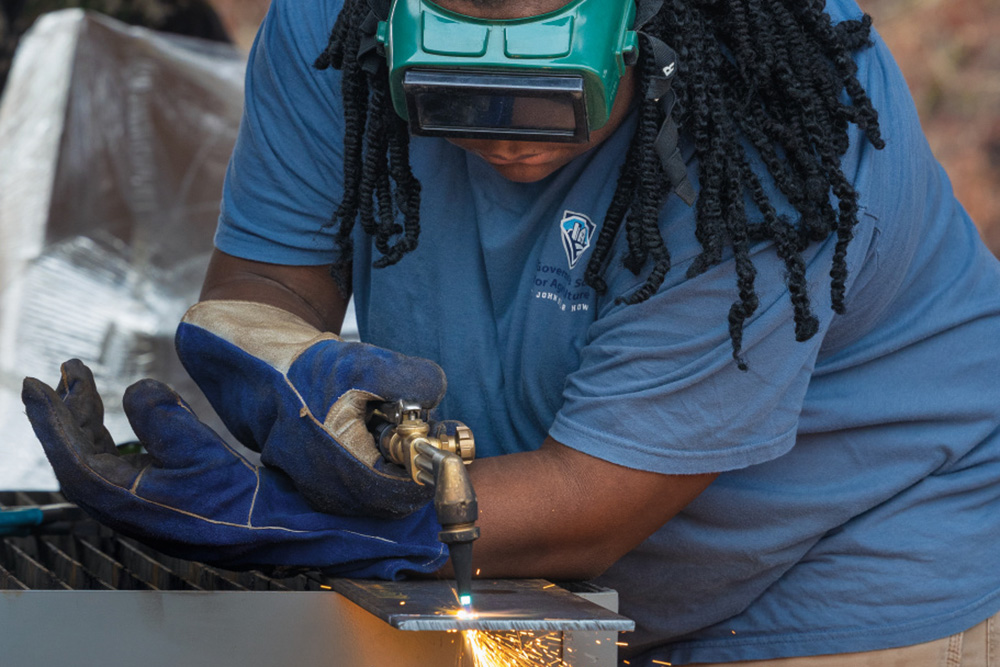
“Students don’t just learn about agriculture in the classroom; they’re out on the farm operating bulldozers, tending beehives, planting cover crops and harvesting fresh produce. Not only are they involved in raising crops and livestock, but they also learn about harvesting and marketing these products,” Miller says. “The farm store allows them to develop technical skills while interacting with the community and understanding the business side of agriculture. This hands-on experience prepares them for real-world careers in agriculture.”
Feeding Skills
For people such as Lyle Fulmer, a recent graduate and now a Clemson University student, and current student Mason Whittle, the opportunities provided by the school are transformative. Fulmer says programs such as the ag mechanics workplace class and the Aggieship Program were instrumental in developing practical skills.
“Since the school itself is considered a functioning agriculture education farm, in the workplace class, we were able to go out and work on anything that needed to be fixed. In the Aggieship Program, we were given the opportunity to work beside an agriculture professional, which helped us grasp an understanding of the everyday life, pleasures and challenges of that role,” Fulmer says.
Rooted in Community
Beyond technical training, Fulmer attributes much of his professional growth to the school’s supportive community.
“Whether it’s the teachers, the faculty, the staff, the farm crew, residential advisers, supporters of the school, families of students, the school’s leadership, or even the school’s security, they’ve all played a role in how I see myself as a person and how I see my future,” he says. “At the school, everyone places a real emphasis on the saying, ‘It takes a village,’ and that is something that I believe will make us well-rounded individuals and future leaders no matter what field we enter.”
For Whittle, his time at the school has only intensified his love of farming and caring for animals.
He says hands-on learning opportunities as well as the connection with local agriculture professionals have helped him realize all the career possibilities available to him.
“Working in the greenhouse helped me realize I could start one of my own and even make some extra money for the farm to help expand it,” he says. “Agriculture instructor Russell Abrams helped me see what I could do in the future with my experience here. My time here has vastly helped my future and is helping shape me into the man I want to be.”
Get to Know Western South Carolina
Want to learn more about living and working in Western South Carolina? Check out the latest edition of Livability Western South Carolina.