
The Military Fuels a $137 Billion Local Economy in Hampton Roads
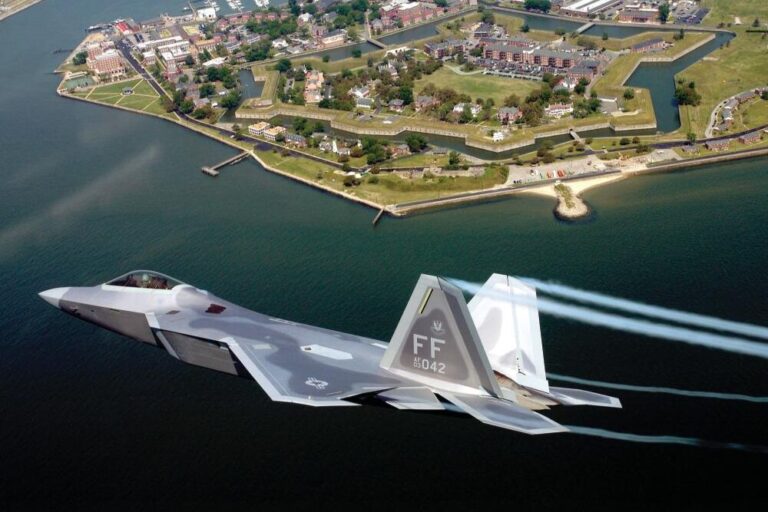
All six branches of the U.S. military and the North Atlantic Treaty Organization (NATO) aren’t just in Hampton Roads, Virginia – they’re of Hampton Roads.
“The military is part of our DNA,” says Bryan K. Stephens, President and CEO of the Hampton Roads Chamber who served 27 years in the U.S. Army. With 18 military installations and about 100,000 veterans living in the region, Hampton Roads is home to one of the nation’s largest concentrations of
veterans, Stephens says. “Veterans make great citizens and neighbors, and they contribute to the economy as well,” he says, adding that the U.S. Department of Defense accounts for fully 40% of Hampton Roads’ $137 billion annual economy.
Powerful Mix
Jolie Spiers, Executive Director of the Hampton Roads Small Business Development Center (SBDC), says her organization serves about 850 businesses annually, about 30% of which are owned by veterans and military spouses. Those military-owned businesses range from government contractors to coffee shops, a skateboard shop and tiki-boat tour operators.
“They contribute a powerful mix of economic development and placemaking that has an incredible impact on Hampton Roads,” Spiers says. “Hampton Roads is the perfect place for a veteran or military spouse to start a business. We have an incredibly diverse population of folks who champion our active-duty and veteran communities and are invested in their success.”
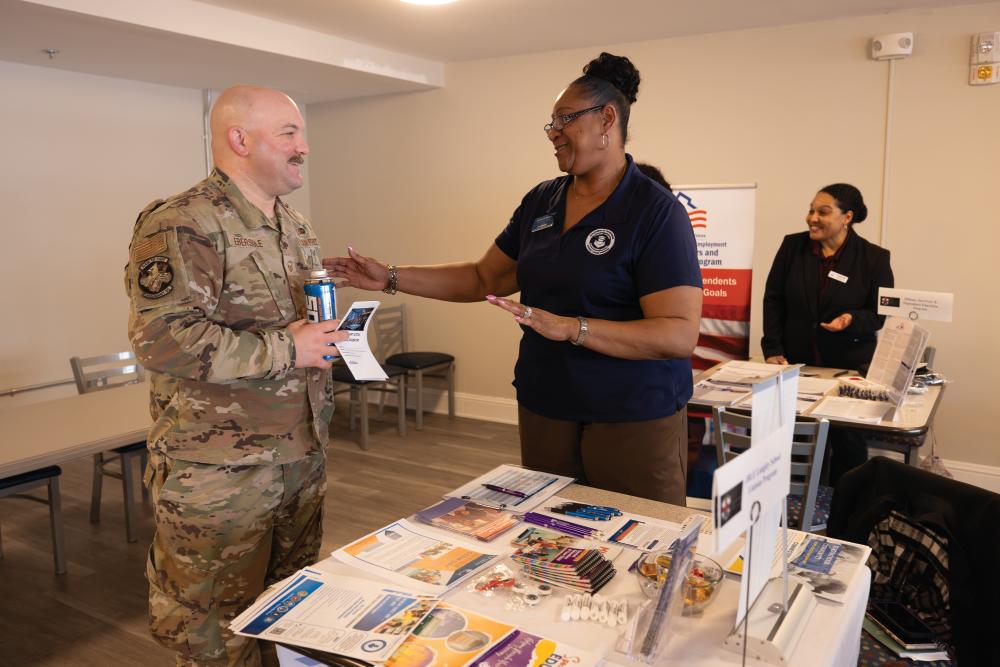
Spiers says the SBDC partnered with the Hampton Roads Chamber and the Hampton Roads Military Advisory Council to create the Military Business Network.
“It’s another circle of engagement for our active-duty, veteran and military-spouse entrepreneurs and small-business owners,” she says. “We get together every month for fellowship and to talk about small business TTPs – tactics, techniques and procedures.”
The results have been exceptional, Spiers says, with new connections and partnerships made at every event, helping these businesses continue to grow and expand.
Intentional and Authentic
Sultan Camp was winding down his service in the U.S. Navy, when he started weighing tactics having to do with booting up his next chapter.
“My dream was to teach classes for military personnel who were getting ready to transition to civilian lives and careers,” he says.
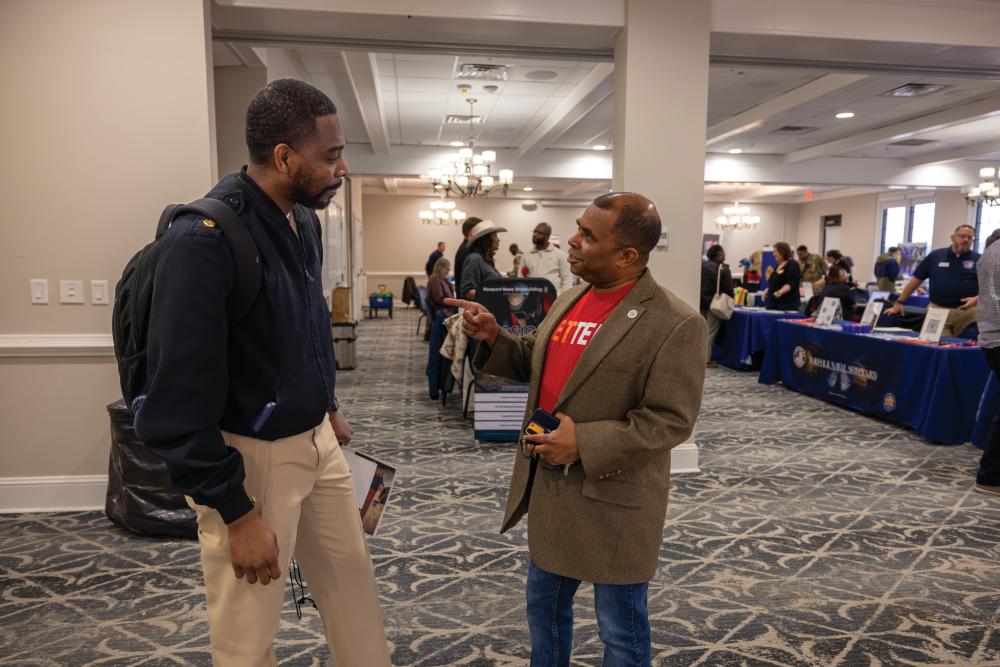
Camp did that and much more – he’s now director of the Hampton Roads Veterans Employment Center. Soon after signing on in 2021, he joined the Hampton Roads Chamber and commanders from numerous Hampton Roads-area military installations in crafting a program in which rigorously vetted employers come in on Tuesdays and Thursdays to talk with job candidates either fresh out of the military or about to leave.
“The commitment we have from those employers is a guarantee to be intentional and authentic in connecting with the military community,” Camp says.
Camp says that in the 24 months between July 2023 and June 2025, nearly half the individuals who had substantive interactions with those Tuesday and Thursday employers got hired.
“Our key to success is creating a positive experience and conveying that staying home, in Hampton Roads, is a no-brainer,” he says. “It’s about creating a positive environment where they can fly – not just exist but thrive.”
Hampton Roads’ Military and Civilian Workforce Statistics By the Numbers
17 Localities comprising the Hampton Roads region
1.8 Million people in the region
140,000 Total active-duty military and federally employed civilians
80,000+ Active-duty military stationed in the area
79 Approximate number of military ships homeported
40 Military aircraft squadrons headquartered in Hampton Roads
Win-Win Solutions
A civil engineer by training, Rick Dwyer knows how to find solutions. The veteran of 20 years of active duty with the U.S. Air Force keeps that skill sharp as Executive Director of the Hampton Roads Military and Federal Facilities Alliance (HRMFFA). Dwyer says HRMFFA works with military commanders to solve issues, lend support and raise awareness regarding interaction and cooperation between military and civilian entities in the community.
“There’s a common misconception that most military members live in base housing,” he says. “In fact, 70% to 80% of personnel and families live off base, so they rely on our communities for critical, quality-of-life services like housing, child care and health care.”
For instance, Dwyer says, the City of Hampton, Virginia, was looking a few years ago to build an indoor firing range for its law-enforcement officers. The price tag was $11 million, but HRMFFA helped bring the military into the picture – and Hampton won a $7.7 million grant from the U.S. Department of Defense for a joint-use firing range.
“That reduced Hampton’s share to 30%, and then the State of Virginia contributed about half of that,” Dwyer says. “That’s the intent – work to find win-win solutions that benefit both the bases and the community.”
Get to Know Hampton Roads, VA
Want to learn more about living and working in the Hampton Roads, Virginia, region? Check out the latest edition of Livability Hampton Roads, VA.
