
5 Things to Know About Manchester, NH’s Biotech Industry
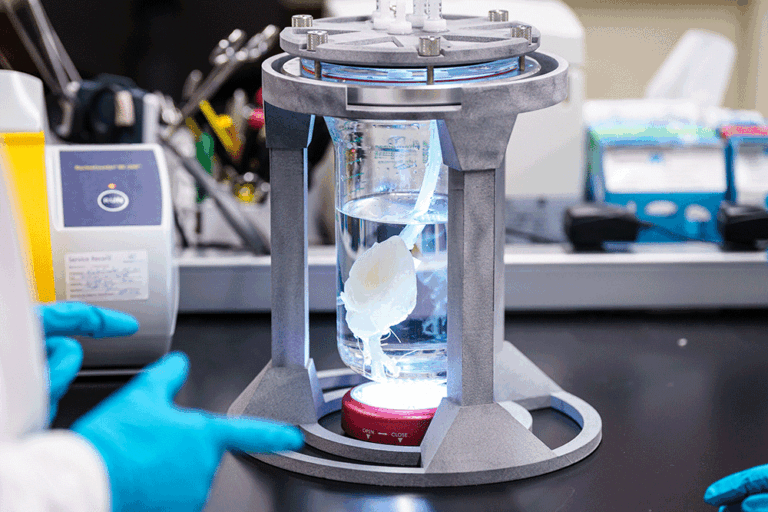
Cool things are happening throughout Manchester, NH. Built on innovation, this city is seeing entrepreneurs turn novel concepts into successful businesses, new multipurpose developments adding to the area’s quality of life, and an ever-growing arts scene fostering togetherness and social change. Perhaps most notable, though, is the emergence of Manchester, NH, as a biotech hub, particularly in the biofabrication sector. This cutting-edge industry manufactures cells, tissues and organs to cure chronic disease and treat traumatic injuries.
“Biofabrication has the potential to revolutionize health care, including how we treat people with chronic conditions, such as diabetes, macular degeneration and heart disease,” says Jodie Nazaka, director of economic development for the City of Manchester.
Ahead, learn more about the biotech industry in Manchester, NH, with these five cool facts about the sector.
In This Article
1. The region’s biotech sector is part of a larger industry that continues to grow.
While biotech is experiencing a boom in Manchester and the state overall, it’s part of a well-established ecosystem, life sciences. According to a 2023 report from the New Hampshire Department of Business and Economic Affairs (BEA), there are more than 600 life sciences businesses in the state.
In fact, the report found that the life sciences cluster generates $2.8 billion in gross regional product, making up 3% of the state’s economy.
In Manchester, organizations work with local government and business leaders to ensure continued growth in this industry.
Julie Lenzer knows all about this. She serves as both chief innovation officer at the Advanced Regenerative Manufacturing Institute (ARMI), a nonprofit organization that works to advance the bioeconomy of the U.S., and regional innovation officer of the ReGen Valley Tech Hub, which is led by ARMI and works to make New Hampshire a global leader in biofabrication.
“We’re very focused on providing pipelines for the residents of Manchester to benefit from this growing industry right in their backyard,” Lenzer says.
2. More biotech jobs are coming to Manchester, NH.
“We anticipate nearly 9,000 new biotech jobs in the next 10 years,” Lenzer says. “They’re not just going to be a bunch of Ph.D.s. When you look at manufacturing technology, we’re going to need everything, from people with certificates in manufacturing, biomanufacturing or biofabrication.”
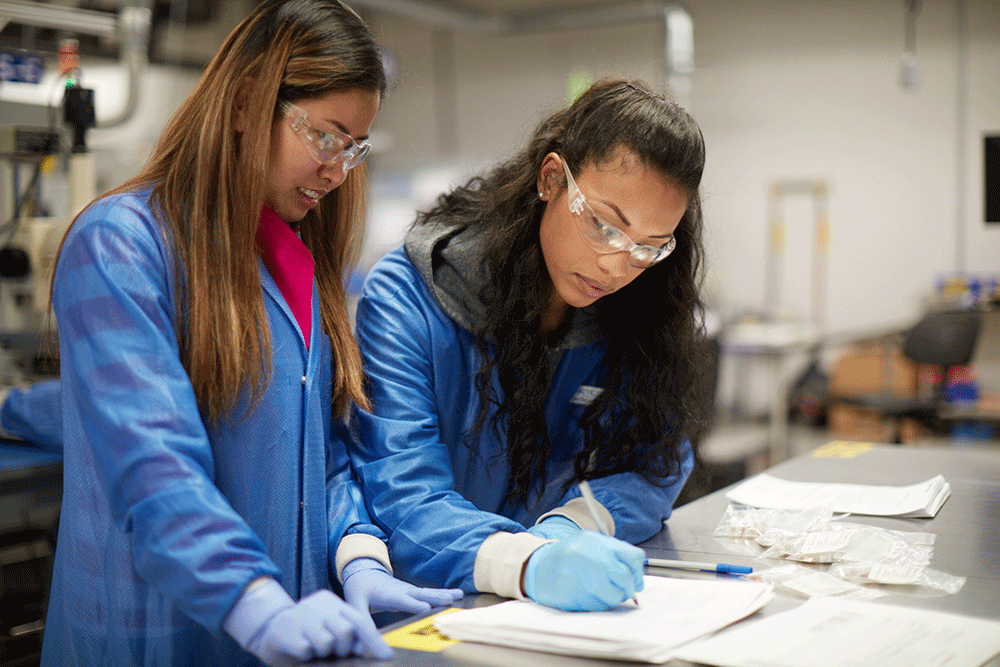
And the best news? Programs are in place to help prepare people for these jobs. One example is the Biofabrication Technician Apprenticeship Program. Operated by ARMI and its BioFabUSA program for tissue and organ manufacturing that’s funded by the Department of Defense, the apprenticeship program provides two months of practical education in laboratory and manufacturing skills and one year of paid on-the-job training.
“We’ve had folks everywhere, from high school graduates who don’t see college as an option for them to folks who are looking to re-skill, change careers and get into a different field,” Lenzer says. “It’s an alternate pathway for engaging community members.”
3. Manchester, NH, offers high-paying careers in the biotech sector.
Over the years, Manchester has seen an influx of tech jobs, which has helped increase the area’s median household income from $66,000 in 2022 to $78,000 in 2024. This jump created opportunities for all Manchester residents, but for those in the biotech industry, salaries remain higher to compete for top talent.
“New Hampshire’s tech and life sciences industry boasts an average salary of over $130,000, reflecting the high-value opportunities attracting talent to the region,” Nazaka says.
4. Manchester, NH, has seen significant investment in its biotech industry.
In recent years, the city has boosted its biotech sector with the help of awards and grants. In 2022, for example, the city received $44 million for its biofabrication cluster from the Build Back Better Regional Challenge, which worked to help communities nationwide with their post-pandemic recovery efforts. In 2023, the ReGen Valley’s consortium of more than 40 organizations was designated a tech hub by the U.S. Department of Commerce’s Economic Development Administration. And in 2024, the ReGen Valley Tech Hub gained another $44 million in federal funding. Additionally, the University of New Hampshire at Manchester received $10 million from the Commerce Department for workforce development initiatives in collaboration with the ReGen Valley Tech Hub.
“Groundbreaking work is happening right here in Manchester, and the nation is taking notice,” Nazaka says. “In addition to hundreds of millions of dollars in funding, the Manchester-Nashua Metropolitan Statistical Area, known as the ReGen Valley Tech Hub, was named by the U.S. Department of Commerce as one of 31 U.S. tech hubs to advance innovation and American competitiveness.”
5. The Queen City creates opportunities that make a difference.
The biotech sector in Manchester, NH, works to create novel therapies beyond traditional pharmaceuticals and other treatments. And, according to Lenzer, this has the potential to make a massive difference in people’s lives.
“We are driven – and haunted – by the fact that chronic disease is an epidemic,” she says. “The end stage for most chronic diseases is an organ transplant. Somebody has to die for somebody else to live.”
ARMI has worked on projects to restore some levels of sight in patients suffering from macular degeneration. It also helped Breakthrough T1D, a Type 1 diabetes research and advocacy organization, manufacture insulin-producing pancreatic islet cells to work toward a cure for Type 1 diabetes.
Also making a difference are companies like EpiBone, which is growing bones from patients’ cells to treat cancer or traumatic injuries, PRO Therapeutics, which focuses on soft tissue repair that enables regeneration of tendons, ligaments and muscles, and Safi Biotherapeutics, which manufactures red blood cells tailored to patients’ needs.
“We’re not talking about a new Band-Aid,” Lenzer says. “We’re talking about real therapies that are going to change lives.”
This article was sponsored by the Manchester Economic Development Office.