
The Arkansas Delta — the Other Home of the Blues
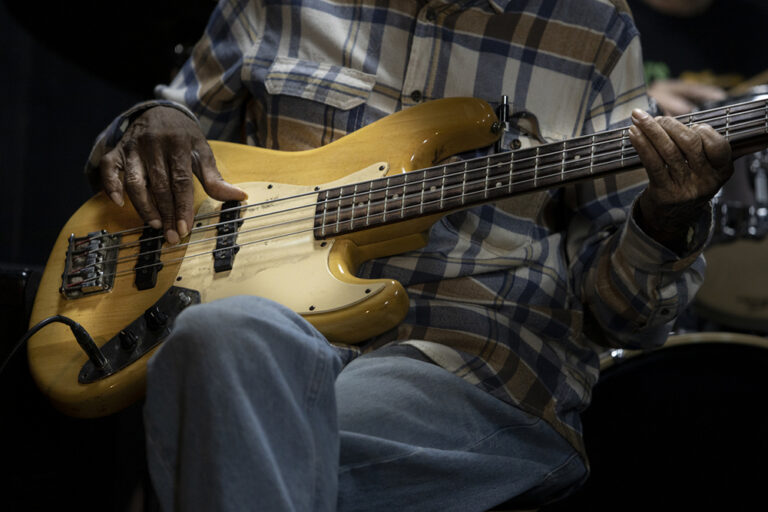
To experience Arkansas’ soul is to drive through Delta farmland with the Mississippi River in view and blues flowing through the car’s speakers.
“Arkansas blues music is a musical gateway into the history of the Delta. It served as a training ground for musicians who would eventually take it to St. Louis, Chicago and the rest of the world,” says Cliff Jones, an Arkansas native and blues historian who teaches at Arkansas State University. “It includes so much more than just music. The blues is a story, a frustration, a celebration, often including wisdom and humor.”
The blues is a uniquely American artform created in the early 20th century by African Americans in the South. Its importance to modern music can’t be overstated. The blues influenced the development of rock, jazz, rhythm and blues, hip-hop and country, and Arkansas blues music played an enormous role.
“The founding fathers of the blues were present here,” says Jones, who credits local radio stations and his parents’ record collection for forming the soundtrack of his youth. “The lives and legacies of the artists are fascinating. Most of the sizeable towns in the Delta had juke joints and cafes that would host blues musicians.”
Juke joints were generally small and lively, serving food and drinks while patrons danced to a jukebox or live band.
We’re trying to tell the story that hasn’t been told. People just don’t realize the Memphis sound actually came from West Memphis and the Arkansas Delta.
Jim Jackson, West Memphis Advertising & Promotion Commission
A Launching Pad for Blues Legends
B.B. King, one of the best-known blues musicians, spent a lot of time playing in Arkansas. He’s joined by an illustrious group of artists. Harmonica hero Junior Wells grew up in West Memphis, AR, and blues artist Shirley Brown was born there. Soul blues legend Johnnie Taylor called Crawfordsville home, while guitarist and singer Son House spent time in Hughes. Blues legend Robert Johnson traveled and played through Crittenden, Lee and Phillips counties, Jones says.
Then there was Howlin’ Wolf, who ranked 51st on Rolling Stone magazine’s 100 Greatest Artists of All Time, and Rock and Roll Hall of Famer Albert King, regarded as one of the greatest blues guitarists, both part of the legacy of Arkansas blues music.
Today, Memphis, TN, is the place most often associated with the blues. But in the 1940s and ’50s, the city closed shop at 11 p.m., so merrymakers went across the Mississippi River to Arkansas.
“West Memphis was where everyone came after Memphis shut down. At one time, we had around two dozen juke joints,” says Jim Jackson, executive director of the West Memphis Advertising & Promotion Commission.
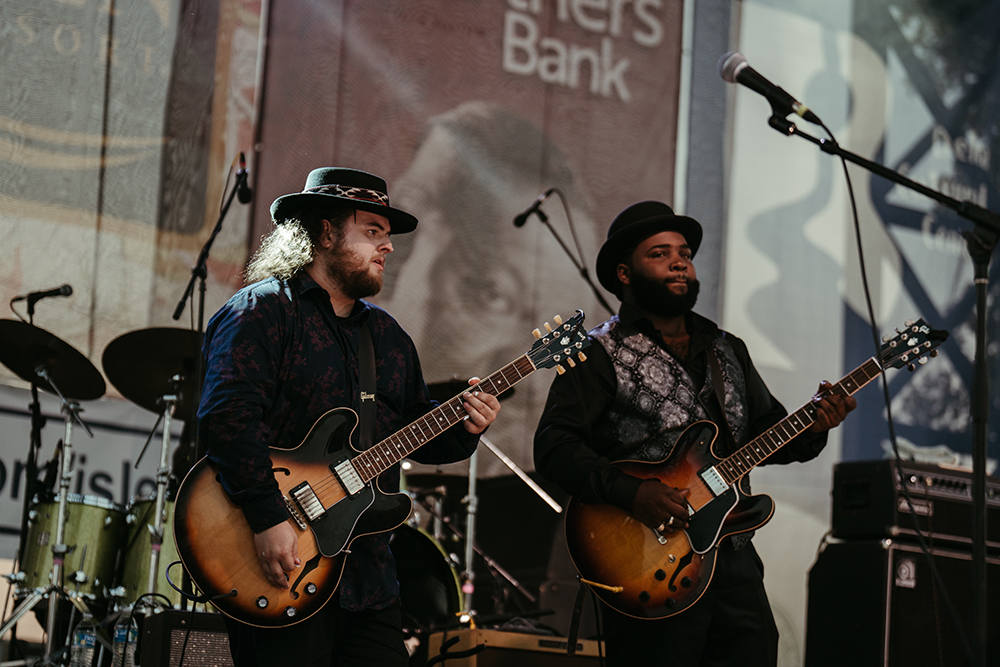
Jackson is also a huge blues fan, and even though few places still exist around West Memphis for bands to perform, he’s busy rekindling the city’s bond with the blues. Jackson got the city to put up banners downtown to honor blues legends, and Thursday evenings in May is Blues Off Broadway, a free concert series.
Soon, West Memphis will start construction on a commemorative blues plaza at Eighth Street and Broadway, the old hub for clubs.
“We’re trying to tell the story that hasn’t been told. People just don’t realize the Memphis sound actually came from West Memphis and the Arkansas Delta,” Jackson says.
Radio Listeners Get the Blues
The clubs were one way the blues spread; the airwaves were another. West Memphis’ KWEM radio began broadcasting in 1947. Anyone who paid a $15 to $20 fee could play live.
B.B. King, Howlin’ Wolf, Albert King and even Johnny Cash and Elvis Presley took KWEM up on the offer. The station went off-air in 1960, but it’s been revived in an online format, bringing the blues to global listeners.
While the blues struck a sweet chord up and down the Arkansas Delta, it owes much of its early success to Helena, a small town 75 miles south of West Memphis on the banks of the Mississippi River. It was here that “King Biscuit Time” launched in 1941 on KFFA, introducing the blues to a wider audience. Broadcasting on weekdays, the show was the first regular radio program to feature the blues.
“King Biscuit Time” is one of the longest-running radio shows in history. Today, it broadcasts weekdays from a special broadcast booth at Historic Helena’s Delta Cultural Center, a museum dedicated to the history of the Arkansas Delta. The museum, a division of the Department of Arkansas Heritage, interprets the heritage of the 27-county Delta region through exhibits, educational programs, annual events and guided tours. Every October, Helena also hosts the four-day King Biscuit Blues Festival, one of the nation’s top blues events.
Blues Musicians Bridge Past, Present
The future of the blues lies with recording artists like West Memphis’ Cecily Wilborn.
“When you listen to my music, you hear the South, rich with blues, gospel, soul and country,” she says. Growing up and then raising her own family in the Arkansas Delta, Wilborn understands the importance of carrying on the blues while connecting with a contemporary crowd.
“I stand on the shoulders of the greats and make my music appealing for the people of today,” she says. “If grown folks and kids can sing together, we’ve won together.”
And West Memphis is never far from her heart.
“My goal is to keep pushing my music forward, but it always has to bring me back home to Arkansas.”
This article was sponsored by Arkansas Tourism.