

Greater Chattanooga Is Built for Business

Greater Chattanooga’s strategic location and forward-thinking investments are fueling significant economic growth across various sectors. From a thriving airport and readily available industrial sites to a crucial inland port and cutting-edge internet infrastructure, the 16-county region is attracting businesses and fostering innovation.
In This Article
A Growing Airport
Chattanooga Metropolitan Airport draws more than half a million people to its doors each year, a testament to its Goldilocks reputation – not too big, not too small, just right – as well as investments to expand parking, nonstop flights and terminals. In 2024, the airport served a record 556,958 passengers.
“To accommodate this growth, we completed a $28 million terminal renovation and expansion in March 2024, adding 26,000 square feet, two new boarding gates, a new restaurant, gift shop and business center,” says April Cameron, Chattanooga Airport president and CEO.
In addition, a new four-level parking deck offers 1,300 additional spaces for travelers.
Shovel-Ready Development Sites
Greater Chattanooga boasts an abundance of certified greenfield sites ready for development and positioned to support business growth. Just north of Chattanooga in McMinn County, TN, certified sites include the North Etowah Industrial Park and 75 Regional Commerce Park. The sites offer rail service and are close to Interstate 75, providing quick, reliable access to the global supply chain. South of Chattanooga in North Georgia, certified sites include the Carbondale Business Park in Whitfield County, the Trenton-Dade Industrial Park in Dade County and Murray South Industrial Park in Murray County. These are strategically located sites for new and expanding companies.
Ocean Access
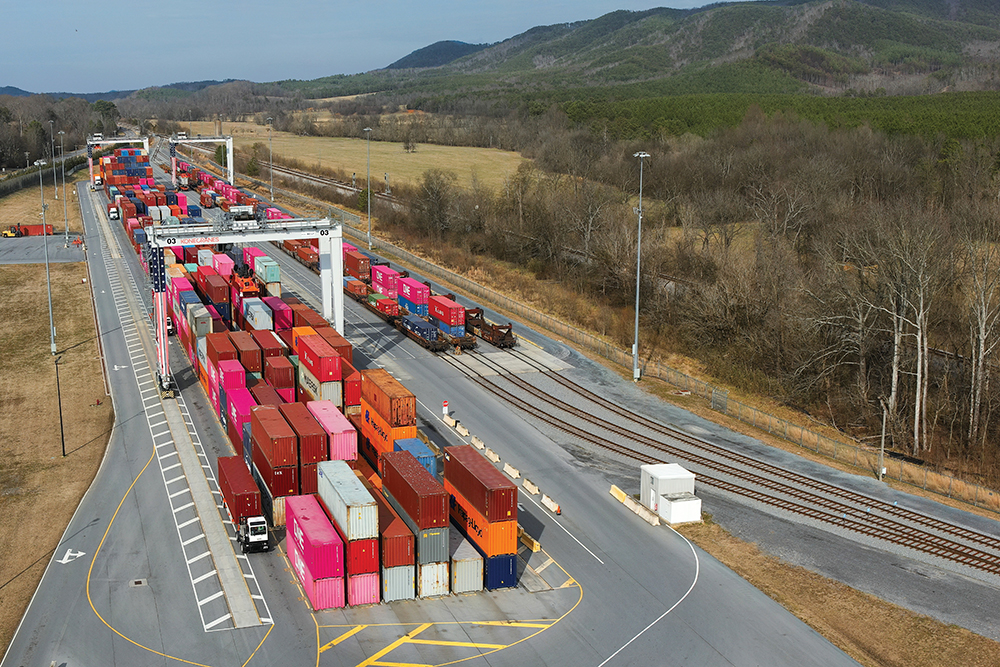
About 50 miles southeast of Chattanooga, the Appalachian Regional Port in Murray County, GA, is a critical link between the Port of Savannah – the third-busiest seaport in the U.S. – and the inland regions of Georgia, Alabama, Tennessee and Kentucky.
Opened in 2018, the inland port is connected to the Port of Savannah’s Garden City Terminal via a 388-mile CSX-operated rail route, offering an efficient alternative to long-haul trucking. Initially capable of handling 50,000 containers annually, the port has plans to double its capacity over a 10-year development period.
Gig Internet and Beyond
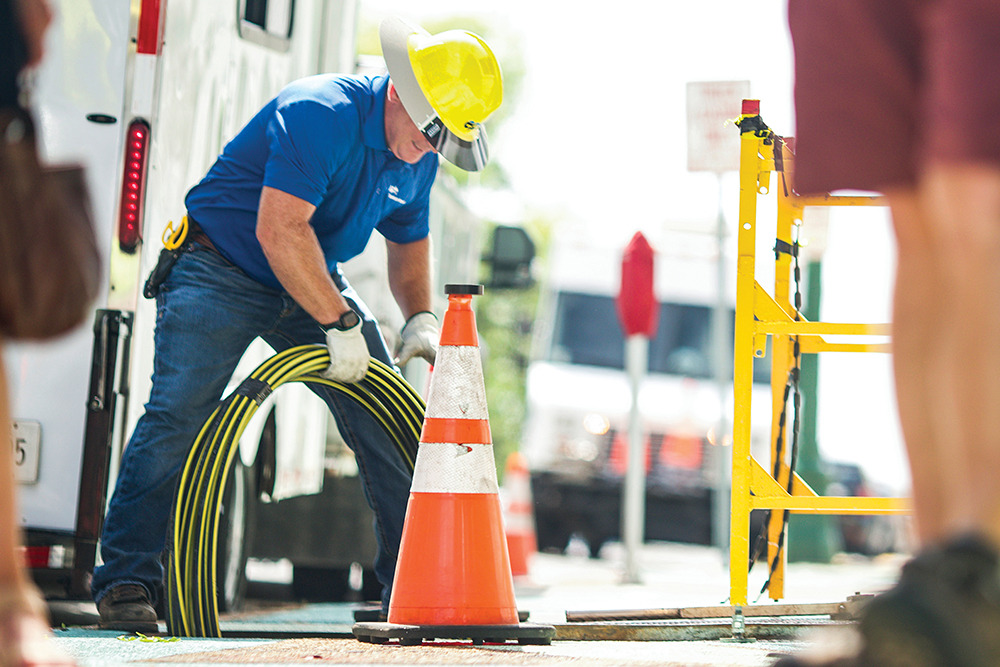
When Chattanooga launched the nation’s fastest internet to homes and businesses more than 15 years ago, it didn’t take long for much bigger markets to take notice.
“In 2010, The New York Times announced us as the first city to have gig speed internet accessible to anyone, and that touched off more media coverage of Chattanooga as an attractive place to live,” says J.Ed. Marston, vice president of strategic communication at EPB.
The gig was big news, but it was just the beginning. Since that time, EPB has rolled out a community-wide 25 gig network, and also launched the nation’s first commercially available quantum network that positions Chattanooga as a test bed for quantum-enabled networks.
EPB also has reliability built into its innovations, with a Smart Grid system that detects outages and reroutes power nearly instantly.
Logistics Legacy
Chattanooga has long been known as Freight Alley, a nod to its role as home to a dynamic collection of logistics and trucking businesses built over more than six decades. In 1950, when modern-day logistics giant Kenco was born as a single warehouse on West 25th Street, Chattanooga was on the road to its future as Freight Alley.
Chattanooga-based trucking giants U.S. Xpress and Covenant Logistics both launched in Chattanooga in 1986. And in 2002, a new wave of logistics expertise arrived. Access America Transport, a startup that ultimately merged with Coyote Logistics, which then sold to UPS for $1.8 billion, spawned multiple companies over the past two decades. Now Chattanooga is home to major logistics players including FreightWaves, Reliance Partners, Steam Logistics, Trident Transport, Taimen Transport, LYNC Logistics and Avenger Logistics.

A Commitment to Sustainability
Chattanooga’s progress in becoming a national model for sustainability didn’t happen overnight. It’s the result of decades of strategic investments, bold leadership and deep community commitment, says Allison Quintanilla Plattsmier, CEO of green|spaces, a Chattanooga nonprofit dedicated to sustainable living, working and building.
One of the most important milestones in that journey was the adoption of the city’s first Climate Action Plan in 2009, which laid the foundation for cleaner air, healthier communities and greener infrastructure. That initial effort contributed to a 25% reduction in citywide carbon emissions and established the groundwork for what would become a more ambitious, community-driven vision.
And Chattanooga’s recent designation as North America’s first National Park City affirms that sustainability isn’t just part of the city’s brand – it’s central to its story.
Fall in Love With Greater Chattanooga
Learn more about building a life you love at livability.com/chattanooga-region.