
Tracing Black History on the Gulf Coast: A 4-Day Juneteenth Road Trip
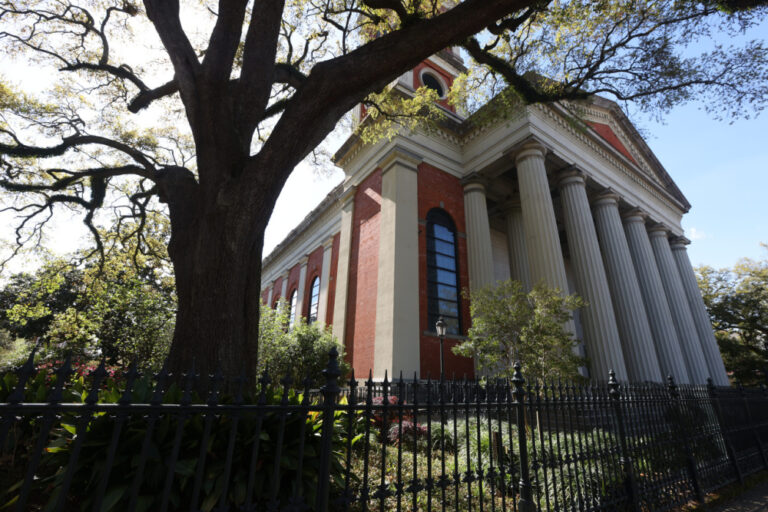
With the nation’s 250th anniversary approaching, American history is firmly in the spotlight this summer. Juneteenth, which marks the official end of slavery in the U.S. in 1865, is expected to have larger celebrations than in the past, and this year, more cities will host multi-day events.
Commemorating the milestone on June 19 is an opportunity to practice diversity, equity and inclusion by immersing yourself in the nation’s history. Traveling to historic sites allows us to honor the resilience of those who came before us while supporting the communities preserving this heritage today.
If you are looking for a deeply meaningful way to spend the holiday weekend, embarking on a Juneteenth road trip along the Gulf Coast offers an extraordinary, moving history lesson. This curated four-day itinerary traces a profound path from Mobile, AL, and historic Africatown, down through the beaches of Gulf Shores, and finally to Pensacola, FL.
In This Article
Day 1: Historic Black Culture and Foodie Finds in Mobile, AL
Juneteenth is on a Friday. Plan to arrive in Mobile as early as you can on Thursday, the 18th.
Morning: The Dora Franklin Finley Heritage Trail
Begin your journey with a two-hour guided tour through Mobile and Africatown along the Dora Franklin Finley African-American Heritage Trail. This driving and walking tour explores more than 40 monumental landmarks and their stories. Must-visit sites include:
- Stone Street Baptist Church: Founded in 1806, making it one of Alabama’s oldest African American churches.
- Creole Firehouse #1: Established in 1819 as the first volunteer fire company in the state.
- The West End & Downtown: Historic African American business districts that served as economic sanctuaries during Jim Crow.
Where to Stay: The Battle House Renaissance Hotel
Settle into your room and keep the historical theme alive at The Battle House Renaissance Mobile Hotel + Spa. This landmark property sits on the former site of General Andrew Jackson’s military headquarters during the War of 1812. The current hotel, built in 1852, has hosted distinguished guests, including Presidents Millard Fillmore and Woodrow Wilson, and has hosted the city’s very first Mardi Gras Ball in its famous Crystal Ballroom.
Evening: A Culinary Tour with Bienville Bites
Mobile is for foodies. Since you won’t be in town long, a great way to sample some of the city’s best cuisine is to take the evening tour with Bienville Bites. Stops include:
- Dauphin’s: Located on the 34th floor of the Trustmark building, offering panoramic views of Mobile Bay. Try the Bama Gump (fried green tomatoes with Gulf shrimp and remoulade) and the Joe Cain Dip with local Conecuh sausage, spinach, artichoke and a baguette. Wash it down with a Thyme Out cocktail, gin, lemon juice, thyme syrup, cucumber, thyme juice and sparkling water.
- Post Crafted Cocktails: Order the 504 Pizza, topped with bites of chicken, Cajun Alfredo, mushrooms, Conecuh sausage, red peppers, Guinness glaze and Buffalo sauce.
- Wintzell’s Oyster House: The oyster sampler may push you over the top with the Bienville, char-grilled, Monterey, Rockefeller and fried pickles.
- Penton’s Bistro: Still hungry for more? Finish your foodie tour with crawfish beignets.
- Las Floriditas: Grab a nightcap in this cool basement speakeasy, where the Cuban chocolate mousse is the last thing you eat before the food coma.
Day 2: Honoring the Clotilda Legacy at Africatown Heritage House
Avoid the temptation to hang out all night so you can catch plenty of shut-eye before Juneteenth begins. You will want to give yourself ample time in the morning to visit the historic Africatown Heritage House. Located just 10 minutes outside of downtown Mobile, Africatown is a unique community founded by the survivors of the Clotilda – the last known slave ship to illegally enter America in 1860.
Morning: Visit the Africatown Heritage House
After gaining their freedom in 1865, the Clotilda survivors pooled their limited resources to build their own independent town. Remarkably, they continued to speak their native language and ran their own sovereign government, schools, churches, and businesses.
Today, the museum tells this triumphant story through Clotilda: The Exhibition, an immersive experience featuring images, audio, illustrations, and actual recovered pieces of the sunken ship. The narrative begins in West Africa and details their journey to America, their lives during enslavement, and their day-to-day resilience after gaining freedom.
By the time you reach the “tank” room at the end of the exhibit, which houses actual physical pieces of the ship, the emotions are likely building. Fortunately, the exhibit provides a quiet space to sit, exhale, collect your thoughts, and end on a hopeful note regarding Africatown’s future.
If you feel like you want to spend more time in Africatown, there’s Africatown Freedom Tours. It can be deeply emotional to walk through parts of the community that were once a plantation, or to pass by decades-old shotgun houses while imagining what life was like for those original founders.
Afternoon: Downtown Exploration
Head back into Mobile for a relaxed lunch at Debris Po-Boys & Drinks or The Ruby Slipper Café. Spend the afternoon browsing local titles at The Haunted Book Shop or exploring regional culture at the Mobile Carnival Museum.
Evening: Freedom Monologues & Open Mic Night
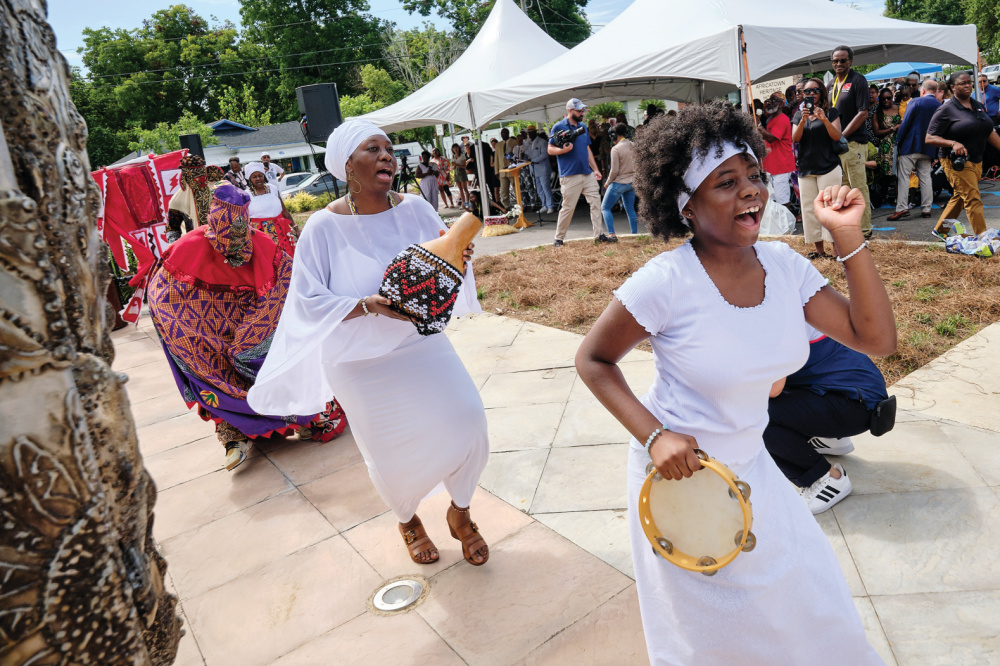
Save your energy for Africatown Heritage House’s Freedom Monologues & Open Mic Night Juneteenth Celebration on Friday evening. Actresses will perform original scenes that explore the meaning of freedom through the Black experience, past, present and the future. Local poets will share their work, and if you want to step up and take to the mic, go right ahead. By night’s end, you will no doubt have had a long, wonderful day.
Day 3: Coastal Relaxation and Sunsets in Gulf Shores, AL
If you choose to stay in town, you can participate in Mobile’s MAMGA Fest: A Juneteenth Celebration Block Party, hosted by the Mobile Area Mardi Gras Association and featuring live music, guest speakers, and food trucks.
Ready to make a move? Head an hour south to Gulf Shores/Orange Beach. If you opt for the coast, you can look forward to a day of rest and relaxation:
- Beach & Lunch: Lounge on the white-sand beach that rivals Florida’s best, and have lunch at DeSoto’s Seafood Kitchen, a long-time, family-owned restaurant loved by locals.
- Sunset Cruise: Head to Gulf Shores for a two-hour sunset boat ride with Hammock Time Tiki Tours. The odds are high you’ll spot dolphins.
- Dinner: Secure a reservation at Jesse’s on the Bay for their extraordinary shrimp and grits, elevated with smoked Gouda and Conecuh sausage.
- Where to Stay: Check into the centrally located, beachside Embassy Suites by Hilton.
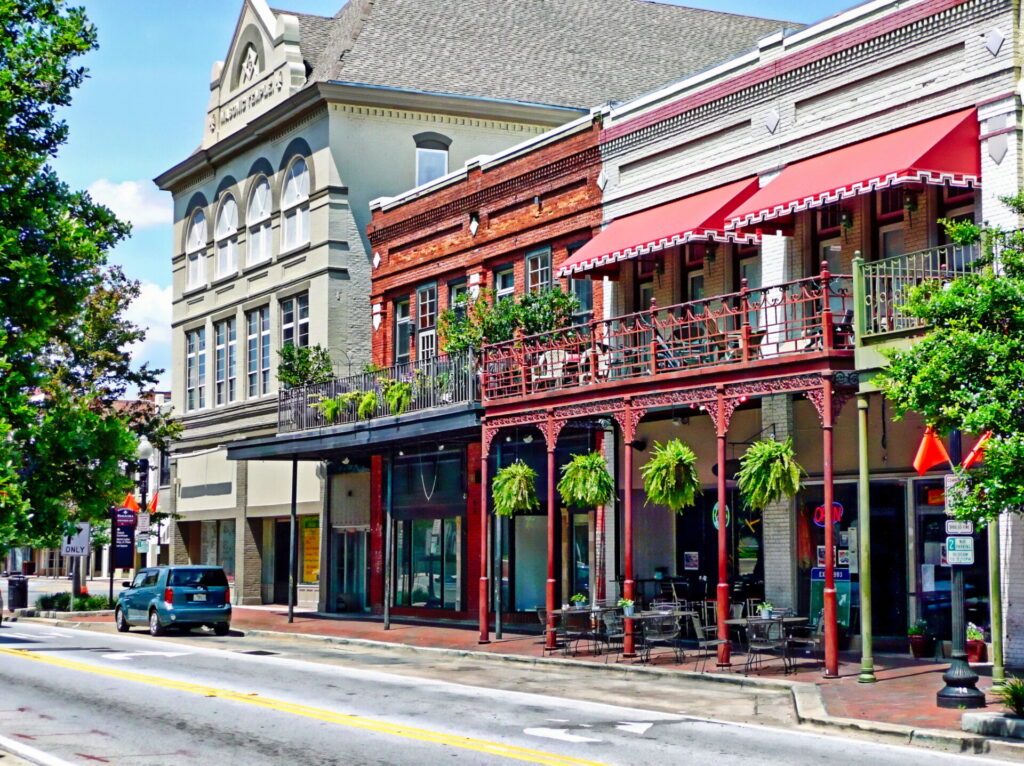
Day 4: Exploring the “Harlem of the South” in Pensacola, FL
Conclude your holiday weekend by driving one hour east into Pensacola, Florida. While the formal festival dates may be over, Pensacola has an incredible wealth of African American history sites.
The Belmont-DeVilliers Neighborhood
Decades ago, the Belmont-DeVilliers neighborhood was nicknamed the “Harlem of the South.” Here, you could catch locals and greats like B.B. King, Sam Cooke, Tina Turner and James Brown in the neighborhood’s theaters and clubs. In the 1920s, Belmont-DeVilliers was also the home to Viola Edwards Hospital, the first Black-owned medical center.
Today, the neighborhood is an official, celebrated stop on the historic Mississippi Blues Trail. While exploring the community’s beautiful public murals, stop by Five Sisters Blues Café for a classic Sunday Jazz Brunch. Feast on starters like fried green tomatoes and fried okra before choosing between chicken and waffles, fresh catfish, or southern sides like mac and cheese, collard greens, and black-eyed peas. Blue Dot Barbecue and The Dwarf Chicken Stand are two other excellent, historic local options.
Other Must-Visit Stops in Pensacola
- Bruce Beach: Historically, one of the few coastal areas open to African Americans during segregation. The recently restored area is a coastal park with a picnic area, playground and walkways. There are interactive and educational signs that tell the Bruce Beach story.
- Julee Cottage: Located in Historic Pensacola Village, Julee Cottage was the 1800s home of Julee Panton, a free Black woman and entrepreneur who used her pastry and candle business to help enslaved people escape to freedom.
- General Daniel “Chappie” James Museum: Hometown hero Daniel “Chappie” James was a Tuskegee Airman during World War II and became America’s first Black four-star general. There’s a memorial plaza on the site of the home he grew up in, and in 2018, the home became the General Daniel “Chappie” James Museum and Flight Academy.
- Where to Stay: Spend your final night at the Black-owned Celestine Bed and Breakfast. This elegant 1880s home features stunning antiques and custom narrative wallpaper that serves as a visual walk down memory lane.
Discover More Heritage Sites
Additionally, the region is home to multiple significant sites designated to the National Park Service’s National Underground Railroad Network to Freedom Program. You can gather more ideas on where to explore Pensacola’s African American history directly on the Visit Pensacola website.
As you head home after what will no doubt be a transformative African American history road trip, take time to reflect on what you’ve learned, what you’ve felt and how you will bring that knowledge and inspiration back into your day-to-day life.