Education in Austin, TX: K-12 Schools, Colleges and Learning Centers
Austin, Texas, is and always has been a big college town. It’s a large city, and its status as a college town has dwindled as the population expands and the area welcomes major players in the tech industry. But it still has a large student population, and certain areas have a distinct college atmosphere. Roughly 10% of the city’s population is made up of students, many of whom attend the University of Texas at Austin, St. Edward’s University, Huston-Tillotson University, or Austin Community College.
As far as primary public schools, the city is served by the Austin Independent School District, a highly diverse district with over 100 schools. The performance ratings are mixed, with schools in more affluent areas showing higher test scores. Surrounding districts, such as Eanes ISD and Lake Travis ISD, tend to be higher performing. Some parents choose local private schools, of which there are many, ranging widely in mission, values and political or religious beliefs.
Austin Education Highlights
| School/System | Type | Grades/Degrees | Student Size | Highlight |
| Austin Independent School District (AISD) | Public Schools | Pre-K–12 | 69,000 students | Offers a wealth of programs and learning styles, including magnet schools, dual-language programs, STEM, fine arts, career & technical education, athletics and early-college options |
| Eanes Independent School District (EISD) | Public Schools | K–12 | 8,000 students | Known for strong academics, extensive extracurriculars and relatively small schools compared with AISD |
| University of Texas at Austin (UT Texas) | Public University | Undergraduate, master’s, doctoral and professional degrees | 55,000 students | Austin’s major research university, offering over 150 undergraduate and over 200 graduate degree programs with major research and athletics programs |
| Austin Community College (ACC) | Public University | Certificates, associate degrees and select bachelor’s degrees | 43,900 credit students | Large, affordable community college system with career-focused programs, transfer pathways, workforce training and a growing selection of degrees |
| St. Edward’s University | Private University | Undergraduate and graduate degrees | 4,000 students | Private Catholic university on a historic campus south of downtown Austin, known for small classes, liberal arts education and its Holy Cross tradition |
Pre-K-12 Schools
Austin has many highly rated schools for Pre-K–12, including public and private institutions. Several of the public schools sit at the top of state and national rankings, making the city even more appealing to families.
Public Schools
The Austin Independent School District is the primary district serving Austin neighborhoods, and it consists of 114 schools. The Eanes Independent School District also serves some outer Austin neighborhoods and suburbs, and consists of only nine schools.
Elementary Schools
- Casis Elementary School: Located in Tarrytown, it offers two sports and a Gifted and Talented program. The school is known for its fun, friendly atmosphere and wide array of community events.
- Bryker Woods Elementary School: In the Bryker Woods neighborhood, this school is wholly student-centered, providing inquiry-based learning styles that reward curiosity. It often performs above average compared to other Austin schools.
- Mathews Elementary School: In the Clarksville/Old West Austin area, with a diverse community and a relatively small student body that allows for more focused attention and smaller class sizes.
- Zilker Elementary School: The main school in the Zilker neighborhood, with a Gifted and Talented program and two sports. It’s one of the most highly rated Austin public schools and has wonderfully small class sizes.
- Becker Elementary School: In the Bouldin Creek neighborhood, known for being one of the few Austin schools using a Two-Way Dual Language curriculum with English and Spanish instruction. It also has phenomenal gardening, environmental and sustainability programs.
- Dawson Elementary School: In the Dawson area of South-Central Austin, with a diverse, inclusive community and both one-way and two-way dual-language programming.
- Russell Lee Elementary School: The Lee School is in the Hancock area of Central Austin, just north of UT Texas. A highly rated public school with small class sizes and the honor of being a National Blue Ribbon School.
- Cedar Creek Elementary School: Located slightly outside Austin proper in the Rollingwood and Barton Creek area, very well-rated with high curriculum standards and some of the smallest class sizes around.
- Bridge Point Elementary School: In the Westlake (West Lake Hills) area — a quieter, more remote neighborhood than much of Central Austin. It has incredibly high performance scores and is part of an affluent community.
- Eanes Elementary School: Another Westlake school, with a strong community atmosphere and exceptional curriculum. It’s frequently voted one of the top schools in the district.
Middle Schools
- O. Henry Middle School: In Tarrytown, with a Gifted and Talented program and 18 sports programs. A sport-focused school and a stellar choice for young athletes and active kids.
- Kealing Middle School: In Central East Austin, offering various programs for gifted students plus a couple of sports. Known as a very accepting and rewarding place for students of all learning levels.
- Lively Middle School: In South Congress, right down the street from the Texas Capitol, making historical field trips a given. The school prides itself on preparing students well for high school and beyond.
- Hill Country Middle School: Technically in Austin but closer to the Westlake community, and many Westlake children attend. Ranked in the top 100 of Texas middle schools by performance.
- Lamar Middle School: In North Austin’s Allandale neighborhood, one of the bigger middle schools in Austin, with a diverse, energetic learning environment. It often ranks in the top 20% of Texas middle schools by test scores.
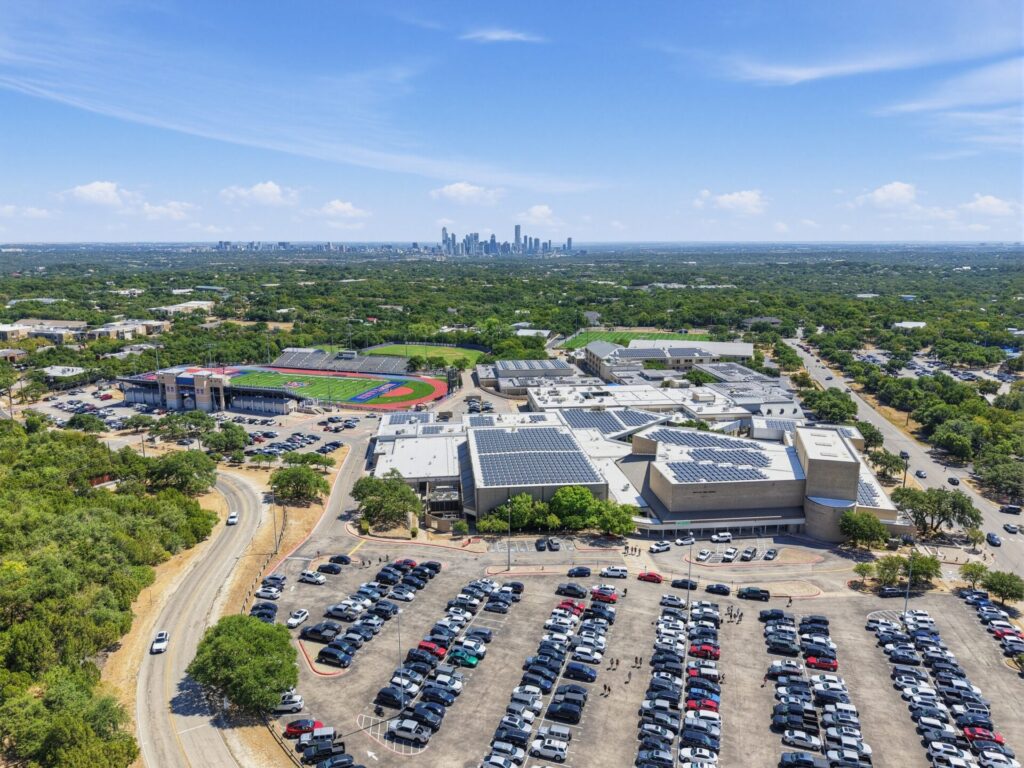
High Schools
- Austin High School: Home of the Maroons, the oldest public high school in the state, consistently offering opportunities to enhance education and explore different subjects. Located in Old West Austin along the Colorado River.
- Travis High School: In the St. Edwards/Travis Heights area, one of the smaller Austin high schools. An excellent public school for children with various learning needs, with smaller class sizes and more individualized attention.
- McCallum High School: In the Allandale/Rosedale area of North Central Austin, a historic high school with a range of Advanced Placement classes. Highly rated and busy, with a spirited atmosphere.
- Westlake High School: In the Westlake area, heavily focused on preparing students for college. A top-rated school with a balanced student-to-teacher ratio, ideal for students pursuing higher education.
- Liberal Arts and Science Academy: A highly respected, selective magnet school that champions innovation, creativity and independence. Consistently rated in the top 50 schools nationally and top five in Texas.
Private Institutions
For families interested in private school options, Austin has dozens of excellent private schools for children of all ages. Learn more about a few of the most popular ones below.
- Kirby Hall: Teaches Pre-K through eighth grade, helping students prepare for college from an early age. A beautiful, historic, non-denominational campus that welcomes advanced academic students who want an attentive learning experience.
- Saint Andrews Episcopal School: A private elementary, middle and high school with small class sizes, exceptional faculty, a rigorous curriculum and extracurricular opportunities. One of the more expensive private schools in Austin.
- Regents School: Serving grades K–12, this Southwest Austin private school has a traditional academic curriculum with Christian values threaded through. Its 82-acre campus gives students plenty of space for sports and other activities.
- St. Theresa Catholic School: In Northwest Hills, this Pre-K–8 private school offers Catholic education and several gifted programs and competitions, with opportunities for athletic, academic, artistic and social growth.
- San Juan Diego Catholic High School: A Catholic high school that prepares students for college or the workforce, with college-preparatory education and corporate internship experiences that help students build their resumes early.
- Waterloo School Austin: In the South Congress neighborhood, serving grades 9–12 with a unique project-focused curriculum — students take only two classes at a time — plus mentorship and internship programs.
- Griffin School: A smaller Central Austin high school with a strong academic curriculum that highlights creativity, arts and independence.
- Headwaters School: With several campuses and Montessori roots, a very student-centered school serving children from 18 months to 18 years, with a holistic approach many find enriching.
Choosing Neighborhoods According to School Zones
If you want to ensure your child can attend a specific school, or want a neighborhood with a short commute, consider the school zones. For example, Bryker Woods Elementary is near Clarksville and Tarrytown in South Central Austin, while the Liberal Arts and Science Academy is in the Johnston Terrace area in East Austin.
School zones and enrollment policies can change, so check with the district before relocating. If you have your eye on a specific school, find out what neighborhoods it serves; and if there’s a particular neighborhood you’re interested in, determine which schools are in the area.
Sometimes the perfect neighborhood doesn’t align with the perfect school. Consider the following factors when choosing neighborhoods and schools:
- Commute: With public schools, you’re generally restricted by zoning policies. For private schools, you can usually enroll no matter where you live in or around Austin — but keep in mind the toll a commute can take. Driving 40+ minutes every morning and afternoon may not be worth it.
- Learning Needs: Consider what type of learning most benefits your child. They may need more one-on-one attention or a specific classroom setup to thrive, or perhaps they’re advanced and need to be challenged more.
- Extracurriculars: The older your child, the more important the extracurriculars. Look into sports teams, clubs and other activities that align with their interests.
- Family Values: Private schools can incorporate religion; some have stricter discipline policies; some require heavy parent involvement. Think about what values matter to your family.
- Tuition: If you’re considering a private school, look into tuition and fees carefully. Schools like Saint Andrews Episcopal can cost tens of thousands of dollars per semester, which might not fit your family budget.
Higher Education
The higher education opportunities in Austin are plentiful. Many top schools are in the heart of the city, making it a fantastic place for students. Below are a few of the most popular colleges and universities in Austin.
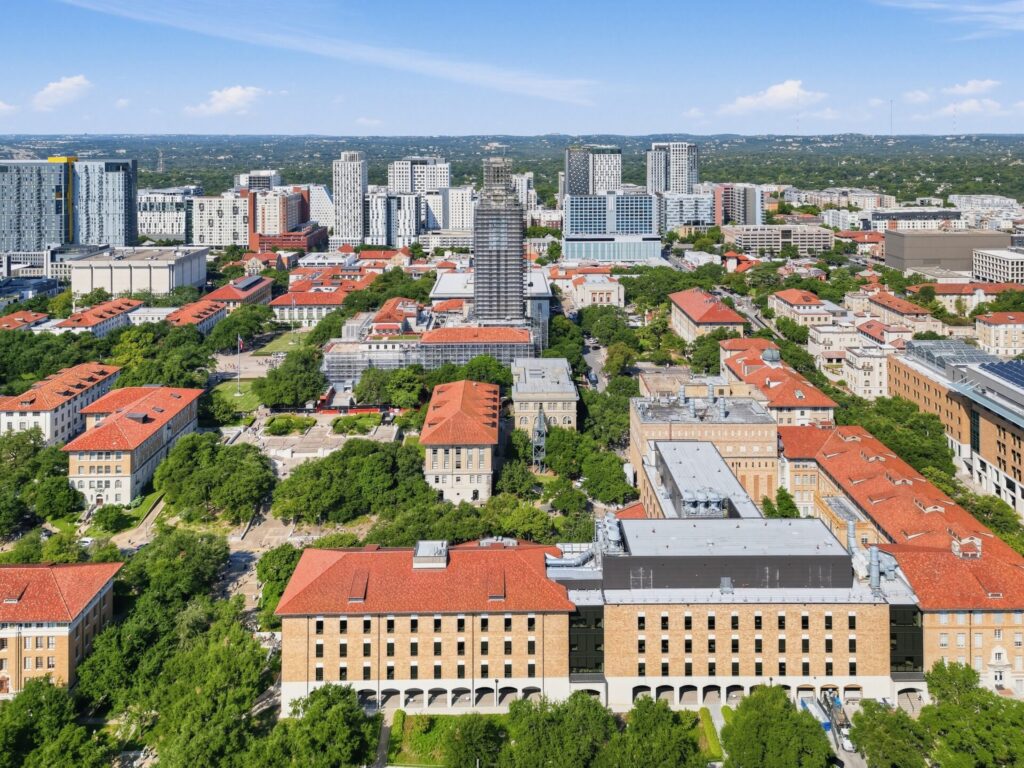
University of Texas at Austin
The University of Texas at Austin, often referred to as UT Texas or UT Austin, is the most significant college in Austin. The campus heavily defines much of the city and sits in the Downtown Austin area. It’s a public research university known for excellent academics and highly ranked research — a Tier 1 research institution, ideal for those interested in innovative fields such as medicine and engineering. The top degrees here include:
- Computer Science and Artificial Intelligence
- Engineering
- Business and Finance
- Geosciences
- Natural Sciences and Mathematics
The school has a vibrant energy, one of the main traits that draw people to enroll. There are constantly events and activities happening on campus, so students never have to be bored.
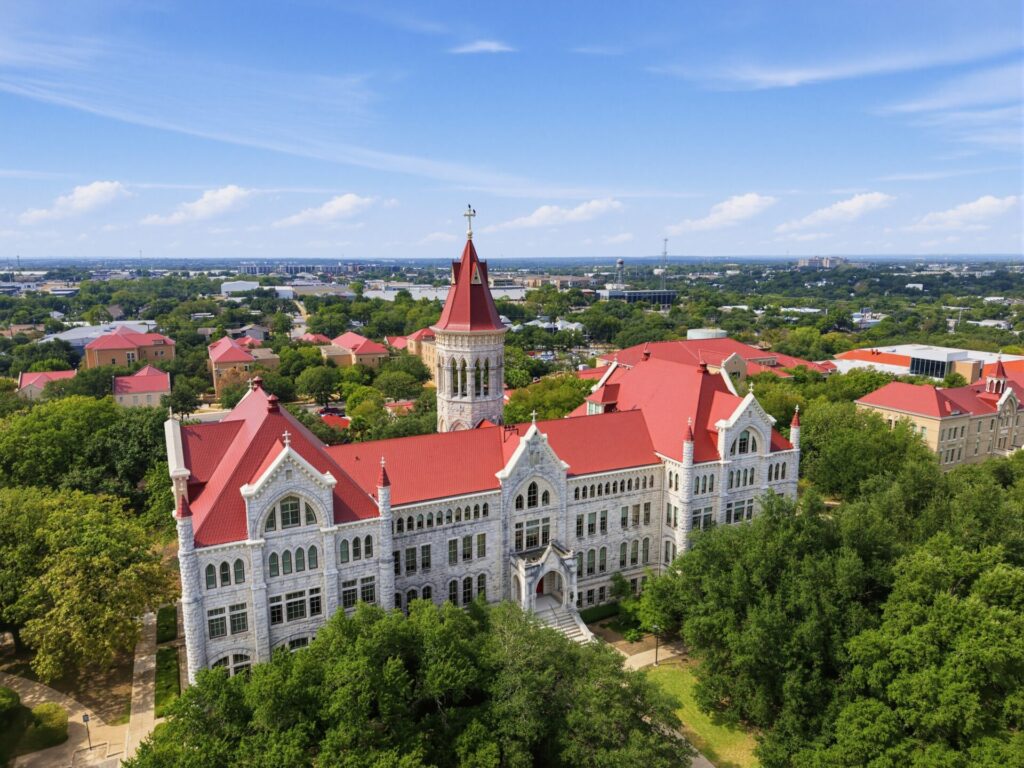
St. Edward’s University
St. Edward’s University is a private, non-profit school focused on liberal arts education. It’s in South Central Austin, just south of Travis Heights and Bouldin Creek. Founded in the Roman Catholic tradition, the campus atmosphere is quite progressive. People enjoy the small class sizes and central location. The top degree programs here are:
- Business, Management and Marketing
- Psychology
- Communication and Journalism
- Computer Science and Environmental Science
- Political Science and Government
- Biological Sciences
St. Edward’s is among the best universities for undergraduate students, offering robust and thoughtful foundational knowledge for students to build their careers with.
Huston-Tillotson University
Located in Central East Austin, Huston-Tillotson University is a private historically Black university affiliated with the United Methodist Church, the United Church of Christ and the United Negro College Fund. It is the city’s oldest higher education institution, set in a historic cultural district that brings character to the campus. The highest-ranking degree paths are below:
- Business Administration and Management
- Psychology
- Kinesiology and Exercise Science
- Criminal Justice and Law Enforcement Administration
- Education
Huston-Tillotson University has a great reputation, and it’s getting even better — the school is steadily improving on many levels and is known for helping students find the best path for their career.
Concordia University Texas
Concordia University Texas is up in Northwest Austin, providing a more secluded, quiet learning atmosphere than the schools in the heart of the city. This private institution lets students choose from a range of learning formats, including full-time, part-time and online enrollment. The most popular degree programs are in:
- Nursing
- Business Administration
- Computer Science and Cybersecurity
- Kinesiology and Exercise Science
- Psychology and Behavioral Sciences
It’s one of the smaller schools, sitting on over 300 acres of a nature preserve, so it has a pastoral, calm feel. The smaller size also means smaller classes, making it wonderful for those who want more focused attention and guidance.
Austin Community College
Austin Community College has several campuses around the city, including in the Highland, Northridge and Rio Grande areas. It’s a convenient, accessible and generally affordable option, and many students praise the faculty. Top programs here include:
- Engineering
- Computer Science and Information Technology
- Nursing and Health Sciences
- Advanced Manufacturing and Semiconductor Technology
- Business and Accounting
You can earn a two-year associate’s degree and then transfer to another school to complete your education. ACC also offers bachelor’s degrees in Cybersecurity, Software Development, Manufacturing Engineering Technology and Nursing.
Adult Education and Lifelong Learning
Austin also has ample resources for older adults who want to keep learning. You can find learning and education centers that aim to help people of all ages expand their minds.
The University of Texas at Austin Osher Lifelong Center
UT Texas has a dedicated learning center for adults, known as UT OLLI. It features both in-person and online learning taught by subject experts. These are non-credit classes, but can offer a similar experience to traditional college courses, and include offerings outside standard academics, such as yoga and music.
Lifetime Learning Institute of Austin
The Lifetime Learning Institute of Austin (LLI) is another marvelous institution for adults who want to enrich their minds. The classes are extremely diverse and welcoming, and it’s a beautiful community to join — take classes like Watercolor Painting Basics, Aging Gracefully, Spanish Upper Level and much more.
Austin also has lifelong learning and adult education centers that cater to a range of needs:
- Lifelong Learning with Friends: A learning space for adults with autism, Down syndrome and other IDDs.
- Adventurers Academy of Lifelong Learning: An education center that helps adults with intellectual and developmental disabilities.