
Family Farms in the Madison Region: A Rich Legacy
Family farms are the heart of Wisconsin agriculture, comprising approximately 95% of all farms in the state. In the Madison Region, three such families exemplify this tradition, skillfully navigating market demands and evolving consumer preferences while sustaining their multigenerational farming legacies. Here’s a look at how family farms in the Madison Region are carrying on these rich traditions.
In This Article
From Fort Atkinson to Your Table
Jones Dairy Farm is a breakfast company, but it doesn’t make milk or cream. The family business, led by sixth-generation farmer Philip H. Jones, produces bacon, Canadian bacon, braunschweiger sausage, ham and its signature product, breakfast sausage. In 1889, Milo C. Jones (Philip’s great-great-grandfather) used his mother’s sausage recipe – just pork, salt and spices – to lay the foundation for the bustling food manufacturer based in Fort Atkinson in Jefferson County.
Newer product offerings include meatballs, chicken and turkey sausage, and organic options. Ninety-eight percent of its products are made within 1 mile of the Jones family’s original settlement in 1832, where patriarch Milo Jones was a dairy farmer.
The family still uses the original farmhouse, the building depicted in the company logo. Down the street is Jones Market, a retail space located in a 1906 brick building, site of the original manufacturing plant. “In addition to carrying our products, fresh deli items and Wisconsin favorites, we ship across the country out of this building,” says Mariah Hadler, company store and customer engagement manager.
She explains how their products never have fillers, allergens or preservatives. “It’s trendy now for food companies to say that, but we’ve never had them in our products,” she notes. “And we never will.”
A Legacy of Stewardship in Janesville
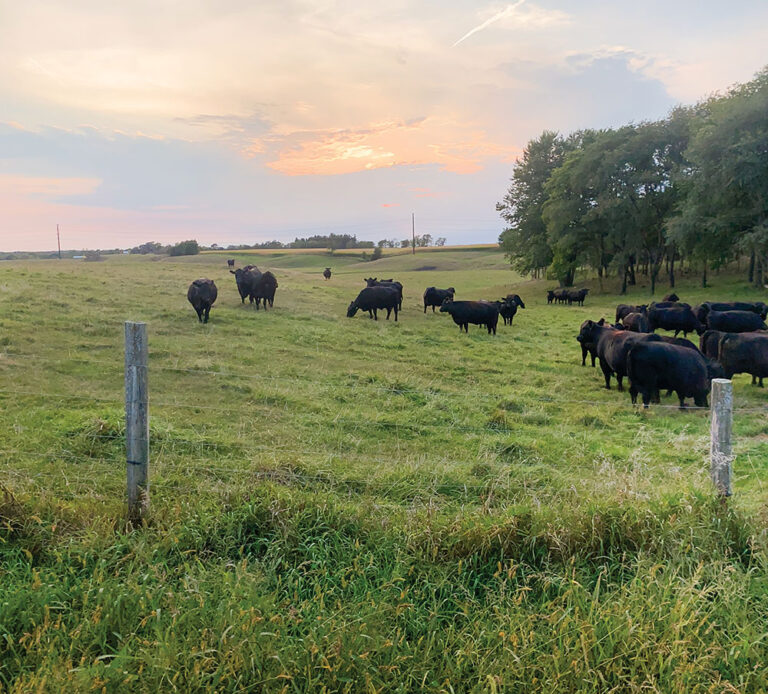
For over a century, the Arndt family has farmed land south of Janesville. The family raises beef cattle and grows row crops, carefully integrating the two for a successful operation.
“The majority of our corn, soybeans and alfalfa feeds our livestock,” says Austin Arndt, who operates Arndt Land & Cattle with his brother, Abraham, and their father, Robert.
The manure created by the cattle is incorporated on the fields as organic fertilizer. After row crops are harvested, the Arndts plant cover crops such as cereal rye and turnips, which improve soil health and help reduce erosion in addition to serving as a fall grazing source for the beef cattle. For these and other sustainable practices, the farm was recognized with the Wisconsin Cattlemen’s Association’s Environmental Stewardship Award.
Most of the cattle are sold to large food companies but a small number of them are processed and sold as quarters, halves or whole steers, or as retail cuts.
“Folks can buy meat directly from us and know where their food comes from,” Austin Arndt says.
He and his brother are committed to the long-term sustainability of their Janesville-area farm.
“Because of development pressure, we’re going to have to get more efficient with fewer resources such as land, whether that’s with new technologies or improving efficiencies,” he says. “Our kids will be the fifth generation, and that’s what sustainability is to us, taking care of the land for the next generation.”

Education, Careers & Opportunity
Raise a Glass to Successful Ventures in the Madison Region
Learn how three Madison-area professionals are thriving in Wisconsin.
Crave Brothers Leads the Way in Waterloo
In 1980, Crave brothers Charles and George purchased a dairy farm in Waterloo. Soon, two more brothers, Tom and Mark, joined the partnership.
By 1999, the family started planning for the next generation. “The idea to make cheese was to extend our business utilizing our own milk,” says Roseanne Crave, second-generation family member, and sales and marketing manager.
Fresh mozzarella, a then-emerging market, was the first product, as suggested by the Center for Dairy Research at the University of Wisconsin-Madison.
Today, this award-winning fresh mozzarella remains the flagship item of Crave Brothers Farmstead Cheese. The farm also produces mascarpone, chocolate mascarpone, Farmer’s Rope branded string cheese, and Oaxaca. Most of the products are available nationally at retail stores or shipped directly to consumers.
The farm’s 2,000 Holstein cows provide milk for all that cheese. Most of the forages the cows eat are grown on the farm’s 2,500 acres as well. The crops are fertilized with recycled nutrients from a manure digester, which breaks down manure into biogas, liquid fertilizer and dry organic matter. The biogas provides clean energy for the farm and beyond, the liquid manure fertilizes the fields, and the dry matter is used for animal bedding.
“When we installed this in 2007, it was very forward thinking,” Roseanne says of the manure digester. “I’m optimistic that we’re going to remain innovative with different product lines to meet consumer preferences.”
A Warm Willkommen
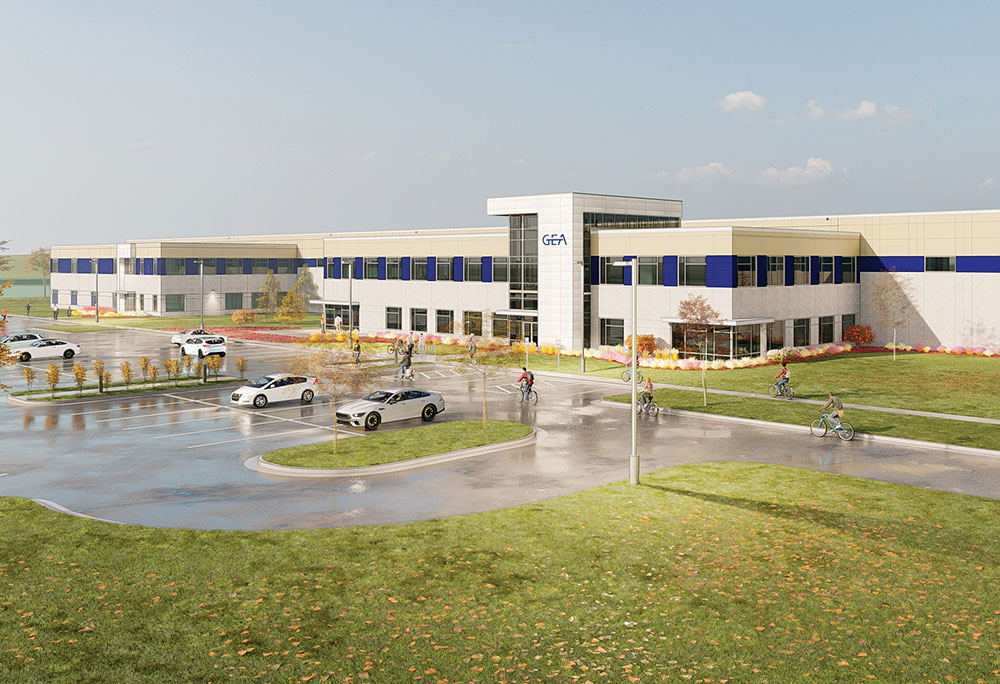
Janesville in Rock County is extending a warm welcome to GEA, a German company set to open a bioprocessing food technology center in 2025.
GEA is a global engineering company that supports industries and sustainability, including the food and beverage sector that the Janesville facility will focus upon.
“Janesville offers the perfect combination of location, talent and community support for GEA’s new Technology Center for Alternative Proteins,” says Thorsten Heidack, senior vice president of GEA Liquid and Powder Technologies, the division leading GEA’s new food activities in North America.
The new pilot center will expand GEA’s Janesville site, which has been operating as a fabrication, repair, logistics and training facility for separators, pumps and valves since 2024.
The center will focus on developing proteins for healthier and more sustainable plant-based or cell-based foods, offering consumer alternatives to traditional foods such as meat, dairy, seafood and eggs.
With the global population projected to reach 10 billion by 2050, GEA’s food research aims to meet the demand for wholesome and fortified foods.
“Situated in the heart of the Midwest’s agrifood belt, the Madison Region provides proximity to leading universities, innovative biotech hubs and a workforce skilled in food and beverage technologies,” he says.
GEA has already made a significant impact in the U.S. food sector. For example, GEA’s systems process one-quarter of the world’s milk, showcasing its leadership in sustainable food production.
The Janesville center represents yet another milestone for the company. The Janesville site will employ a diverse workforce that includes machine operators, bioprocessing engineers and scientists.
Officials also aim to assist entrepreneurs in the food and drink sector by developing business plans and advancing their innovative ideas.
– Kevin Litwin contributed to this article.