

Carolina Forest, Myrtle Beach, SC: Suburban. Expanding. Family-Oriented.
Carolina Forest is a large master-planned suburban community located west of the Intracoastal Waterway in the greater Myrtle Beach, South Carolina area. Developed primarily from the 1990s onward, Carolina Forest represents one of the fastest-growing residential areas along the Grand Strand, known for its newer housing stock, extensive subdivision development, and strong connection to the Horry County school system. Unlike the tourism-focused districts closer to the oceanfront, Carolina Forest functions primarily as a full-time residential community centered on schools, suburban amenities, and everyday convenience.
Positioned between U.S. Highway 501, Carolina Forest Boulevard, and the S.C. Highway 31 corridor, the neighborhood benefits from access to major commuter routes while maintaining a distinctly suburban identity. Residential subdivisions, shopping centers, schools, parks, and golf communities define much of the landscape. Residents are within relatively short driving distance of the beach, airport, and entertainment districts while remaining removed from the most heavily trafficked tourism corridors.
Overall Vibe & Lifestyle
Life in Carolina Forest centers on convenience, space, and suburban routine. Unlike Myrtle Beach’s oceanfront districts or mixed-use neighborhoods like The Market Common, Carolina Forest is built around residential subdivisions, schools, youth sports, and everyday family-oriented activity.
Residents are often drawn to the neighborhood for its combination of newer homes, access to highly sought-after schools, and proximity to shopping and services. Daily life typically revolves around short drives between residential neighborhoods, grocery stores, schools, restaurants, and recreational facilities. The overall pace feels more residential and structured than the tourism-heavy coastal sections of Myrtle Beach.
The neighborhood appeals strongly to families, retirees, remote workers, and buyers seeking newer-construction homes in a master-planned suburban environment. Because of its size, Carolina Forest contains a wide range of subdivisions and housing styles, creating a broader mix of residents and price points than many smaller Grand Strand communities.
Safety & Walkability
Carolina Forest functions primarily as a car-dependent suburban neighborhood. Major roads such as Carolina Forest Boulevard and River Oaks Drive connect the community’s subdivisions, schools, shopping centers, and recreational facilities, but most errands require short drives rather than walking.
Sidewalks are common within individual subdivisions and along portions of the main corridors, supporting neighborhood walking, jogging, and biking for recreation. However, the broader layout prioritizes vehicle access and suburban connectivity over mixed-use pedestrian design. Traffic volume can increase significantly during school hours and peak commuting periods, particularly near Highway 501 intersections and school zones.
While walkability between commercial areas is limited, many residents prioritize the neighborhood’s residential layout, newer infrastructure, and access to parks and recreational amenities rather than urban-style pedestrian access.
Natural & Built Environment
The built environment in Carolina Forest reflects large-scale suburban expansion and planned residential development. The neighborhood consists primarily of newer subdivisions with detached single-family homes, townhomes, apartment communities, and golf-course-oriented developments spread across a broad geographic area.
Landscaping throughout the area includes retention ponds, planted buffers, newer tree growth, and maintained common spaces integrated into subdivision planning. Compared to older coastal neighborhoods, Carolina Forest features wider roads, larger commercial centers, and more modern infrastructure.
Outdoor recreation options are woven into the community. International Drive Ballpark & Fields and nearby recreation fields support youth sports and community events, while walking trails and green spaces are distributed throughout many residential sections. Residents also benefit from relatively quick access to the Intracoastal Waterway, local golf courses, and beach destinations farther east.
Design & Architecture
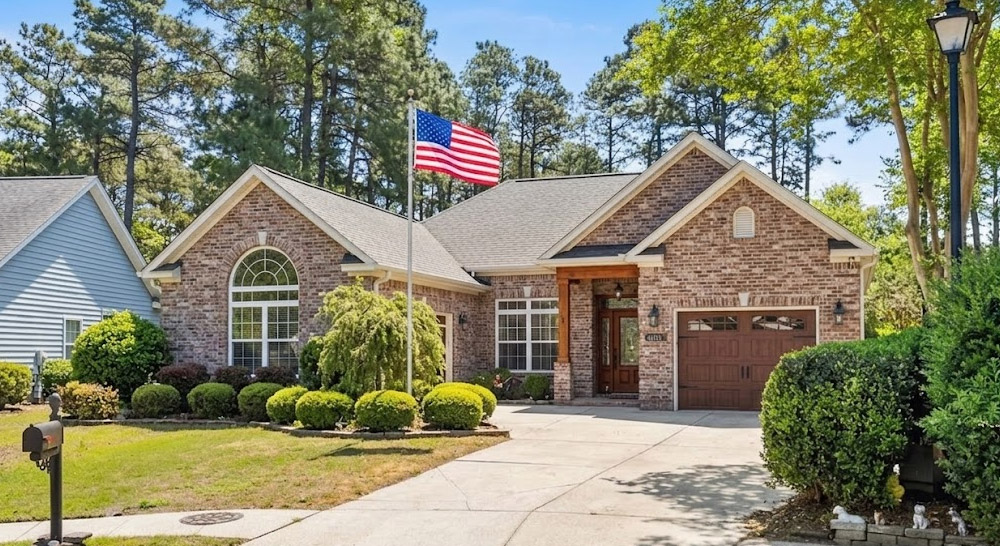
Architecture in Carolina Forest reflects contemporary suburban and master-planned community design. Most homes were constructed from the late 1990s through the present, resulting in a housing inventory dominated by newer construction and modern floor plans.
Residential styles commonly include traditional suburban homes, coastal-inspired designs, townhomes, and golf-course properties. Exterior materials often include vinyl siding, Hardie-style siding, brick accents, stone detailing, and attached garages. Interiors typically emphasize open-concept layouts, larger kitchens, primary suites, and flexible living spaces designed for modern family use.
Subdivision layouts vary significantly throughout the community. Some neighborhoods emphasize gated access and golf amenities, while others focus more heavily on affordability and larger-scale residential development.
Housing at a Glance
Carolina Forest offers a wide range of newer suburban housing options across multiple master-planned subdivisions and residential communities.
| Metric | Description |
|---|---|
| Type | Single-family detached homes, townhomes, apartments, and golf community properties. |
| Size & Layout | Typically 1,400 to 4,500+ square feet with 3-5 bedrooms. |
| Interior & Exterior Features | Open floor plans, attached garages, newer construction, community amenities, and larger suburban layouts. |
Real Estate Snapshot
The Carolina Forest housing market reflects strong and consistent demand driven by school access, newer homes, and continued population growth throughout the Myrtle Beach area. Buyers are often attracted to the neighborhood’s relatively modern housing inventory and suburban infrastructure compared to older coastal communities.
Inventory turnover tends to remain active across many price points, particularly in subdivisions with newer construction and community amenities. Continued development throughout the area has expanded housing options while maintaining steady demand from both local buyers and relocating residents.
| Metric | Summary |
|---|---|
| Market Demand | Strong due to schools, newer construction, and suburban growth. |
| Inventory | Active turnover across multiple subdivision types and price ranges. |
| Buyer Profile | Families, retirees, remote workers, and relocation buyers. |
| Pricing Context | Broad range from entry-level suburban housing to upper-tier golf communities. |
| Investment Pattern | Continued appreciation tied to population growth and ongoing development. |
Amenities & Local Conveniences
Carolina Forest residents benefit from immediate access to a wide range of everyday amenities concentrated along Carolina Forest Boulevard, Highway 501, and surrounding commercial corridors.
Retail centers throughout the area provide grocery stores, pharmacies, fitness centers, medical offices, and major national retailers within short driving distance of most subdivisions. Dining options range from casual chain restaurants to locally owned spots integrated throughout the broader Myrtle Beach area.
The neighborhood also provides convenient access to recreational facilities and golf courses. Nearby destinations include Myrtle Beach National Golf Club and multiple community parks and athletic complexes that support organized sports and outdoor recreation.
Because Carolina Forest is inland of the beach corridor, residents can often access practical daily services more efficiently than in heavily tourism-oriented parts of Myrtle Beach, while still remaining within driving distance of the oceanfront.
Schools & Education
Carolina Forest is served by Horry County Schools and is widely recognized for its strong demand among families prioritizing public school access. Students living in the neighborhood may be assigned to schools such as Carolina Forest Elementary School, Ocean Bay Middle School, and Carolina Forest High School, though assignments vary depending on subdivision location and enrollment adjustments. Families should confirm attendance zones directly with the district.
Nearby higher education options include Coastal Carolina University and Horry-Georgetown Technical College.
Commuting & Location
Carolina Forest’s inland location provides relatively efficient access to both regional highways and major Myrtle Beach destinations.
| Destination | Approximate Drive Time |
|---|---|
| Myrtle Beach Boardwalk | 20-25 minutes |
| Myrtle Beach International Airport | 15-20 minutes |
| Broadway at the Beach | 15-20 minutes |
| North Myrtle Beach | 30-40 minutes |
| Conway Downtown | 20-25 minutes |
Drive times may vary significantly depending on seasonal traffic conditions and school-related congestion.
Carolina Forest Neighborhood Map
Quirks & Perks
One of Carolina Forest’s defining characteristics is how fully suburban the community feels compared to much of the Grand Strand. While many Myrtle Beach neighborhoods revolve around tourism, golf resorts, or oceanfront access, Carolina Forest is built primarily around full-time residential living and everyday convenience.
Another major advantage is the neighborhood’s concentration of newer homes and planned infrastructure. Buyers seeking modern layouts, larger homes, and subdivision amenities often find more options here than in older coastal neighborhoods closer to the beach.
The neighborhood’s scale also creates variety. Carolina Forest contains everything from starter-home subdivisions to gated golf communities, allowing residents to remain within the same broader area even as housing needs change over time.
Neighborhood Logistics
Carolina Forest operates within unincorporated Horry County, with services including law enforcement, fire protection, road maintenance, and public infrastructure managed primarily at the county level. Many subdivisions within Carolina Forest include homeowners associations that oversee landscaping, amenities, architectural standards, stormwater systems, and common areas.
Parking is primarily driveway- and garage-based, with most homes designed around suburban vehicle access. Street parking availability varies by subdivision and HOA regulations. Because the community is heavily car-oriented, daily errands, commuting, and recreation generally involve driving between residential sections and commercial areas.
Traffic patterns remain one of the neighborhood’s primary trade-offs. Continued population growth has increased congestion along Carolina Forest Boulevard and nearby highway connections during peak periods. However, many residents view that trade-off as worthwhile in exchange for newer housing stock, access to schools, and proximity to the broader Myrtle Beach region without living directly within the tourism corridor.
Explore Myrtle Beach Neighborhoods
Note on imagery: Images marked “AI Generated” are visuals to illustrate the neighborhood homes, atmosphere and architectural style. To protect homeowner privacy, these images are artistic representations and do not depict specific existing properties.