
7 Ways to Experience Appalachian History in the Smoky Mountains

Who is America? Since the nation’s founding in 1776, this question has left settlers, citizens and founding fathers alike a bit puzzled. In truth, America has always spoken with a voice distinctly its own, yet somehow oddly familiar.
Its story is less a monologue and more a chorus, stitched together like a quilt from fragments left by the millions who call it home. Like Dolly Parton’s iconic song “Coat of Many Colors,” America is a rich tapestry of cultures. These diverse influences have shaped the Americana we know and love, creating the very destinations that draw travelers from every corner of the world today.
Although the exact number of these uniquely American cultural regions varies, definition is key. Cultural geographers agree that visitors to the United States encounter dozens of distinct areas. Each features its own settlement history, foodways, social values, economy, and dialect. Sometimes experts group these regions under easily recognizable names, such as New England or the Southwest. At other times, the shared character of the people and their persistent traditions create unmistakably self-contained identities.
Audiences worldwide recognize one such region for its independent, enduring spirit. Here, early residents fought for America’s freedom. Today, their descendants still live among the ridges surrounding the country’s most visited national park. Nestled in the Great Smoky Mountains, Appalachia holds a story deeply woven into the American narrative. Native American, Scots-Irish, English, and German influences actively shaped this legacy. Ultimately, they centered it on self-reliance, family, faith, and coexistence with the land.
Here, history lingers along scenic roadways, hiking trails, and overlooks. You will also find it in the nooks and crannies of small businesses and craft workshops. If the mountains are calling you, let history whisper its stories through these seven cultural experiences to discover Appalachian history in the Smoky Mountains.
In This Article
1. Visit the Oconaluftee Indian Village (Cherokee, North Carolina)
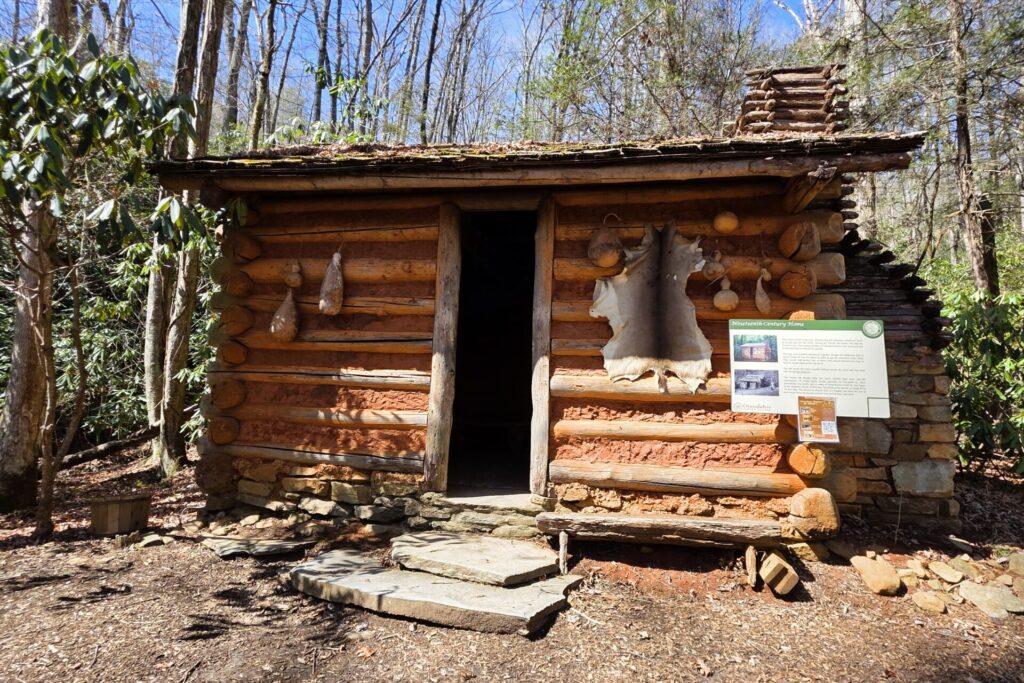
Appalachian culture, as we know it, was profoundly shaped by the Indigenous communities who thrived in the region long before European settlement. While popular history often emphasizes conflict, many neighboring settlements actually established deep networks of trade and resource sharing. Indigenous nations provided the vital ecological knowledge essential for survival in the rugged mountain landscape, while settlers introduced new metallic tools and trade goods. These early exchanges laid the groundwork for a distinct regional culture that continues to evolve today.
Indigenous neighbors fundamentally influenced Appalachian agricultural practices by introducing “Three Sisters” crops: corn, beans and squash. They demonstrated how to cultivate, prepare and preserve these foods, creating the foundation for regional staples like cornbread and hominy. They also shared essential hunting, fishing and meat-smoking techniques, alongside an invaluable understanding of foraging and medicinal plants.
Their artistic traditions left an equally enduring mark. Cherokee traditions heavily influenced the materials, color palettes, and techniques found in modern Appalachian pottery, wood carving, and white oak basketry, and audiences globally now celebrate these crafts as hallmarks of American folk art.
The Oconaluftee Indian Village presents these intersecting histories with great intentionality. A living replica of an 18th-century Cherokee settlement, the village offers immersive experiences that showcase Cherokee culture and artistry. From April through October, the grounds come alive with interactive demonstrations by local artisans and historians.
💡 Pro Tip: To deepen your understanding of the Eastern Band of Cherokee Indians, round out your visit by exploring the nearby Museum of the Cherokee People, shopping at the Qualla Arts and Crafts Mutual and catching a live performance at the Mountainside Theatre.
2. Drive the Cades Cove Scenic Loop (Great Smoky Mountains National Park)
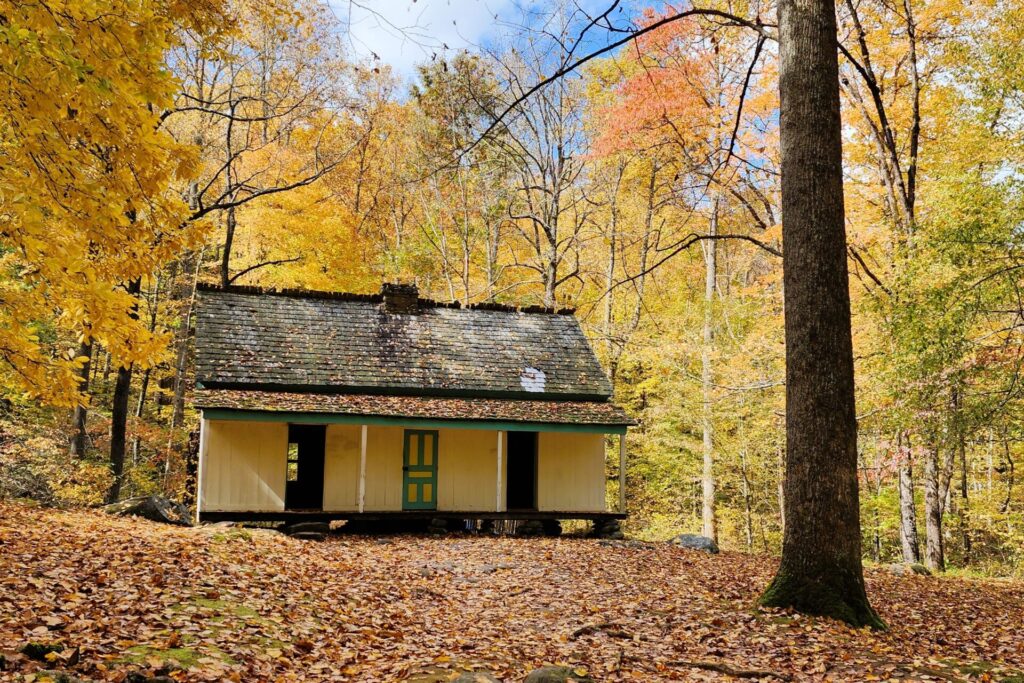
Long before the fertile valley known as Cades Cove became a national park centerpiece, the land belonged to the Cherokee Nation. They highly valued the area for its rich soil, abundant wildlife, and sheltered geography. In the early 19th century, Scots-Irish and German settlers migrated down the Great Wagon Road and established small homesteads here. Initially, they formed productive trade relationships with their Cherokee neighbors.
However, as European expansion intensified, settlers and politicians mounted immense pressure to remove Native populations. Following the passage of the Indian Removal Act of 1830, the United States government forcibly displaced Cherokee families from the valley. This tragic mass migration became known as the Trail of Tears.
The remaining settlers developed a highly self-sufficient way of life in this isolated mountain basin. They farmed, foraged, and raised livestock. They also produced practical household crafts and centered their social lives around small, independent Baptist and Methodist congregations.
This fragile peace was shattered during the American Civil War. Many Cades Cove residents held strong pro-Union sympathies, placing them at direct odds with Confederate authorities in Tennessee. From 1862 to 1864, Confederate guerrillas and bushwhackers repeatedly raided the valley—destroying property, stealing livestock and leaving scars that took the community decades to heal.
By the early 20th century, the rise of corporate logging and an influx of early automobile tourists shifted the valley’s isolation. Conservation efforts culminated in the establishment of Great Smoky Mountains National Park in 1934, which required the families of Cades Cove to relocate once more. While some stayed for a time under lifetime leases, the last full-time residents departed by 1944.
Today, Cades Cove is a beautifully preserved open-air museum. Weathered churches, log homes, barns and gristmills remain scattered across the valley, connected by an 11-mile, one-way scenic loop road.
🚲 Planning Your Visit: The loop is open daily from 8:00 a.m. until sunset. To experience the valley without vehicle noise, visit on a Wednesday between May and September, when the loop is closed to cars and reserved exclusively for pedestrians and cyclists.
3. Explore “Daisy Town” and the Elkmont Nature Trail (Great Smoky Mountains National Park)
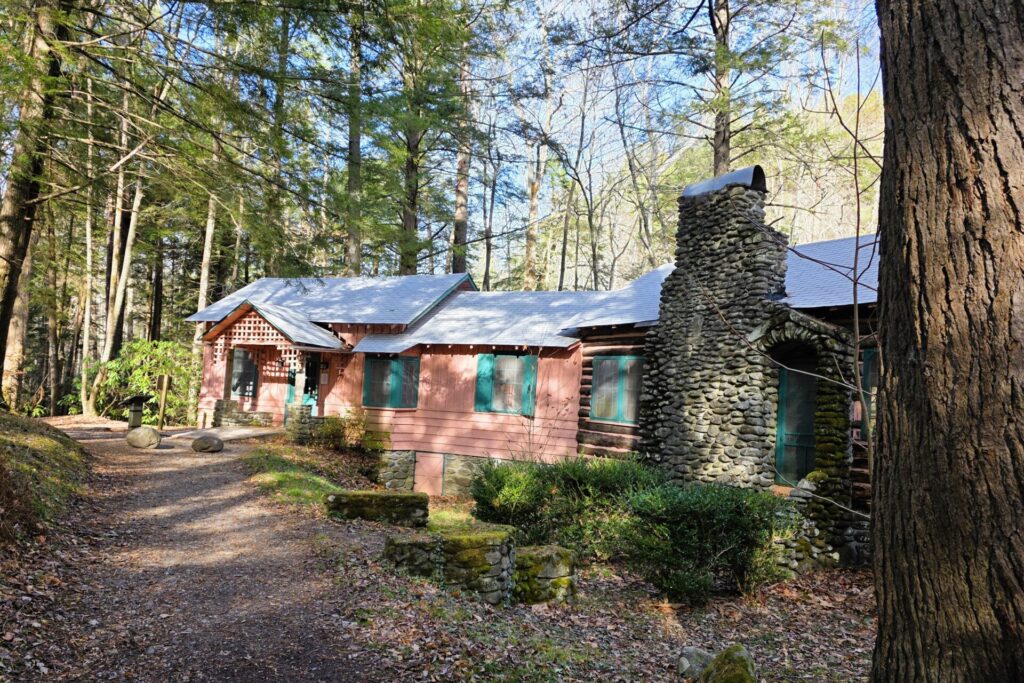
The creation of the national park transformed other settlements besides Cades Cove. Residents slowly abandoned the once-booming logging town of Elkmont after 1934, leaving behind a fascinating timeline of Appalachian industry and tourism.
First settled in the 1840s as a quiet community called “Little River,” the area changed drastically in the early 1900s when Colonel W.B. Townsend constructed a railroad deep into the timberlands. The Little River Lumber Company quickly turned the isolated settlement into a massive, bustling logging camp.
Concurrently, the railroad made the valley accessible to wealthy urbanites from Knoxville and beyond who were seeking cool mountain air. Elkmont rapidly evolved into a dual-identity town. It featured a gritty logging operation on one side and an exclusive resort community on the other. Elegant social hubs like the Appalachian Club and the Wonderland Hotel anchored the resort side.
When the land was bought up for the national park, Elkmont residents faced a choice. They could sell their properties at full value and move immediately. Alternatively, they could accept a reduced price in exchange for a lifetime lease. Many chose to stay. This kept the community alive in a unique state of transition until the final leases expired in 1992.
Today, visitors can walk through “Daisy Town,” a beautifully preserved section of Elkmont. This area features historic resort cabins currently under restoration by the National Park Service. Nearby, the Elkmont Nature Trail offers a gentle, family-friendly 0.8-mile loop. The path features 13 interpretive markers detailing the area’s forest ecology. For an enriched experience, local outfitters like Smoky Mountain Guides offer walking tours. These guided hikes reveal hidden relics, including moss-covered stone walls, solitary chimneys and the quietly abandoned Elkmont Troll Bridge.
4. Ride the Great Smoky Mountains Railroad (Bryson City, NC)
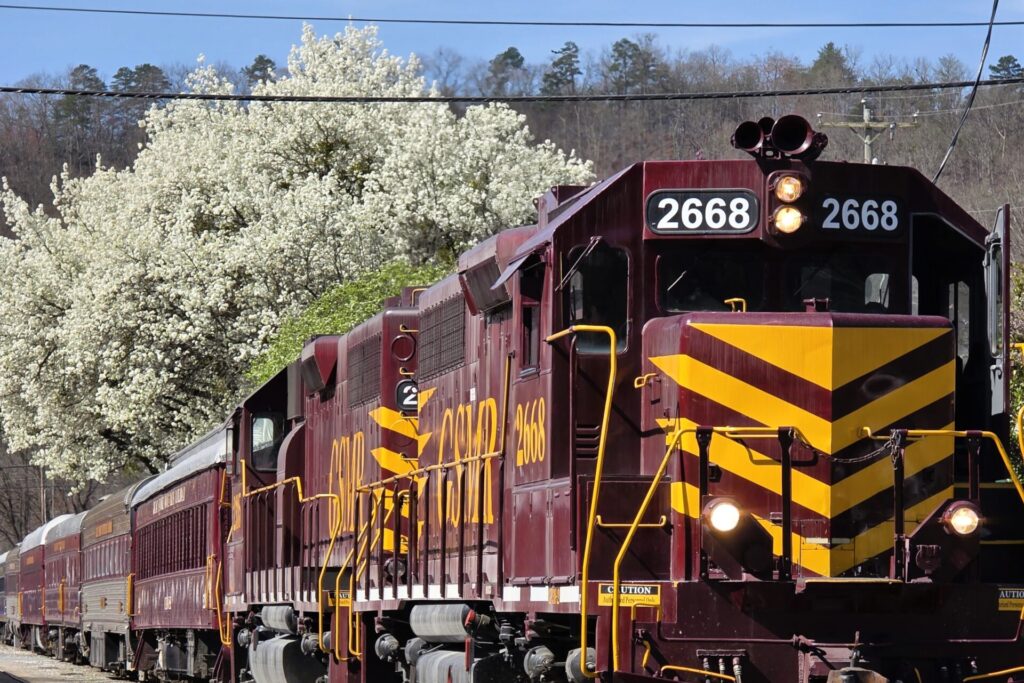
When railway workers first blasted and hammered tracks west from Asheville in the 1880s, they did more than lay iron – they fundamentally altered the economic trajectory of western North Carolina. This engineering feat connected isolated mountain enclaves to global markets, transforming small outposts into thriving timber capitals.
Incorporated in 1907 as the Knoxville, Sevierville and Eastern Railway Co. (KS&E), the line primarily transported lumber, gravel and coal out of the rugged terrain. Yet, passenger cars quickly became a major draw. The novelty of traveling by steam train into the heart of the wilderness attracted America’s earliest wave of adventure tourists.
As automobiles and paved highways rose to dominance mid-century, rail lines across the country fell into decline. By the 1980s, the historic line’s future was uncertain. Fortunately, a coalition of historic preservationists and private investors formed the Great Smoky Mountains Railroad in 1988, preserving this vital piece of transit history.
Today, you can step back in time at the historic depot in downtown Bryson City, NC. The railroad operates daily passenger excursions pulled by either historic diesel locomotives or the famous “Steam of the Smokies” steam engine. Scenic routes like the Nantahala Gorge Excursion and the Tuckasegee River Excursion offer breathtaking, cliffside views of the mountains that remain entirely inaccessible by car.
5. Shop the Great Smoky Arts & Crafts Community (Gatlinburg, TN)

A common phrase passed down through generations of Appalachian makers is simple: “I’m just keeping my hands busy.”
For early mountain residents, crafting was born out of pure necessity rather than recreation. Isolated from major trading centers, they had to carve their own bowls, weave their own textiles, forge their own tools and build their own instruments. This utilitarian focus fostered an interconnected creative economy where art, agriculture and survival were entirely seamless.
Formally established in 1937, the Great Smoky Arts & Crafts Community in Gatlinburg, TN, stands today as the largest independent artisan group in North America. Curated along an 8-mile loop road, this community features more than 100 working studios, galleries and shops. Visitors can chat with master quilters, glassblowers, potters and woodcarvers, watching them practice heritage skills passed down through families for generations.
🚏 Transit Tip: If you want to bypass downtown Gatlinburg traffic, park at the main terminal and take the city’s complimentary Yellow Line Trolley, which offers direct, hop-on-hop-off service to the entire artisan loop during peak season.
The Arrowmont Legacy
While exploring Gatlinburg’s craft history, look for the Arrowmont School of Arts and Crafts. Founded in 1912 as a “settlement school” by the Pi Beta Phi Fraternity for Women, it originally provided essential education and healthcare to rural mountain families.
Grateful local parents often paid for their children’s tuition using the only currency they had: beautifully crafted handmade quilts, baskets and pottery. These exchanges inspired the school to pivot fully into an arts institution in 1945. Today, Arrowmont is a globally acclaimed educational center hosting over 200 creative workshops annually.
6. Sample Heritage Spirits at Downtown Gatlinburg’s Distilleries
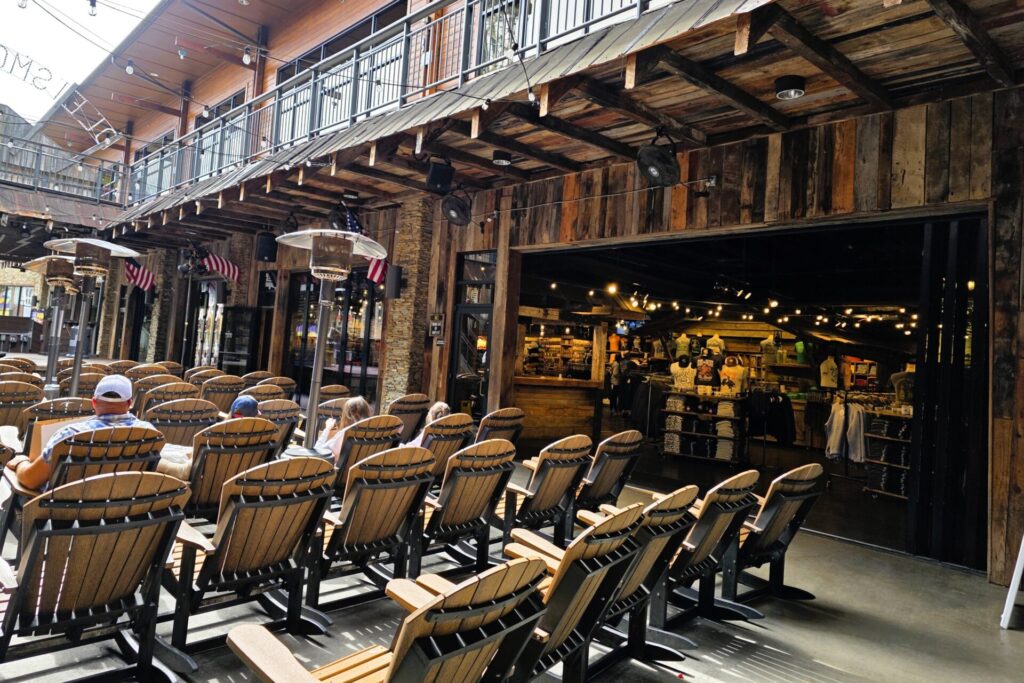
The Smoky Mountains boast a liquid legacy dating back to the late 1800s. For early Scots-Irish immigrants, distilling surplus corn into whiskey or moonshine wasn’t a vice; it was an economic survival strategy. Liquid spirits were far easier to transport over treacherous mountain passes than bulky bushels of grain, making whiskey a primary currency for trade and medicine.
When national Prohibition went into effect in 1920, the region’s spirits economy was forced underground, giving birth to the legendary era of bootlegging and moonshining. While pop culture has heavily romanticized the era of fast cars and hidden stills, for local farmers, it was a risky but necessary means of keeping food on the table during the Great Depression.
Today, Tennessee’s distilling heritage has stepped back into the sunlight. Walking down the Parkway in downtown Gatlinburg, you can experience this history firsthand through legal tastings at world-class distilleries:
- Ole Smoky Tennessee Moonshine: Operating out of its famous Gatlinburg locations, The Holler and The Barrelhouse, Ole Smoky is the most visited distillery on the planet. They pour authentic, high-proof moonshine rooted in century-old family recipes alongside inventive modern flavors like Apple Pie and Blackberry.
- The Gatlinburg Wine Trail: For a different taste of the terroir, travelers can follow this dedicated trail to sample local hard ciders, sweet mountain wines and traditional honey meads infused with wild regional berries.
7. Take a Day Trip to the Museum of Appalachia (Clinton, TN)
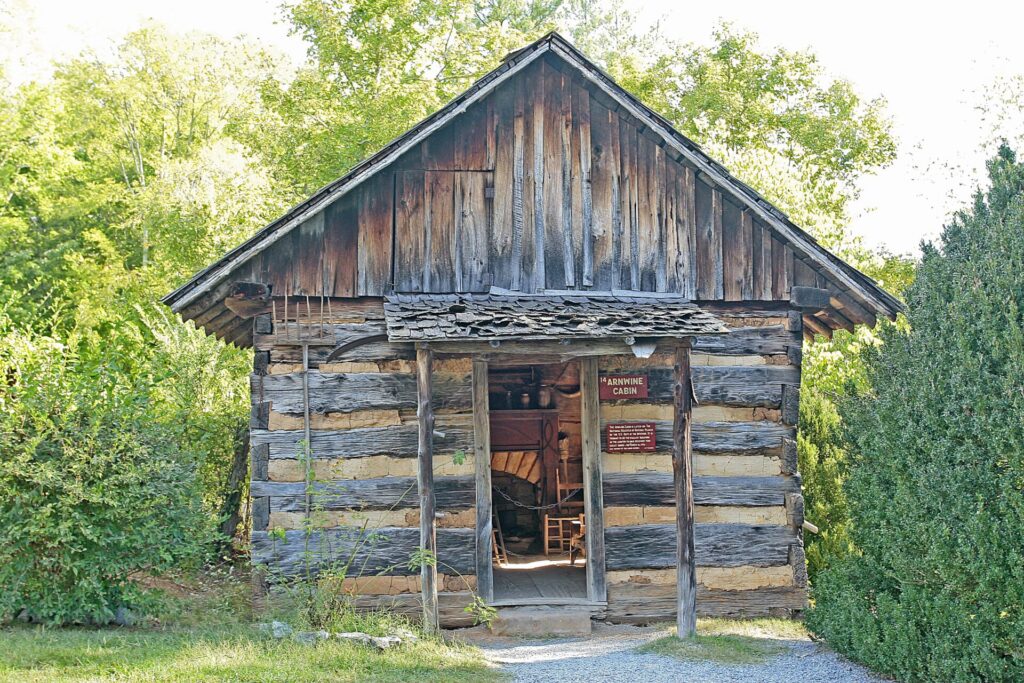
Born in 1930, Tennessee native John Rice Irwin was an “old soul” who spent his childhood listening to the stories of frontier elders and learning the mechanics of traditional tools. This early fascination turned into a lifelong mission to preserve the vanishing material culture of rural Appalachia.
For decades, Irwin traveled the backroads of the mountains, purchasing everyday artifacts, logging tools, folk art and musical instruments directly from local families. His collection grew so vast that his wife eventually demanded he find a permanent home for it. In 1969, Irwin began relocating threatened historic log structures – barns, cabins, schoolhouses and churches – directly to his 65-acre property in Clinton, TN, creating a meticulously reconstructed pioneer village.
Today, the Museum of Appalachia is a prestigious Smithsonian Affiliate and one of the most comprehensive living history museums in the nation. Rather than viewing sterile glass cases, visitors step directly into a functioning historical landscape populated by free-roaming livestock and historic gardens.
Housed within three massive exhibition buildings are more than 250,000 artifacts. What makes the museum truly unforgettable are the thousands of descriptive labels handwritten by Irwin himself, detailing not just what an item is, but the exact name, story and personality of the mountain family who used it.
🍽️ Amenities: Still operated by Irwin’s descendants, the property features a restaurant specializing in authentic Southern Appalachian country cooking, an artifact-rich gift shop and a rotation of live old-time and bluegrass musicians performing on the porch.
Experience the Resilience of the Mountains

Appalachian history is far more than a collection of dates; it is a beautifully stitched story of diverse people whose hands shaped a resilient, distinctly American subculture. As travelers, we play an active role in keeping this heritage alive by supporting the artisans, museums and parks that preserve it.
“There are people working hard to reintroduce true Appalachian culture to the wider world,” Jason Frye, producer, photographer and author of 28 travel guides, including Moon Great Smoky Mountains National Park and Moon North Carolina. “Redefining what it means to be Appalachian starts with identity – the ways we express our culture through music, writing, visual arts and traditional crafts. Once we establish that authentic identity, we can reclaim the deep regional pride that has sometimes been obscured or misunderstood.”
By experiencing the Smoky Mountains through this historical lens, you aren’t just looking at the scenery – you are listening to the living heartbeat of the hills.
📬 Where to Next?
Love discovering hidden gems and incredible communities across America? Sign up for our newsletter to get the absolute best of local food, culture, hidden travel itineraries and expert relocation advice sent straight to your inbox.