

Ballantyne, Charlotte, NC: Modern + Master-Planned
Ballantyne is one of Charlotte’s most prominent suburban communities, known for its master-planned design, highly rated schools, corporate employment centers and extensive residential amenities. Located in the southern portion of Charlotte near the North Carolina-South Carolina border, Ballantyne has evolved from former farmland into one of the region’s most desirable places to live, work and raise a family.
Unlike Charlotte’s historic neighborhoods, Ballantyne is a product of modern development. Wide boulevards, planned neighborhoods, golf courses, office campuses and mixed-use districts create an environment designed around convenience and quality of life. The community combines suburban comfort with access to major employment opportunities, making it particularly attractive to professionals and families seeking a balance between work, recreation and everyday living.
Today, Ballantyne functions as more than a neighborhood. It serves as one of Charlotte’s major business, residential and lifestyle centers, attracting residents from across the region.
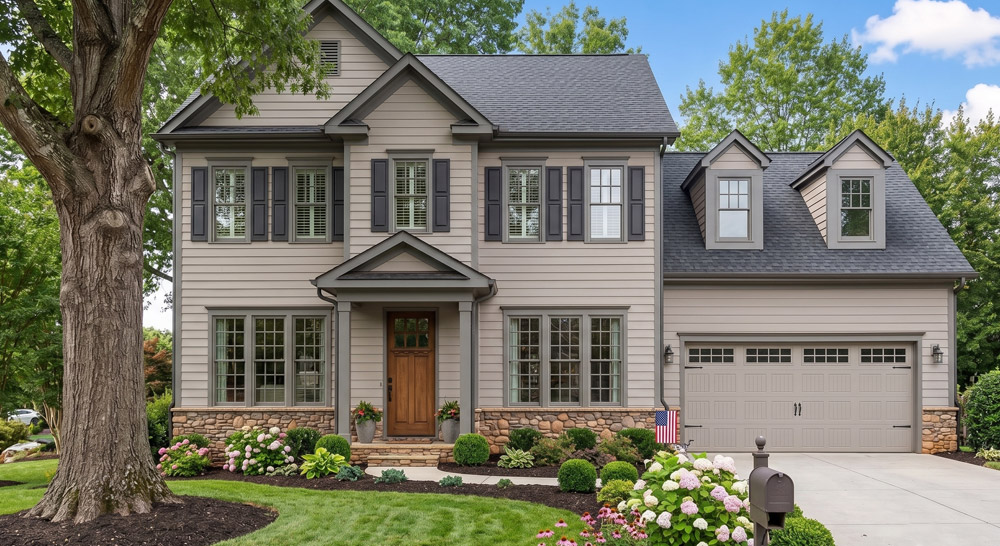
Overall Vibe & Lifestyle
Life in Ballantyne revolves around convenience, community and modern amenities.
Residents are drawn to the neighborhood for its well-maintained appearance, family-friendly atmosphere and strong concentration of services. Daily life often centers around schools, youth sports, shopping centers, restaurants and community events. Unlike Charlotte’s urban neighborhoods, Ballantyne prioritizes space, accessibility and planned growth.
Many residents work within Ballantyne’s office district or commute to employment centers elsewhere in Charlotte. The neighborhood’s extensive infrastructure and proximity to Interstate 485 help support these commuting patterns while maintaining a suburban feel.
Families make up a significant portion of the population, and much of the neighborhood’s development reflects that reality. Parks, playgrounds, greenways and recreational facilities are integrated throughout the area, creating opportunities for outdoor activity and community engagement.
The overall atmosphere is polished, active and family-oriented, with a strong emphasis on convenience and quality of life.
Safety & Walkability
Ballantyne is generally regarded as one of Charlotte’s more desirable suburban environments.
Sidewalks are present throughout much of the community, particularly within newer developments and mixed-use areas. Residents can walk between certain residential neighborhoods, parks, schools and shopping destinations, though Ballantyne remains more automobile-oriented than neighborhoods such as South End, NoDa or Dilworth.
Recent redevelopment efforts around Ballantyne’s town-center district have expanded pedestrian infrastructure and improved connectivity between residential, retail and office areas. Walking opportunities continue to improve as new mixed-use projects are completed.
Traffic tends to be heaviest along Ballantyne Commons Parkway, Johnston Road and Interstate 485 during peak commuting hours. However, the neighborhood’s planned street network generally supports efficient movement throughout the area.
Many residents balance driving for longer trips with walking and biking for neighborhood-oriented activities.
Natural & Built Environment
Ballantyne’s environment reflects its master-planned origins.
Landscaped boulevards, maintained green spaces, ponds and tree-lined streets contribute to the neighborhood’s appearance. While the area lacks the historic tree canopy found in neighborhoods such as Myers Park, extensive landscaping and preservation efforts help create an attractive suburban environment.
The Four Mile Creek Greenway provides recreational opportunities for walking, running and cycling. Additional parks and community green spaces are distributed throughout the neighborhood, supporting outdoor activity and family recreation.
The built environment consists largely of residential subdivisions, mixed-use developments, office campuses and retail centers. Newer construction dominates the landscape, giving Ballantyne a cohesive and contemporary appearance.
The ongoing transformation of Ballantyne’s town center continues to introduce additional residential, retail and entertainment options while creating a more connected community core.
Design & Architecture
Architecture in Ballantyne is primarily contemporary and suburban in character.
Most residential development occurred during the late 20th and early 21st centuries, resulting in neighborhoods that feature traditional-inspired architecture combined with modern floor plans and amenities. Brick facades, attached garages, open-concept interiors and professionally landscaped lots are common throughout the community.
Housing styles include traditional, transitional and craftsman-inspired designs, with a wide range of sizes and price points available.
The neighborhood also includes luxury golf-course communities, executive homes, townhome developments and apartment communities. New mixed-use projects continue to introduce modern architecture and higher-density residential options to select portions of the area.
The overall architectural environment feels cohesive, well-maintained and distinctly suburban.
Housing at a Glance
Ballantyne offers a wide variety of housing options, from luxury estates and golf-course homes to townhomes, condominiums and apartment communities.
| Metric | Description |
|---|---|
| Type | Single-family homes, luxury estates, townhomes, condominiums and apartments. |
| Size & Layout | Typically 1,200 to 8,000+ square feet depending on property type. |
| Interior & Exterior Features | Open floor plans, bonus rooms, home offices, attached garages, community amenities and landscaped lots. |
Real Estate Snapshot
Ballantyne remains one of Charlotte’s strongest residential markets.
Demand is fueled by the area’s schools, employment opportunities, amenities and reputation for quality living. While inventory varies by market conditions, well-maintained properties often attract significant buyer interest.
The neighborhood appeals to a broad range of buyers, including executives, healthcare professionals, technology workers, families and retirees seeking a suburban lifestyle with convenient access to urban amenities.
| Metric | Summary |
|---|---|
| Market Demand | Strong due to schools, amenities and employment access. |
| Inventory | Moderate inventory with continued residential development. |
| Buyer Profile | Families, professionals, executives and retirees. |
| Pricing Context | Above Charlotte averages but offers diverse housing options. |
| Investment Pattern | Strong long-term appreciation supported by sustained demand. |
Amenities & Local Conveniences
Ballantyne offers one of the most comprehensive collections of amenities in the Charlotte region.
The neighborhood’s commercial core includes Ballantyne Village, The Bowl at Ballantyne and a growing collection of restaurants, shops, entertainment venues and office space. Residents have access to everything from grocery stores and fitness centers to healthcare providers and specialty retail.
Dining options range from casual neighborhood restaurants to upscale establishments. Local favorites include Gallery Restaurant, Blackfinn Ameripub, Miro Spanish Grille and numerous newer concepts emerging throughout the Ballantyne district.
Golf remains an important part of the area’s identity. The Ballantyne Country Club and nearby golf communities provide recreational opportunities and social amenities for residents.
Healthcare access is another major advantage. Atrium Health, Novant Health and numerous specialty providers maintain facilities throughout South Charlotte, giving residents convenient access to medical services.
The concentration of amenities allows many residents to meet daily needs without traveling far from home.
Schools & Education
Ballantyne is one of Charlotte’s most sought-after areas for families, due in part to its educational opportunities.
The neighborhood is served by Charlotte-Mecklenburg Schools, with students potentially attending schools such as Ballantyne Elementary School, Community House Middle School, Jay M. Robinson Middle School, Ardrey Kell High School and Ballantyne Ridge High School, depending on assignment boundaries.
The area is also close to several highly regarded private schools, including Charlotte Latin School, Providence Day School and Charlotte Country Day School.
Because Charlotte-Mecklenburg Schools utilizes attendance zones and school-choice programs, families should verify assignments directly with the district.
Commuting & Location
Ballantyne’s location provides convenient access to South Charlotte, South Carolina and major transportation corridors.
| Destination | Approximate Drive Time |
|---|---|
| Uptown Charlotte | 25–35 minutes |
| SouthPark | 15–20 minutes |
| Charlotte Douglas International Airport | 25–30 minutes |
| Fort Mill, SC | 15–20 minutes |
| Matthews | 20–25 minutes |
| Lake Norman | 45–60 minutes |
Drive times may vary depending on traffic conditions.
Interstate 485 provides access to multiple employment centers and destinations throughout the metropolitan area.
Ballantyne Neighborhood Map
Quirks & Perks
One of Ballantyne’s defining characteristics is that residents can often live, work and socialize within the same community.
Unlike many suburban neighborhoods that function primarily as residential areas, Ballantyne includes major office campuses, shopping destinations, restaurants, hotels and recreational facilities. This creates a more self-contained lifestyle than many Charlotte suburbs.
Another advantage is the neighborhood’s ongoing evolution. The redevelopment of Ballantyne’s town-center district continues to introduce new dining, entertainment and residential options, helping the area remain competitive with Charlotte’s emerging urban neighborhoods.
The community also benefits from a strong reputation among relocating families, many of whom specifically target Ballantyne when moving to the Charlotte region because of its schools, amenities and overall quality of life.
Neighborhood Logistics
Ballantyne operates within the City of Charlotte, with municipal services including police, fire protection, sanitation and public works provided by the city.
Many residential communities are governed by homeowners associations that maintain common areas, amenities and neighborhood standards. HOA structures vary depending on the specific development.
Parking is generally plentiful, with most homes featuring garages and private driveways. Commercial centers provide extensive parking, though traffic can increase during peak shopping and commuting periods.
Most daily errands can be completed within the Ballantyne area, reducing the need for lengthy trips elsewhere in Charlotte. The overall trade-off is a highly convenient suburban lifestyle defined by strong schools, extensive amenities, modern housing and access to one of the region’s most important employment centers.
Note on imagery: Images marked “AI Generated” are visuals to illustrate the neighborhood homes, atmosphere and architectural style. To protect homeowner privacy, these images are artistic representations and do not depict specific existing properties.