

Education in Charlotte, NC: Learning Opportunities for Every Stage of Life
Education is one of the primary reasons families relocate to Charlotte. As the largest city in North Carolina and one of the fastest-growing metro areas in the Southeast, Charlotte offers an educational ecosystem that extends far beyond traditional K-12 schools. Students have access to one of the state’s largest public school systems, nationally recognized magnet programs, respected private schools, early college opportunities, research universities, and workforce development programs designed to meet the needs of a rapidly evolving economy.
Whether you’re raising young children, preparing a teenager for college, or pursuing professional development yourself, Charlotte offers educational opportunities at every stage of life.
In This Article
Charlotte Education at a Glance
| Category | Highlights |
|---|---|
| Primary Public School District | Charlotte-Mecklenburg Schools (CMS) |
| District Enrollment | More than 148,000 students |
| Number of Schools | More than 180 schools |
| Magnet Programs | STEM, Arts, Language Immersion, Leadership, IB, and more |
| Major University | UNC Charlotte |
| Community College | Central Piedmont Community College |
| Private Universities | Queens University of Charlotte, Johnson C. Smith University |
| Early College Programs | Multiple dual-enrollment and early college pathways |
| Workforce Development | Strong partnerships with healthcare, finance, and technology employers |
K-12 Education: One of North Carolina’s Largest School Systems
Charlotte-Mecklenburg Schools (CMS) serves students throughout Charlotte and Mecklenburg County and is one of the largest school districts in the United States.
The size of the district allows families access to significantly more educational options than are available in many communities. While neighborhood schools remain important, CMS has built an extensive school-choice system that allows students to pursue specialized academic interests through magnet programs and career-focused academies.
Many families relocating to Charlotte are surprised by the variety available in the public school system.
Programs include:
- STEM-focused schools
- International Baccalaureate programs
- Performing and visual arts academies
- Leadership-focused magnet programs
- Language immersion schools
- Career and technical education pathways
- Early college opportunities
This variety allows families to tailor educational experiences to their children’s interests and strengths rather than relying solely on geographic assignment zones.
Notable Public School Options
Several CMS schools consistently attract attention from families moving to the area.
Myers Park High School: Known for strong academics, Advanced Placement offerings, and extensive extracurricular opportunities.
Providence High School: A highly regarded South Charlotte school with strong college-preparation programs and competitive athletics.
Ardrey Kell High School: Frequently sought after by relocating families because of its academic reputation and location within one of Charlotte’s fastest-growing areas.
Northwest School of the Arts: A magnet school combining rigorous academics with intensive arts education.
Charlotte Engineering Early College: Offers students the opportunity to earn college credits while preparing for engineering and technology careers.
Why School Boundaries Matter
Unlike many smaller cities, school assignments can vary significantly depending on where you live.
Families considering relocation should use Charlotte-Mecklenburg Schools’ official school locator tool to verify attendance zones and program eligibility before purchasing a home.
Many neighborhoods are popular specifically because of the educational opportunities available nearby.
Private & Independent School Options
Charlotte also offers a robust collection of private-school options serving students from preschool through high school.
Some of the most recognized include:
Charlotte Country Day School: One of the region’s most established independent schools, known for strong academics, arts programming, and athletics.
Charlotte Latin School: A college-preparatory institution offering extensive academic and extracurricular opportunities.
Providence Day School: Known for rigorous academics, competitive athletics, and strong college-placement outcomes.
Cannon School: Located in nearby Concord, Cannon serves students from across the Charlotte region.
Charlotte Christian School: A large private Christian school offering comprehensive academic and extracurricular programs.
These schools provide alternatives for families seeking smaller class sizes, specialized educational philosophies, or faith-based instruction.
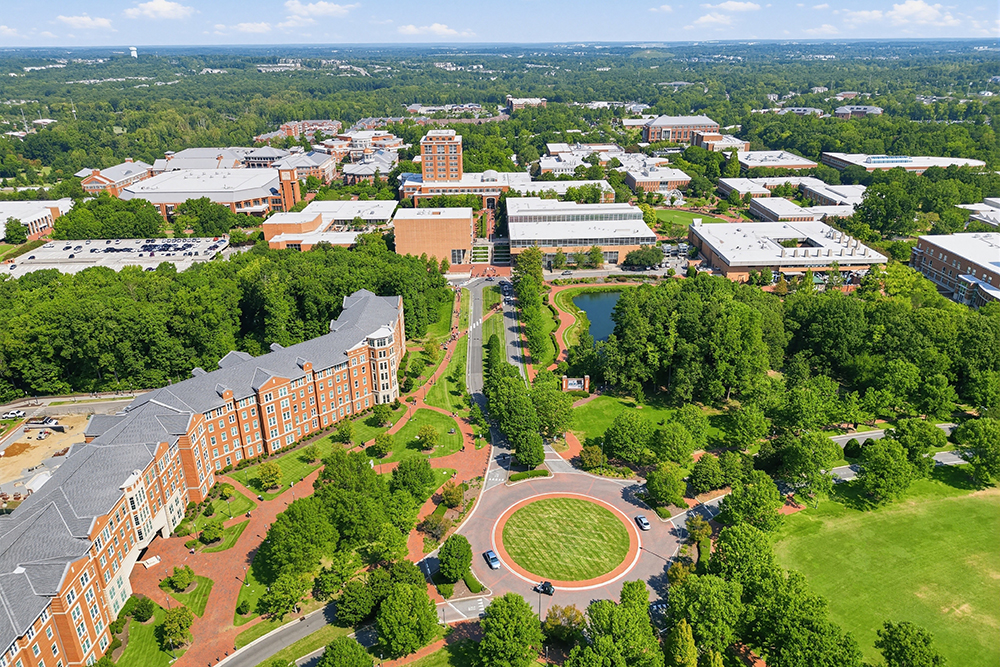
Higher Education: A Growing University City
Charlotte’s higher education landscape has expanded dramatically alongside the city’s population growth.
UNC Charlotte: With more than 30,000 students, UNC Charlotte has become one of North Carolina’s largest universities and serves as a major driver of research, innovation, and workforce development.
Popular programs include:
- Engineering
- Computer Science
- Business
- Nursing
- Architecture
- Data Science
- Education
The university plays an increasingly important role in supplying talent to Charlotte’s financial, healthcare, and technology sectors.
Queens University of Charlotte: Located near Uptown, Queens offers a smaller private-university experience with strong programs in business, health sciences, and liberal arts.
Johnson C. Smith University: Founded in 1867, this historically Black university remains an important part of Charlotte’s educational landscape.
Davidson College: Located just north of Charlotte, Davidson is consistently ranked among the nation’s top liberal arts colleges and provides another prestigious educational option within the metro area.
Workforce Development & Career Training
Charlotte’s educational system extends beyond traditional degrees.
As one of the nation’s fastest-growing business centers, the city has invested heavily in workforce-development initiatives that connect education directly to employment opportunities.
Central Piedmont Community College
Often simply called CPCC, Central Piedmont serves tens of thousands of students annually and plays a critical role in workforce development throughout the region.
Programs include:
- Healthcare Careers
- Information Technology
- Cybersecurity
- Advanced Manufacturing
- Construction Trades
- Logistics
- Business Administration
For many students, Central Piedmont provides a cost-effective pathway toward either immediate employment or transfer into a four-year university.
Industry Partnerships
Charlotte employers work closely with educational institutions to build talent pipelines.
Key sectors include:
| Industry | Educational pathways |
|---|---|
| Banking & Finance | UNC Charlotte, Queens University, CPCC |
| Healthcare | Atrium Health partnerships, Novant Health partnerships, CPCC |
| Technology | UNC Charlotte, CPCC, coding and certification programs |
| Manufacturing | Workforce development certificates and technical programs |
| Energy | Engineering and technical education pathways |
These partnerships help students gain practical experience while ensuring employers have access to qualified talent.
Learning Beyond the Classroom
Education in Charlotte isn’t limited to schools and universities.
Families have access to numerous cultural and educational institutions that support lifelong learning.
Discovery Place Science: One of the city’s most popular family attractions, Discovery Place combines interactive exhibits, STEM education, and hands-on learning experiences.
The Mint Museum: Offers educational programming alongside its art collections and exhibitions.
Levine Museum of the New South: Provides opportunities to explore regional history and culture.
Charlotte Mecklenburg Library System: The library system offers resources that extend far beyond books, including workforce development programming, digital learning tools, and community education opportunities.
These institutions help reinforce a culture of curiosity and lifelong learning throughout the region.
Why Education Is a Charlotte Advantage
Charlotte’s educational strength comes from the breadth of opportunities available.
Families benefit from one of North Carolina’s largest public-school systems, extensive magnet and school-choice programs, respected private schools, and multiple higher-education institutions. Students can begin earning college credit while still in high school, pursue degrees at major universities, and access workforce-training programs aligned with some of the region’s fastest-growing industries.
For employers, this educational ecosystem helps create a skilled workforce. For residents, it provides opportunities to learn, grow, and adapt throughout life.
As Charlotte continues to attract families and businesses from across the country, education remains one of the foundations supporting the city’s long-term success – and one of its most compelling reasons to call the Queen City home.