
College of Southern Idaho Bridges Gap Between Academics and Adventure
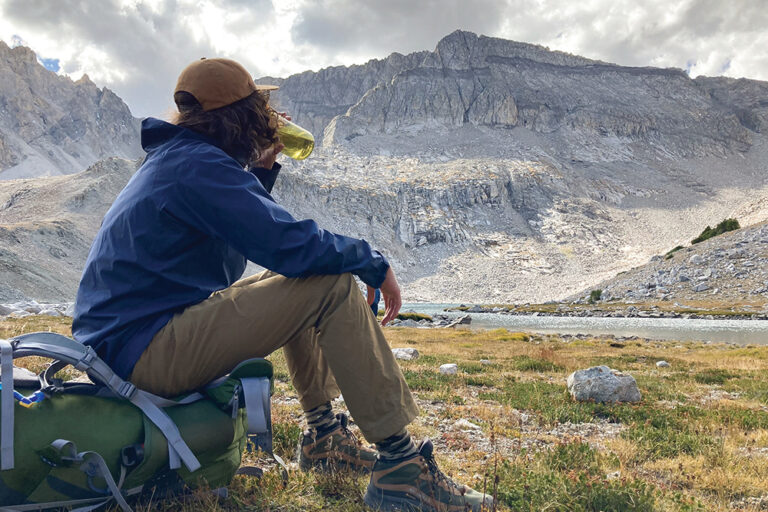
When it comes to a real-world college education experience, things don’t get much more real than the outdoor-focused academic offerings found at the College of Southern Idaho in Twin Falls.
Want to learn about whitewater rafting? There are Class III rapids along the Snake River, barely 30 miles from the CSI campus.
Interested in rock climbing? Canyon walls stretching more than 400 feet high run directly past Twin Falls.
What about backpacking or cross-country skiing? Opportunities abound in the Sawtooth National Forest just 80 miles away.
“We have so much access to outdoor recreation around here that it lets us be able to teach these programs. It’s just an amazing classroom to learn in,” says Mike Young, manager of CSI’s OutdoorRecreation Leadership (ORL) program. “We have a lot of different courses involving all four seasons of outdoor recreation that we offer to folks of all skill levels and ages.”
These include programs for students interested in pursuing a career in the outdoor recreation industry, from a basic 15-credit ORL Technical Certificate to a full two-year, 60-credit ORL associates degree. Classes range from life-saving (Wilderness First Responder, Swift- Water Rescue, Avalanche Safety) to life-affirming (Intro to Outdoor Cooking).
“Our goal is to help students who are interested in outdoors or outdoor-adjacent careers get their feet on the ground and really get into some technical skills and some human-interaction skills,” Young says. “It’s really a low-stakes way for people who are interested in the outdoors to see if they want to get on that career track. Give us two semesters, and if you love it, you can take the second year here, then transfer to other four-year degrees.
“Plus, outdoors doesn’t have to be the only thing you do. If you like engineering, we always need lighter and stronger climbing gear and other equipment. If you’re interested in medicine, we need folks to help figure out how to keep people safe while outdoors. So, it’s also a great addition to other fields.”
Skills for the Wild at Heart
While there is classroom work involved in these courses, the two-semester itinerary also sounds a lot like a great eight-month adventure trip. It begins with a backpacking class in which the students handle most of the logistics – choosing a route, setting food menus, establishing an emergency plan – for a weeklong expedition.
That is followed by a climbing class that begins with the technical aspects, then expands to focus on the myriad safety details involved in the activity.
“So, they start with little to no experience in climbing, and then hopefully leave with the ability to take other folks climbing and teach these techniques to them,” Young says.
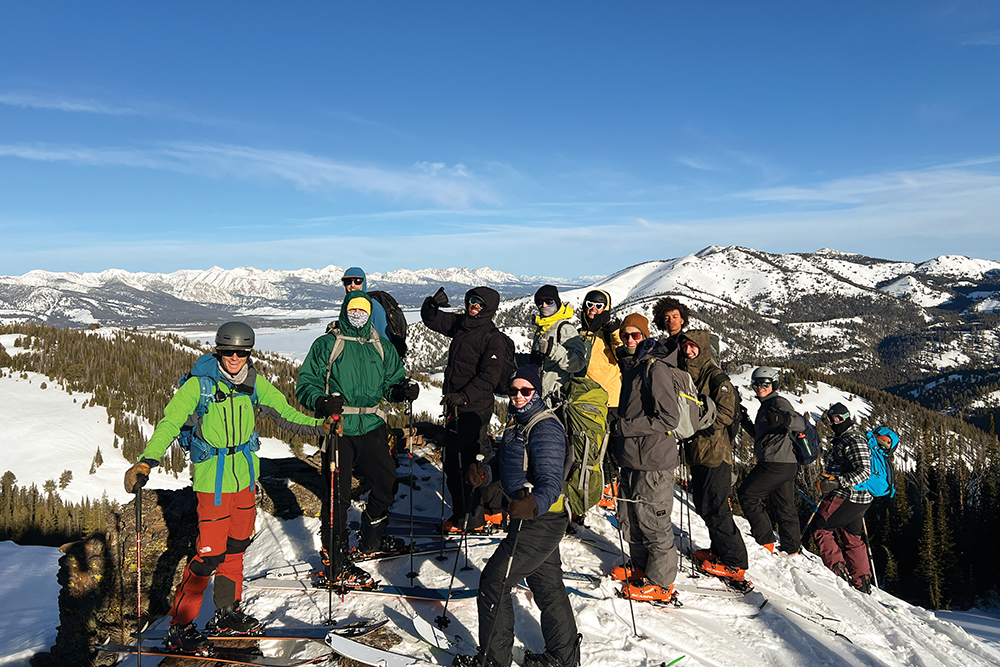
When winter rolls around, it’s time for some backcountry skiing. Students head to one of the nearby mountains twice a week for six weeks, learning a combination of basic techniques along with safety and rescue instructions. The course ends with a three-day backcountry skiing trip that includes an avalanche-rescue drill.
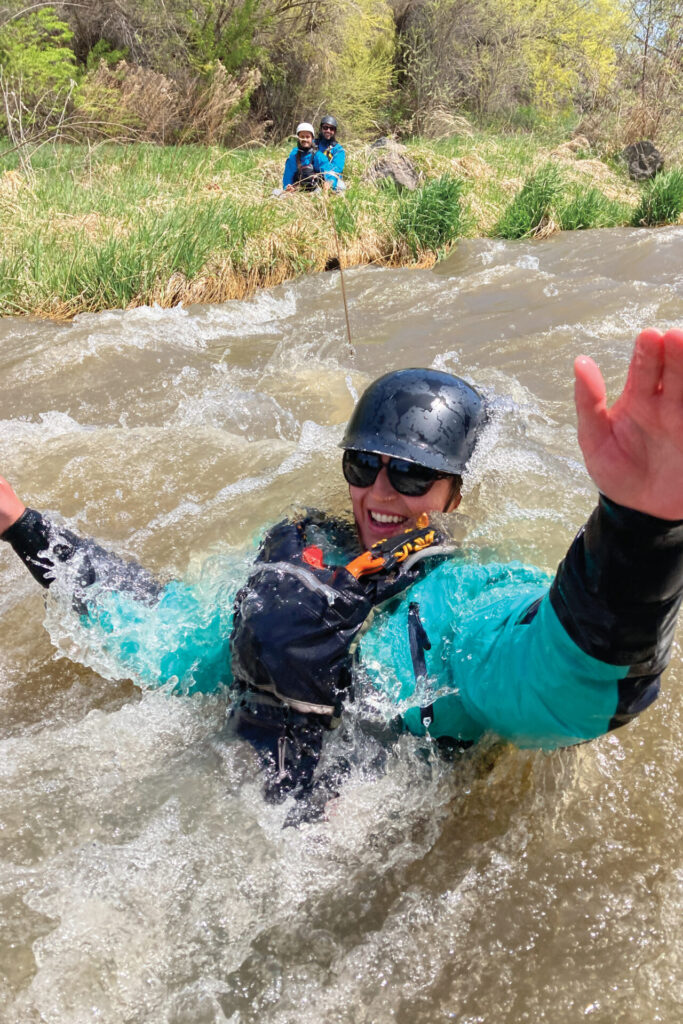
After skiing comes whitewater rafting. Students start with canoes, then move on to rafting, followed by kayaks. Finally, the spring semester concludes with a wilderness-safety course in which students learn how to deal with emergencies in the backcountry.
“There is definitely a focus on the actual skill of getting out and doing these activities and having fun,” Young says. “But many of the students are looking at getting jobs in the industry. So, we have to get them to think about it from a management lens. How am I going to take care of myself and the people I have in the field with me? We teach them to have more of a group focus.”
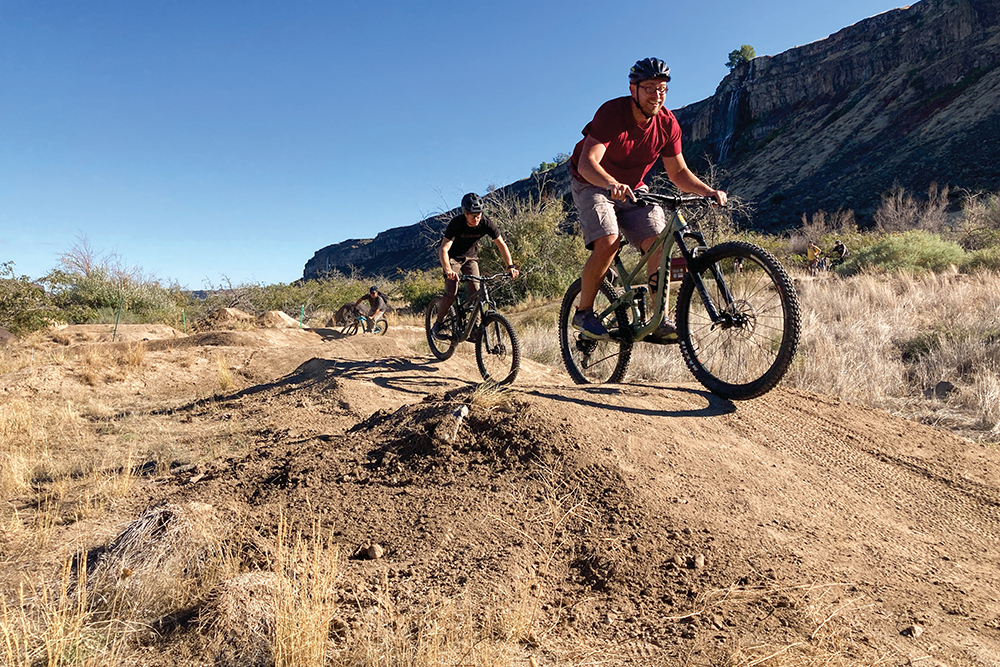
In addition to the career-minded, Young says many students, along with community members, take these classes simply to learn more about various outdoor activities. So, there are numerous just-for-fun offerings such as Introduction to Mountain Biking and Beginning Kayaking.
“I encourage folks to push themselves and try challenging things. And a lot of that is just getting out and learning a new skill,” Young says. “We have students aged 16 to 86 for some of these classes, which makes for a fun mix.”
College of Southern Idaho expands to Jerome
The College of Southern Idaho (CSI) is expanding in 2026 with the scheduled opening of the LeRoy Craig Jerome Center educational facility. This 20,000-square-foot satellite building in downtown Jerome, approximately 15 miles from the main campus in Twin Falls, will house a health professions academy as well as training space for food processing and other regional employment needs.
Named in honor of former CSI board member and longtime Jerome resident LeRoy Craig, the new center will be designed to provide hands-on learning opportunities in industry-style settings, all in one centralized location. It was developed in collaboration with the Jerome Urban Renewal Agency and the U.S. Department of Agriculture, with assistance from U.S. Rep. Mike Simpson.
“This facility has been a long time coming, and will greatly enhance our ability to serve the residents of Jerome County,” CSI President Dr. L. Dean Fisher said in a press release.
The College of Southern Idaho also has off-campus facilities in Burley (the Mini-Cassia Center). In 2024, CSI’s total enrollment exceeded 12,000 students.
Get to Know Southern Idaho
Visit livability.com/southern-idaho to learn more about living, working and playing in the region.