
Workforce Development in Eastern Idaho: Creating Pathways to Success
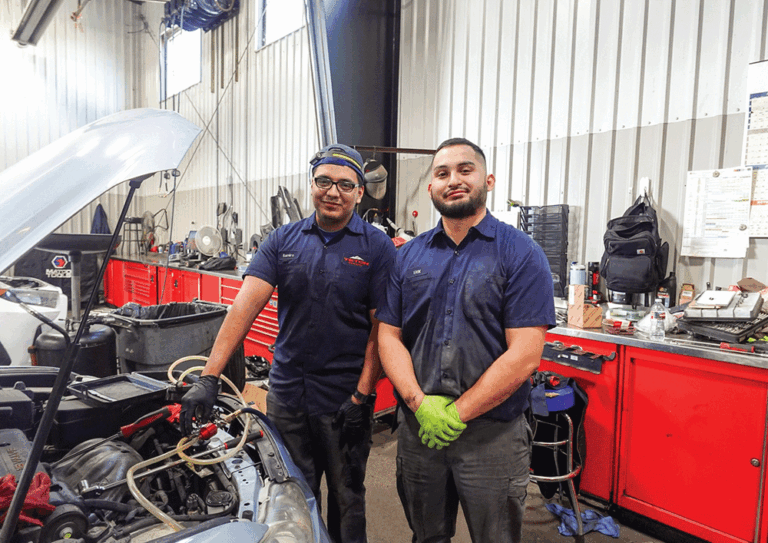
In Eastern Idaho, workforce development has become a central strategy for long-term economic growth, ensuring businesses can find the talent they need and residents can access the skills training that leads to job security.
Anchoring these efforts are Next Steps Idaho, Idaho Business for Education and the Idaho Workforce Development Council – a network of programs, initiatives and organizations working together to align education with workforce demands. From career exploration and financial support to apprenticeships and work-based training, it helps forge a road map from classrooms to careers.
In This Article
Taking the Next Steps
Next Steps Idaho – an online platform through the Idaho State Board of Education – serves as one of the state’s most visible and impactful tools for connecting educational opportunities with the workforce.
According to Marissa Morrison, communications director with the Idaho State Board of Education, the platform is designed to introduce residents to opportunities in high-demand fields, such as health care, agriculture, energy and manufacturing.
“The platform gives students and families clear, reliable information about career pathways, training requirements and opportunities available right here in Idaho,” Morrison says. “It helps ensure students understand the high-demand occupations that are growing in the region and the preparation needed to succeed in them.”
The platform also offers helpful tips for finding educational funding and planning for life after high school graduation. Morrison says the Next Steps platform brings together job-demand indicators, wage data and education options in one place to pair career exploration with local workforce needs and trends.
“By providing a single, statewide resource that ties together industry data, education options and career planning supports, Next Steps Idaho helps students make informed decisions and supports a stronger, better-aligned talent pipeline,” Morrison says. “And by combining career exploration tools with accurate statewide demand indicators and connections to local training providers, the site helps students see real pathways into Idaho’s priority industries.”
Did You Know?
Five federal agencies have operations in Eastern Idaho:
Department of Energy
Department of Defense
Federal Bureau of Investigation
Homeland Security
U.S. Navy
Ready to LAUNCH
Affordability remains one of the biggest barriers to postsecondary education, and the Idaho LAUNCH program is another resource working to break down those barriers. The grant program covers up to 80% of tuition and fees – up to $8,000 – for programs tied to regional, in-demand careers.
“Idaho LAUNCH significantly reduces the financial barriers that keep many families from pursuing postsecondary education. For Eastern Idaho families, this can mean the difference between attending college or not,” Morrison says. “LAUNCH allows students to choose the option that best fits their goals, whether that’s a certificate, apprenticeship, two-year program or four-year degree.”
She says that accessibility directly primes the workforce pipeline.
“When more students can afford to pursue high-demand skill sets, regional employers see a larger, more prepared talent pool,” Morrison says. “Over time, this broader access helps reduce workforce shortages, supports business growth and keeps Eastern Idaho competitive.”
Apprenticeships at Work
While Next Steps Idaho and Idaho LAUNCH focus on awareness and access, Idaho Business for Education (IBE) turns career interest into hands-on experience.
Angie LeBlanc, business development and program manager for IBE, says youth apprenticeships are a powerful tool for workforce readiness. IBE manages some 1,200 apprenticeship pathways for students aged 16 to 24 in areas that include welding, construction, health care, early childhood education and automotive technology.
“We connect students with training plus work experience, employer partners and education credentials through paid, structured apprenticeships,” LeBlanc says. “Each of our apprenticeships is federally recognized by the U.S. Department of Labor, and each apprentice receives a nationally recognized credential.”
A Coordinated Approach
Partnerships are at the heart of the region’s workforce development success. The Idaho Workforce Development Council, for example, ties many of these efforts together, providing leadership, funding and cohesion across the state’s organizations.
Through initiatives such as Talent Pipeline Management, the Idaho Leader initiative and the Youth Apprenticeship Readiness Grant, the council ensures the region’s businesses are involved in the workforce development process. Programs such as educator externships also bring industry insight directly into classrooms, while Next Steps Idaho and the IBE’s apprenticeship programs keep students engaged.
“We collaborate with statewide and regional partners like the Idaho Workforce Development Council, local school districts, employers and postsecondary institutions to ensure apprenticeship pathways align with real, in-demand jobs,” LeBlanc says. “This has allowed IBE to place 285 apprentices in just over a year and to reach all parts of Idaho, including rural areas.”

The Future Is Now
In Eastern Idaho, schools, colleges and universities are developing innovative programs today to secure a highly skilled workforce for tomorrow. For example, the Portneuf Valley Technical Education Career Campus (PV Tech) in Chubbuck, which opened in 2024, plays a critical role in regional workforce development by directly addressing local labor market needs and preparing high school students for immediate employment opportunities.
PV Tech creates a pathway from high school to employment, with 18 of its 23 career pathways leading directly to entry-level jobs. All career pathways are designed so students can either enter the workforce immediately after graduation or continue their education toward associate or bachelor’s degrees.
“When they come here, they’re coming to work. And so, we don’t talk about these classes as being electives,” says Rhonda Naftz, principal of the Portneuf Valley Technical Education Career Campus. “Yes, they are electives for their transcript to be able to graduate, but we really talk about them as being professional development opportunities, and that this is their chance to learn about their future careers.”
The school, which is part of Pocatello-Chubbuck School District 25, works closely with local businesses to ensure students are learning the skills leading industries need. Naftz says each pathway maintains a Technical Advisory Committee made up of industry professionals.
“Through these partnerships, we are able to host guest speakers and take field trips to local businesses. They offer guidance on current industry standards and equipment needs. They even offer internships and work experiences to our upper-level students,” she says. “For example, the Animal Science program partners with local veterinarians, Zoo Idaho, the Humane Society and animal shelters.”
Changing Lives at CEI
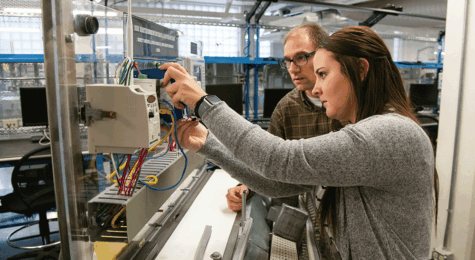
The College of Eastern Idaho (CEI) in Idaho Falls also places a strong emphasis on career and technical education with state-of-the-art facilities and hands-on learning opportunities to equip students with the technical proficiency required to succeed in fields such as nursing, welding, automotive and diesel technologies, energy systems and mechatronics, and cybersecurity.
In 2026, the college will open a new CTE building dubbed Future Tech. The building will house growing CTE programs as well as new programs, such as Mechatronics Engineering Technician and Battery and Solar technologies.
“’Changing lives’ is our mantra. CEI is a place where individuals can transition into high-paying and rewarding jobs that will help our great community be a better place to live and rear their families,” says Todd Wightmann, communications and marketing director for College of Eastern Idaho. “Well-educated, well-trained workers tend to produce more and earn more money, benefiting themselves, their families and the regional economy. CEI helps to make Eastern Idaho a more vibrant and livable region for all.”
Get to Know Eastern Idaho
Want to learn more about living and working in Idaho Falls, ID, and the region? Check out the latest edition of Livability Eastern Idaho.