
How the Palouse Fuels Global Innovation and Outdoor Adventure
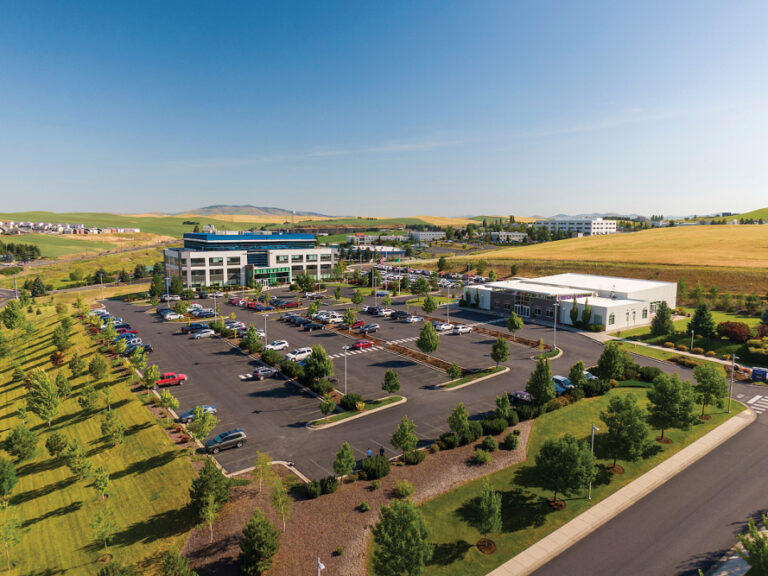
The companies originally known as Northwest River Supplies and Schweitzer Engineering Laboratories, now referred to as NRS and SEL, respectively, could hardly be characterized as being similar.
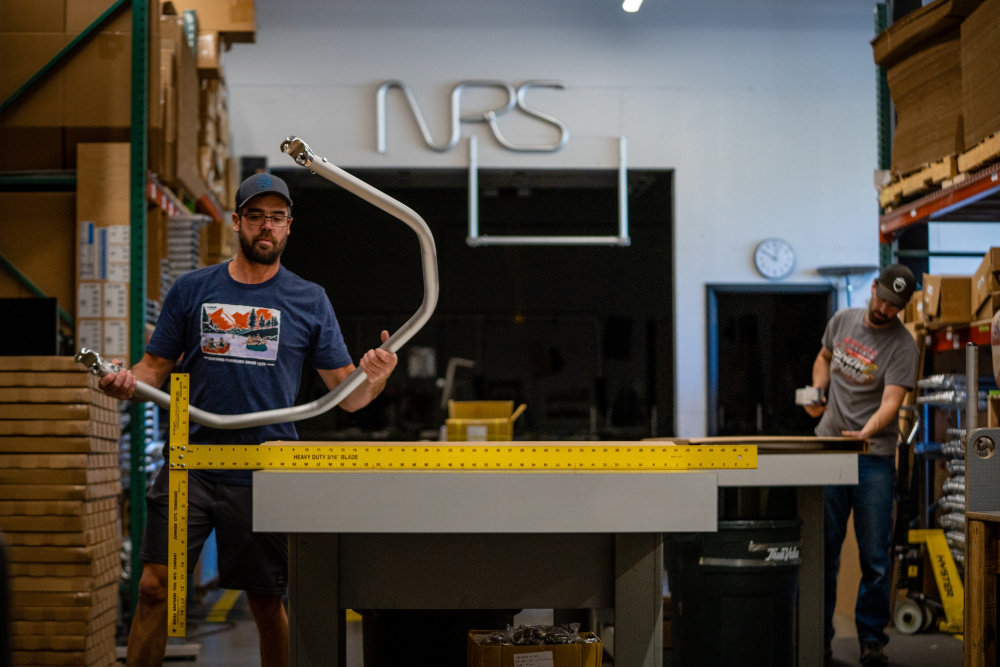
With 8,000 employees worldwide, SEL builds technology that protects and modernizes electric power systems, including the power grid. The 135 employees at NRS make kayaking, rafting, camping and other outdoor recreation gear.
What NRS and SEL have in common is their home – they’re neighbors on the Palouse, a region of rolling terrain and breathtaking views that includes Moscow, Idaho, and Pullman, Washington. The region’s name likely reflects a convergence of influences: French-Canadian fur traders used the word pelouse, meaning “land with short, thick grass,” while the name may also have been shaped by the Indigenous Palus tribe, whose name appeared in early records with similar spellings.
“It’s kind of a rural place – agricultural, known for wheat fields,” says Tony Mangini, chief financial officer and human resources director at NRS.
At the same time, though, the Palouse is anchored by the cities of Pullman, Washington, and Moscow, Idaho, and their schools – Washington State University (WSU) and the University of Idaho (U of I).
“What makes the Palouse different is that the two large universities bring lots of resources and opportunities most rural areas don’t have access to,” Mangini says. “It’s a small-town feel – you can get anywhere in Moscow in 10 minutes – but not missing out on what big cities have to offer.”
Winning Combination
Dr. Edmund O. Schweitzer III founded SEL in the basement of his Pullman home in 1982. Adina Bielenberg, SEL’s vice president for corporate affairs, says having two standout land-grant universities in the region offered a winning combination for the business.
Schweitzer invented the first microprocessor-based digital protective relay while completing his doctoral work at WSU. The SEL-21 became the first product the company brought to market, she says.
Bielenberg says SEL has nearly 3,000 employees based in Pullman, where its campus includes 16 buildings with more than 1 million square feet under roof.
The company expanded into Moscow in 2023, opening a fabrication facility in Moscow, just 8 miles from Pullman.
Being on the Palouse offers SEL advantages to both the company and its people, Bielenberg says.
“The region offers steady access to talent from local universities and colleges, creating a consistent source of engineering, technical, manufacturing and business expertise,” she says. “For the employees, the region offers a close-knit community, where people know their neighbors, support local schools and look out for one another. Families value the safety and strong schools, and the short commutes give employees more time at home and less time on the road.”
Bielenberg says outdoor access is another major benefit of being on the Palouse, noting that “hiking, fishing, hunting, rafting and camping are often only minutes away.”
Boats in a Wheat Field
Little wonder, then, that NRS is right at home in Moscow. “We feel like we’re part of something here,” Mangini says.
Origin story is something else NRS and SEL have in common. NRS was also launched by an academician, Dr. Bill Parks. Mangini says Parks started NRS in 1972 while working at the University of Oregon, but moved it to Moscow when he took a job there.
“We have numerous lakes and rivers within an hour’s drive, but we were selling rafting and kayaking equipment in the middle of a wheat field,” he says, adding that Parks used NRS’ location on the Palouse to its advantage when it came to hiring.
“We’re in outdoor recreation, and people in our industry tend to be like-minded – it’s our work, but we care about the outdoors as well,” he says. “We found a lot of our employees here – people in the community who felt engaged.”
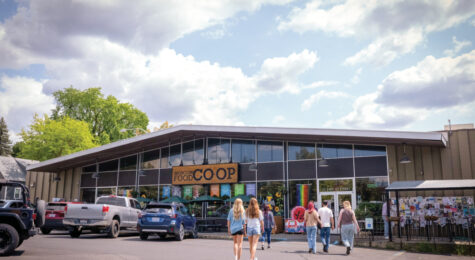
Mangini, who lives in Moscow, says that after more than three decades on the Palouse, he doesn’t feel as though he’s missed out on a faster life in a bigger market.
“I think of all the things this community has given us,” he says. “I met my wife here. She’s worked in the Pullman and Moscow school districts, and we raised two daughters here. We know a lot of people in the community, and it feels safe.
“I’m very outdoorsy – I like skiing on the weekends, rafting,” he adds. “But I also have a job that feels meaningful and enriching.”
Get to Know the Palouse
Want to learn more about living and working in the Palouse region of Idaho and Washington? Check out the latest edition of Livability On the Palouse.
