
New Orleans Arts and Culture: The Ultimate Travel Guide to NOLA’s Creative Soul
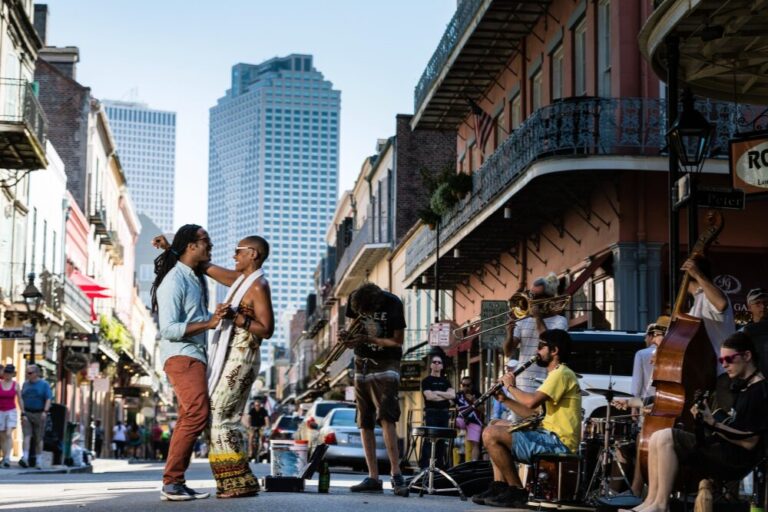
New Orleans continues to captivate the world with its one-of-a-kind gumbo of histories, cultures and identities. Famous for its Cajun and Creole roots, regional dialects and distinctive architecture, New Orleans is celebrated as the birthplace of iconic American soundscapes like jazz, Cajun and zydeco. It is defined by its colonial ties to France and Spain before joining the American story through the historic Louisiana Purchase.
It is a historic city that wears its age differently – a place where people express themselves as colorfully as a Mardi Gras float. New Orleans is not “living history” in the way other colonial cities present themselves. This city is alive with artistry.
That artistry is everywhere, creating an environment best experienced through all five senses. You see, hear, smell, taste and feel it, carrying its unmistakable energy with you. It lives inside world-class restaurants, historic music venues and neighborhood businesses. It reveals itself down hidden alleyways, along the ironwork fences of Jackson Square, hanging from galleries and layered across historic buildings throughout the Warehouse and Business Districts. It moves through the city in casual conversation – in the rhythm of a hotel concierge’s recommendation or the cadence of a rideshare driver’s story.
Its cultural footprint is less like a static canvas and more like a big band blending on the chorus, with each player stepping forward for a solo. Don’t waste your next trip simply walking down Bourbon Street. Let the city lead you into its rhythm with this guide to New Orleans arts and culture.
In This Article
Discover the Louisiana State Museum Campus
For any art and culture lover, prioritizing a visit to the historic sites within the Louisiana State Museum’s French Quarter campus is a must. Art has always been a conversation between an artist, a muse and an audience. To fully understand the language of art in New Orleans, it helps to first understand its histories, cultures and lived experiences, embracing the connection between art and place.
The museum network encompasses the Spanish colonial Cabildo, the Presbytère and the Old U.S. Mint (home to the New Orleans Jazz Museum), alongside the 1850 House and Madame John’s Legacy. Each site offers a distinct collection of artifacts and exhibitions highlighting the changemakers and defining moments still shaping the city.
Must-See Exhibitions at the Louisiana State Museum:
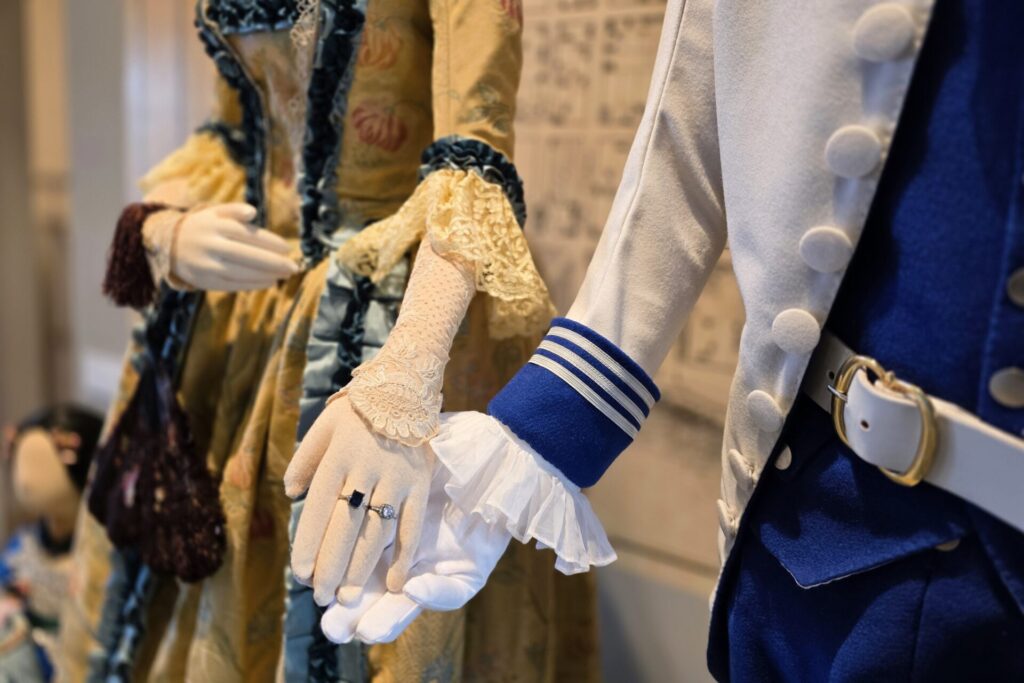
- Gálvez and Louisiana in the American Revolution (The Cabildo): Timed to commemorate the nation’s 250th anniversary, this exhibition explores Louisiana’s pivotal role in defending key territories like Florida and protecting critical trade routes along the Mississippi River. The story is anchored through historical clothing, featuring a multi-floor presentation on sewing arts and fashion history curated by tailor Kathleen Nadeau and researcher Stephen L. Kling Jr.
- Michalopoulos: Mystical Expressionism (The Cabildo): Featuring painter James Michalopoulos, this collection honors New Orleans’ colorful architecture while calling attention to the fragility and resilience of historic neighborhoods. His use of layering, color and texture speaks directly to the strata of local history, capturing Creole cottages, shotgun houses and ironwork galleries.
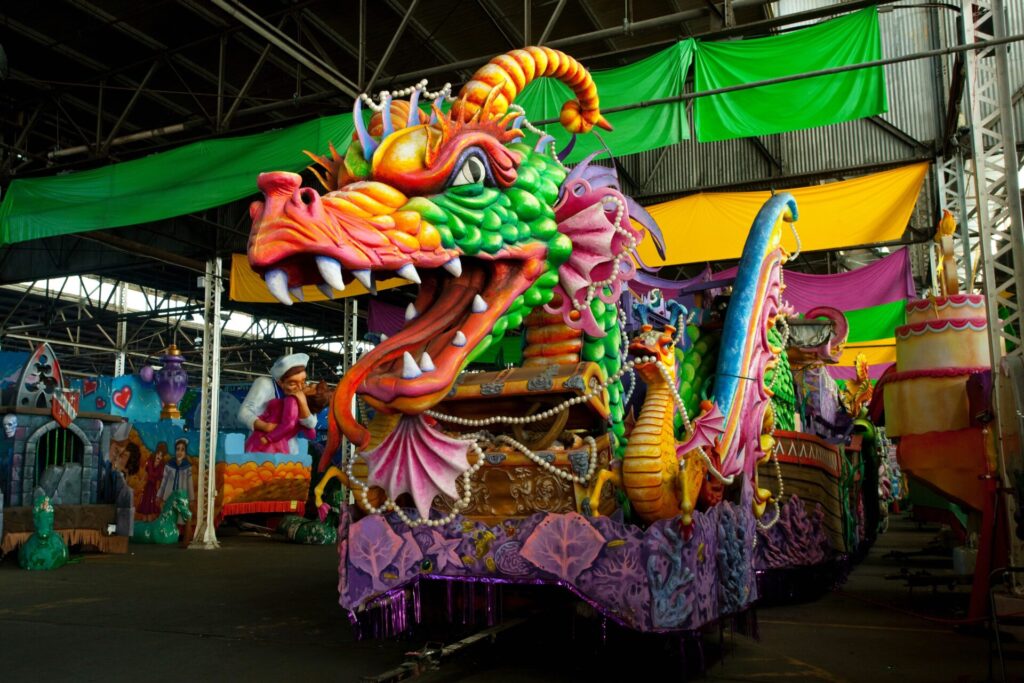
- Mardi Gras: It’s Carnival Time in Louisiana (The Presbytère): Located across St. Louis Cathedral, this exhibition looks beyond Fat Tuesday parades to showcase Carnival as a months-long stage. Here, floats become sculpture, fashion becomes art and spiritual symbolism moves through the streets alongside legendary music. For those who have never experienced Mardi Gras in New Orleans, the exhibition offers a valuable introduction to the range of art forms that come alive during the season.
Walk the Historic Streets of the French Quarter
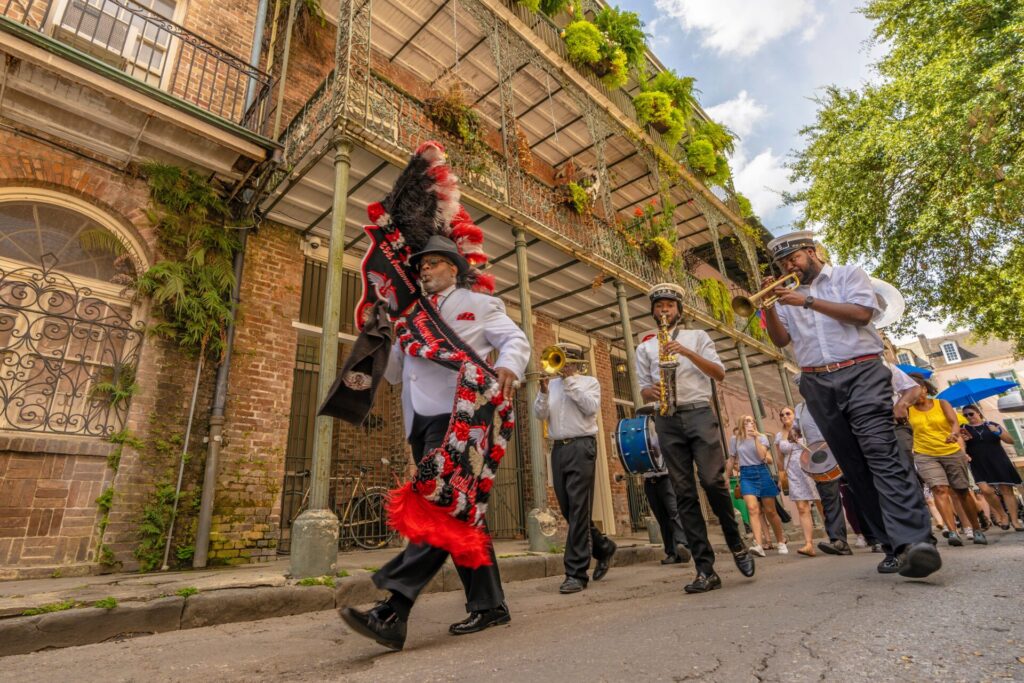
New Orleans’ streets are a destination in themselves. Each neighborhood feels like its own movement within a larger composition – distinct in its features and flourishes, yet all written in the same key.
The French Quarter serves as the overture. This world-famous district marks the original footprint of the French colony founded in 1718; its visual landscape evolved after a devastating fire and a period of Spanish rule left much of the district rooted in Spanish colonial design, layered with Creole influences.
Art and culture lovers, especially those with an eye for architecture, will find this historic pocket particularly intriguing. The streetscape is deliberate and understated, defined by wrought-iron galleries, shuttered windows and fine cracks in fading washes of color. Built to feel introverted and private, the Quarter looks more Mediterranean than traditionally French. Thick stucco walls were laid over brick for fire resistance, roofs were finished with tile and living spaces opened into central courtyards – a design reminiscent of Moorish-influenced homes in Spain.
Highlights in the French Quarter:
- The Historic New Orleans Collection: Spread across 13 historic buildings, The Historic New Orleans Collection campus showcases early cityscapes, portraiture and works connected to artists like Edgar Degas alongside decorative arts, prints and rare photography documenting daily life.
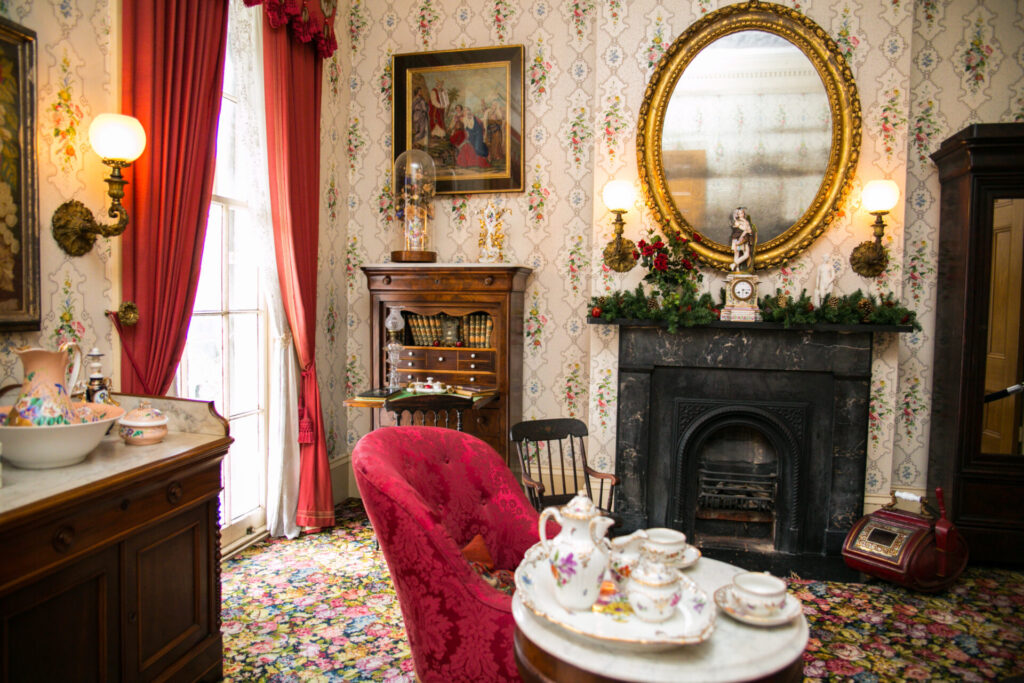
- Gallier House: Designed by architect James Gallier Jr., this historic home offers an intimate and rare look at 19th-century New Orleans design, period furnishings and the refined social rhythms of Creole society. The Gallier House is listed on the National Register of Historic Places and designated a National Historic Landmark.
- Royal Street Gallery Corridor: Long known for its high concentration of fine art and antiques, Royal Street features independently curated spaces highlighting local voices. Rather than operating as a formal gallery district, Royal Street unfolds as a series of independently curated spaces, many rooted in local artists, each contributing its own voice to the city’s broader artistic composition. Key stops include Gallery Rinard, Galerie Rue Royale, Gallery Burguieres and M.S. Rau Antiques.
- Preservation Hall: Visual art is only one layer of the French Quarter’s creative legacy. American history and New Orleans’ artistic identity continue to intertwine through music, particularly jazz, the genre most deeply associated with the city. Located just off Royal Street, Preservation Hall offers a salon-like atmosphere where visitors can experience pure, acoustic New Orleans jazz in a room virtually untouched by time.
- Jackson Square Open-Air Market: As visitors make their way back toward Jackson Square, the presence of street artists and performers becomes impossible to ignore. Along the wrought-iron fence of the square, artists pin and hang their paintings, sketches and portraits in a colorful open-air gallery, creating opportunities to buy art directly from the creators. It is both organized and chaotic, where finished pieces and works in progress exist side by side, and conversations with the artists become part of the experience.
Explore the Faubourg Marigny and Bywater Neighborhoods
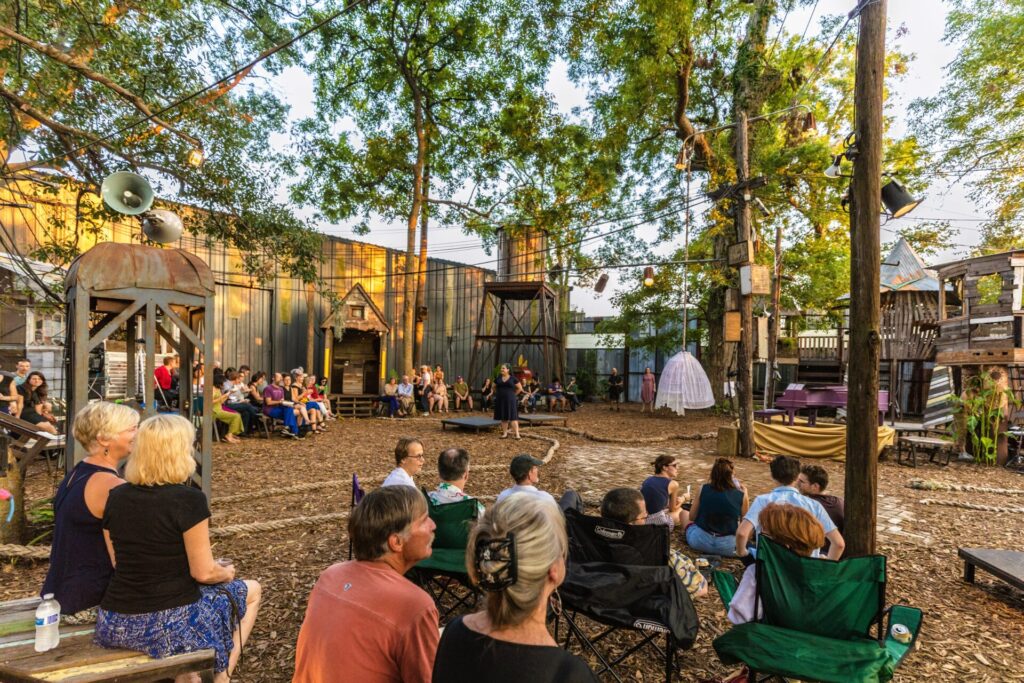
Just downriver from the French Quarter, the Faubourg Marigny and Bywater neighborhoods shift the city’s creative energy away from formal preservation toward something expressive, improvisational and lived-in. This creative corridor is where New Orleans’ artistic identity spills fully into the streets.
Faubourg Marigny
Frenchmen Street anchors the Marigny with intimate performance venues, colorful architecture and a lively bohemian atmosphere. Brass melodies and basslines drift from open doorways at legendary spots like Snug Harbor Jazz Bistro, Blue Nile and The Spotted Cat Music Club.
Just down the road sits JAMNOLA (“Joy, Art & Music – New Orleans”). Created in collaboration with dozens of local artists, musicians and designers, this interactive, walk-through experience blends installation art, local folklore and Carnival aesthetics into a bold, maximalist celebration of New Orleans culture. Located near the edge of Faubourg Marigny and Bywater, the experience functions less like a traditional museum and more like a magical alternate universe.
Bywater
Continuing beyond JAMNOLA, art and culture lovers drift further into Bywater, a neighborhood long shaped by immigrants, laborers, artists and riverfront industry. Today, the Bywater neighborhood carries a community-rooted spirit where colorful Creole cottages, industrial remnants and artist studios coexist. For art and culture lovers, Bywater is less about formal institutions and more about atmosphere and the way creative expression naturally folds into everyday life:
- StudioBE: Created by artist Brandan Odums (BMike), StudioBE is a 35,000-square-foot former warehouse gallery that blends large-scale portraiture, public art aesthetics and powerful social commentary exploring race, identity and Black Southern culture.
- Beanlandia: Another notable project from Brandan Odums is the nearby Beanlandia, home of the Krewe of Red Beans. Equal parts immersive art environment and community gathering space, this whimsical installation uses public art and layered symbolism to celebrate one of New Orleans’ most iconic culinary traditions: red beans.
- Dr. Bob Folk Art: The working studio of self-taught folk artist Dr. Bob, whose vibrant work mixes wood, found objects and upcycled materials into iconic regional art.
- Music Box Village: Experimental artistry in Bywater is not only thriving in studios, but also resonating through collaborative spaces like Music Box Village. This experimental outdoor art environment features more than 16 “musical houses” – sculptural structures built from salvaged materials engineered to function as playable instruments during concerts and performances.
Before leaving the Bywater neighborhood, visitors should also spend time wandering its streets. Public art appears unexpectedly throughout the area, from large-scale murals and political street art to smaller community-driven installations tucked between homes, cafés and corner businesses.
Ride the St. Charles Streetcar to Uptown and the Garden District
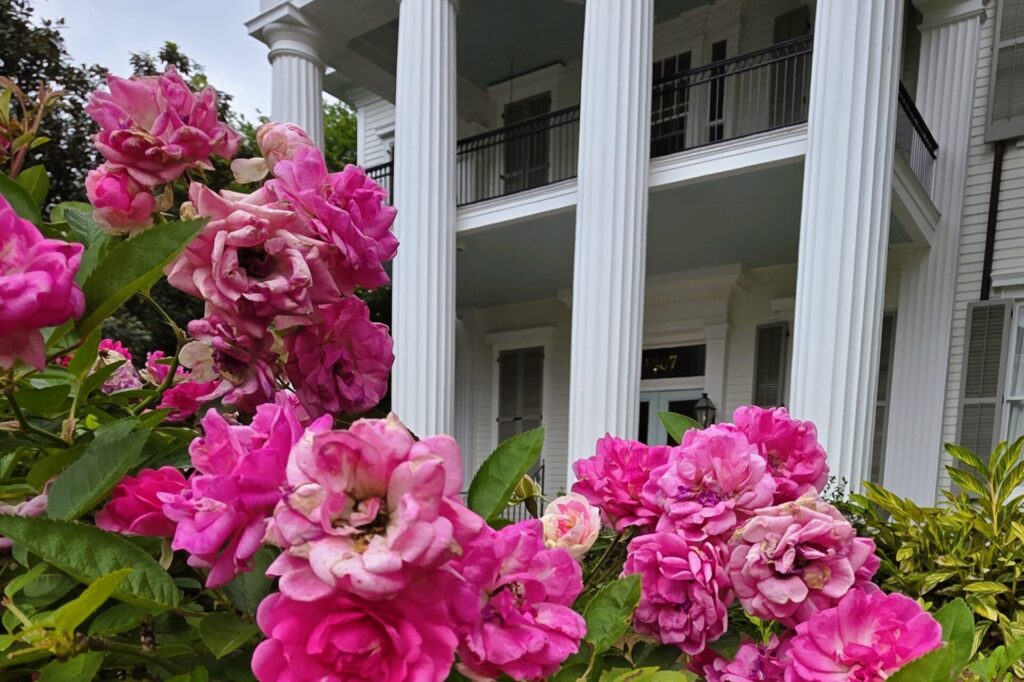
A ride aboard the historic St. Charles Streetcar Line – the oldest continuously operating streetcar line in the world – takes visitors Uptown into the Garden District. Developed in the 19th century by Americans settling upriver from the French Quarter, the neighborhood features one of the most intact collections of historic homes in the country, showcasing Greek Revival columns, Italianate detailing and Victorian ornamentation, adding layers of personality and visual storytelling along wide cobblestone streets shaped by knobby roots and shaded by sprawling oak trees.
Unlike the inward-facing French Quarter, the Garden District opens outward with deep setbacks and lush gardens shaded by sprawling live oaks. Guided walking tours bring these streets to life through oral storytelling, highlighting the era’s social dynamics and celebrating figures like gothic fiction author Anne Rice, whose novels are forever linked to the neighborhood’s physical landscape through literary lore.
Best known for Interview with the Vampire, Rice’s body of work left a lasting imprint on literature, film and television. Beyond her fiction, her interpretation of New Orleans serves as a bridge between its physical landscape and its imaginative life.
Tour the Downtown Warehouse and Arts District
Stepping off the streetcar at Canal Street brings you into the Central Business District, a neighborhood defined by reinvention, where 19th-century commercial spaces, mid-century structures and contemporary glass towers share the skyline.
Arts and culture lovers should take time to explore the district’s performance venues, cocktail lounges and design-forward restaurants. Creative concepts like the Peacock Room, located within Kimpton Hotel Fontenot, embody this energy by merging the intimacy of French salons with the lively spirit of a Southern social club.
Warehouse & Arts District
Just adjacent lies the Warehouse District (or Arts District), a neighborhood that exemplifies adaptive reuse. Once an industrial corridor supporting Mississippi River trade, its historic brick structures now house contemporary galleries, lofts and museums, making it a neighborhood that embraces one of New Orleans’ most enduring philosophies: adaptive reuse as an art form. Rather than separating old and new, the neighborhood layers them together into an evolving creative landscape.
For arts and culture enthusiasts, there are several spots within the district that can’t be missed, including:
- Julia Street: The heart of the district’s art scene, famous for its concentration of galleries and studios and monthly “First Saturday” art walks featuring new exhibition debuts and artist talks.
- Mardi Gras World: Located along the river, this massive working warehouse offers a behind-the-scenes look at float design. Part museum, part active production studio, Mardi Gras World allows visitors to take a closer look at the elaborate craftsmanship behind the city’s parade culture and watch artists, welders and sculptors build, paint and assemble the elaborate props and floats seen during Carnival season. The experience also highlights how Mardi Gras manifests not simply as a celebration, but as a year-round artistic practice tied to New Orleans’ identity.
- Ogden Museum of Southern Art: A world-class institution showcasing the visual art, photography and heritage of the American South.
Immerse Yourself in New Orleans City Park
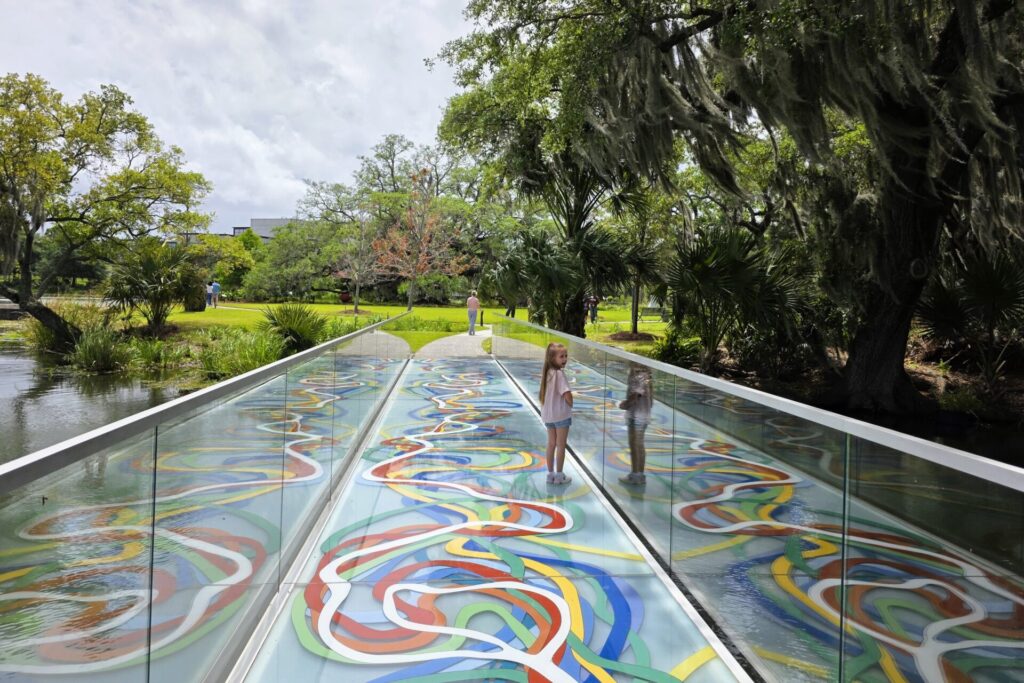
Hop back aboard the streetcar line and make your way toward City Park, one of the oldest and largest municipal parks in the United States. Established in 1854, City Park is a 1,300-acre urban oasis filled with moss-draped live oaks, scenic waterways and major cultural institutions:
- New Orleans Museum of Art (NOMA): Featuring over 100,000 square feet of gallery space, NOMA’s permanent collection includes works by Edgar Degas, Andy Warhol and Gilbert Stuart.
- Must-See Installation: America by Will Ryman – a large-scale walk-in log cabin sculpture constructed from wood, embedded with historic artifacts and coated in gold resin, challenging viewers to consider the tension between mythmaking, economic ambition and the nation’s more complicated foundations. In many ways, the installation encourages viewers to sit with dissonance, tracing the uneasy relationship between where America began and what it ultimately became.
- Sydney and Walda Besthoff Sculpture Garden: Located directly adjacent to NOMA, this free, 12-acre garden features contemporary sculptures set among lagoons, winding footpaths and live oaks draped in Spanish moss.
- New Orleans Botanical Garden: Features 12 acres of lush, year-round displays highlighting tropical flora, historic Art Deco sculptures and serene reflecting pools.
Uncover More Historic NOLA Neighborhoods and Culinary Arts
This guide only scratches the surface of New Orleans’ creative soul. Art lovers, both visitors and residents alike, could easily spend weeks moving between neighborhoods, museums, performance spaces, galleries, music venues and community traditions, gaining a deeper understanding of creative expression with every turn. Travelers looking to dig deeper should spend time exploring:
- Historic Tremé: As one of the oldest African American neighborhoods in the United States, Tremé has played a defining role in shaping the city’s musical, artistic and cultural identity. The neighborhood is home to the Backstreet Cultural Museum, the New Orleans African American Museum and Treme’s Petit Jazz Museum, which preserve second-line, jazz funeral and Mardi Gras Indian traditions.
- Mardi Gras (obviously!): Beyond the headline parades of Fat Tuesday, the celebration encompasses centuries of craftsmanship, ritual, music, masking traditions, beadwork, costume design and community storytelling that continue year-round through social clubs, Mardi Gras Indian tribes, musicians and neighborhood cultural organizations.
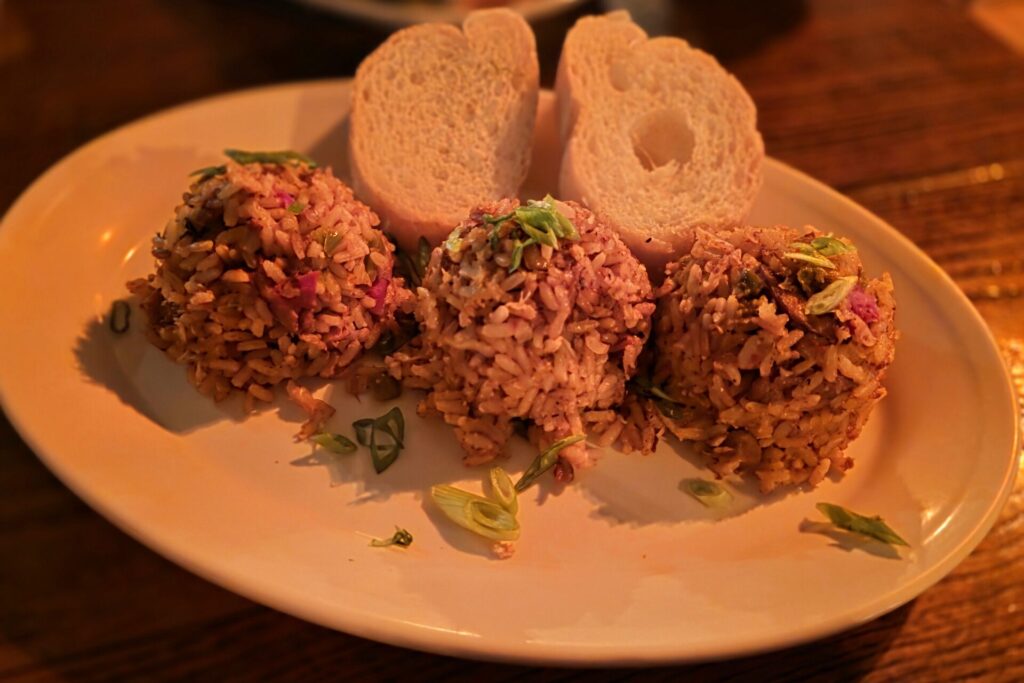
- The Culinary Arts: Food in New Orleans tells the same story of cultural exchange as its music. From communal pots of Monday red beans and rice to dishes like étouffée, jambalaya, gumbo, muffulettas and po’boys, food in New Orleans often tells the same stories as its music and visual arts: stories of migration, resilience, adaptation, celebration and cultural exchange. While classics like beignets remain essential, whether at Café du Monde, Café Beignet or through Loretta’s famous praline-filled variation at Loretta’s Authentic Pralines, the city’s food culture stretches far beyond its most recognizable dishes. Local chefs continue reimagining African, French, Spanish, Caribbean and Indigenous culinary practices. Hungry for more? Consider booking a cooking class through one of the city’s many culinary schools.
In New Orleans, artistry is not confined to a gallery wall or the four walls of a museum; it is stitched into daily life and carried through generations and continuously reshaped by the communities that call it home. Like America itself, the city exists as a kind of cultural gumbo, mixing influences from African, French, Spanish, Caribbean, Indigenous, Italian and immigrant communities whose traditions blended, evolved and became something entirely their own.
Long after your trip ends, the city lingers like a song that refuses to leave your head – a reminder of the beauty created when cultures, histories and people come together to play as one. Like a big band, each instrument contributes something distinct to the tune, each melody line building upon the next, creating a sound far richer and more powerful than any solo alone.
📬 Where to Next?
Love discovering hidden gems and communities across America? Sign up for our newsletter to get expert relocation advice, travel inspiration and city rankings delivered straight to your inbox.