
East Carolina University Joins Ranks of Nation’s Elite R1 Research Universities
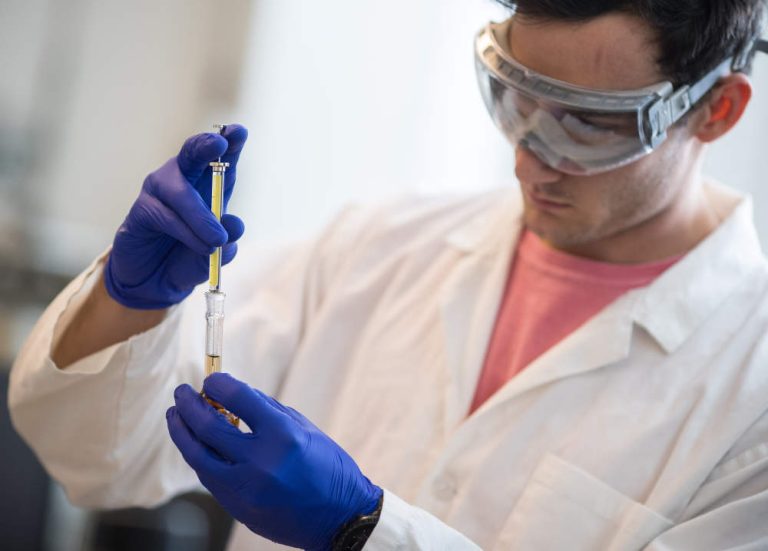
East Carolina University’s (ECU) recent achievement of an R1 research designation has positioned the Greenville, NC, university among the nation’s elite R1 research universities, creating ripple effects that extend far beyond the campus into the broader Greenville-Pitt County region. The R1 classification, earned by only 5% of universities nationwide, represents the highest level of research activity and has fundamentally transformed ECU’s academic profile. Monetary-wise, an institution must have an average annual research and development expenditure of at least $50 million to achieve R1 status.
“It really signals that we have even greater academic excellence than we used to have and a real commitment to advancing the excellence to very high-level research,” says John Cavanagh, ECU associate dean for research, chair of foundational sciences, professor and chair of biochemistry and molecular biology, and associate chief of clinical research and research strategy. “This R1 designation puts us at the very top end of this, so it makes people look at us a lot more seriously.”
“A degree from an R1 institution can provide a competitive edge in the job market because the school’s prestige is recognized by employers and industry leaders.”
John Cavanagh, East Carolina University
R1 Universities Are Career Destinations
The designation has proven particularly valuable in faculty retention, addressing a longstanding challenge in which ECU often served as a steppingstone to larger institutions. The university’s new designation now encourages faculty to view ECU as a destination in their academic careers.
“Faculty members do incredibly well here because we’re very supportive, but then they get starry-eyed, and they may go somewhere else. The fact that we have this new designation that signals we’re an elite R1 university makes them want to stay here,” Cavanagh says. “Recruitment and retention are important for both faculty and students. It certainly allows us to secure larger funding opportunities, and the designation can lead to opportunities for more and larger research grants from public and private sectors.”
For students, the benefits are equally significant. Graduate and undergraduate researchers now have access to more extensive research projects, advanced facilities and hands-on experiential learning opportunities.
“A degree from an R1 institution can provide a competitive edge in the job market because the school’s prestige is recognized by employers and industry leaders,” Cavanagh says.

The university’s research portfolio spans multiple disciplines, with particularly strong programs in biomedical research and community health. ECU currently conducts 200 clinical trials, focusing on areas such as cancer treatments, cardiovascular health and neurological conditions.
ECU is also pioneering drug discovery research in melanoma, antibiotic resistance and neurodegeneration, which will have positive impacts on the region’s health outcomes.
Cavanagh says the university’s R1 status has the potential to generate substantial economic benefits for the region as well.
“Being a high-end research operation certainly could attract businesses and expand workforce opportunities,” he says. “From the innovation and technology transfer side of things, we’re much more likely to prioritize innovation and the commercialization of research, so that leads to the community getting some contributions of the science and technology that we do, and that’s important.”
Get to Know Greenville, NC
Want to learn more about living and working in Greenville, NC? Check out the latest edition of Livability Greenville-Pitt County, North Carolina.