
Harrisburg, NC
Thinking about living in Harrisburg, North Carolina? This fast-growing Cabarrus County town offers established neighborhoods, newer planned communities, destination parks, and convenient access to both Concord and northeast Charlotte.
In 2025, Harrisburg’s population increased an estimated 9.1% from the town’s 2020 population base. Growth has brought new subdivisions, townhomes, businesses, and public facilities, but Harrisburg still feels more residential than the commercial centers surrounding Concord Mills, University City, and Charlotte Motor Speedway.
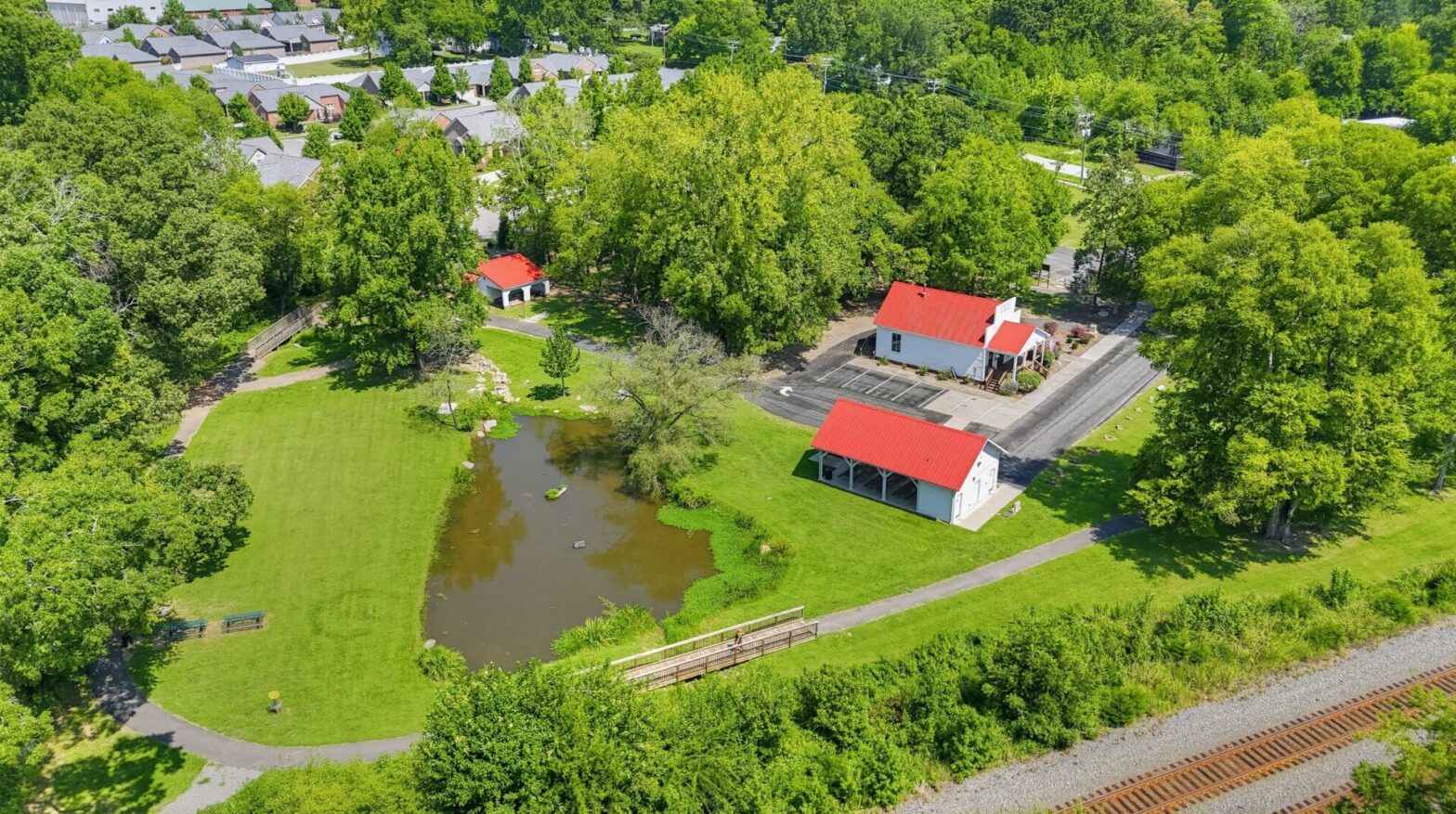
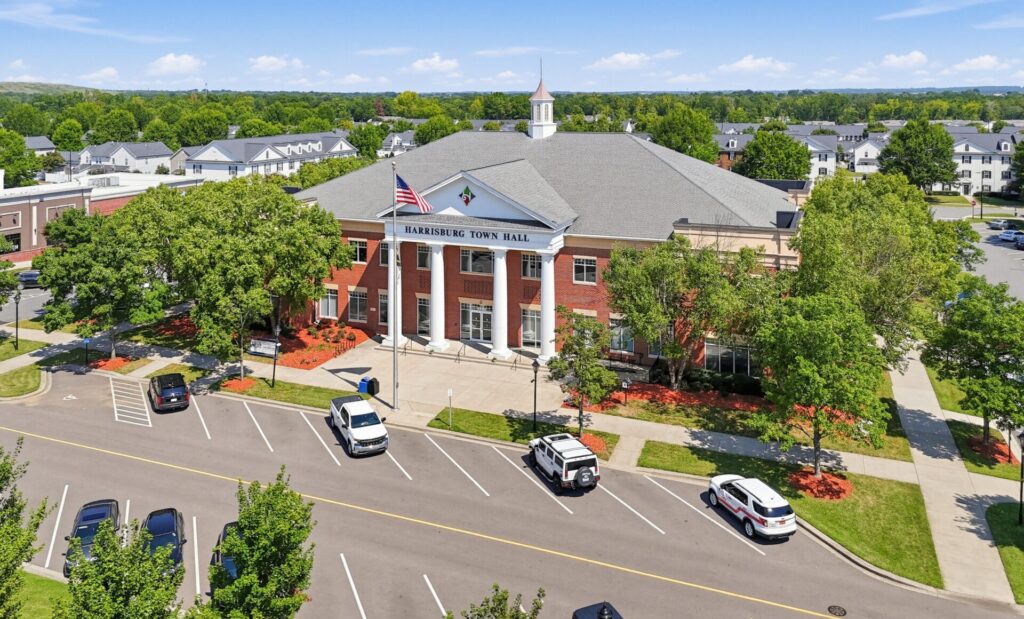
The town’s identity is spread among several places. Harrisburg Town Center provides restaurants, offices, attached housing, and the Town Hall. Harris Depot Park preserves connections to the community’s railroad-era center, while Harrisburg Park has become the primary destination for youth sports, walking, bicycling, playground use and seasonal events.
This combination gives residents access to Charlotte-area employment without requiring them to live in a dense urban neighborhood. Detached houses remain the dominant housing type, but townhomes, condominiums, and newer mixed-density communities have broadened the available choices.
Why You’ll Love Living in Harrisburg
Harrisburg provides suburban space without placing residents far from the region’s largest employment and entertainment centers.
Interstate 485 runs along the town’s western side, creating direct connections with University City, Interstate 85, Matthews and other parts of Mecklenburg County. N.C. 49 links Harrisburg with Charlotte and Mount Pleasant, while Rocky River Road, Robinson Church Road, Hickory Ridge Road, and Morehead Road connect residential areas with Concord and surrounding Cabarrus County communities.
The town also has an extensive public park system for a community of its size. Harrisburg Park, Harris Depot Park, Pharr Mill Park, Stallings Park, Veterans Park and the Holcomb Woods Athletic Complex provide athletic fields, trails, playgrounds, courts, picnic facilities, natural areas and community gathering spaces.
Community traditions give Harrisburg a distinct identity beyond its subdivisions. The town’s July 3 and 4 celebration brings concerts, activities and fireworks to Harrisburg Park, while public recreation programs, youth sports and seasonal events create regular opportunities for residents to gather.
Harrisburg also offers a small but meaningful local food and beverage scene. Residents can meet for breakfast, coffee, dinner, or craft drinks without making every outing a trip to Concord or Charlotte.
Quick Facts About Harrisburg, NC
- Average Commute
- 26 minutes
- Median Home Value
- $454,548
- Median Household Income
- $175,629
- Total Population
- 21,952
- Median Property Tax
- $4,563
- Median Monthly Rent
- $1,910
Where Is Harrisburg, NC?
Harrisburg is located in southwestern Cabarrus County, immediately northeast of Charlotte.
The town sits between University City and Concord, with Mint Hill to the south, Mount Pleasant to the east, and the Concord Mills and Charlotte Motor Speedway area to the north. Its western edge lies close to the Mecklenburg County line and Interstate 485.
N.C. 49 is the primary commercial corridor through central Harrisburg. The road connects the town with the University of North Carolina at Charlotte and northeast Charlotte to the southwest, then continues east toward Mount Pleasant and rural Cabarrus County.
Interstate 485 is most convenient to neighborhoods near Rocky River Road, Robinson Church Road, and the western side of town. Communities farther east may offer more space or a quieter setting but require additional travel on local roads before reaching the interstate.
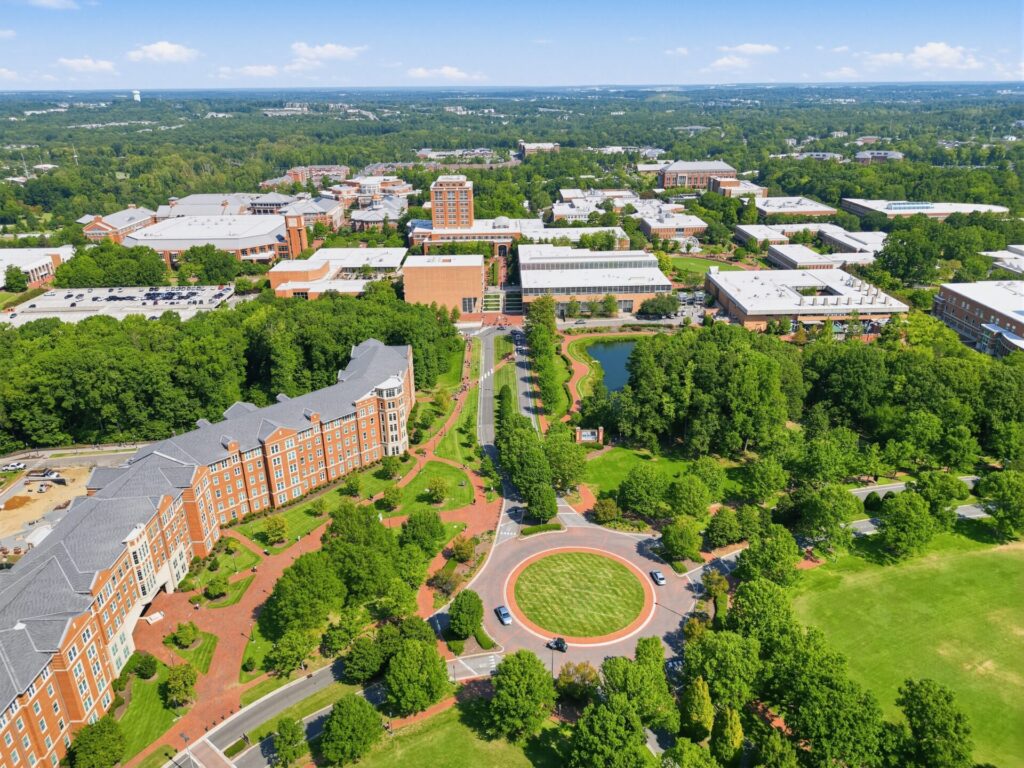
Harrisburg’s relationship with Charlotte is especially visible through UNC Charlotte. The university’s approximately 1,000-acre campus is about 4 miles from Harrisburg Town Center, making the town a practical home base for university employees, students and households that regularly use University City.
Downtown Concord, Concord Mills, Charlotte Motor Speedway, and Atrium Health Cabarrus are also within a practical drive. Travel times vary considerably during events, school traffic, and weekday commuting periods.
Map of Harrisburg, NC
Weather and Climate
Harrisburg has the humid subtropical climate typical of the Charlotte metropolitan area.
Summers are hot and humid, with normal early-July conditions in the Charlotte area reaching highs around 90 degrees and lows near 69 degrees. Afternoon thunderstorms occur regularly, and mornings and evenings are often the most comfortable times to use parks and trails.
Spring brings mild temperatures, flowering trees, and heavy pollen. It is also one of the busiest seasons for youth sports, playground visits, and community events.
Fall usually provides comfortable temperatures for walking, cycling, outdoor dining, and park use. The wooded landscape at Pharr Mill Park is especially attractive as leaves change color.
Winters are moderate compared with colder regions, although freezing nights and occasional snow or ice can disrupt schools and roads. Because major winter storms are relatively uncommon, even a modest accumulation can affect travel.
Rain falls throughout the year. Properties near streams, ponds, sloped yards or wooded drainage areas should be evaluated for stormwater movement, particularly in older neighborhoods and on larger parcels.
Average Temperatures
72 high / 49 low
Average Annual Rainfall
45 in
Average Annual Snowfall
4 in
Economy and Jobs
Harrisburg’s economy is closely connected with Charlotte, Concord and the Interstate 485 corridor.
Many residents commute to University City, Uptown Charlotte, Concord, Charlotte Motor Speedway, Concord Mills, or employment centers along Interstate 85. Common industries include healthcare, higher education, professional services, banking, logistics, manufacturing, technology, and public administration.
Within Harrisburg, employment is concentrated in schools, medical practices, construction, restaurants, retail, municipal services, and professional offices. N.C. 49 and Town Center contain many of the town’s most visible businesses, while medical offices are clustered around Physicians Boulevard and surrounding commercial properties.
Atrium Health operates several local practices, including Cabarrus Family Medicine, Harrisburg Family Physicians, Ardsley Internal Medicine and Levine Children’s Rocky River Pediatrics. These facilities support both access to health care and local employment.
Residential and commercial growth remains active. Harrisburg’s February 2026 development summary listed continuing construction in communities such as Harrisburg Village, Harmony, Grantham, Farmington, Tramore and the Courtyards at Robinson Church, along with future projects in several additional locations.
This development can bring more local services and housing choices, but it also increases pressure on roads, schools and public infrastructure. The town maintains an interactive map to help residents track active development and administrative projects.
Remote and hybrid work also influences Harrisburg’s appeal. Many detached homes provide bonus rooms, lofts, or spare bedrooms that can serve as offices while keeping residents within reach of Charlotte employers.
Learning and Education
Cabarrus County Schools serves Harrisburg.
The district educates more than 35,000 students throughout the county and offers traditional neighborhood schools as well as STEM, fine arts, early college, and other program-choice opportunities.
Harrisburg Elementary School is located on Stallings Road. Other schools with Harrisburg addresses include Hickory Ridge Elementary, Patriots Elementary, Rocky River Elementary, Hickory Ridge Middle School, and Hickory Ridge High School. C.C. Griffin Middle School also serves portions of the broader Harrisburg area.
Patriots Elementary and C.C. Griffin Middle are among the district’s STEM program locations. Program participation, application requirements, and transportation arrangements may differ from those of ordinary neighborhood assignments.
School assignments depend on the exact home address and can change as Cabarrus County adjusts attendance boundaries. Families should confirm the assigned elementary, middle, and high schools through the district before purchasing a home or signing a lease.
UNC Charlotte is only a few miles from Harrisburg Town Center and offers undergraduate, graduate, research, and continuing education programs. Rowan-Cabarrus Community College provides occupational training, transfer programs, and workforce development throughout Cabarrus and Rowan counties.
Where to Live in Harrisburg, NC
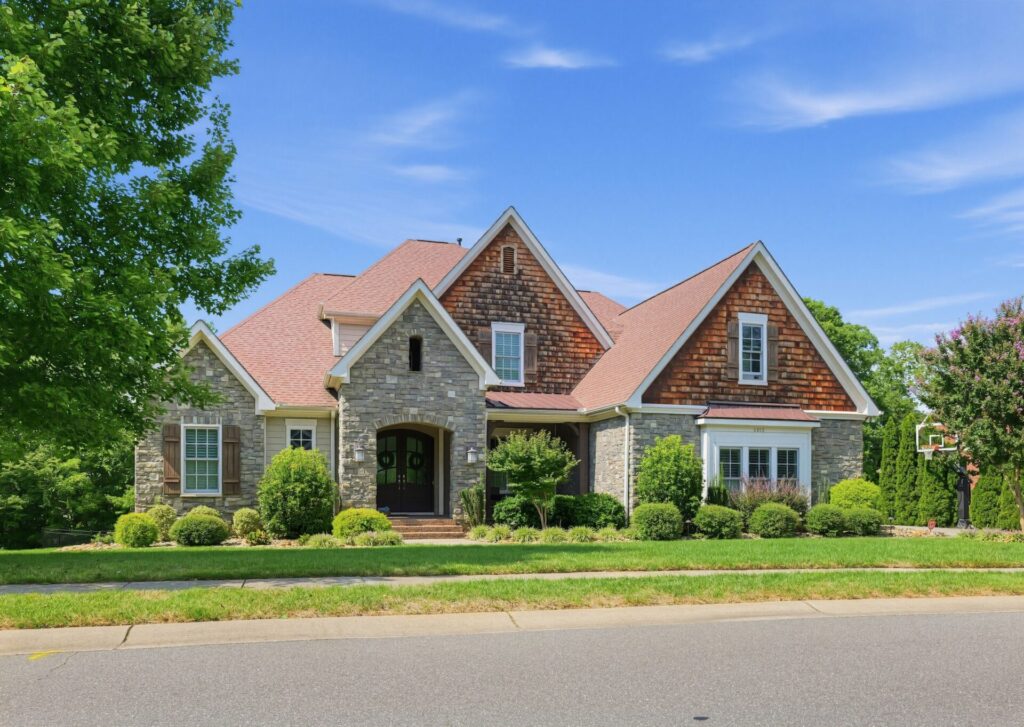
Harrisburg offers a mix of town-center housing, established pool communities and larger traditional homes.
Harrisburg Town Center and Harrisburg Village provide a range of lower-maintenance condominiums, townhomes, smaller detached homes and newer construction near restaurants, businesses, Town Hall and other civic services.
Bradford Park and Abbington offer a more traditional suburban experience, with larger detached homes, mature landscaping and convenient access to schools, parks and major roads. Bradford Park adds amenities such as a pool and tennis courts, while Abbington provides flexible living space and established surroundings. These areas are well suited to buyers who prioritize convenience, established neighborhoods and community amenities, although association fees and property maintenance can vary considerably.
For buyers seeking newer construction or more space, Farmington and newer western Harrisburg offer detached homes and townhomes with current floor plans, newer finishes and convenient access to Interstate 485, Charlotte and University City. The trade-offs can include smaller lots, less mature landscaping and ongoing construction.
Eastern Harrisburg and the Pharr Mill area provide a lower-density alternative, with older ranches, custom homes, established subdivisions and larger wooded properties near N.C. 49 and Pharr Mill Park. These areas offer more privacy and natural surroundings but generally require greater reliance on a car.
Buyers should consider whether they prefer walkability, established amenities, newer construction or larger lots, and should verify HOA requirements, utility arrangements, zoning and planned development for individual properties.
Healthcare
Harrisburg provides several local options for primary and pediatric care.
Atrium Health Primary Care Cabarrus Family Medicine on Physicians Boulevard treats patients of different ages and offers laboratory, X-ray, and diagnostic services. Harrisburg Family Physicians provides family medicine from birth through adulthood, while Ardsley Internal Medicine offers preventive care, chronic-condition management, and same-day sick appointments.
Atrium Health Levine Children’s Rocky River Pediatrics provides pediatric care in the Harrisburg area, giving families a local option for routine and sick visits.
Hospital-level care generally requires a drive outside town. Residents commonly use facilities in Concord, northeast Charlotte, or Mint Hill, depending on the neighborhood, insurance network, and medical need.
Harrisburg’s position between Concord and University City gives residents access to a much larger regional network of specialists, imaging centers, urgent care clinics and hospitals.
Things To Do
Harrisburg’s principal attractions are its parks, recreation programs, community events and local gathering places.
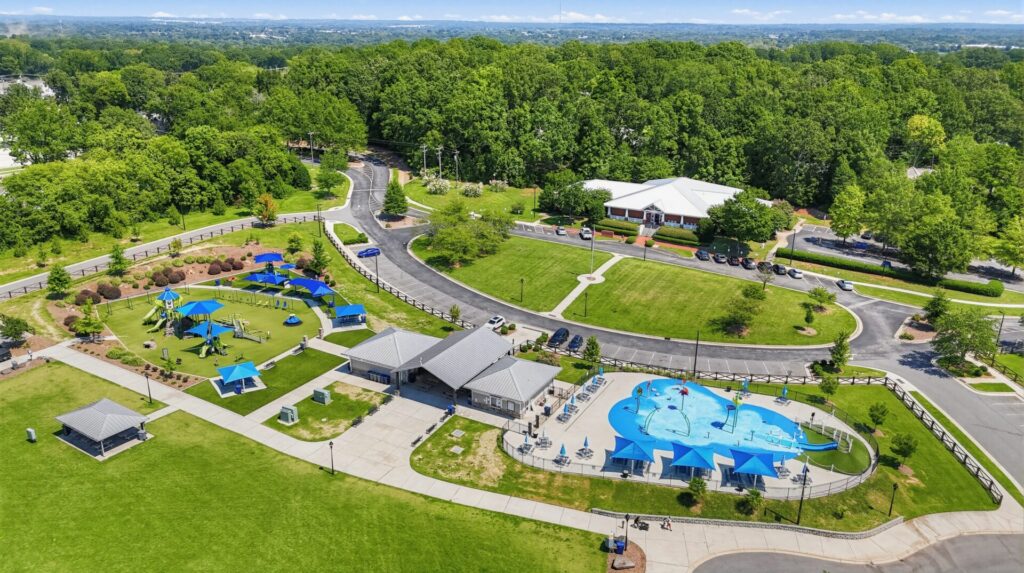
Harrisburg Park is the town’s largest active recreation destination. The 64-acre property includes five multipurpose fields, a paved walking track measuring approximately 0.54 miles per lap, trails, sidewalks, a mountain-bike trail, a bicycle pump track, and seasonal concessions.
The Harrisburg Park Splash Pad adds warm-weather water play near the front of the park. Admission, registration procedures, and operating schedules may vary, so families should review current information before visiting.
Youth and adult recreation programs include baseball, softball, soccer, flag football, kickball, and other organized activities. Athletic fields and gym spaces are distributed among town parks and local schools.
The annual July 3 and 4 celebration is Harrisburg’s largest public tradition. Concerts, activities, food, and fireworks draw large crowds to Harrisburg Park and surrounding event sites, with special parking, pedestrian access, and shuttle services in place during the celebration.
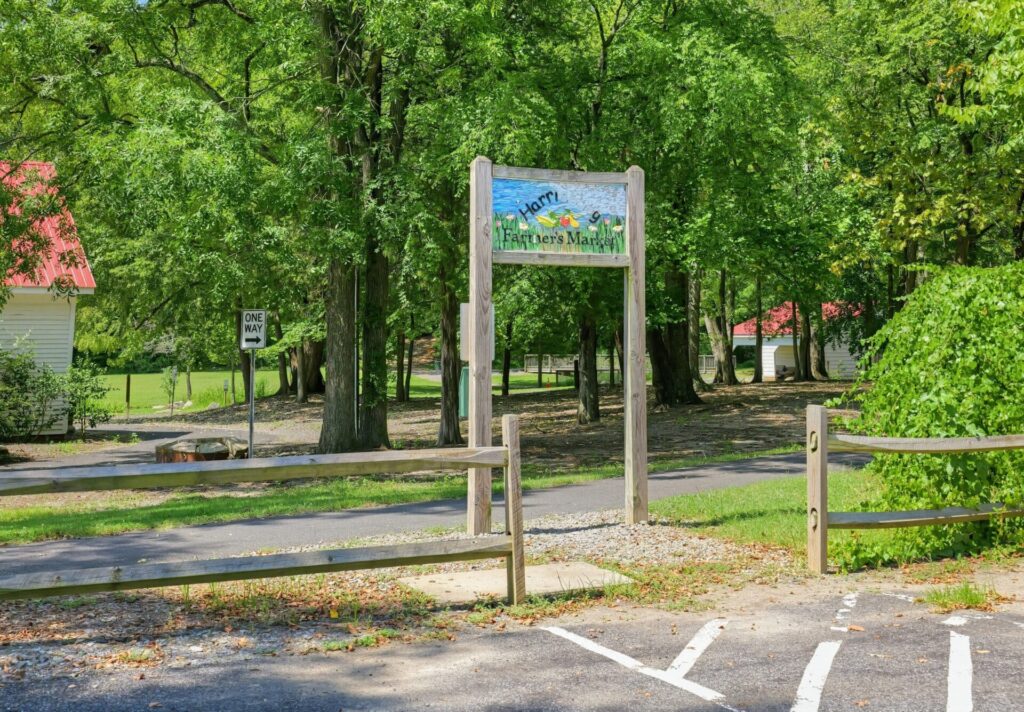
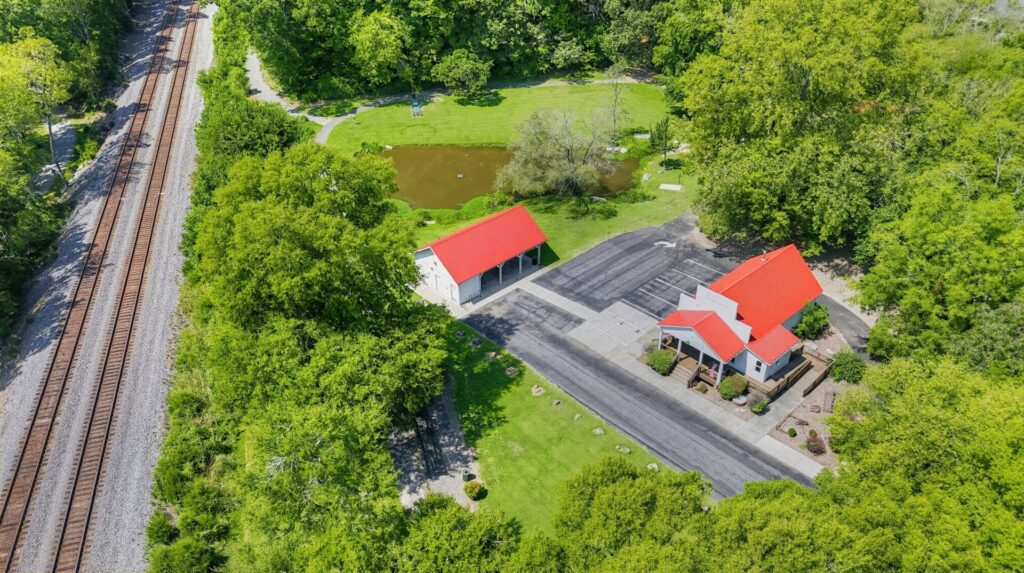
Harris Depot Park provides a quieter experience with historic buildings, walking and biking routes, a pond, and a seasonal farmers market. The park’s log cabin and historic post office help preserve the town’s connections to its earlier railroad-centered community.
Harrisburg’s proximity to Charlotte Motor Speedway, Concord Mills, PNC Music Pavilion and UNC Charlotte also gives residents access to major regional entertainment without living directly beside those destinations.
Outdoor Life and Green Space
Harrisburg’s park system balances organized athletics with wooded trails and passive recreation.
Pharr Mill Park contains 37.31 acres and is operated through a partnership between Harrisburg and Cabarrus County. Trails and a boardwalk lead toward the Rocky River, and the park connects with the Carolina Thread Trail. Additional amenities include a fishing pond, playground, sand volleyball, picnic space, and natural areas.
The park also occupies historically significant ground associated with an early location of Rocky River Presbyterian Church, which operated there between 1751 and 1776. Pharr Mill Park is certified by the National Wildlife Federation as a wildlife habitat.
Stallings Park supports both organized sports and everyday recreation. A playground, walking trail, picnic shelters, tennis and pickleball courts, and a grove of Yoshino cherry trees join baseball and softball fields.
Harris Depot Park combines historic structures with natural features. Residents can use its trails, disc golf holes, cornhole courts, pond, picnic shelter, and shaded areas beneath old-growth hardwood trees.
Harrisburg Park is the most active destination, with sports fields, cycling features, a walking track, and playground facilities. Together, these parks allow residents to choose between team sports, paved walking, mountain biking, disc golf, fishing, and quieter wooded recreation.

Food, Drink, and Neighborhood Flavor
Harrisburg’s dining scene is distributed among Town Center, N.C. 49, School House Commons and smaller commercial centers.
Harrisburg Family House is a longstanding local destination for homestyle meals. The restaurant serves breakfast, lunch and dinner in a casual setting and remains closely associated with the town’s everyday dining culture.
Wake Up & Eat specializes in breakfast and lunch, with omelets, waffles, breakfast platters, burgers, sandwiches, and wraps. Rocky River Coffee Co. and Sunflour Baking Company provide coffee, pastries, and lighter morning options.
Three Monkeys Tavern and Grill offers burgers, wings, mixed drinks, and a large tap selection in a casual neighborhood pub setting.
Vortex Bottle Shop combines a large beverage selection with flatbreads, charcuterie-inspired food, and rotating desserts. Its location in School House Commons makes it both a bottle shop and a full lunch, dinner, or Sunday brunch destination.
Percent Tap House gives Harrisburg Town Center its principal craft-beverage gathering place. The taproom serves locally made beer, wine, cider, seltzer, and nonalcoholic options, with events and visiting food businesses adding to the activity throughout the year.
Hot Tuna Wok & Roll Bar adds a newer Asian dining option, while Bubba’s Bunkhouse and other independent restaurants broaden the town’s lunch and dinner choices. Explore Cabarrus identifies these businesses as part of Harrisburg’s current local dining scene.
Harrisburg does not have a large nightlife district. Its restaurants and beverage businesses operate more like individual neighborhood gathering places, with most residents driving to a single destination and staying there for the evening.
The Soul of the City
Harrisburg’s identity reflects the transition from a railroad community to a suburban town connected with Charlotte.
The original commercial center developed around the railroad and the route once known as N.C. 15. As Highway 49 became the principal transportation corridor, the town’s commercial center shifted away from the railroad area and toward new development along the highway.
Harris Depot Park preserves the older side of that history. Its historic buildings, mature trees, pond, and seasonal farmers market create a setting that feels different from the newer subdivisions and commercial centers surrounding Interstate 485.
Harrisburg Town Center represents the newer civic identity. Town Hall, attached housing, offices, restaurants, and community businesses form a modest mixed-use center rather than a traditional downtown lined with century-old storefronts.
The parks connect these two versions of Harrisburg. Residents gather at Harrisburg Park for sports and July Fourth festivities, at Pharr Mill Park for wooded recreation, and at Harris Depot Park for history, trails, and the farmers market.
Growth remains one of the town’s defining issues. Harrisburg added more than 9% to its population between 2020 and 2025, while new subdivisions continue to expand across former wooded and rural land. The town’s challenge is to manage that growth while maintaining the parks, schools, community traditions and neighborhood connections that allow Harrisburg to feel distinct from both Charlotte and Concord.
Frequently Asked Questions About Harrisburg, NC
Harrisburg is known for its suburban neighborhoods, access to Interstate 485, public parks, youth recreation, and annual July Fourth celebration. Harrisburg Park, Pharr Mill Park, and Harris Depot Park are among its most recognizable local destinations.
Harrisburg may appeal to residents who want detached housing, community parks, and access to both Charlotte and Concord. Housing includes established subdivisions, townhomes, condominiums, new construction, and properties with larger lots.
Harrisburg borders the northeastern side of Charlotte. Travel to Uptown typically takes 25 to 45 minutes, depending on the neighborhood, traffic, and route. University City and UNC Charlotte are considerably closer, with the university campus located about 4 miles from Harrisburg Town Center.
Yes. Harrisburg sits immediately southwest of Concord. Residents can reach Downtown Concord, Concord Mills, Charlotte Motor Speedway, and Atrium Health Cabarrus without traveling through central Charlotte.
Cabarrus County Schools serves Harrisburg. Local schools include Harrisburg Elementary, Hickory Ridge Elementary, Patriots Elementary, Rocky River Elementary, Hickory Ridge Middle, and Hickory Ridge High. Exact assignments depend on the property address.
Popular residential neighborhoods include Harrisburg Town Center, Harrisburg Village, Bradford Park, Abbington, Farmington, and newer subdivisions around Robinson Church Road and Hickory Ridge Road. The eastern side of town also offers older homes and larger lots near Pharr Mill Road.
Harrisburg Park is best suited to sports, walking, bicycling, and splash-pad visits. Pharr Mill Park provides trails, boardwalks, fishing, and Rocky River access, while Harris Depot Park combines history, a pond, trails, and seasonal farmers market activity.
Harrisburg does not have the extensive fixed-route transit available in central Charlotte. Most residents rely on personal vehicles, although nearby Charlotte and Concord transit services may be useful for selected regional trips.
Harrisburg is primarily car-dependent. Town Center offers the best opportunity to walk between housing, restaurants, Town Hall, and local services. Sidewalks, trails, and walking tracks support recreation within parks and many subdivisions, but most residents drive for work, school, and major shopping.
Harrisburg has a Town Center rather than a traditional historic downtown. The mixed-use area includes Town Hall, offices, restaurants, attached housing, and local businesses. The town’s older historic center is represented more clearly by Harris Depot Park and the former railroad corridor.

Have Questions About Moving to the Harrisburg Area?
Whether you're relocating soon or just starting to plan, drop your question here. Our internal team reads every submission and will follow up with our top local insights to help you get the real answers you need.