
From Field to Table: Williston’s Innovative Agriculture Sector
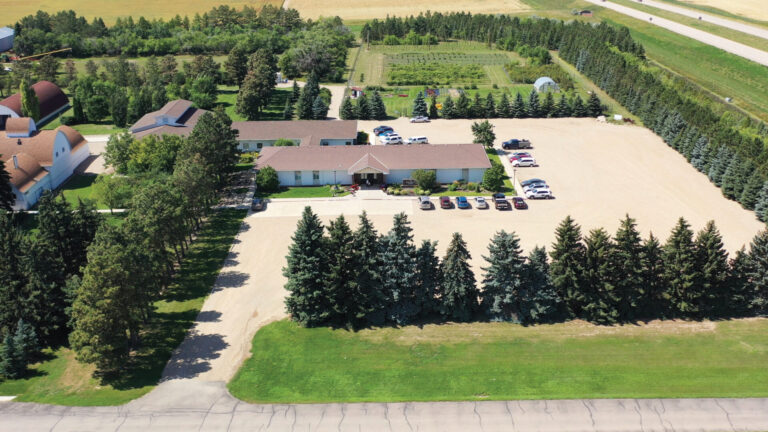
Western North Dakota is defined by wide-open spaces, the mighty, historic Missouri River and an arid landscape of eroded rock formations called the Badlands. It’s a dynamic setting where agriculture also flourishes, contributing to the state’s national prominence in the farm industry.
“North Dakota ranks in the top five in crop production acreage for 16 different crops, with a No. 1 rank in acreage among states in seven crops,” says Tyler Tjelde, a research agronomist for the Williston Research Extension Center (WREC). North Dakota also ranks first in dry bean, canola, flax, sunflower, pea, spring wheat and durum wheat.
WREC is one of seven branch stations representing North Dakota State University.
“Researchers at the extension centers develop and share technology to enhance quality of life, sustain food, feed, fiber and fuel production, and protect our heritage,” Tjelde says.
From day to day, he’s studying agriculture cropping systems, soil and water conservation and different ways to control weeds and pests. He’s also evaluating new varieties of plants.
“From the time the seed is put into the ground until it finds itself on the grocery store shelf is a very complex system,” Tjelde says.
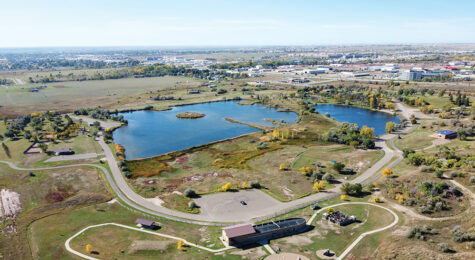
Successful Harvests
It’s Steve Ibach’s job to provide those seeds and growing tools to the farmers. He’s the location manager for United Agronomy, a full-scale chemical, fertilizer and seed retailer with a Williston location.
“I guess it’s easier to explain what we don’t do,” Ibach says. “We don’t seed it, and we don’t harvest it. We’re involved in all the other processes.”
Like all Midwestern states, agriculture is huge in North Dakota. But the state’s range of crops really sets it apart. While other states are largely corn and soybeans, North Dakota has a much more diverse set that numbers 50 or so different crops, Ibach says.
And from April 15 to July 4, he and his team are slammed, with each sales agronomist with a client list of at least 50 growers.
“We’re in constant contact,” he says. “My day-to-day is probably 200 phone calls to make sure all of our locations have what they need. We pride ourselves on wanting the plants to be as healthy and productive as they can be, which in turn will make the growers as profitable as they can be.”
Forming Partnerships
David Anfinson and Paul Weyrauch are looking to become more profitable by diversifying their businesses. They have a long history together.
“We worked at the same company. We’ve worked for each other, and we’ve farmed together,” Weyrauch says.
In 2020, they decided to join forces on a new venture, ND Malting and Hops. “I got into home brewing a while ago,” Anfinson says. “I realized I could grow everything on my farm. I’ve raised malting barley for years.”
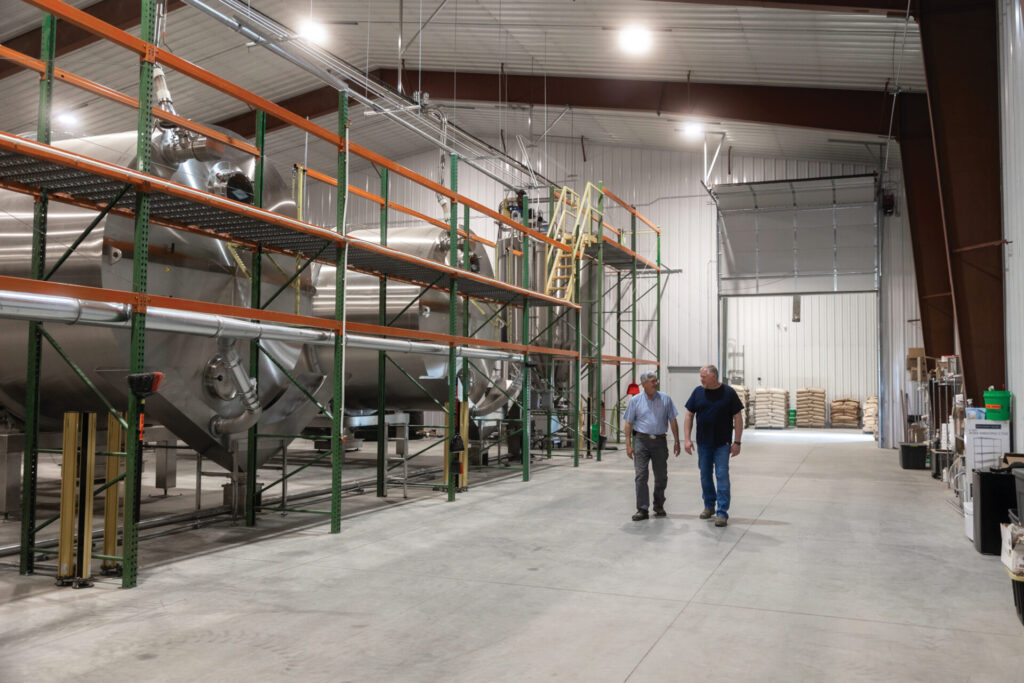
The production facility is a way to broaden their customer base. With help from the STAR Fund, a City of Williston-administered grant program, and the Bank of North Dakota, ND Malting and Hops began cleaning, malting and packaging high-quality barley, wheat and oats in May 2024.
“We raise more barley than the plant will take, so we can afford to be picky with color sorting and sizing the plumpest kernels,” Weyrauch says.
Hops are the next step.
“They grow natively up here, so that should be a relatively easy leap for us moving forward,” Anfinson says.
Anfinson’s dual role of grower and home brewer gives him unique insight. “We do barley really well up here,” he says. “So, we start with a really good product and continue from there.”
Right now, he and Weyrauch grow all the grain, so there’s traceability to the farms. The dedication to high quality and consistency is gaining notice. They’ve worked with several North Dakota brewers and a few in Montana. There’s also interest from Minnesota and Arizona. And even though the once red-hot craft brewing market is slowing, Anfinson says the business is still in a good place.
“It’s still a social thing,” he says. “We’re also seeing distilling coming on, too.”
And in a state where agriculture and crop diversity excels, both growers can farm corn, rye and wheat.
Around Williston, “America’s Breadbasket” is particularly meaningful, especially when it comes to the agricultural industry’s sophistication, work ethic and creativity.
Get to Know Williston
Want to learn more about living and working in Williston, ND? Check out the latest edition of Livability Williston, North Dakota.