

Pawleys Island, Myrtle Beach, SC: Historic. Coastal. Unhurried.
Pawleys Island is a historic coastal community located along the southern end of South Carolina’s Grand Strand, approximately 25 miles south of Myrtle Beach. Known for its quiet beaches, Lowcountry landscapes, and long-standing reputation as one of the oldest seaside resorts on the East Coast, Pawleys Island offers a distinctly different atmosphere than the more tourism-driven sections of Myrtle Beach. The community is widely recognized for its slower pace, historic beach cottages, golf communities, and strong connection to marsh, creek, and oceanfront living.
Positioned between the Atlantic Ocean and the mainland commercial corridor along U.S. Highway 17, Pawleys Island includes both the narrow barrier island itself and the surrounding mainland areas commonly associated with the broader community. The area balances natural coastal scenery with upscale residential development, boutique shopping, golf resorts, and boating access. Unlike many heavily commercialized beach destinations, Pawleys Island maintains a quieter and more residential identity shaped by preservation, outdoor recreation, and Lowcountry tradition.
Overall Vibe & Lifestyle
Life in Pawleys Island centers on relaxation, outdoor living, and a coastal routine rather than large-scale tourism. Compared to Myrtle Beach’s entertainment districts and resort corridors, the environment here feels quieter, more residential, and noticeably less commercialized.
Residents are often drawn to the community for its slower pace and natural setting. Daily life commonly revolves around boating, fishing, golfing, beach walks, paddleboarding, marsh access, and local dining rather than nightlife or tourism attractions. The atmosphere feels strongly connected to the surrounding environment, with many residents prioritizing outdoor recreation and coastal lifestyle over entertainment-driven amenities.
The neighborhood appeals to retirees, second-home owners, golf enthusiasts, remote workers, and buyers seeking a quieter coastal environment with stronger ties to traditional Lowcountry character.
Safety & Walkability
Pawleys Island functions primarily as a low-density coastal community with lighter traffic patterns than much of the Grand Strand. Roads throughout the area are generally less congested outside peak summer weekends, and many residential sections maintain a slower overall pace than nearby tourism corridors.
Walkability varies depending on location. The barrier island itself supports walking and biking for recreation, particularly along residential beach roads and shoreline areas. Mainland commercial sections near Highway 17 are more vehicle-oriented, though some shopping and dining clusters can be navigated on foot.
Because the community is spread between the island, marsh, golf, and mainland residential sections, most errands still require short drives. However, the reduced traffic intensity and quieter road network contribute to a more relaxed day-to-day environment than many neighboring coastal communities.
Natural & Built Environment
The natural environment defines much of Pawleys Island’s identity. Marshes, tidal creeks, live oaks, sandy beaches, and Lowcountry waterways shape the landscape throughout the area. The barrier island itself remains relatively narrow and lightly developed compared to many East Coast beach destinations, preserving ocean views and natural coastal scenery.
The built environment reflects a mix of historic cottages, luxury coastal homes, golf community developments, and marshfront properties. Unlike the high-rise-heavy sections of Myrtle Beach, Pawleys Island has very limited vertical development, contributing to a more open, residential feel.
Outdoor recreation opportunities are integrated into daily life throughout the community. Huntington Beach State Park is located nearby and provides beach access, birdwatching, trails, and access to Atalaya Castle. Boating, kayaking, fishing, and paddleboarding are also common throughout the marsh and creek systems surrounding the island.
Design & Architecture
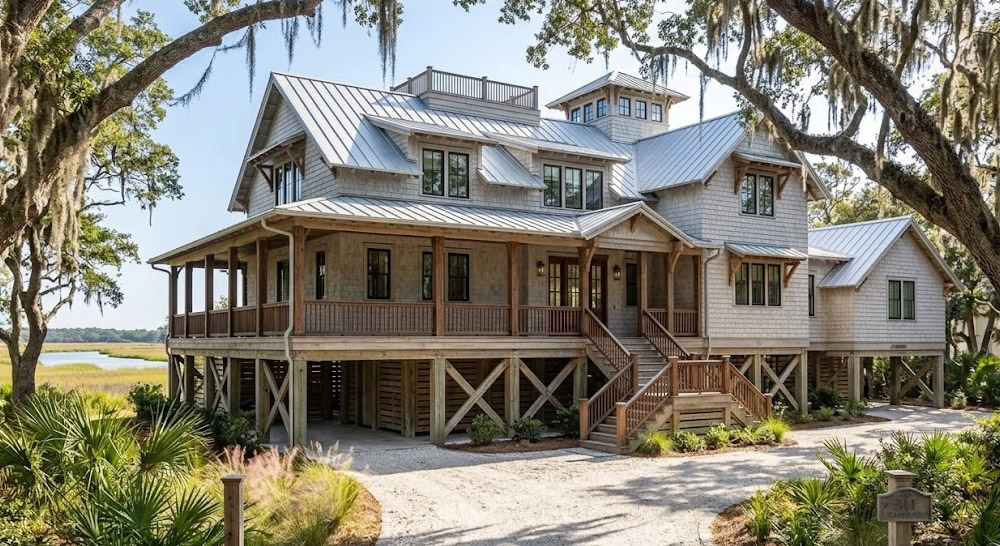
Architecture in Pawleys Island reflects a combination of historic coastal character and upscale Lowcountry residential design. The island itself is known for its traditional raised beach cottages, weathered-wood exteriors, broad porches, and homes designed for ocean breezes and floodplain conditions.
Mainland developments often include larger custom homes, golf-course properties, marshfront residences, and gated communities designed in Lowcountry or coastal architectural styles. Exterior materials commonly include wood siding, metal roofing, elevated foundations, shutters, and expansive porches intended for outdoor living.
Compared to more densely developed beach communities, the architecture throughout Pawleys Island emphasizes openness, natural integration, and a less commercialized visual identity.
Housing at a Glance
Pawleys Island offers a mix of historic beach cottages, luxury coastal homes, golf community properties, and marshfront residences within a quieter Lowcountry setting.
| Metric | Description |
|---|---|
| Type | Historic cottages, luxury coastal homes, golf community residences, and marshfront properties. |
| Size & Layout | Typically 1,200 to 6,000+ square feet, depending on location and property type. |
| Interior & Exterior Features | Large porches, elevated construction, marsh or ocean views, coastal finishes, and outdoor living spaces. |
Real Estate Snapshot
The Pawleys Island housing market reflects strong demand for quieter coastal property with historic character and access to golf, boating, and natural amenities. Buyers are often attracted to the community’s lower-density development patterns and more residential atmosphere compared to larger tourism markets farther north.
Inventory tends to remain relatively limited, particularly for island properties and marshfront homes. Pricing varies substantially depending on proximity to the ocean, golf access, water views, and historic character.
| Metric | Summary |
|---|---|
| Market Demand | Strong among buyers seeking quieter, upscale coastal living. |
| Inventory | Limited inventory, particularly for island and waterfront properties. |
| Buyer Profile | Retirees, second-home owners, golfers, boaters, and luxury coastal buyers. |
| Pricing Context | Generally positioned above many inland Grand Strand communities. |
| Investment Pattern | Stable long-term demand tied to coastal scarcity and lifestyle appeal. |
Amenities & Local Conveniences
Pawleys Island residents benefit from access to locally oriented dining, boutique retail, golf communities, and outdoor recreation rather than large-scale entertainment districts.
Dining throughout the area includes long-standing coastal restaurants such as Frank’s Restaurant & Bar, as well as waterfront dining destinations in nearby Murrells Inlet. Shopping areas such as The Hammock Shops Village provide boutique retail and locally oriented businesses rather than large commercial centers.
Golf remains a major component of the local lifestyle. Nearby golf communities and courses, including Caledonia Golf & Fish Club and True Blue Golf Club, contribute heavily to the area’s identity and residential appeal.
Residents also maintain relatively easy access to medical facilities, grocery stores, marinas, and Highway 17 commercial services while remaining removed from Myrtle Beach’s denser tourism infrastructure.
Schools & Education
Pawleys Island is served by the Georgetown County School District. Students living in the area may be assigned to schools such as Waccamaw Elementary School, Waccamaw Middle School, and Waccamaw High School, though assignments vary depending on address and zoning changes. Families should confirm attendance zones directly with the district.
Nearby higher education options include Coastal Carolina University and Horry-Georgetown Technical College, farther north along the Grand Strand corridor.
Commuting & Location
Pawleys Island’s southern Grand Strand location provides access to both Myrtle Beach amenities and quieter Lowcountry communities farther south.
| Destination | Approximate Drive Time |
|---|---|
| Murrells Inlet MarshWalk | 15-20 minutes |
| Myrtle Beach International Airport | 35-45 minutes |
| Broadway at the Beach | 40-50 minutes |
| Georgetown Historic District | 20-25 minutes |
| Charleston | 2-2.5 hours |
Drive times may vary depending on seasonal traffic and summer beach congestion.
Pawleys Island Neighborhood Map
Quirks & Perks
One of Pawleys Island’s defining characteristics is its deliberate resistance to large-scale commercialization. While much of the Grand Strand has developed around tourism infrastructure and high-rise growth, Pawleys Island has retained a quieter and more traditional Lowcountry atmosphere.
Another major advantage is the combination of coastal access and natural scenery. Residents can move between marshes, golf courses, beaches, and creek systems within minutes, creating a lifestyle that feels deeply tied to the surrounding environment.
The area’s longstanding reputation as a historic beach destination also contributes to a stronger sense of continuity and local identity than many newer coastal developments farther north.
Neighborhood Logistics
Pawleys Island operates through a combination of municipal governance on the island itself, Georgetown County services, and various homeowners’ associations and private community structures throughout the mainland residential sections. Services, including law enforcement, fire protection, road maintenance, and public infrastructure, are managed through a combination of local and county-level agencies.
Parking and transportation logistics vary significantly depending on location. Island properties often operate within tighter coastal road systems and floodplain considerations, while mainland golf communities and residential developments rely more heavily on suburban vehicle access.
Because of the area’s coastal geography, flood insurance, storm preparation, and environmental regulations can play a larger role in homeownership than in inland communities. Residents generally view those trade-offs as part of the value proposition tied to the area’s preserved coastal character, lower density, and long-term residential appeal.
Explore Myrtle Beach Neighborhoods
Note on imagery: Images marked “AI Generated” are visuals to illustrate the neighborhood homes, atmosphere and architectural style. To protect homeowner privacy, these images are artistic representations and do not depict specific existing properties.