
Apprenticeships in Oak Ridge Create Bright Futures
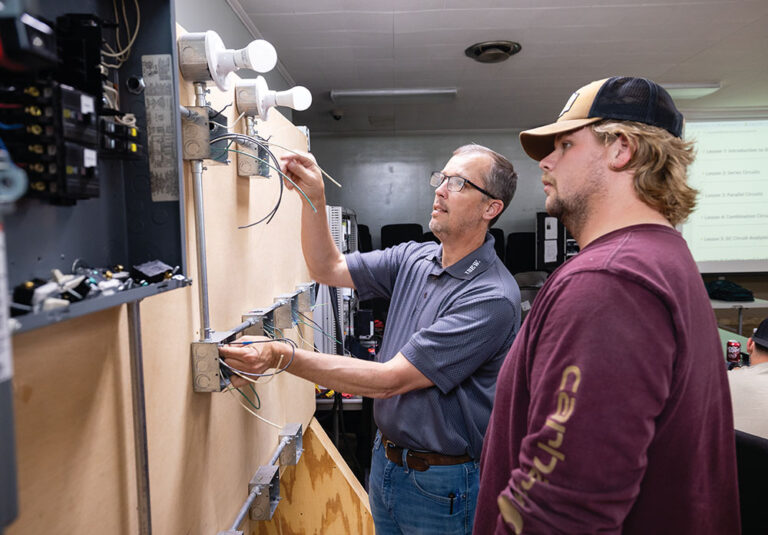
Skilled trades are a cornerstone of the Oak Ridge region’s economy, playing an essential role in driving local industry and economic growth. The region’s rich history in advanced manufacturing, energy production and technological innovation relies on a workforce proficient in trades, such as electrical work and welding. That’s why apprenticeships in Oak Ridge are vital.
Through programs like those offered by the Oak Ridge Electrical Joint Apprenticeship and Training Committee (OREJATC), the region can maintain a pipeline of skilled talent that flows to these vital industries. This also positions the area as a competitive hub for future industrial and technological advancements, ensuring its leadership in critical sectors.
Apprenticeships in Oak Ridge: Learn and Earn
The OREJATC is at the forefront of offering promising career paths through its Department of Labor registered apprenticeship program. A collaboration between the International Brotherhood of Electrical Workers (IBEW) Local Union 270 and the East Tennessee Chapter of the National Electrical Contractors Association (NECA), OREJATC is dedicated to developing highly skilled electrical workers.
Apprenticeships and technical education programs are increasingly being recognized as viable alternatives to traditional four-year degrees. OREJATC’s program calls for students to invest 720 hours of classroom time and 8,000 hours of paid on-the-job training – spread out over four years – ensuring that graduates are well prepared for the workforce.
“Apprentices are working a minimum of 40 hours a week and getting paid, and then one night a week, they come to class and learn about things, such as DC theory, AC theory, how to bend conduit and how to hook up motor starters,” says Brad Hale, training director for the OREJATC apprenticeship program. “After they finish the program, that’s just the beginning of their career. They have opportunities to be planners or estimators. We have graduates who are working at Oak Ridge National Laboratory. We have supervisors for multicraft positions who came through this program. In a competitive job market, it gives them a big advantage.”

Education, Careers & Opportunity
Oak Ridge Embraces Nuclear Renaissance
City experiencing a surge in nuclear energy investment and next-generation technology.
Unlocking Potential Around the Region
That competitive advantage is why Aubrey Johnson, an electrical foreman at Y-12 National Security Complex in Oak Ridge, relocated from Chattanooga in 2018 to enroll in the program. During his apprenticeship, he worked at Y-12 and Oak Ridge National Laboratory, both Department of Energy contractor sites.
“I applied to this program because, to me, it is more fruitful than any of the others because of all the work that’s going on in this area,” Johnson says. “I was more certain that I would be able to take care of my family and provide for them working out of the Oak Ridge area.”
Johnson, who currently supervises an eight-person crew, says the skills he gained during his apprenticeship set him up for success, not only within the organization, but wherever he chooses to grow his career.
“The program most definitely gave us a head start. We took classes but most of our training was hands-on in the field. Now that I have these skills, I can take them anywhere. It’s not like working in a car factory where if the factory closes, you have to find something else to do. I can literally take my electrician skills and go anywhere in the world,” Johnson says.

A Big Bang for the Buck
Both Johnson and Hale point to the program’s affordability as another major draw. Apprenticeships offer a financially attractive alternative to four-year colleges, often with lower costs and the significant benefit of paid, hands-on training. Additionally, the job placement rates for graduates of these programs are relatively high. OREJATC apprentices pay only $600 per year to enroll in the program, which Hale says is a bargain when compared to potential earnings.
“They’re earning a wage, they’re earning retirement, and they’re able to provide for themselves and their families. And these are individuals who may have just graduated from high school, and now they’re able to provide for themselves and even save for their future,” Hale says. “When they graduate, they’re what’s called a journeyman. Journey-level workers make $32 or more an hour. But that’s not the ceiling; that’s the floor of what they can potentially earn.”
Johnson agrees. He earned six figures last year. “Oak Ridge is a great place to work, but it’s also a great place to live,” he says. “Plus, I’ve built a family here.”
Get to Know Oak Ridge
Want to learn more about living and working in Oak Ridge, TN? Check out the new edition of Livability Oak Ridge, Tennessee.