
Local Co-ops Help Connect Palouse Residents to Crops Throughout the Year
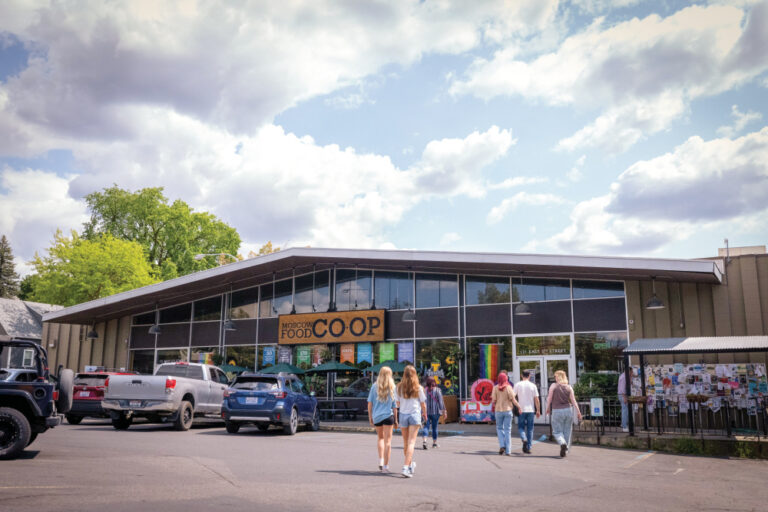
On a first visit to the Palouse, it quickly becomes apparent why good food is central to the region’s lifestyle. Fields of grain cover the rolling hills, local produce overflows at farmers markets, fishing and hunting are popular recreational activities, and world-class fruit and wine are grown a few hours’ drive away.
“The Palouse region has a robust local agricultural scene,” says Melinda Schab, general manager of Moscow Food Co-op.
For 20 years, Schab has helped connect farmers to customers.
“Each producer showcases unique strengths given their own growing opportunities, such as extraordinarily large vegetables, greenhouse grown citrus, specialty mushrooms or quality plant starts,” she says.
It’s no wonder the bounty of the Palouse is one of the top draws of the co-op.
“Our produce section is designed to be a welcoming red carpet and the crowning jewel of the store,” Schab says.
A Long History of Community Involvement
The Moscow Food Co-op has grown significantly since its founding in 1973. Though it has had to change locations several times, it has been anchored in its current downtown spot since 2005.
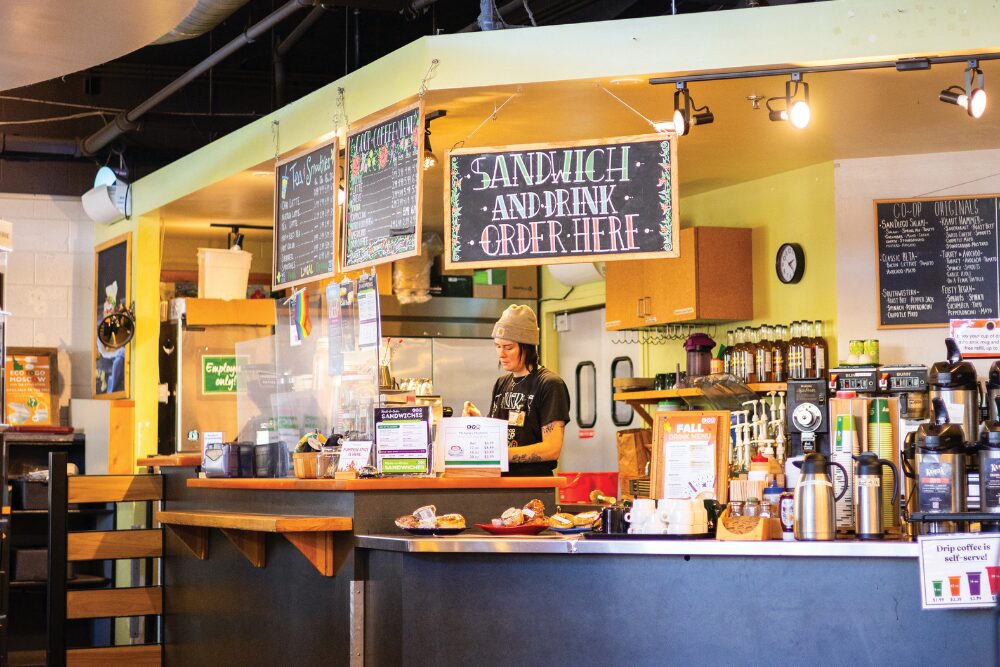
The co-op is akin to a full-service grocery with the same departments as a chain store, Schab says, the major difference being the ownership model. A food co-op is typically community-owned, with shoppers purchasing a share to become member owners. The Moscow Food Co-op has a board of directors who are elected from the pool of co-op owners.
“The board is responsible for big-picture thinking,” Schab says. “They define the impact our co-op wants to have on our community and the future we’re working to create.”
Building relationships is at the root of a successful co-op, particularly when it comes to fresh, local produce. Farmers the co-op regularly works with are friends and neighbors, Schab says, and co-op members show their care by acting as collaborators.
“We’re looking for arrangements that are wins for those producers, wins for our local community members and wins for the co-op,” she says. “When you shop at any cooperatively owned business, more money stays in your local community.”

Pullman Plans for Food Co-op
Across the state line, plans are in the works for a brand new brick-and mortar store. The Pullman Good Food Co-op recently signed a letter of intent to lease a 4,000-square-foot space downtown with hopes of opening a full-service grocery with a wide variety of food, produce and health products.
“We also hope to include a community space, cafe and prepared foods,” says Andy Jacobs, board chair of the Pullman Good Food Co-op. “The co operative is being established so we can provide more channels for local farmers to grow a variety of crops and keep them on the Palouse.”
Until then, the Pullman Good Food Co-op operates online, where customers can order products like meat, fish, eggs, tea and freshly cut flowers. Called Pullman Market Monday, payments go directly to the co-op’s farmers and producers. The goodies are then ready for pickup every Monday afternoon at a downtown location.
Making a Difference on the Palouse
In this online exclusive, learn how the region’s roster of community-minded nonprofit organizations are helping to meet challenges and better the lives of the region’s residents. Read more at livability.com/palouse-nonprofits.
Making Local Products Available to All
“Co-ops are important because they make our entire food supply chain more resilient,” Jacobs says. “The majority of crops grown around Pullman are commodities that leave our community. We believe opening this marketplace will give farmers opportunities to diversify and put local food on the table for everyone.”
Making the food economically accessible is a key component, too. Pullman Good Food Co-op plans to accept SNAP benefits when it opens its physical store. State regulations currently prevent it from accepting SNAP for the Monday Market. In lieu of that, it provides free membership in the co-op for all SNAP beneficiaries.
Moscow Food Co-op accepts SNAP benefits and offers a supplemental food access program called FLOWER (Fresh Local Organic Within Everyone’s Reach) that offers an additional 20% discount every day to its limited-income co-op owners, Schab says.
“SNAP and FLOWER make it possible for more people in our community to feel welcome here,” Schab says. “When the co-op does well, we pay that back to the community. We also have a responsibility to make sure that we care for one another, and part of that care is ensuring that everyone has enough to eat.”
Get to Know the Palouse
Want to learn more about living and working in the Palouse region of Idaho and Washington? Check out the latest edition of Livability On the Palouse.