
10 New Mexico Hiking Trails That Inspire, Educate

You’d be hard-pressed to find a state with a more diverse trail system. From mountain tops to cliffside caves, New Mexico hiking trails wind through forests, along the rims of volcanoes and across sandy deserts. Here are 10 trails you’ll want to explore!
In This Article
Atalaya Mountain Trail
Starting southeast of downtown Santa Fe, this route runs from St. John’s College to the summit of Atalaya Mountain. Depending on where you join the Atalaya Mountain Trail, it’s between 4.4 and 5.8 miles there and back. This popular, family-friendly hike climbs through aspen and ponderosa pine before climaxing at a panoramic overlook of the city and surrounding mountains.
Ancestral Sites Trail
Southeast of Santa Fe lies Pecos National Historical Park, the location for several fascinating sites including a Civil War battlefield and ranch. The 1.25-mile Ancestral Sites Trail takes visitors to the oldest section of the park where Pecos Pueblo flourished from about 1350 to 1838. Near the remains of the pueblo stands a 1717 Spanish mission church.
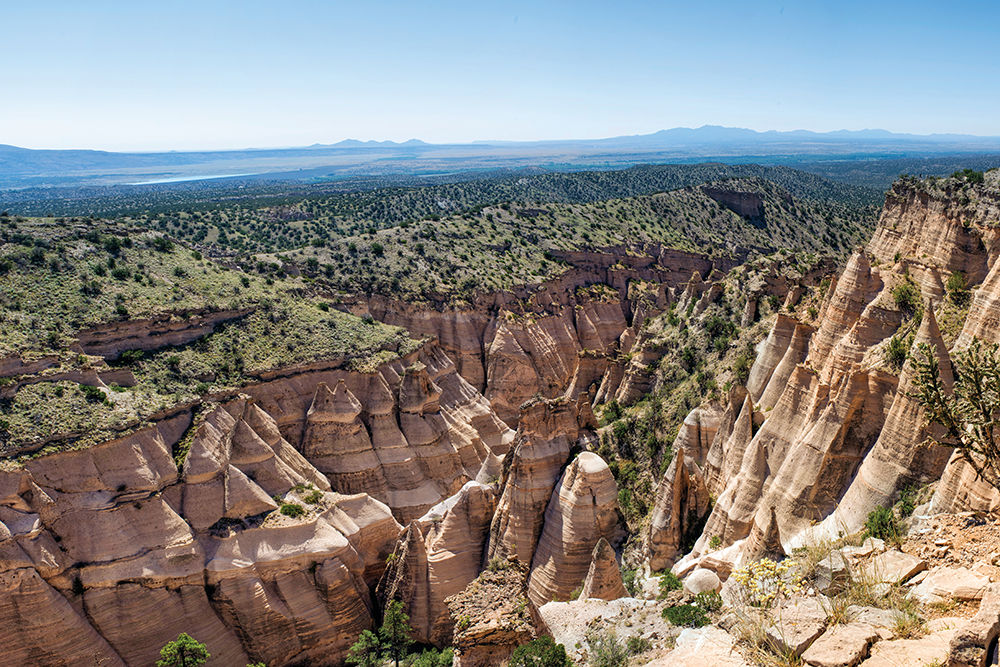
National Recreational Trail
If you like weirdly beautiful rocks and treks through tight canyons, this trail is a must-hike. Located southwest of Santa Fe in Kasha-Katuwe Tent Rocks National Monument, the trail has two connecting segments. The 1.2-mile Cave Loop Trail features cone-shaped formations created by volcanic eruptions while the 1.5-mile Slot Canyon Trail travels up a narrow gorge.
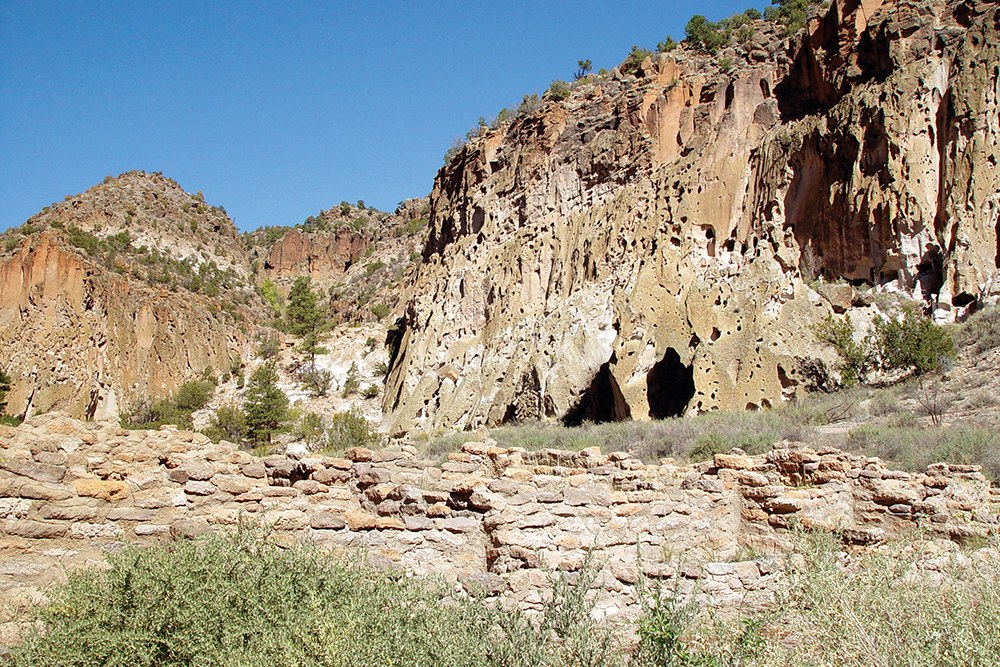
Pueblo Main Loop
New Mexico has some of the best-preserved archaeological sites of any state. This hiking trail near Los Alamos in north central New Mexico is a 1.4-mile loop through Bandelier National Monument. The route passes through a valley where ancestral Pueblo people carved alcoves into the towering canyon wall. Visitors can climb into some of the dwellings. There are also hundreds of petroglyphs depicting animals, humans and geometric patterns.
Crater Rim Trail
Many New Mexico hiking trails don’t fully present themselves from a distance. But as travelers approach Capulin Volcano National Monument in northeastern New Mexico, the impressive rim is clearly visible. A road winds to the top, where a paved, 1-mile loop circumvents the crater. On a clear day, Colorado, Oklahoma and Texas can be seen in the distance.
Pueblo Alto Trail
In northwestern New Mexico, Chaco Culture National Historical Park preserves one of the most extraordinary archaeological sites in North America, if not the world. Pueblo Alto is the most comprehensive trail in this UNESCO World Heritage Site, looping 5.5 miles through what was once a booming regional center for the ancestral Pueblo people. The trail passes by several great houses with stunning overlooks of the remains and desert landscape.
Pino Trail
The Sandia Mountains loom to the northeast of Albuquerque, and this 4.7-mile trail delivers an invigorating way to quickly leave the city behind. The popular, somewhat steep hike ascends some 3,000 feet through numerous ecological zones, from desert and cactus at the bottom to aspen and evergreens up top, with breathtaking and magnificent valley views along the way.
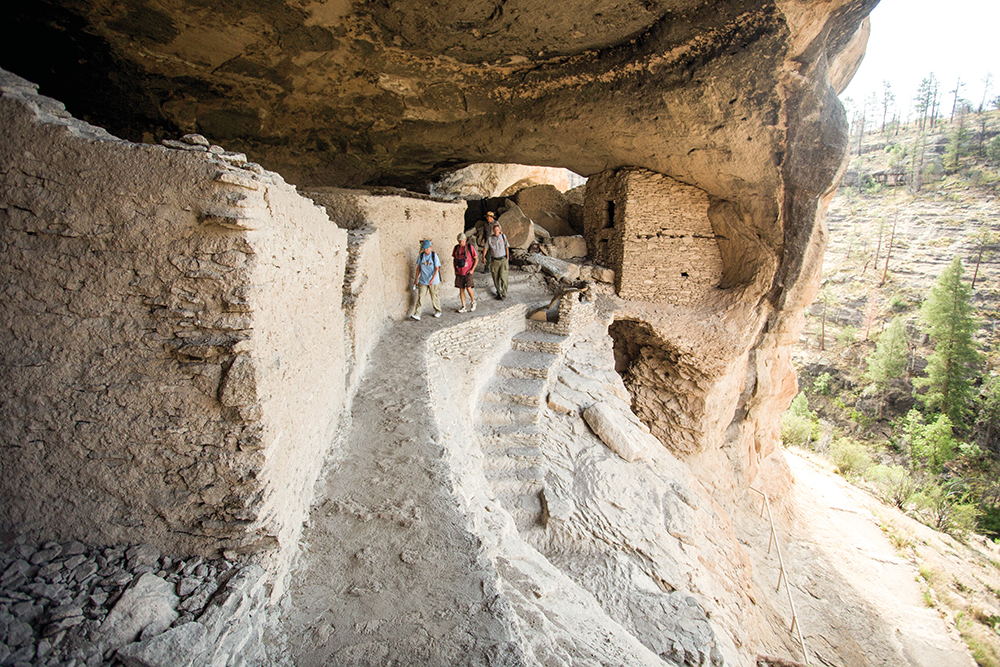
Gila Cliff Dwellings Trail
In southwestern New Mexico, the Gila Wilderness is so prized that in 1924 it became the world’s first designated wilderness area. There’s evidence humans have been active in the region for more than 11,000 years. The most significant example is on view at Gila Cliff Dwellings National Monument where the Mogollon people lived more than 700 years ago. This 1-mile trail leads through caves defined by standing masonry walls and ancient timbers.
Alkali Flat Trail
For thousands of years, white sand has slowly engulfed 275 square miles of desert in south-central New Mexico. Today, the world’s largest gypsum dunefield is called White Sands National Park. This 5-mile loop trail explores the heart of the park with a demanding trek through a massive expanse of undulating 60-foot-high white dunes. The route skirts the outer edge of Alkali Flat, an ancient lake.
Old Guano Trail
After an underground tour of Carlsbad Caverns National Park in southeastern New Mexico, visitors in need of sun and fresh air will appreciate this 3.7-mile scenic trail named after bat droppings. In the early 1900s, the fertilizer was mined in the caverns and then hauled away. Today, hikers follow the historic road past mining operation ruins as the trail gradually goes down an escarpment with sweeping views of the desert and mountains.

State Grant Improves Access to Nature
When thinking about New Mexico trails, an all-wheel bike park probably isn’t top of mind. And that’s the point.
“People think outdoor recreation is about public lands and the Bureau of Land Management but it’s not,” says Karina Armijo, director of the New Mexico Outdoor Recreation Division. Her team oversees the Outdoor Recreation Trails+ Grant. Since it started in 2020, the grant has awarded $28.7 million to fund the planning, development and improvement of New Mexico hiking trails and related infrastructure of 221 projects throughout the state.
“The projects are so broad,” Armijo says. “Everyone has been so creative in their proposals for getting folks outside.”
One of Armijo’s favorite developments is an all-wheel bike park in Picuris Pueblo, a tribal community near Taos. “It’s the only bike park in that part of northern New Mexico,” she says. “It’s open to the public, and families are driving an hour each way a few times a week to enjoy it.”
In Carlsbad, the city is using award money to build trails, revamp boating docks and make critical safety improvements at Lake Carlsbad Recreation Area.
Another project brings New Mexicans together as volunteers. “We funded a nonprofit that helps the U.S. Forest Service expand the Adopt-a-Trail Program. It takes a lot to maintain trails, and this gets the community involved,” Armijo says.
While the grant benefits cities big and small, the division especially likes to talk to rural communities and ask them what their needs are, explains Armijo. By connecting people to nature, the grant’s impact is wide-ranging, strengthening outdoor industries and boosting local economies by attracting visitors and creating jobs.
“In a time of cell phones and social media, it’s not just the economic impact,” Armijo says. “Outdoor recreation is just good for people.”
Get to Know New Mexico
Want to learn more about living and working in New Mexico? Check out the latest edition of Livability New Mexico Economic Development.