
Local New Mexico Producers Bottle Indigenous Heritage and High-Desert Heat
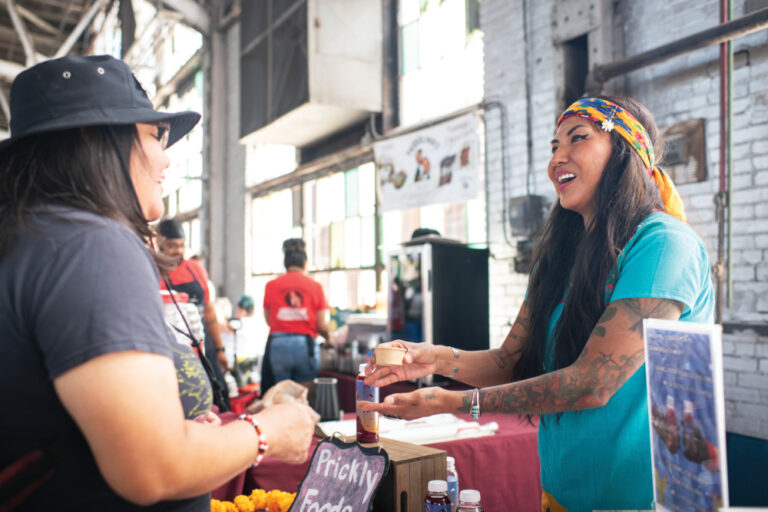
New Mexico’s agricultural landscape is a testament to resilience and flavor, offering a delicious bounty deeply connected to the land and its people. From native plants that have nourished Indigenous peoples for centuries to value-added products crafted with love from local harvests, the Land of Enchantment produces delicious and sustainable foods with an eye toward local culture. Whether you’re looking to cool down with prickly pear juice or heat up with super-spicy hot sauce, farmers here have got you covered.
Tickled Pink
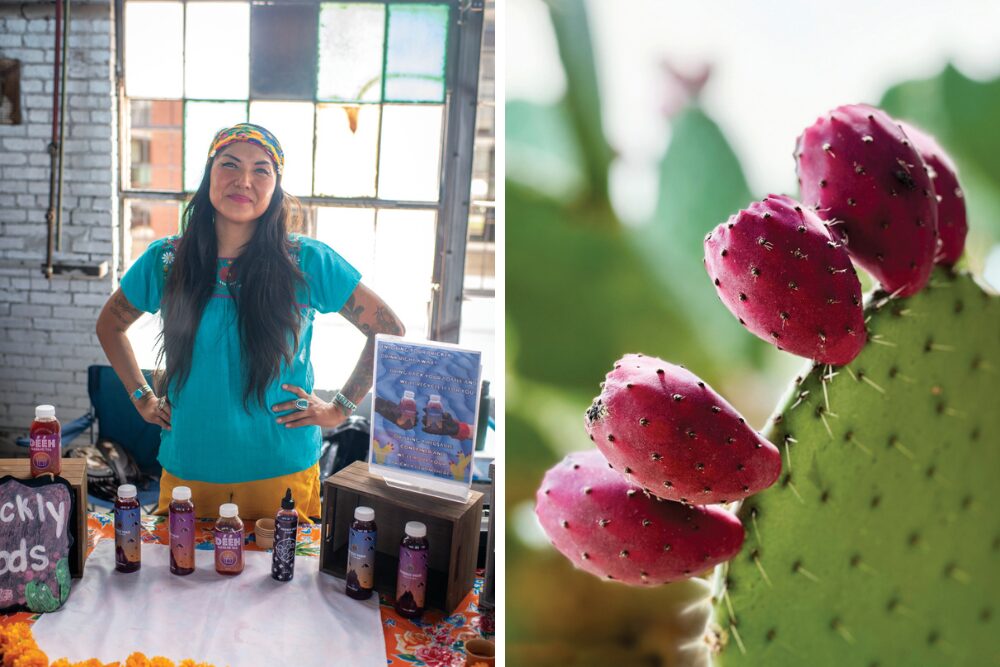
In 2019, Albuquerque native and landscape designer Will Thomson (he/him) founded the New Mexico Prickly Pear Festival as a celebration of the cactus; in the process, he reconnected with longtime acquaintance Liz McKenzie (they/them), a chef whose interest in prickly pear stems from their Indigenous heritage.
McKenzie is Diné (a population historically dubbed Navajo by Spanish explorers) and recalls learning about the plant from their grandmother.
“When she was little, her family was sheepherders,” McKenzie says. “When wandering through the desert and over the mountains, there were different plants they would harvest and eat; prickly pear was one of them. This is a familiar taste to my people and other people in this area, and it should be accessible.”
Thomson and McKenzie launched Prickly Foods in 2021, utilizing the neon fuchsia prickly pear juice in its line of beverages. Cultivated on a farm near Lemitar, the cacti’s fruit sweetens Prickly Food’s lavender and sumac lemonades, syrup and dééh, or Navajo tea, a traditional herbal infusion.

“My grandma has health issues,” McKenzie says, “so one of the things we’re proud of is the lemonade doesn’t have added sugar, just a little bit of stevia. Elders or anyone else can enjoy them.”
Prickly Foods sells products at farmers markets as well as 20 local grocery stores and is in expansion mode: It’s beginning the process of canning its dééh, and McKenzie hopes to develop an all-natural energy drink soon.
“These products are an extension of me and my culture,” McKenzie says. “As a New Mexican, a lot of people think we’re not necessarily part of the (United States), but it’s very neat to share this with people their first time here. It’s such a beautiful representation of where we live.”
New Mexico Ag Stats
20K: Farms across the state in 2024
1,870: Average size of farms in acres in 2024
$4B: Total value of ag production in 2023
No. 1: State ranking for chile production
1,040: Chiles produced in 2024 (1,000 hundredweight)
Source: New Mexico Department of Agriculture
Hot Stuff
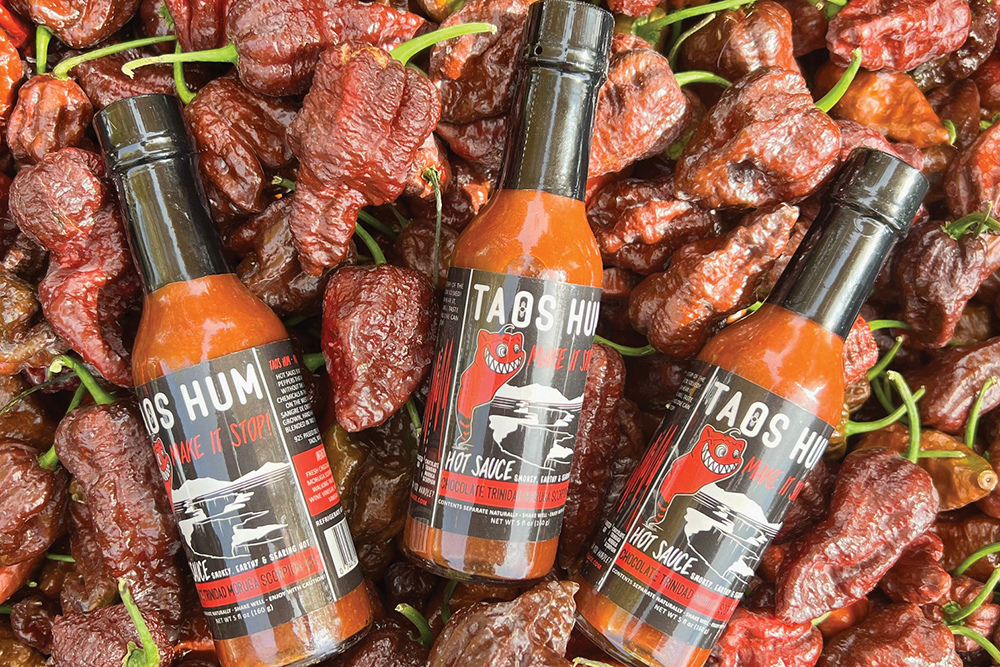
In addition to its native communities and artsy vibe, Taos is home to the Taos Hum, an unexplained, low-frequency rumble that about 2% of the population reports is a constant auditory backdrop to life in the northern New Mexico city. It’s also the inspiration for husband-and-wife Joe and Loe Marcoline’s line of hot sauces: Taos Hum – Make It Stop!
The Marcolines started out by planting their 26-acre, solar-powered farm with a wide variety of organic produce and selling their wares at farmers markets. A bumper crop of “crazy hot” chiles led to the creation of the couple’s first hot sauce.
“A habanero is 75 cents or a dollar at the grocery store,” Joe says. “You can’t make a lot of money with peppers because people only need one. So, we made our first batch of hot sauce, and the next year we did 30 or 40 cases.”
Sales rapidly expanded, and in 2019, they put all their peppers into one basket, focusing exclusively on Taos Hum.
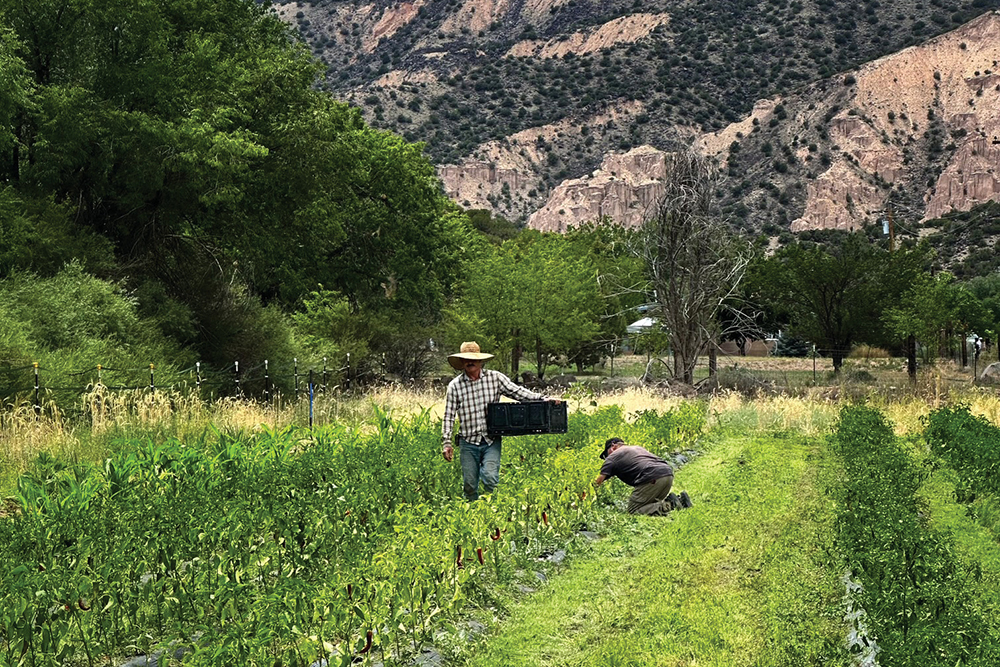
Today, the brand produces 50,000 bottles per year from around 20 varieties of pepper, ranging from sort of zingy (Mild Green Roasted Ghost) to searingly hot (Chocolate Trinidad Moruga Scorpion). Every delicious ingredient in the bottles is locally sourced, and Taos Hum even makes its own vinegar.
“Some hot sauce companies buy their products from Central America or South America. It’s cheap, and they add water, xanthan gum and filler. You can produce thousands of cases for $300,” Joe says.
The problem, he argues, is that these generic bases all taste the same, failing to reflect the unique variety and terroir of each year’s harvest. Variability in harvests is the biggest challenge for Taos Hum, he says, noting that “some years the serrano will be amazing but the jalapeños won’t be.”
Heat levels can also vary from season to season. Ultimately, the Marcolines began thinking of (and marketing) their hot sauces like vintners. “We’ve used that to our advantage,” he says. “A wine changes from year to year. That’s how we account for variations.”
Excess of ingredients also spurs creativity: The Peach Habanero hot sauce came about thanks to a glut of fresh peaches. Despite the challenges, Joe says, “My favorite thing is seeing how excited people are about Taos Hum. It’s why we’ve continued to do it.”
Where to Find New Mexico-Made Items
Tourists love searching for “authenticity.” Whether it’s an iconic local dish, music venue or dive bar, every visitor wants to recall the goods and experiences that can’t be found just anywhere.
The New Mexico Tourism Department is banking on that with its New Mexico True Certified Program, an initiative designed to promote Land of Enchantment products that are 100% grown or manufactured in the state. The program is free to licensed New Mexico businesses that are “growing or manufacturing tangible artisan products of interest to the traveling public,” according to newmexico.org.
Since 2016, the statewide program has certified over 475 ranchers, growers, artisans and makers, encompassing everything from furniture to fine art and clothing to candles.
Of course, plenty of local food and beverages have made the cut; nearly 80 producers appear on the program’s online directory. It’s a one-stop shop for products like Happy Bees raw honey in Fort Sumner; Heidi’s Raspberry, Red Chile and Ginger Jam in Albuquerque; and a lager or tequila from Little Toad Creek Brewery & Distillery in Las Cruces.
The True Certified Program also releases seasonal gift guides, so keep an eye out for holiday and summer guides to find the perfect gift. Certified products bear a seal displaying the iconic Zia sun symbol also found on New Mexico’s state flag.