
San Joaquin County: A Working Model for the “New California Economy”
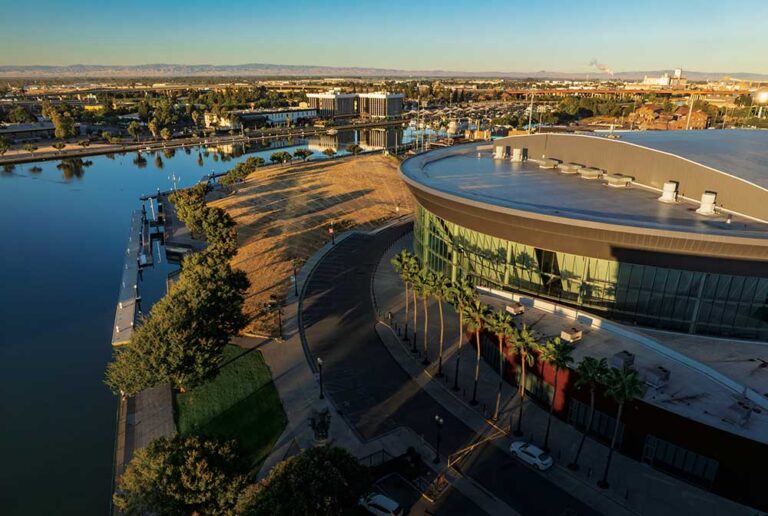
Warehouses and freeways helped build San Joaquin County’s reputation as a California logistics hub. Now, after hosting the 2025 California Economic Summit and drawing statewide attention to Stockton, leaders are working to leverage that foundation into something broader: resilient growth, climate-ready communities and expanded economic opportunities.
Kate Gordon, CEO of California Forward, cites San Joaquin County as a prime location for the event hosted in 2025.
“I was excited about it being in San Joaquin County, as it’s an interesting region. It brings together a lot of different elements of California economics,” Gordon says. “It’s like it is a microcosm of a lot of things going on.”
When the Summit wrapped in Stockton in October, it highlighted a region putting ideas into practice – turning plans for California’s future economy into real projects on the ground.
In This Article
Bridging Tradition and Innovation
Summit attendees saw an economy in transition. Leaders here have built on existing strengths while expanding into new sectors.
“San Joaquin County bridges tradition and innovation,” says Bob Gutierrez, president and CEO of the San Joaquin Partnership. “Our agricultural roots remain strong, but we’re also emerging as a hub for advanced manufacturing, clean energy and logistics.”
By diversifying its economy, the county has built a more resilient foundation that extends beyond traditional agricultural cycles, making the area a key part of California’s supply network while maintaining its agricultural heritage.
Planning for Multiple Futures
Sustainability efforts in San Joaquin County go beyond environmental compliance, representing thoughtful long-term planning.
“Instead of guessing one single future, we planned for several,” says Kim Anderson, deputy director of planning at the San Joaquin Council of Governments. “We looked at big changes that could affect our region, like new technology, extreme weather or more people working from home.”
That forward-thinking approach has delivered results. The Regional Transportation Plan & Sustainable Communities Strategy, approved in 2022, called for creating a regional housing fund to reduce commutes and cut pollution.
By 2024, the regional housing trust fund officially launched and supported affordable housing and infill projects across the county.
Meanwhile, the award-winning Green Team San Joaquin continues to build connections between commerce and the environment, helping businesses reduce costs while advancing sustainability goals. They have replicated the model in Stanislaus, Merced and Fresno counties.
Creating Pathways for All
The region’s approach to inclusive growth focuses on building from existing strengths rather than displacing workers.
“It is easier to train someone if they have a job than if they do not,” says Thomas Pogue, director of the Center for Business and Policy Research at the University of the Pacific. “Transportation and warehousing created the basis by which there’s hope we can further leverage that employment and develop skills and training. Take the existing workforce to those opportunities.”
This philosophy drives partnerships across sectors.
“Partnerships are the foundations of our success,” Gutierrez emphasized. “Whether it’s a public agency collaborating with industry or education aligning with workforce needs, our region thrives when sectors work together.”
The results show in programs like the Delta Sierra Adult Education Alliance, which offers pathways for adult learners, Spanish speakers
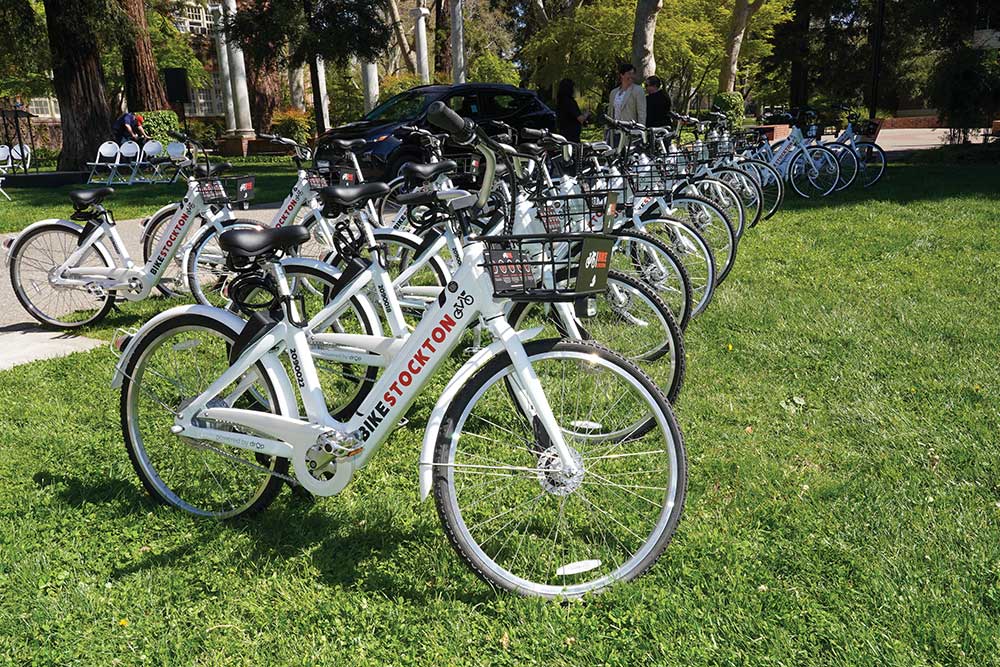
and workers transitioning between industries. Projects like the Stockton Mobility Collective bring together affordable e-bikes, electric carshare programs and job training, connecting transportation access directly to economic opportunity.
Public input has shaped these efforts, particularly from underserved communities.
As Anderson says, planners “put a lot of effort into reaching people who don’t usually get heard,” offering materials in multiple languages and partnering with local groups to ensure community voices guide development priorities.
San Joaquin County: A Model for Prosperity
For Summit attendees, San Joaquin County demonstrated what the “New California Economy” looks like in practice – not as aspiration, but as achievement.
“The fact it was held in this region is a testament to the great work the region has done,” Pogue says, “but also the coming together and recognition of the common cause the region has.”
As California grapples with housing costs, climate challenges and economic inequality, San Joaquin County offers a working model.
“San Joaquin County is not just part of California’s economy; we’re essential to its future,” Gutierrez says. “We offer the land, infrastructure, talent and innovation needed to drive sustainable growth.”
The Summit may have ended, but it made one thing clear: The “New California Economy” is already taking root in San Joaquin County. For Gutierrez, the true test lies ahead.
“The real success of the Summit will be measured by what we do going forward,” he says. “How we turn ideas into action for a more resilient, inclusive and prosperous San Joaquin County.”
Get to Know San Joaquin County
Want to learn more about living and working in San Joaquin County, CA? Check out the latest edition of Livability San Joaquin County, California.