
Fiery Pueblo Chile Peppers a Point of Pride in Pueblo, Colorado
Plenty of things about chile peppers are disputed: What growing area is the best? Is hotter always better? What’s the highest and best use of a chile? And — perhaps most often debated — are “chile,” “chili,” “chilli” and “hot pepper” synonyms?
One thing that’s indisputable is the fruit’s impact on Southwestern culture at large, and in particular on Pueblo, CO, an agricultural center and home of Pueblo chiles. Technically speaking, Pueblo chiles are simply peppers grown in the region, including widely known varieties like jalapeños, Anaheims and Fresnos. But when heat seekers encounter peppers labeled “Pueblo chile,” it’s most likely a Mirasol (a variety that, unlike other strains, grows upward towards the sun) or a Mosco (a larger, meatier strain of Mirasol that was developed in the late 1990s in the Arkansas Valley).
Whether Mirasols or Moscos are the archetypal Pueblo chile is up for debate, but there’s no question the city is fiercely proud of its agricultural heritage and fiery peppers, whatever the strain.

Competition Heats Up
Rocky Musso is the fifth generation of his family to farm 150 acres just east of Pueblo. (Musso’s 3-year-old son and the sixth generation of farmers sometimes accompanies him to the fields). Today, he and his father grow several types of melons, sweet corn, potatoes, beans and eggplant in addition to chiles.
“You name it,” he says when asked what crops he tends. “It’s a whole lineup.”
Chiles are planted on approximately 35 acres of the farm, though that varies each year depending on the water situation, he says. The majority of those 35 acres are sold at Musso Farms’ roadside farm stand, often roasted whole over an open fire in a rotating barrel.
In 2019, things heated up on the chile front with a friendly(ish) wager between the governors of Colorado (rooting, of course, for Pueblo chiles) and New Mexico (standing for Hatch chiles) about which variety rules supreme. That, says Musso, really increased the awareness of Pueblo’s product.
“There wasn’t a declared winner,” he says, “but we got everybody into the ‘who’s better’ thing. Since then, I’ve seen a big increase in interest and people coming from out of town.”
Pueblo chile is by far the most popular variety of chile grown in the region, according to Musso, who says, “the flavor along with its sporadic heat is what makes it the best pepper.”
Pueblo chiles range from 5,000 to 20,000 Scoville heat units (SHU), according to the Pueblo Chile Growers Association; Hatch chiles ring in between 1,000 and 12,000 SHU.
“You get one Pueblo chile and say, ‘Oh, there’s heat,’ and get another one and say, ‘Oh, that’s fire.’”
That lends a complexity to Colorado-style green chile, a sauce-stew hybrid that’s a favorite use for the pepper in the state.

Community Gets Fired Up for Pueblo Chile Festival
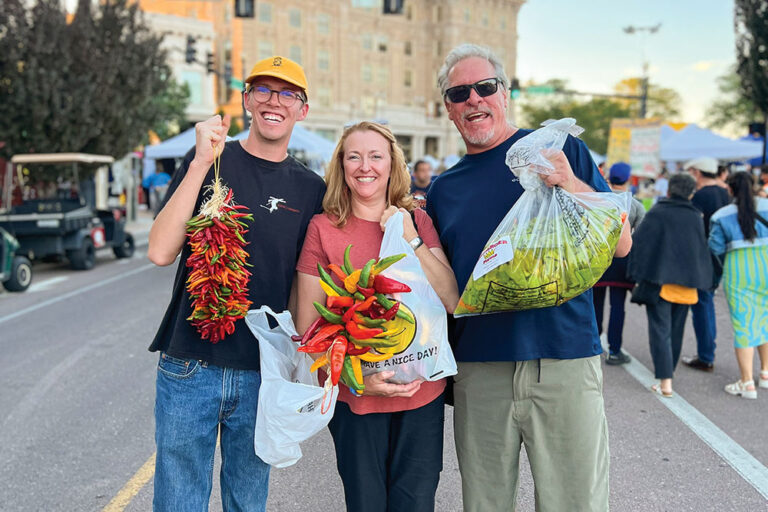
Hotheads can find chiles in nearly every preparation under the sun at Pueblo’s annual Chile & Frijoles Festival, which celebrated its 30th year in 2024.
The festival features six family-owned farm stand roasters, showcases 55 entertainment acts, and hosts over 200 vendors across 10 downtown blocks. Each year, on the third weekend of September, over 100,000 visitors gather to indulge in bushels of roasted chiles while enjoying the culture of Southern Colorado.
Donielle Kitzman, vice president of the Greater Pueblo Chamber of Commerce, began volunteering for the event back in 2000 and recalls a particularly memorable fest in the early 2000s when an early snow blanketed the streets.
Pueblo Chile & Frijoles Festival By the Numbers
$8M-$10M
estimated economic contribution to the city
100K+
visitors attend the festival
200+
vendors
“I was working as a bartender and we brought small space heaters from home to plug in on the ground and wore all our winter gear to try and stay warm,” she says. “Needless to say, we did not sell much beer.”
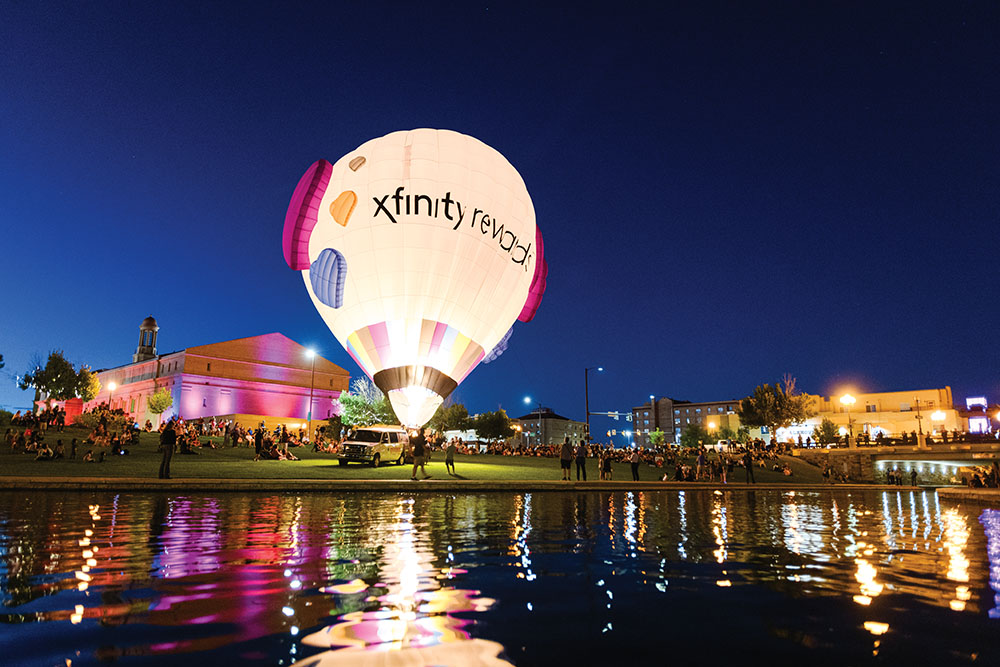
In recent years, a hot air balloon glow and launch has been added to the chile festivities. Marking the 30th anniversary, 30 hot air balloons filled the skies kicking off the festival. Festival attendees could catch a hot air balloon glow on the Pueblo Riverwalk just outside the main gate of the Chile Fest.
“We also had a fireworks show on Saturday night and featured 30 contestants for the annual jalapeño-eating contest,” Kitzman says.
The event now contributes an estimated $8 million to $10 million to the city’s economy and attracts guests from around the world.
“We have now had attendees from 10 countries and every state except Maine,” Kitzman says. “Where are you, Maine? Don’t be shy!”
Get to Know Pueblo, CO
Want to learn more about living and working in Pueblo, CO? Check out the new edition of Livability Pueblo, Colorado.