
How Railroads Transformed Pueblo Into Colorado’s Steel City
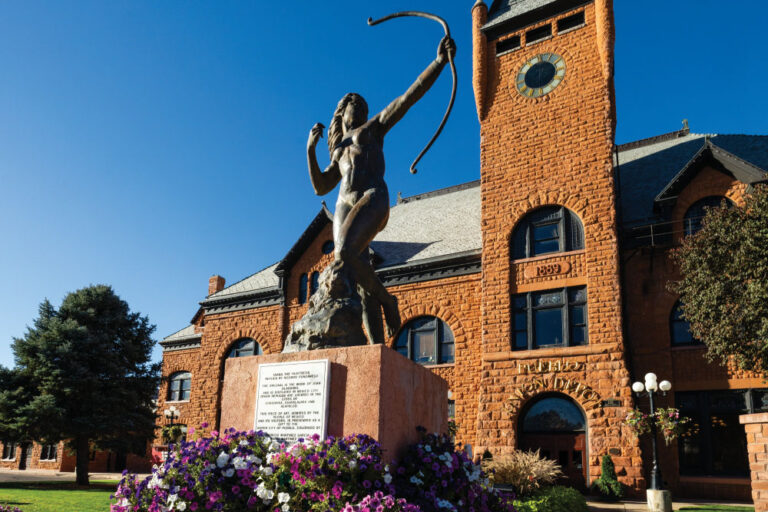
It’s 1876 in Pueblo. The streets are dusty, home to horses and wagons, and lined with stables, livery companies and stores stocking ranch or mining-camp necessities. The new one-room school is the town’s pride. There’s a newspaper, several churches, but no telephones in town. Ulysses S. Grant visited just last year. Colorado is about to join the Union and Pueblo, population 750, is about to change forever.
Incorporated for just six years, Pueblo is an important but unassuming trading town. The growing municipality is about to become an economic powerhouse, a hub for expansion to the West and a foundational giant of the U.S. steel industry – thanks to the railroads.
All Aboard
Today, Sal Pace, former Pueblo County commissioner and a leading advocate of the proposed Front Range Passenger Rail, reflects on the role of rail in shaping the region’s historic narrative.
“Rail helped develop this city and was so instrumental in opening the whole western United States,” Pace says. “Before the advent of rail, people were moving by horse and buggy at a much slower pace. Look at the population numbers after rail reached Pueblo and you see a huge boom.”
The Pueblo area was home to non-native people for nearly 100 years, before it benefitted from the 1872 arrival of the of the Denver and Rio Grande Railroad. In 1876, when the fabled Atchison, Topeka & Santa Fe Railroad finally reached Pueblo, the volume and variety of highly sought-after products such as iron ore, limestone, coal, cattle and agricultural goods vastly increased.
“Pueblo became a major supply center for all of Colorado, and it became the second-largest city in the state. It supplied the cattle industry, the steel industry and the mining industry. It was a boom,” says Larry Green of the Pueblo County Historical Society. “Towns in the region grew substantially, and merged eventually, realizing there was no point in competing.”
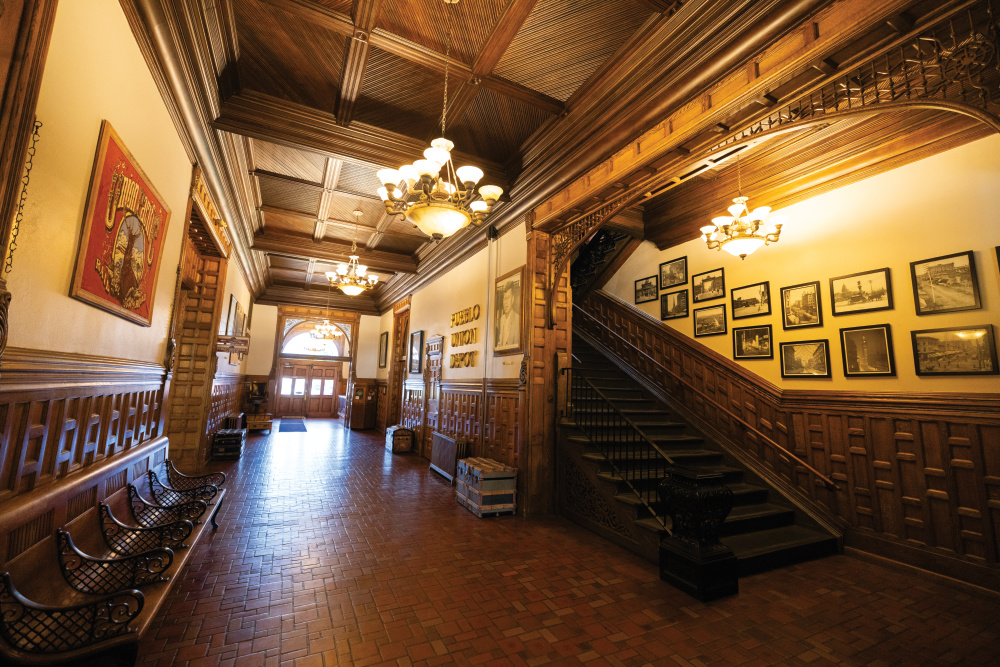
Steel City
Once the railroad provided access to raw materials, local steel production became inevitable. With easy access to raw materials and a massive demand for rails to fuel westward expansion, Pueblo began producing steel at home.
In 1877, the first steel smelter was built in Pueblo. And in 1892, Colorado Coal and Iron, later known as Colorado Fuel and Iron (CF&I), opened its steel mill. It soon became the largest employer in Colorado and the city’s economic mainstay well into the 20th century. Today, the mill is owned and operated by Rocky Mountain Steel.
“Thanks to Pueblo’s location, the coal fields to the south, water out of the Arkansas River, ore from the mountains and a substantial number of people who worked in those industries, Pueblo became a national steel center,” Green says. “At one time, Pueblo boasted five smelting centers and a broad spectrum of immigrants from every part of the world.”
Among those who came to work in the steel industry were Slovenian, Greek, German, Jewish, African American, Lithuanian, Russian, Japanese and Hungarian groups, making Pueblo the widely diverse city it remains to this day.
In 2026, Pueblo’s steel mill is still a leading producer of railroad track and parts and is the nation’s only solar-powered steel mill.
“Pueblo continues to be a very strong railroad town,” Pace says. “Not only is there a significant freight industry and a large freight yard, but we also have two of the largest rail-test facilities in North America. It’s a significant part of Pueblo’s economy.”
With Colorado celebrating 150 years and the nation hitting 250, this dual milestone sets the stage for a new era of rail travel. A measure to fund the proposed, long dreamed-of Front Range Passenger Rail may appear on a ballot in 2026, Pace says.
The project aims to create a new intercity train service for Coloradans. If all goes as planned, residents may be hearing “All aboard!” on the train from Pueblo to Denver and beyond by 2029.
Get to know Pueblo, CO
Want to learn more about living and working in Pueblo, CO? Check out the new edition of Livability Pueblo, Colorado.