
Discover the Rich History of the Ocmulgee Mounds

When it comes to history in the Robins Region of Georgia, you can’t get much older than Ocmulgee Mounds National Historical Park.
Human habitation on this stretch of land dates back more than 12,000 years, and it was home to members of the Muscogee (Creek) Nation. As a result, the area contained a treasure trove of ancient artifacts, many of which were uncovered in the 1930s during the largest archeological dig in American history.
Today, the 3,336-acre park located within the Macon city limits still provides a glimpse of the past – most notably in the massive earthen mounds that mark the remains of a 1,000-year-old town – while also offering modern-day amenities and programs. An effort began in 2024 to establish Ocmulgee Mounds and surrounding areas as the first National Park and Preserve in Georgia.
“The Ocmulgee Corridor is a special place, recognized as one of America’s most important wildlife habitat corridors, tribally significant landscapes and archaeological sites,” says Seth Clark, executive director of the Ocmulgee National Park and Preserve Initiative. “Conserving the series of ecological and cultural assets as a national park and preserve is vital to the region.”

History of the Ocmulgee Mounds
Situated along the Ocmulgee River, the mounds are part of the ancestral homelands of the Muskogean people. The flat-topped hills – seven of which have been preserved at Ocmulgee Mounds National Historical Park – were constructed to provide a platform for town leaders whenever they needed to speak to the residents. Evidence has been discovered that the town also contained village homes, a plaza, agricultural fields and even stickball courts.
In the 1930s, the Smithsonian Institution initiated an archeological dig at the site that consisted of more than 800 men and women. An astounding 2.5 million artifacts were uncovered, spanning all major time periods in Native American history.
The oldest artifact is a Clovis point arrowhead, determined to have been made 12,000 years ago. It is on display in the park’s museum, along with more than 2,000 other items such as pottery, stone tools, bones, pipes, bells and jewelry.
The archeological dig was so successful that the entire site was designated for federal protection by the National Park Service in 1934. Ocmulgee Mounds was listed on the National Register of Historic Places in 1966 and redesignated in 2019 as a National Historical Park.
Much More Than a Museum
While exhibiting historical artifacts is an important part of Ocmulgee Mounds, there are plenty of other things to see and do in the park. The area features more than 8 miles of hiking trails that wind through lush forests and beautiful wetlands, and a portion of the 13-mile Ocmulgee Heritage Trail cuts through the park as well. Park rangers offer weekly programs about the history of the site and provide hands-on activities for children.
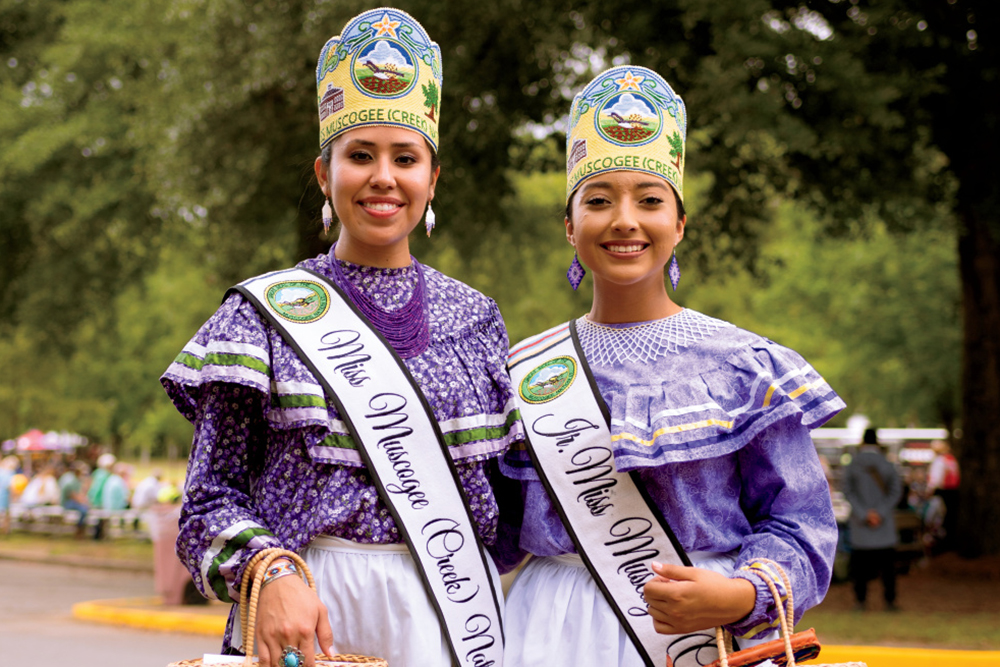
The park also hosts several large events every year. In the spring, as part of Macon’s International Cherry Blossom Festival, the park holds Lantern Light Tours at night. Then, in the fall, it is the site of the Ocmulgee Indigenous Celebration, a free two-day event that showcases the art, stories, songs and dance of many Southeastern tribal members.
In 2024, a bipartisan bill incorporated information from a Special Resource Study to define the boundaries of the proposed new U.S. National Park and Preserve. This was done in close coordination with feedback collected from the Muscogee (Creek) Nation. If Ocmulgee Mounds receives national park status, the Muscogee (Creek) Nation will co-manage it, marking the first time that a Native American tribe will help operate a U.S. national park.
“We are thrilled to see this bill introduced and stand ready to support this legislation every step of the way,” says David W. Hill, principal chief of the Muscogee (Creek) Nation. “We are ready to help preserve and co-manage the land, which holds the rich cultural history, natural resources and recreational opportunities that a National Park and Preserve will bring.”
Get to Know the Robins Region
Want to learn more about living and working in the Robins Region? Check out the latest edition of Livability Robins Region, Georgia.