
Find a Bounty of Homegrown Ingredients in the Palouse Region
With its rich farmland and a long tradition of growing wheat, lentils, barley and chickpeas, the Palouse is an agricultural hot spot where residents can savor not only local grains and legumes, but also mushrooms, berries, beef, lamb and cheese. From professional chefs sourcing regional ingredients to markets where home cooks can chat with the folks raising their food, there’s no shortage of farm-to-table on the Palouse.
Restaurant Rules
“I’m a firm believer that if it’s growing near you, it’s better than something that isn’t,” says Alex Barham, who owns a restaurant called Lodgepole in Moscow, ID, with his wife, Melissa. Since the spot opened in 2015, obtaining quality, local ingredients has been a priority. In the past decade, conversations around locality and seasonality of ingredients have exploded in the fine-dining scene.
“It has become more talked about, which is great, but we’ve always had the same mentality,” he says. “We look first at what’s around as we’re building our menu.”
That mindfulness surrounding local connections is especially important on the Palouse, which doesn’t have the extended growing season of more southerly regions.
“The growing season is not very long, but it’s super abundant,” Barham says.
A few of Lodgepole’s suppliers include Wing Over and Affinity farms in Moscow; Brush Creek Farms and Creamery in Deary; and Washington State University’s dairy program, which produces Cougar Gold cheese – known for being packaged in a can – and ice cream. Lodgepole also utilizes locally foraged mushrooms and takes advantage of a variety of veggies that local farmers don’t sell.
“We’re here to catch all the stuff that they have trouble moving,” Barham says.
Nick Pitsilionis, chef and owner of the nationally recognized Black Cypress in Pullman, WA, (it was a finalist for the prestigious James Beard Award in 2023) echoes that sentiment.
“Producers need to be able to sell their product at retail,” he says. “We need to not interfere with that.”
Like Barham, he’s made a practice of sourcing much of the restaurant’s produce based on what farmers have left over from market days. “Between pickling and cellaring, we do well up until November or December, sometimes January or February,” Pitsilionis says.
Pitsilionis is especially enthusiastic about his local protein suppliers. “We have lamb and beef we source locally,” he says.

In particular, he sings the praises of Palouse River Premium Beef’s wagyu beef. “It’s as good as I have had in the States: It has all the requisite marbling, but the feed mix is such that the flavor profile is much beefier and richer.”
Farmers Market Magic
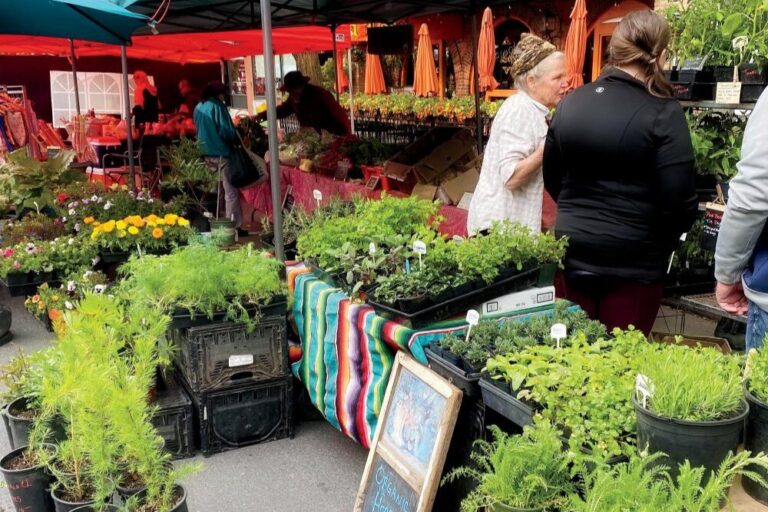
Home cooks who want to get even closer to the source of their food will want to hit up one of the farmers markets in the region. Pullman Farmers Market offers an opportunity for local producers to reach the community through an online market drop. Just a few miles away is Moscow Farmers Market, which is entering its 49th season, according to Amanda Argona, community events manager for the city, who says about 80% of her role is dedicated to planning and organizing the market, which runs May through October.
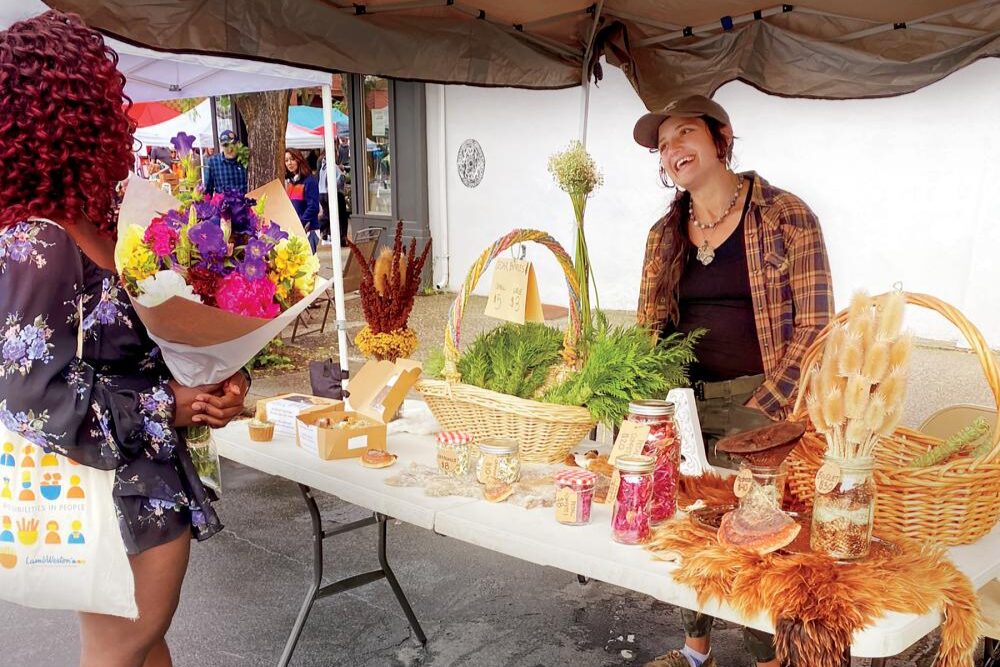
Vendors must meet certain criteria: They must be based within 200 air miles of Moscow and be the grower (no reselling is allowed), with preference given to producers from the counties of Latah, Idaho, and Whitman, Washington. Then, “Every producer at the market, from vegetable to flower growers to someone raising goats for goat milk soap, has a site visit. We go out to their farm to see that their practices are in alignment with our guidelines,” Argona says.
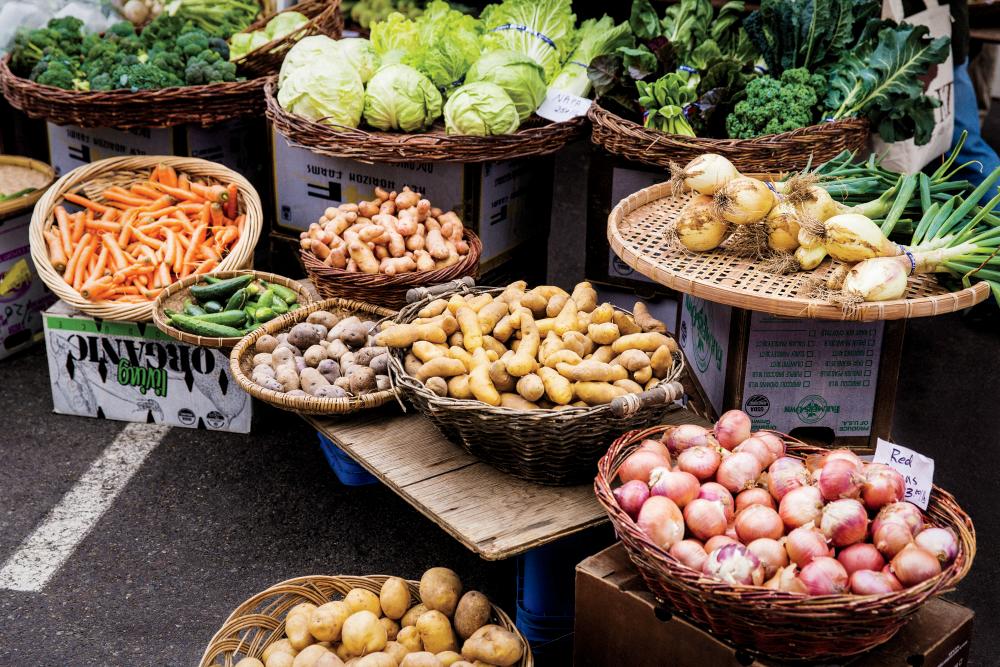
The result: Each Saturday, around 8,500 adults and children peruse the 80 to 90 vendors selling fresh veggies, eggs, salsas, syrups, crafts and more. A 2016 economic impact survey determined produce, nursery products, livestock and poultry accounted for 52% of sales in 2015 and estimated the economic impact of the market to be between $3.9 million and $5.4 million.
One of Argona’s most notable market items is the peacotum, a peach, apricot and plum hybrid sold by just a couple of vendors. “It’s one of my favorite fruits. We’re lucky if we get it for two or three weeks, tops,” she says. She continues: “A lot of people aren’t aware we have a longtime vendor who harvests wild Idaho cranberries. I’m from Massachusetts, and when I found out about wild Idaho cranberries, it became my thing!”
Get to Know the Palouse
Want to learn more about living and working in the Palouse region of Idaho and Washington? Check out the latest edition of Livability On the Palouse.