
Explore and Savor the Rich History of Southwest Louisiana
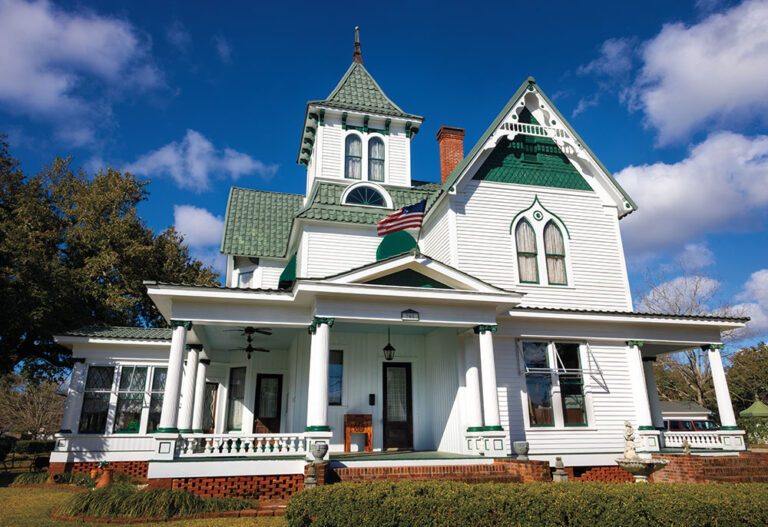
Southwest Louisiana has always held a distinct place in the state. The region’s unique history, geography and culture have set it apart throughout time, and remnants of its past continue to influence the region today. Tight-knit communities, well-preserved historic districts and a rich culinary history are just part of what has made Southwest Louisiana into what it is today. Here’s a look at the vibrant history of Southwest Louisiana.
A Unique Corner
For much of its history, the region now known as Southwest Louisiana wasn’t part of the greater state of Louisiana. For many years, it was a “no man’s land” that was not included in the Louisiana Purchase of 1803.
“We’re sort of in this unclaimed corner,” says Adley Cormier, a local historian specializing in the history of Southwest Louisiana. “For at least a generation, this was no man’s land. This was sort of a piece of lost geography between the empire of Spain and the young United States.”
The prairies and grasslands of Southwest Louisiana were more suitable for cattle grazing and ranching, as opposed to the sugarcane and cotton that flourished along the fertile rivers in other parts of the state. As a result, a culture of cowboys and ranching arose in the region, and it was largely excluded from the plantation economy of the rest of the state during the 1800s. Due in part to these geographic factors, the region developed at a different pace.
“You have sort of a different culture developing in Southwest Louisiana than you have in the rest of Louisiana during the 1800s,” Cormier says.
Many of the families who originally settled in the area still reside there today, carrying the legacy of the region’s early history in their sense of community and culture.
“They recognize that heritage, that we’re a bit different from the rest of the state,” Cormier says. “They recognize the uniqueness of this corner of the state.”

Flavorful Foodways
The region’s geography and blend of cultures also impacted local cuisine. The French and Spanish influence of early settlers took root alongside contributions from Western Africa, Germany, Kentucky and Tennessee, as people from all over added their own unique cuisines to the mix.
“You have foodways from a lot of different places in Southwest Louisiana,” Cormier says.
The rice, beans, seafood and meat that were the staples of the region are still found today in restaurants like Pat’s of Henderson, Steamboat Bill’s on the Lake, Leonard’s Food Quarters and Chadeaux’s.
“The cuisine culture is a very, very important part of the community, an identifying part of the community,” he says.
Carpenters’ Pride
The Charpentier Historic District in Lake Charles has a storied legacy in Southwest Louisiana. French for “carpenter,” the Charpentier District held true to its name. The carpenters who inhabited the district in the late 1800s and early 1900s showed off their skills by building homes and businesses from Calcasieu pine and bald cypress.
Without architects in the area, local structures were a hybrid of different styles built from style books of the time. The resulting homes are a unique blend of Queen Anne, Victorian, bungalow and stick style. The Lake Charles column, a distinct column that tapers at the top, also arose from this period.
When Lake Charles burned in 1910, many of the businesses in the commercial district were destroyed, but most residential structures remained. The houses have since withstood hurricanes and years of disuse, a testament to the sturdiness of their carpentry.

The city rallied to keep the houses from being torn down after they fell into disrepair. Thanks to community efforts, the Charpentier District was added to the National Register of Historic Places.
“That just tells you how committed the people here were to doing this,” says Sue Durio, treasurer for Calcasieu Historical Preservation Society and member of the board of directors since 1995.
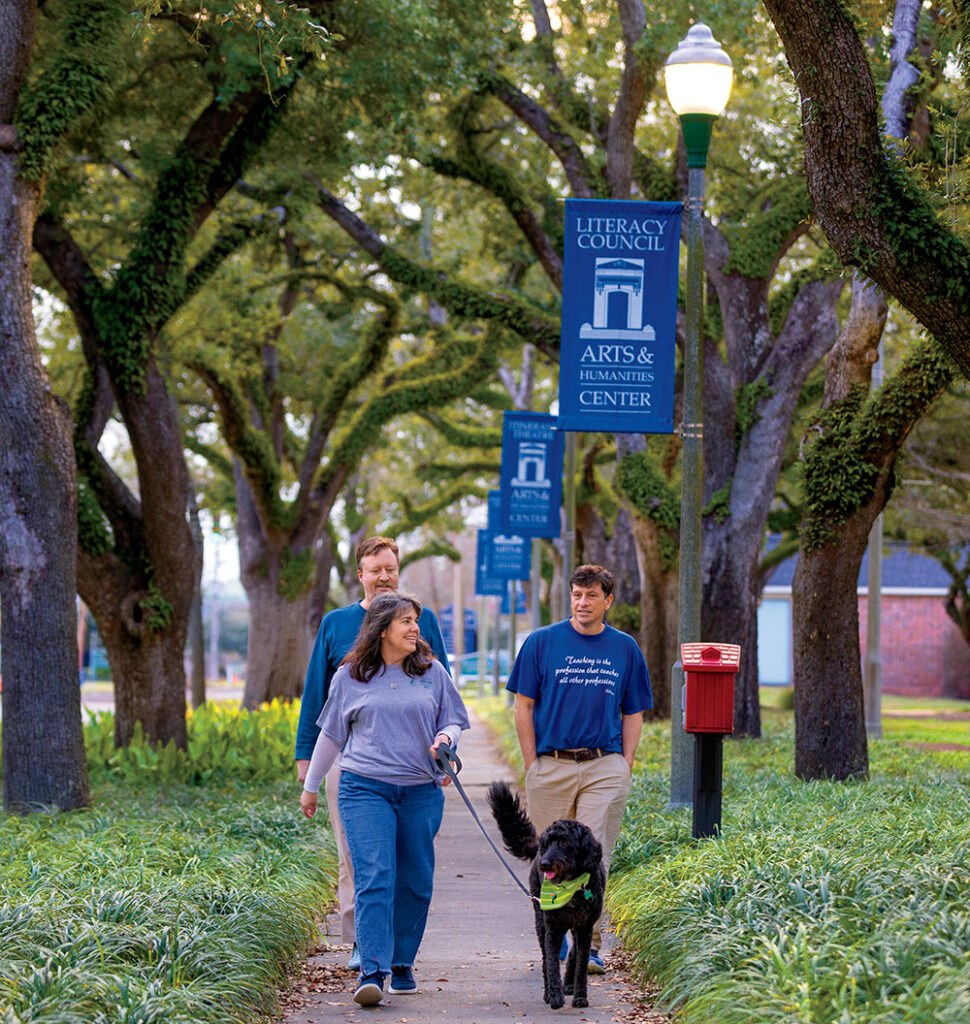
Along with restoring the district’s historic homes, the movement allowed Central School to be converted into a centerfor the arts.
Today, the houses and historic buildings of the Charpentier District are a draw for tourists and locals alike, allowing a glimpse into an earlier time. “We are a link to what the city was originally and what made it great,” Durio says.