
Explore the Expanding Trails System in Casper, WY
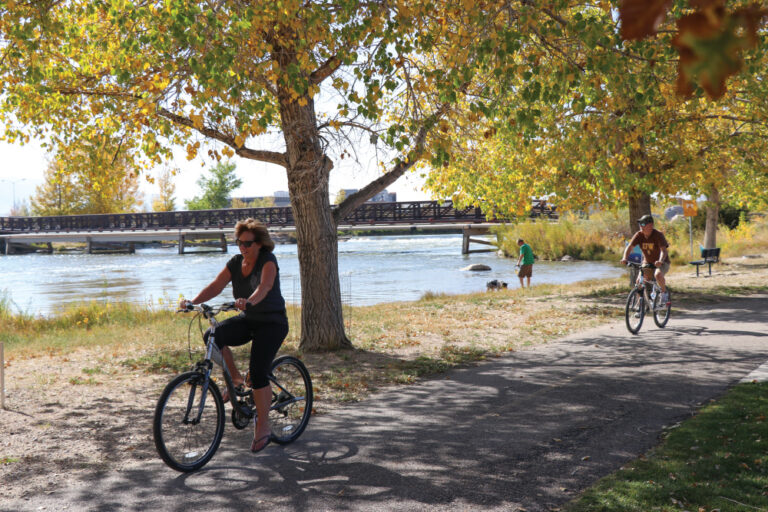
Trails have defined Casper since the beginning. Generations before European settlers headed West, Native Americans followed animal migration routes and rivers, traversing their territories for hunting, harvesting, war and more.
Pioneers sensibly followed the same paths while forging their way westward, and Casper was first established as a way station on the many trails that followed the North Platte River. Today, the city is still a stronghold of trails – albeit more for fun than food and fighting.
Visitors and residents can enjoy everything from smooth, accessible pathways to steep and exhilarating mountain biking trails, all within convenient reach of downtown.
Scaling the Summit
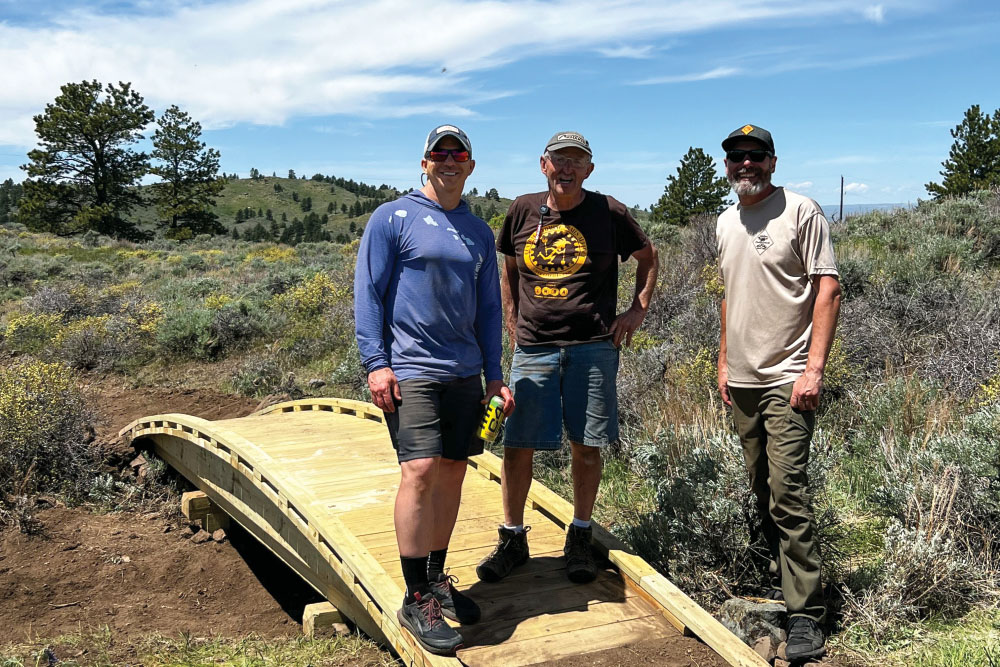
Austin Burgess has been building trails in Casper – where he was born and raised – for more than 30 years.
“When we really first started, we were just trying to expand mountain biking in Casper,” he says. “But now the mission is much broader.”
As the first executive director of the Central Wyoming Trails Alliance, Burgess is proud to head the state’s only local chapter of the International Mountain Bicycling Association. Formed in 2014 as a grassroots organization that educates, advocates and constructs nonmotorized multiuse trails in central Wyoming, the alliance seeks to preserve, protect and promote mountain biking, trail running, hiking and horseback riding access on the Casper region’s public and private lands.
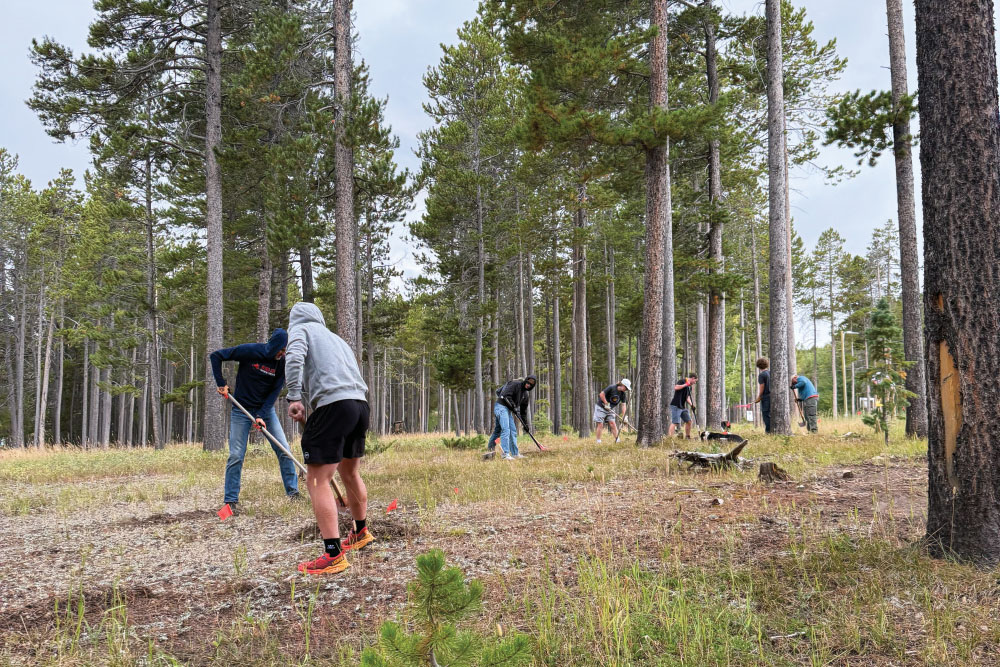
The organization has approximately 125 volunteers who devote more than 1,000 hours each year to building new trails as well as grooming and maintaining the approximately 25 miles of nonmotorized mixed-use trails already in existence.
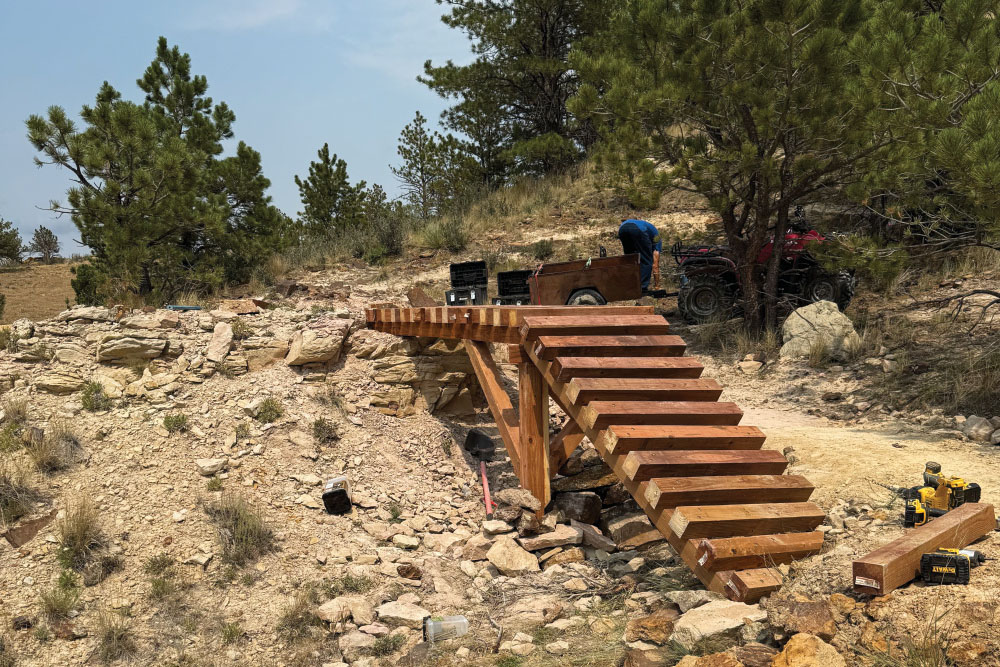
Phase one of the Kay-Linn Master Plan to expand and improve trails and infrastructure on Casper Mountain was completed in 2025, adding a 4.5-mile connector trail in McMurry Mountain Park.
Phase two “will include 21 miles of mountain bike-optimized downhill trails, as well as additional campground connector trails and other amenities. We’re also in the planning and design right now of Casper’s first all-wheels park,” Burgess says.
As the first of its kind in the state, that facility will include a skills course, a pump track, a skate park and a children’s bicycle playground.
Bridging the Gap
But the vision for a bikeable Casper doesn’t end at the trailhead. Down in the valley, the focus shifts from high-elevation descents to the essential pathways that link neighborhoods, schools and parks. Thankfully, Rachel Spear, the director of the Platte River Trails Trust, has a vision.
“I picture a place where kids can safely set out in their neighborhoods on a bike, and a parent doesn’t have to worry about them crossing major roads or how they get to their friend’s house safely. Basically, where trails would get you from A to B, whether that’s to a friend’s house or to school, and where kids can go be free and play again,” she says. “I also see a future where we work more closely with developers, so that they’re incorporating those neighborhood pathways into the system from the beginning.”
The trust oversees a system of community trails including the River Trail that travels 11 miles along the North Platte River corridor and is the spine of the system.
One future project involves the completion of the Paradise Valley to Robertson Road Bridge project. This will extend the River Trail to Casper’s western boundary and will also be a first step in more conservation of the North Platte River Corridor and an eventual connection to the Rim Rock recreation area.
Another 6-mile trail running along a former railroad bed is being expanded by 3 miles. “That’s a mixed surface trail,” Spear says, “but it’s bike- and pedestrian-friendly. And our short-term goal is to get the path across the highway to Edness Kimball Wilkins State Park. They get over 150,000 visits a year, which is pretty significant.”
Spear sees a bright path ahead for the city’s infrastructure.
“Casper is still learning to become a bike- and pedestrian-friendly community,” she says. “We’re acknowledging the importance of recreation as a draw to tourism and the economy, but we’re also recognizing it just in lifestyle, being able to safely navigate our communities on foot or by bicycle.”
Get to Know Casper
Want to learn more about living and working in Casper, WY? Check out the latest edition of Livability Casper, Wyoming.
