SNAP Resources & Benefits by State
Here at Livability, we believe in creating safe, livable communities for ALL.
What makes a city livable? It’s a question we’ve researched for over a decade, and the answer is clear: safety, opportunity, education and inclusion. Every person deserves to feel safe and have equal access to opportunities and basic necessities in their communities. This includes our neighbors facing food scarcity and insecurity. We work hard to provide resources to help create a welcoming, safe and secure world that everyone deserves.
As the federal government shutdown stretches on, more than 42 million Americans who rely on the Supplemental Nutrition Assistance Program (SNAP) – the nation’s largest food aid program – may soon struggle to put food on the table. With federal funding in limbo, November SNAP benefits will most likely be delayed or reduced, leaving families across the country unable to cover basic needs. In this uncertain time, helping those facing food insecurity (or knowing where to turn for food assistance) has never been more urgent.
In This Article
What Is SNAP and Who Does It Benefit?
The Supplemental Nutrition Assistance Program is the nation’s most important program for reducing hunger and food insecurity. Dating back to the Great Depression and administered by the USDA, it provides monthly funds for buying groceries to approximately one in eight Americans in need of food assistance. The program has never been disrupted this way.
According to the USDA Food and Nutrition Service, about 40% of SNAP participants are children, and four out of five SNAP households include either a child younger than 18, an elderly individual (60+) or an individual with a disability. The program plays a critical role not only in feeding families but also in reducing poverty, improving participants’ health and supporting communities during economic downturns. Numerous studies have also linked nutritional access to improved mental health and a decrease in violence and crime rates, showing that investing in feeding our communities makes us not only happier and healthier but also safer.
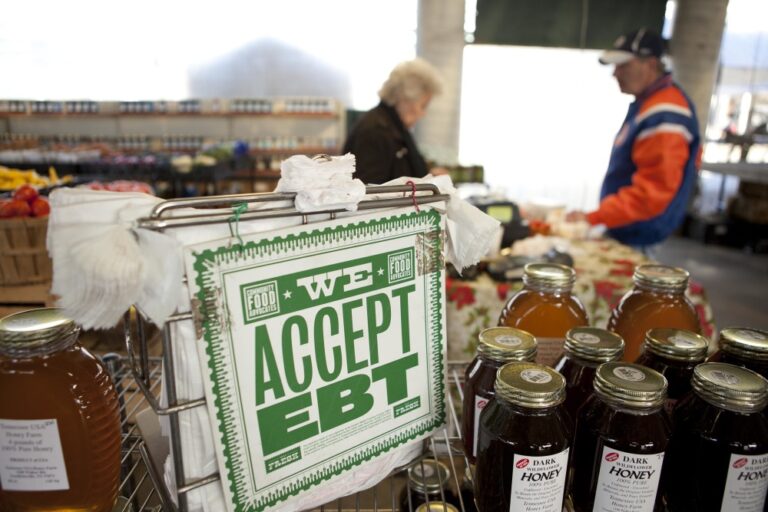
SNAP also provides a significant return on investment, as every $1 in additional SNAP benefit spending generates $1.54 in economic activity. In addition, the program supports farmers by providing a steady market for their goods. When SNAP benefits are spent at grocery stores and farmers’ markets, those dollars flow directly back to local growers and food businesses, helping sustain agricultural communities and regional economies.
Resources for Those Needing Help
If you’re looking for a food bank near you, Feeding America has a locator tool for finding nearby pantries and distribution centers. Additionally, local churches, community centers and civic groups often run food banks or pop-up pantries that rely on volunteers and donations.
Looking for more ways to help? Visit our sister site, Farm Flavor, for plenty of ways to help those facing food insecurity.
SNAP Participants By State
We’ve compiled information on each state’s use of SNAP benefits, based on USDA data. In May 2025, the initial USDA report indicated that the five states with the largest number of SNAP participants were California, Texas, New York, Florida and Illinois. Here’s how the states stacked up in May 2025:
- Alabama: 736,178 SNAP participants
- Alaska: 66,377 SNAP participants
- Arizona: 887,253 SNAP participants
- Arkansas: 239,748 SNAP participants
- California: 5,494,318 CalFresh (the state’s implementation of the federally funded SNAP program) participants
- Colorado: 614,843 SNAP participants
- Connecticut: 363,524 SNAP participants
- Delaware: 118,209 SNAP participants
- District of Columbia: 140,659 SNAP participants
- Florida: 2,943,012 SNAP participants
- Georgia: 1,356,493 SNAP participants
- Hawaii: 38,152 SNAP participants
- Idaho: 163,576 SNAP participants
- Illinois: 1,879,564 SNAP participants
- Indiana: 586,403 SNAP participants
- Iowa: 267,158 SNAP participants
- Kansas: 186,036 SNAP participants
- Kentucky: 595,155 SNAP participants
- Louisiana: 803,988 SNAP participants
- Maine: 163,520 SNAP participants
- Maryland: 667,981 SNAP participants
- Massachusetts: 1,076,187 SNAP participants
- Michigan: 1,473,832 SNAP participants
- Minnesota: 451,966 SNAP participants
- Mississippi: 357,042 SNAP participants
- Missouri: 655,940 SNAP participants
- Montana: 80,523 SNAP participants
- Nebraska: 150,600 SNAP participants
- Nevada: 496,848 SNAP participants
- New Hampshire: 75,717 SNAP participants
- New Jersey: 826,094 SNAP participants
- New Mexico: 457,699 SNAP participants
- New York: 2,962,913 SNAP participants
- North Carolina: 1,378,291 SNAP participants
- North Dakota: 57,129 SNAP participants
- Ohio: 1,450,955 SNAP participants
- Oklahoma: 692,477 SNAP participants
- Oregon: 772,893 SNAP participants
- Pennsylvania: 1,958,047 SNAP participants
- Rhode Island: 142,726 SNAP participants
- South Carolina: 567,895 SNAP participants
- South Dakota: 75,282 SNAP participants
- Tennessee: 690,545 SNAP participants
- Texas: 3,455,085 SNAP participants
- Utah: 177,087 SNAP participants
- Vermont: 64,633 SNAP participants
- Virginia: 824,866 SNAP participants
- Washington: 905,471 SNAP participants
- West Virginia: 273,566 SNAP participants
- Wisconsin: 689,315 SNAP participants
- Wyoming: 27,122 SNAP participants
More SNAP By State Stats:
- A small handful of states have confirmed they are using state funds to either maintain SNAP benefits or to help other networks with food aid. Those states include California, Colorado, Louisiana, Minnesota, New Hampshire, New Mexico, New York and Virginia.
- Roughly 12% of the United States population (or 1 in 8 people) benefits from SNAP.
- Connecticut will spend $3 million to supplement food aid benefits through its nonprofit Connecticut Foodshare. However, this will only protect these benefits for roughly two weeks.
- Fox5 Atlanta reported that SNAP “injects more than $3 billion per year into Georgia’s economy, supporting over 2,300 grocery stores, big box chains, specialty shops and farmers’ markets statewide.”
- Louisiana Governor Jeff Landry has declared a state of emergency to fund SNAP benefits. The initial round of funding will come from the Louisiana Department of Health.
- Minnesota will deploy $4 million in emergency state funding.
- New Hampshire’s Department of Health and Human Services will partner with the New Hampshire Food Bank to make up for delayed federal funding and plans to provide support to the more than 75,000 residents who rely on SNAP.
- Vermont’s legislative leaders approved $6.3 million to backfill food benefits for 15 days if federal SNAP funding is cut off on November 1.
- Governor Glenn Youngkin declared a state of emergency in Virginia to allow the state to use emergency funds to support food assistance until federal funding resumes.