
Iowa Western Community College Upskills Region’s Workforce
When it comes to lifelong learning, Iowa Western Community College (IWCC) in Council Bluffs, IA, is at the forefront, offering a robust menu of continuing education programs designed to serve the evolving needs of the region and workforce.
Whether it’s picking up a new hobby, refining a skill set or earning credentials for career advancement, IWCC’s diverse course offerings are tailored to meet learners where they are, enhancing the region’s quality of life and growing the economy.
“The continuing education programs have a very important role because we’re taking individuals and then retraining them for today’s workforce needs,” says Matt Mancuso, vice president of business and community education for IWCC. “Whether they are scaling up their skills or changing their skills, we have a program to fit their interests, from health care and transportation to business and emergency management.”
Building Futures
At the heart of the programs’ success is a commitment to community engagement.
Libby Woods, director of community education for IWCC, says the college continuously gathers input from local business partnerships, market research and instructor expertise.
“We have a team that goes out and meets with local businesses and community partners to understand where growth is happening,” Woods says. “Our goal is to provide education and training that aligns with workforce development and community interests.”
This proactive approach ensures that IWCC is not just offering classes but is also creating real opportunities for both personal enrichment and professional advancement.
“We recently started offering classes in dog grooming, drone operation and business essentials, which includes financial management, sales, growth and expansion, and marketing,” Woods says. “We are also working hard to offer new life and leisure classes, such as cooking classes and a land stewardship series based on the feedback we received from the community.”

Unlocking Potential
Some of the more popular programs include those related to health care, such as certified nursing assistant (CNA), pharmacy technician, phlebotomy, paramedic and EMT. Mancuso says the CNA program serves as a gateway to higher-paying positions in the health care field, a fact that is especially appealing to students, such as Lacey Lantau.
After battling and overcoming addiction, Lantau decided to pursue a career in health care. Her passion for caregiving was deeply personal, influenced by time spent with her grandmother in a nursing home.
“I wanted to find a role where I could truly make a difference,” she says. “Becoming a CNA has allowed me to do that. The residents I care for bring joy to my life, and I know I’m making a real impact.”
Woods says Lantau’s story is a testament to the power of continuing education – and not just as a professional development tool, but as a catalyst for personal growth and renewal.
“It’s a great way to invest in yourself and your future,” Woods says. “Continuing education offers a chance to gain new skills, expand your knowledge and stay competitive in your field. Whether you’re looking to advance in your current career or explore something new, it can open a lot of opportunities.”

Priming the Talent Pipeline
Mancuso says the programs offer a win-win for students and the community.
“We work with a lot of low-income individuals who are looking to train or retrain, and we want to make sure those individuals who go through our program can earn a living wage,” he says. “We want to make sure that they continue to be actively engaging and participating in our community in many ways through the workforce.”
Mancuso says the continuing education programs can help bridge workforce gaps by providing targeted training in areas where demand is high, but supply is low, such as health care, IT, trades and manufacturing.
IWCC doesn’t just train new workers; it helps companies upskill their current employees, offering customized courses tailored to company-specific needs.
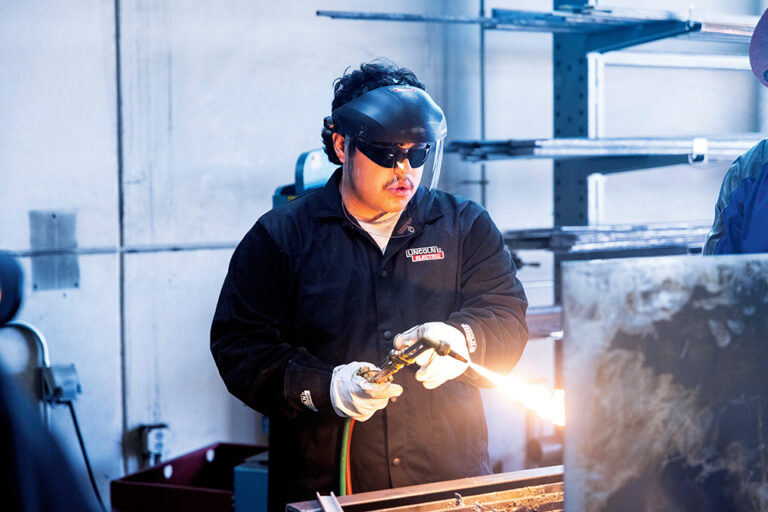
“We are constantly talking to businesses – about 75 to 100 each week – to track industry trends and create relevant training,” Mancuso says. “If we hear a repeated need, whether in welding, construction or health care, we develop programs to address it. We’re not just helping create a workforce pipeline, we are also helping to retrain or train up the current workforce – all to hopefully fill the needs of our industries.”
Get To Know Council Bluffs
Learn more about working and living in Council Bluffs, IA, by visiting livability.com/council-bluffs.