
How the University of Mississippi Is Revolutionizing Sound Research
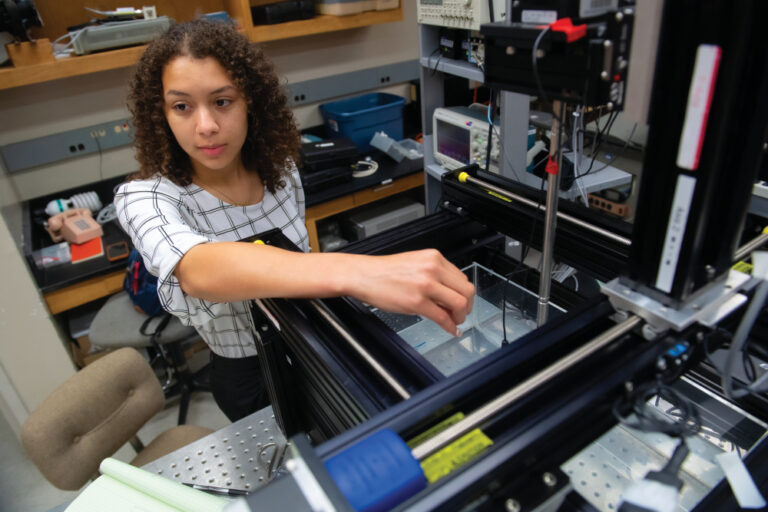
At the University of Mississippi’s National Center for Physical Acoustics (NCPA), sound is a tool – not just for hearing the world, but for measuring, modeling and safeguarding it.
Established by Congress in the 1980s, the center has evolved into a national hub for jet and rocket noise, severe-weather infrasound, ultrasonics, metamaterials and geophysical sensing. Its campus footprint reflects that ambition, with anechoic chambers for precision testing, Faraday labs for low-noise experiments, a jet test facility and a full machine shop that turns sketches into field-ready instruments.
Beyond the physical facilities, the NCPA operates as a magnet for collaboration. Government agencies, industry partners and academic researchers from across the country routinely engage with the center, drawn by its ability to test concepts at scale and translate them into deployable technologies. This outreach ensures that NCPA’s work doesn’t remain on the shelf but instead moves into defense applications, commercial aviation, environmental monitoring and even health care.
Why Sound, Why Here
Aeroacoustics researcher and NCPA Director, Nathan Murray, puts it plainly: acoustics are a multiplier.
“The NCPA’s mission is simple: Take the physics of sound and turn it into technologies that matter,” Murray says. “Every project – from monitoring tornadoes to reducing rocket noise – is about moving from theory to impact.”
Murray says the center helps the public see how acoustics “can contribute to multiple areas, such as the ability to understand complex materials, integrate smart acoustic devices into autonomous systems, improve propulsion systems, enhance drug delivery and tackle a wide range of real-world challenges.”
That breadth defines the lab’s mission to “advance science and technology through the study of sound and its interaction with matter.”
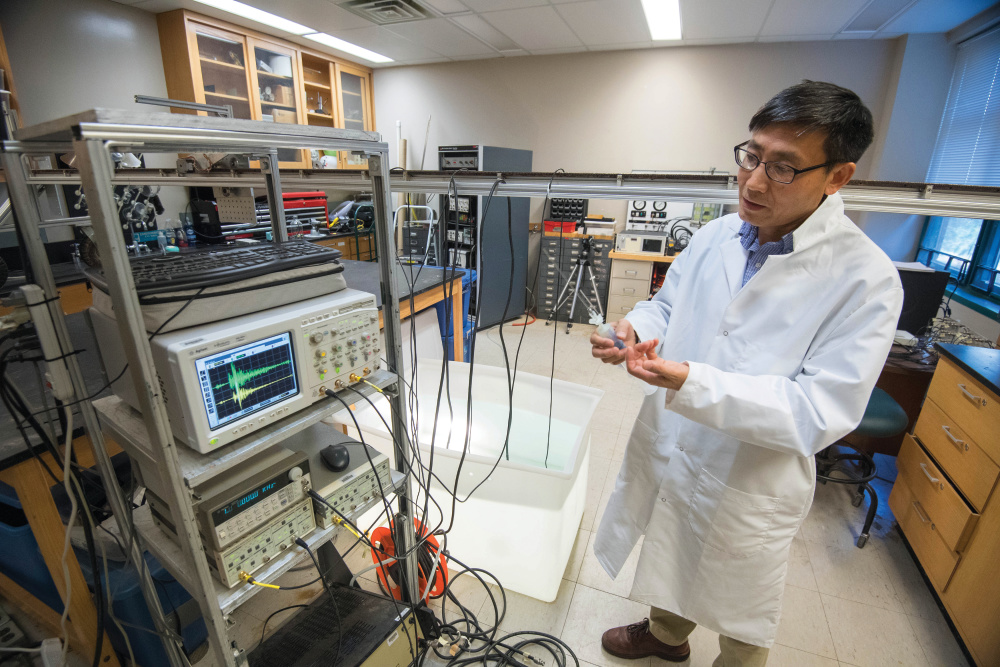
In practice, that means projects that move from principles to practical tools. Researchers have developed acoustic methods to monitor water quality and sediment runoff in streams and created systems that reduce noise from jet propulsion, pushing commercial and defense engines toward quieter, more efficient operation. The infrasound team contributes to national security, too, using low-frequency waves inaudible to humans to help detect nuclear test explosions and monitor severe storms.
AI as a Tool
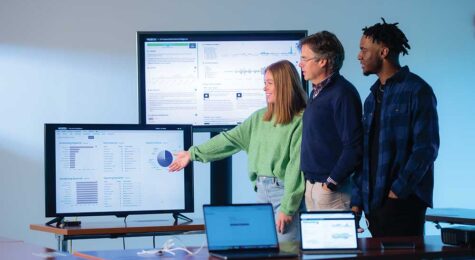
The center is utilizing state-of-the-art array processing techniques to parse vast acoustic data sets for patterns that traditional thresholds miss – discriminating storm signals from background noise or separating industrial blasts from natural phenomena.
A flagship example is tornado acoustics. Led by Principal Scientist Roger Waxler, NCPA researchers deploy arrays of infrasound microphones to capture the distinctive signatures of tornadoes and build real-time verification and path-projection tools for forecasters.
“We have found that we can acoustically detect tornadoes from great distances using an infrasonic signal that the tornado emits,” Waxler says.
Field campaigns across the Southeast have shown how those faint, low-frequency cues can complement radar, especially close to the ground, where radars can be blind.
At the high-frequency end, NCPA teams shape and steer ultrasound for imaging, manipulation and material characterization. Work on acoustic metamaterials – engineered structures that bend waves in unusual ways – feeds innovations like flatter, lighter ultrasound lenses and underground sensing concepts for buried objects. In medical acoustics, researchers are exploring ultrasound techniques to map properties of brain tissue, a step toward future diagnostics for neurological conditions. The common thread is translation: fundamental wave physics, engineered into devices that solve concrete problems.
Talent Pipeline
None of this happens without people. The center’s impact is rooted in its interdisciplinary culture – physicists, engineers and mathematicians sharing space, instruments and hard problems.
The University of Mississippi supplies a steady pipeline of graduates trained on real sponsor projects. Industry teams come to Oxford for facilities they can’t find elsewhere. Professionals stay because the combination is rare: serious labs, short commutes and a lively college-town fabric that’s easy on families and mid-career scientists alike.
The range of capabilities and the region’s technologists keep the NCPA at the forefront of questions that sound alone can answer.
Get to Know Oxford and Lafayette County
Want to learn more about living and working in Oxford, MS? Check out the latest edition of Livability Oxford-Lafayette County.