
These U.S. Cities Are Memorializing Civil Rights Movement Stories

“…Oh deep in my heart, I do believe, we shall overcome someday,” lyrics of a gospel hymn turned protest song made famous by activist Pete Seeger. An unofficial anthem so pervasive that even President Lyndon B. Johnson included the title phrase into a speech made to Congress in March of 1965. “We Shall Overcome” is just one of the many songs that became the anthem of a generation of freedom fighters.
In 1865, the 13th Amendment may have abolished slavery in the United States, but it wasn’t until nearly 100 years later that the Civil Rights Act was signed into law on July 2, 1964. From brave sit-ins and unifying marches to powerful speeches and compelling artwork, the fight for civil rights in America has left a lasting mark.
These remnants of the past are still living and breathing in our communities, ready to inspire the next generation of activists. That trendy restaurant that was once a Woolworth’s Five and Dime. That historic home has been lovingly restored into a boutique bed and breakfast. The statue at the local park marks the spot of a once-thriving business district. That historical marker in the old town district reminds us of the importance of a seemingly commonplace building.
From Tennessee to Florida to Washington, D.C., today’s history-loving travelers can walk in the footsteps of freedom fighters and immerse themselves in the powerful moments that advanced social justice in the 1950s and 1960s, transforming everyday citizens into heroes.
In This Article
Greensboro, North Carolina
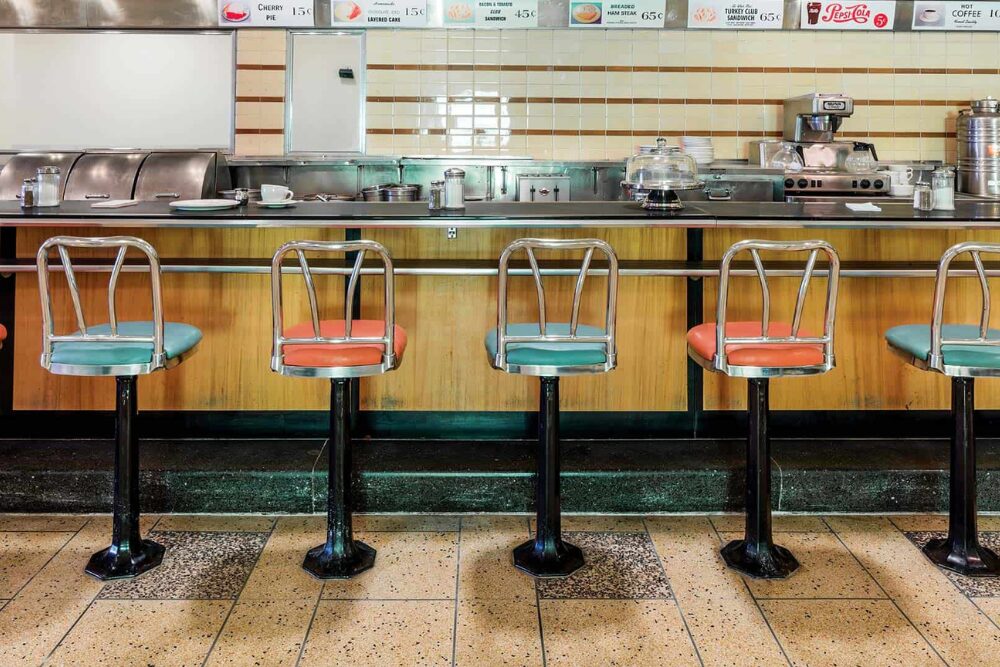
Greensboro is a vibrant city, centrally located in the heart of North Carolina, and well-known to travelers for its family-friendly attractions. However, for those interested in exploring the stories of the Civil Rights Movement, this city is a must-visit with its wide range of cultural sites, including the International Civil Rights Center & Museum.
On February 1, 1960, the “Greensboro 4” sat down at the then-segregated lunch counter inside Woolworth’s department store and were denied service. The four college students from the Agricultural & Technical College of North Carolina, now North Carolina A&T State University, refused to move from their seats and waited at the counter for the coffees they ordered until the store finally closed that night. Although not the first protest of the Civil Rights era, this was the first formal sit-in targeting Woolworth’s Five and Dime counter, and in many ways, it ignited the spark that turned the movement from a local happening into a national campaign.
The infamous counter is preserved within the original Woolworth’s building and has now been rehabilitated into the International Civil Rights Center & Museum. Visitors to the museum can see the counter for themselves, as well as enjoy guided tours, exhibits, video libraries and special events.
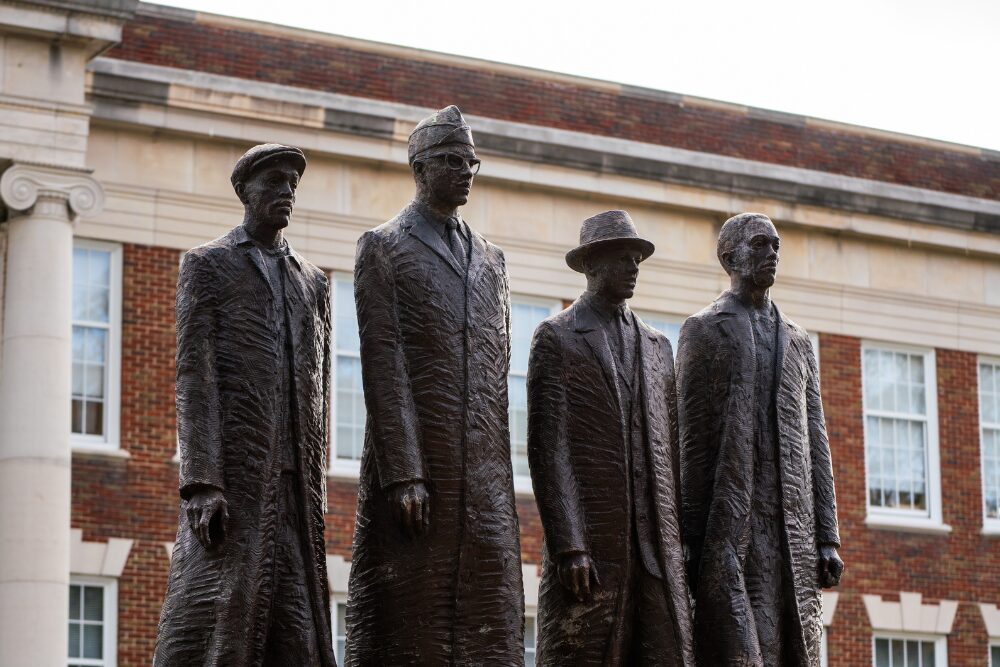
The students of the “Greensboro Four” can also be found honored through the February One monument, a 10-foot-tall sculpture outside of the Dudley Building on the North Carolina A&T State University campus.
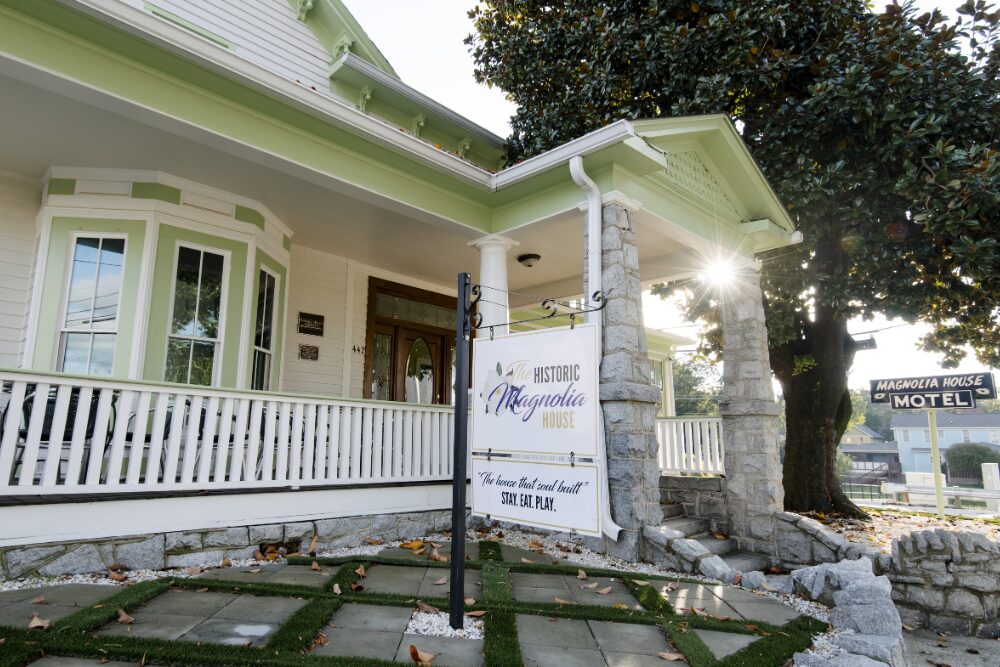
During America’s period of segregation, those traveling to Greensboro could only safely stay at overnight lodging open to Black Americans. One such hotel frequented by civil rights leaders and celebrities alike was the Daniel D. Debutts House, now the Magnolia House Bed & Breakfast. This historic inn, which opened in 1949, was one of the only hotels between Atlanta and Richmond that allowed Black travelers to stay despite lodging restrictions under Jim Crow. The house gained notoriety after appearing in multiple editions of The Negro Motorist Green Book, a travel guide that listed businesses safe for Black patrons. Today, visitors can still stop by for Sunday Brunch, book a room or host a special event at this charming inn.
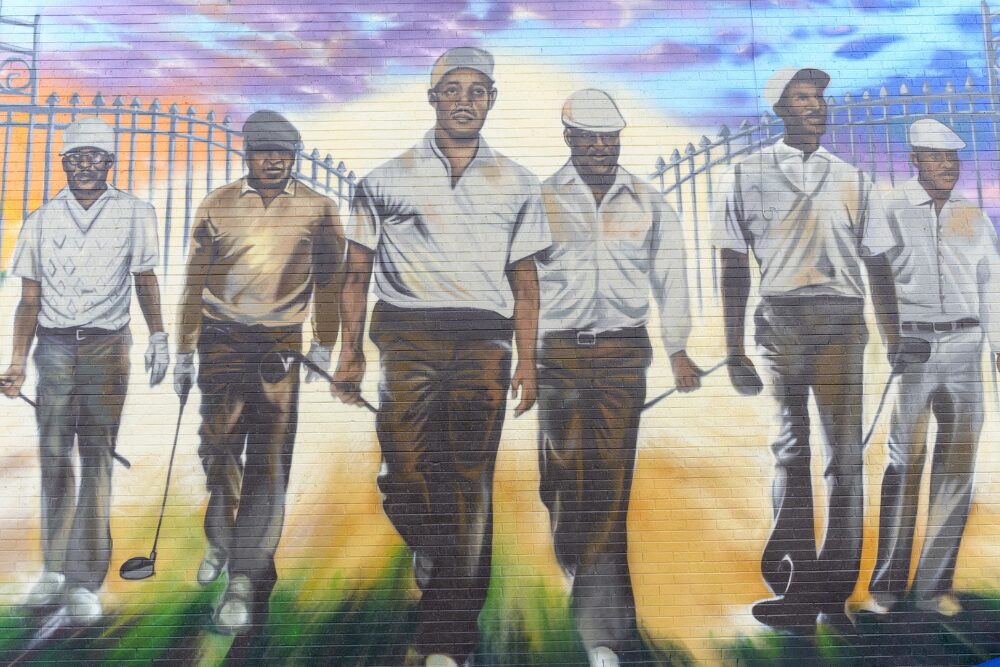
Golf enthusiasts traveling to the region will also be surprised to learn that Greensboro is home to a municipal golf course that played a unique role in the fight for civil rights. On December 7, 1955, a group of Black golfers known now as the “Greensboro 6” each dropped their 75-cent fee on the desk of the pro shop attendant of the city-owned Gillespie Golf Course. The group teed up and went on to play through about the 5th hole before being cursed at and threatened off the property. That evening, the police arrested the six protestors, and they were later charged with trespassing and spent 15 days in jail. Their case reached the Supreme Court, but unfortunately, it did not rule in their favor.
Those visiting Greensboro can still play a round in honor of those freedom golfers at the municipal course, which is part of the City of Greensboro Parks and Recreation system. Visitors can also view the new Greensboro 6 Mural at the course that commemorates the desegregation of the course.
Rock Hill, South Carolina
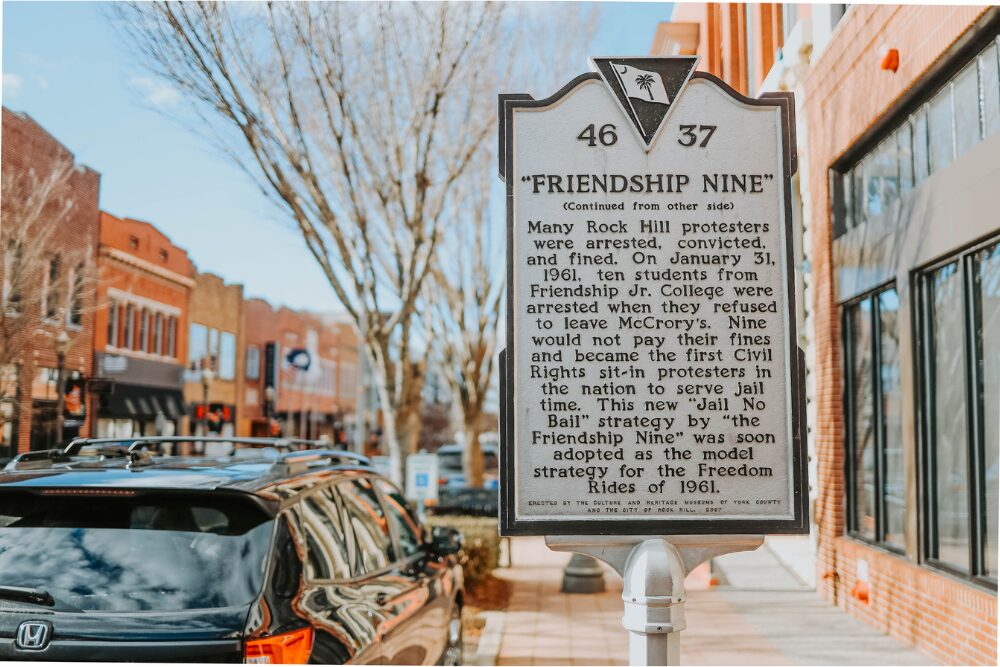
Tucked away near the border of South Carolina and North Carolina, the small town of Rock Hill made a surprisingly significant impact on the movement. The story of the Rock Hills sit-ins begins on February 12, 1960, when students from Friendship Junior College took a seat at McCrory’s Five & Dime and were refused service. Refusing to give up, the students staged another sit-in on January 31, 1961, but this time, they were not only refused service but arrested. Nine of these freedom fighters became national news when they also refused to pay their fines, becoming the first sit-in protesters in the nation to serve jail time. Later referred to as the “Friendship 9,” their jail, no bail decision became a widely adopted strategy across the movement.
The site of McCrory’s counter sit-in is memorialized by a historic marker in front of the building on Main Street in Rock Hill’s Old Town District. But unlike similar counter sites, visitors to the region can still order lunch at the counter, and service is more than guaranteed. The original McCory’s closed its doors leaving the counters future unknown. With help from the community, the building and famous counter were saved as various restaurant concepts occupied the space. In 2020, the space transitioned into Kounter Restaurant, opened by Rock Hill local Chef Rob Masone, who remains dedicated to preserving the building’s legacy.
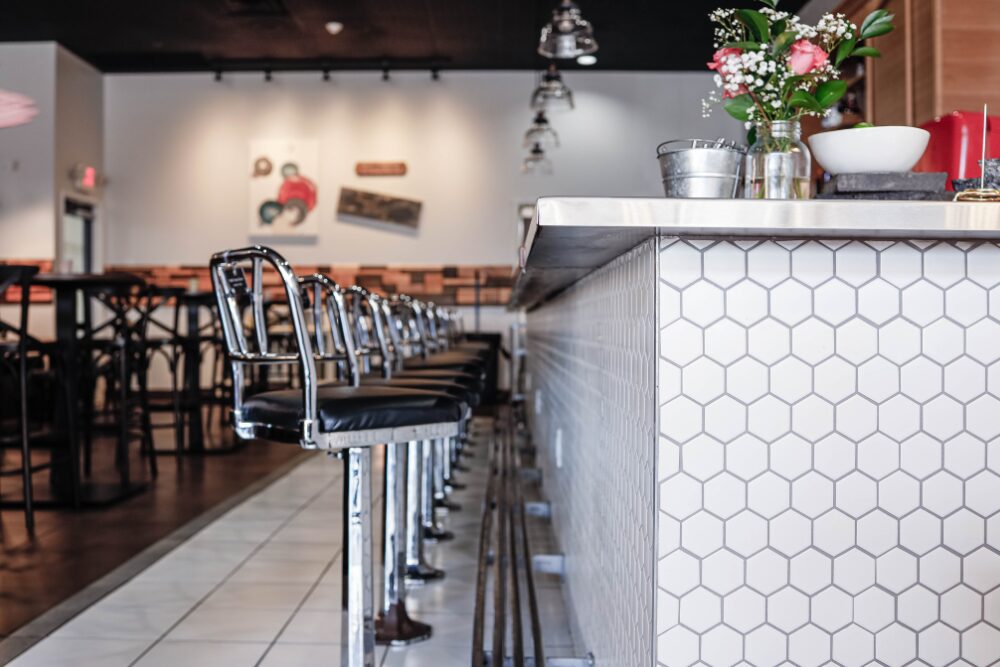
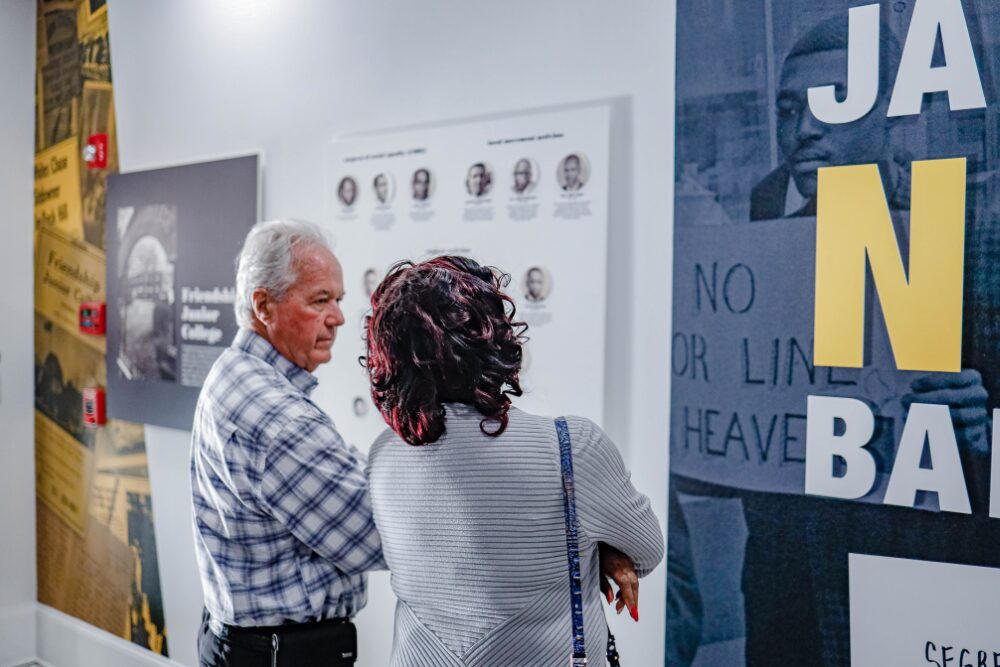
After enjoying a delicious lunch at Kounter, guests are welcomed into the hallway of the building that is now converted into the Jail, No Bail: How 30 Days Impacted the Civil Rights Movement exhibit. The exhibit showcases original letters, newspaper articles, images and videos that allow visitors to get an almost behind-the-scenes perspective of the movement and the stories of those who participated in these iconic sit-ins.
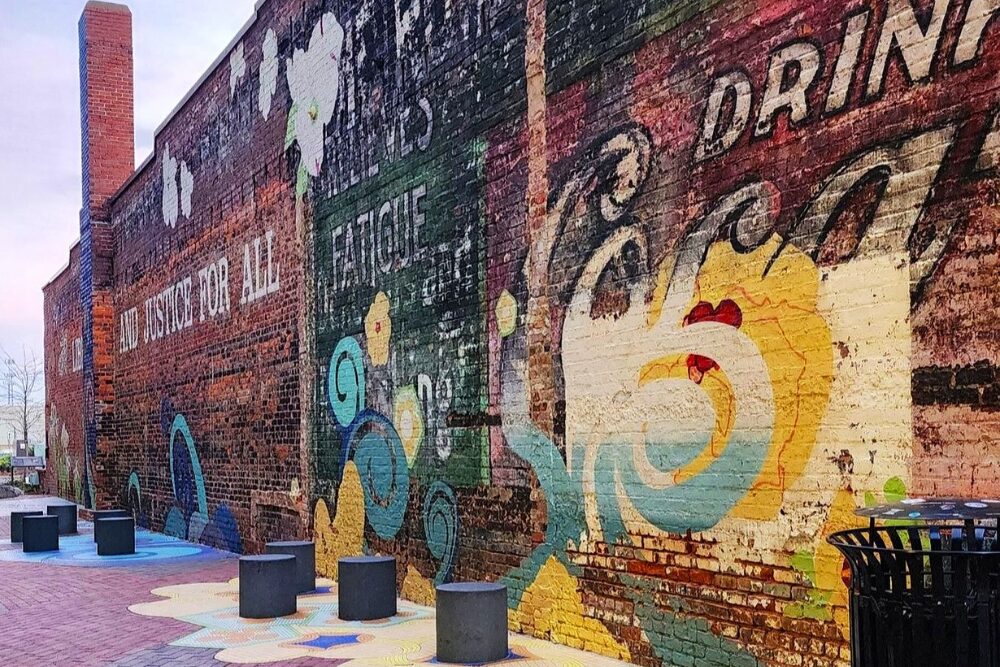
Just steps from the exhibit and diner lives an alley referred to as The Freedom Walkway that features a mural commissioned by the community to commemorate the efforts of these brave Rock Hill residents.
Like many small towns throughout the South, Jim Crow restrictions impacted where and how Black Americans could do business. It was common for Black-owned businesses to be segregated to certain parts of towns and or streets of the city center, making them even more of a target to white resistors during the civil rights period. The unrest of the period, paired with the eventual desegregation of city businesses, led to the decline of many once-thriving Black business districts — and Rock Hill was no exception.
Today, travelers to the region can visit the African-American Business District Monument, located at the corner of Black Street and Dave Lyle Boulevard, which pays tribute to the segregated business district demolished in the 1970s.
Nashville, Tennessee
When visitors think of Nashville, they tend to imagine cowboy boots, country music and honkey tonks, but this historic city is so much more than a fun place for a festive friends weekend. Nashville, in many ways, served as the headquarters of sorts for the sit-in movement and its leaders.
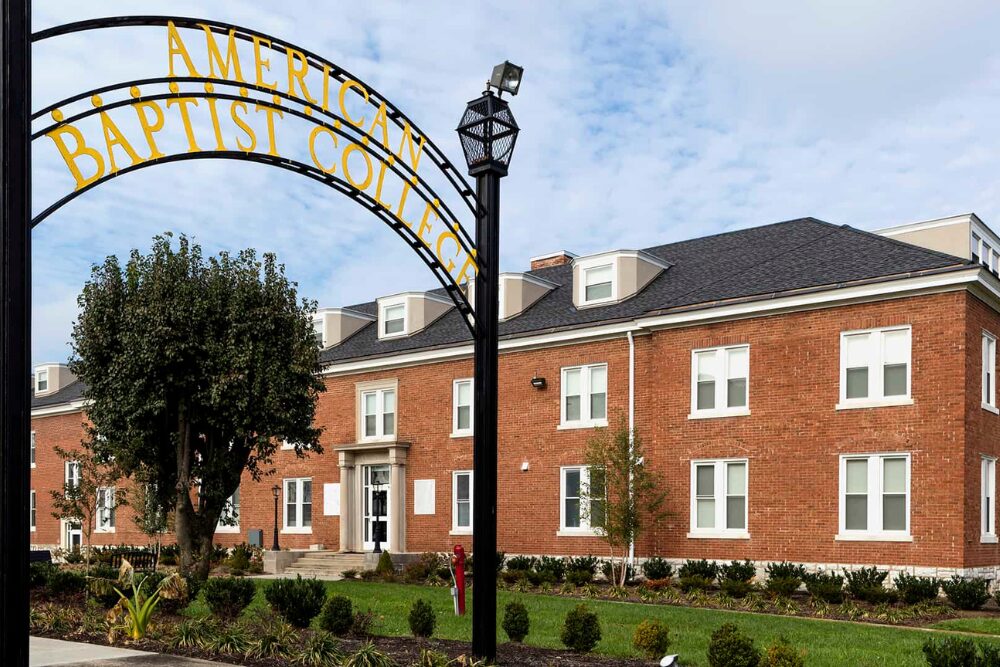
The first cultural site visitors to Nashville should consider is Griggs Hall at the American Baptist College. This historic religious institution became the center for nonviolent training and protest activity in the Nashville area. It can boast that a number of its students have gone on to become prominent names in civil rights history and American politics. Be sure to plan ahead — tours of the restored space are available by appointment only.
If a quick tour of Griggs Hall is not enough, visitors can visit the carefully curated Civil Rights Room at the Nashville Public Library, which houses a museum-worthy collection of resources about Nashville’s impact on the movement. Those visiting the room can stop by the video presentation space to watch compelling programs, such as NBC’s White Paper documentary “Sit-in,” originally broadcast on December 20, 1960. This documentary shares footage of the college’s training sessions, accompanied by commentary from those who lived through the experience, providing insight into the movement.
It would be no shock that Nashville hosted a handful of sit-ins and other nonviolent protests throughout the time. In February 1960, 124 college students set out with the ambitious goal of desegregating Nashville’s lunch counters. These students sat at the lunch counters of Woolworth’s, Kress, McClennan’s and other prominent department stores, requesting service that would never come. These freedom fighters found themselves experiencing a violent reaction on February 27 when white resistors assaulted students, throwing them from their seats at Woolworth’s and McClennan’s. The police did show up to the altercation but sadly only arrested the Black student protestors for their disorderly conduct and loitering. 88 students were arrested and spent approximately 33 days in jail after refusing bail.
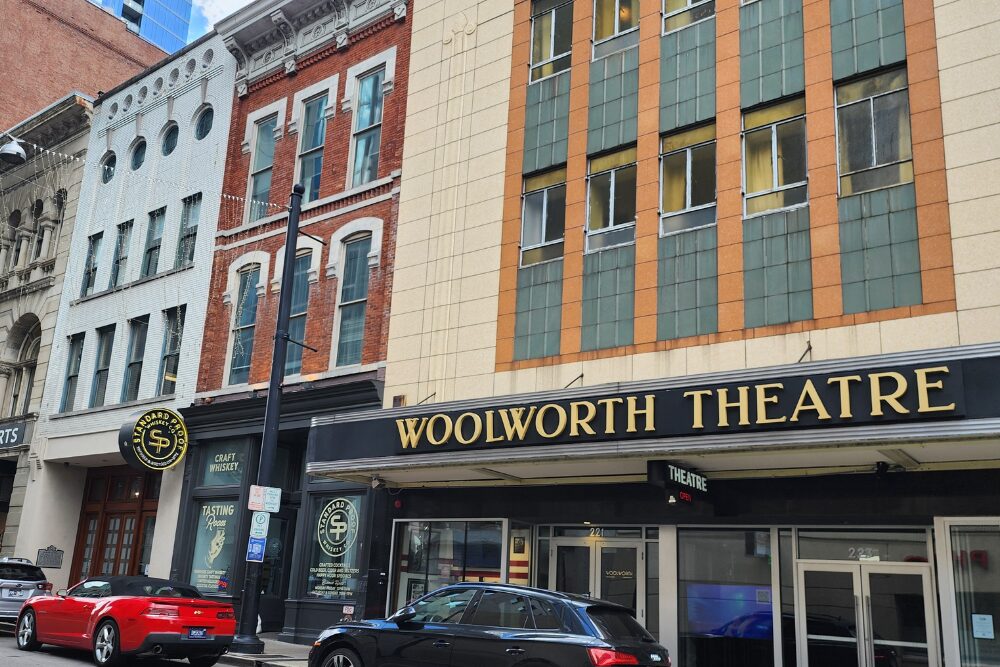
Most of these original counter-sites are no longer available to the public, but visitors to Nashville can find historical markers and plaques commemorating these stories. One of these markers can be found in downtown Nashville’s Fifth Avenue Historic District outside of the lovingly reimagined Woolworths building, now Woolworth Theater. In addition to the marker, the building still showcases pieces of the property’s civil rights past in its front window.
Try to plan a trip accordingly to enjoy a performance from the Fisk Jubilee Singers. This choral group, whose legacy dates back to the mid-1800s, sought to contribute to the fight against segregation by training many of its members in nonviolent protest workshops and helping to reinforce the use of artistry by protesters during that period. Music was used during the movement as a tool to disseminate the message through broadcast radio and early television programs, as well as better connect Americans with the movement itself. The group still performs many of the gospel anthems now associated with the freedom fighters of the period.
Nashville offers a wealth of resources and cultural experiences for those interested in exploring the stories of the Civil Rights Movement. Additional exhibits can also be found throughout the city at sites such as the National Museum of African American Music and the Tennessee State Museum, as well as smaller collections at historic Fisk University.
St. Augustine, Florida
St. Augustine is America’s oldest city, well-loved by visitors for its beautiful beaches, historic district and unique amenities. It is hard to imagine that the now colorful, tourist-lined streets of St. Augustine had once been nightly national news due to violent protests and strong KKK opposition throughout the civil rights struggle.
What happened in the waters of St. Augustine was the tipping point for the Civil Rights Movement as a whole. American beaches and pools have long been centers of racial conflict, with many recreation centers being segregated. White resisters of the period did not like the idea of shared water, and separate pools and beaches were established for Black Americans. However, separate was rarely equal, as many of these designated spaces were small, poorly funded and, in some cases, dangerous. This inequality inspired what would be referred to as the “wade-ins,” which were hosted at public beaches, pools, and other recreation centers during the period.
On June 11, 1964, Rev. Dr. Martin Luther King, Jr. and his party attempted to enter the restaurant at the Monson Motor Lodge but were prevented from entering and arrested. The group then decided to shift their attention from dining to swimming, and on June 18, 1964, white and black protesters entered the property through the hedges and started a pool party-themed wade-in demonstration. This orchestrated event was supported by Dr. King, his team of ministers, as well as 16 rabbis from New York who began an interfaith prayer circle and marched around the grounds of the Motor Lodge. They sought a significant impact that would capture media attention — and they achieved it. After multiple attempts by hotel staff and the owner to remove the protestors from the pool, the owner dumped in hydrochloric acid, and police officers waded in to arrest the protestors. Monson Motor Lodge may no longer be in business, but tourists to the area can still visit the steps of the pool, now on the property of the Hilton St. Augustine Historic Bayfront Hotel.
As expected, the event at Monson Motor Lodge enraged civil rights supporters, and additional wade-in protests began popping up along Florida’s public beaches. The most notable events occurred on June 25, 1964, while Dr. King and his team were staying at the nearby Beach Inn — 75 protestors peacefully entered the waters but were met with violent opposition, and many were arrested as a result. That evening, KKK leaders responded with their own rally as hundreds of white supremacists brutally attacked protestors during their evening march. This particular conflict left 19 protesters seriously hospitalized and some missing in action.
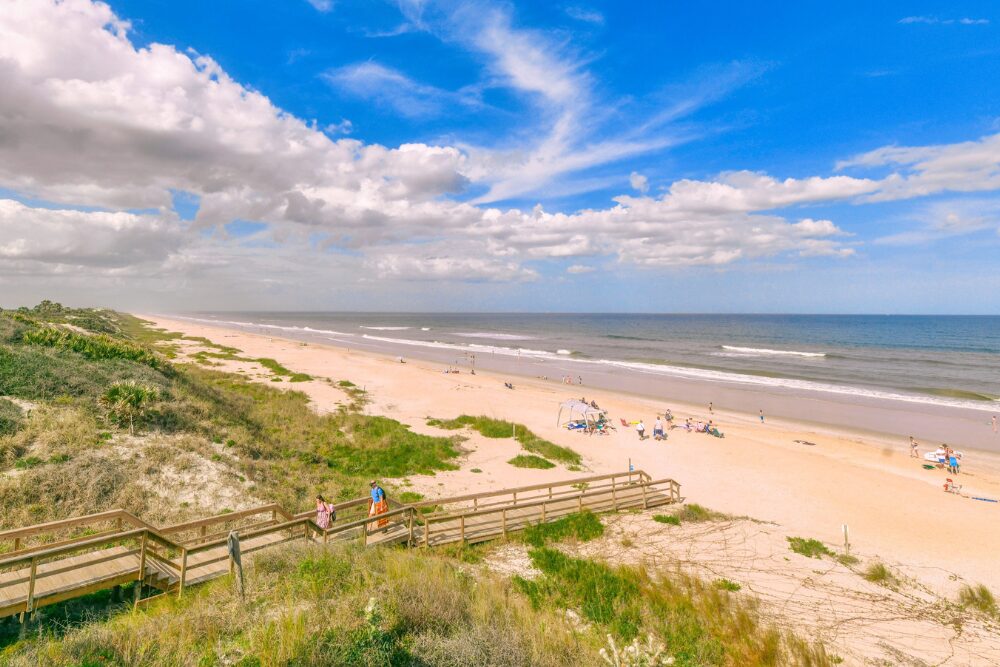
The wade-ins at St. Augustine Beach captured global media attention, helping to hasten the passage of the Civil Rights Act. Visitors to the region can pay tribute to these freedom fighters by visiting the historic St. Augustine Beach Hotel and the newly curated “Waves of Change” exhibit.
Lincolnville was the first sanctuary city for free Black Americans after the Civil War and went on to prosper for many generations. This forward-thinking city naturally became a hub for freedom fighters, supporting Dr. King and his team as they led demonstrations throughout the region.
With too many stories to share, those visiting St. Augustine are welcome to experience the legacy of this unique historic district by visiting the Lincolnville Museum and Cultural Center, housed in what was once St. Augustine’s first Black secondary school, Excelsior High School. Additionally, travelers can stop by the ACCORD Civil Rights Museum and take the self-guided ACCORD Freedom Trail that weaves through a handful of prominent homes and sites throughout the area.
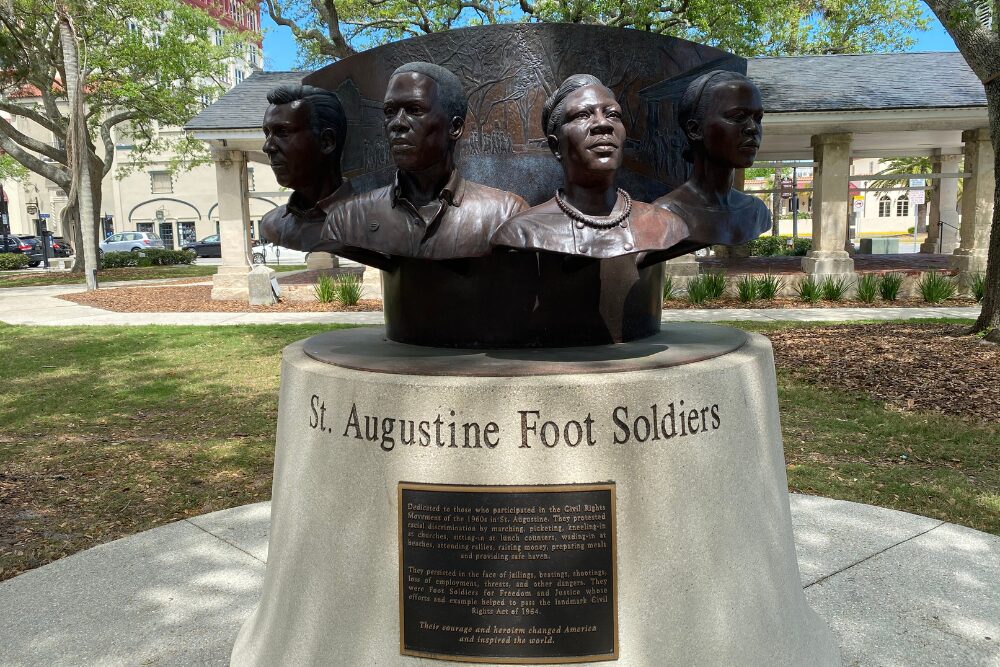
Those eager to learn more about the Civil Rights Movement will be pleased to know that we have only scratched the surface of the incredible wealth of experiences, tours and events available throughout St. Augustine. Keep an eye out for historical markers and statues like the Andrew Young Crossing marker that commemorates movement leader Andrew Young or the Foot Soldiers Monument that sits in the southeast corner of the Plaza de la Constitucion, where numerous night marches occurred.
Washington, DC
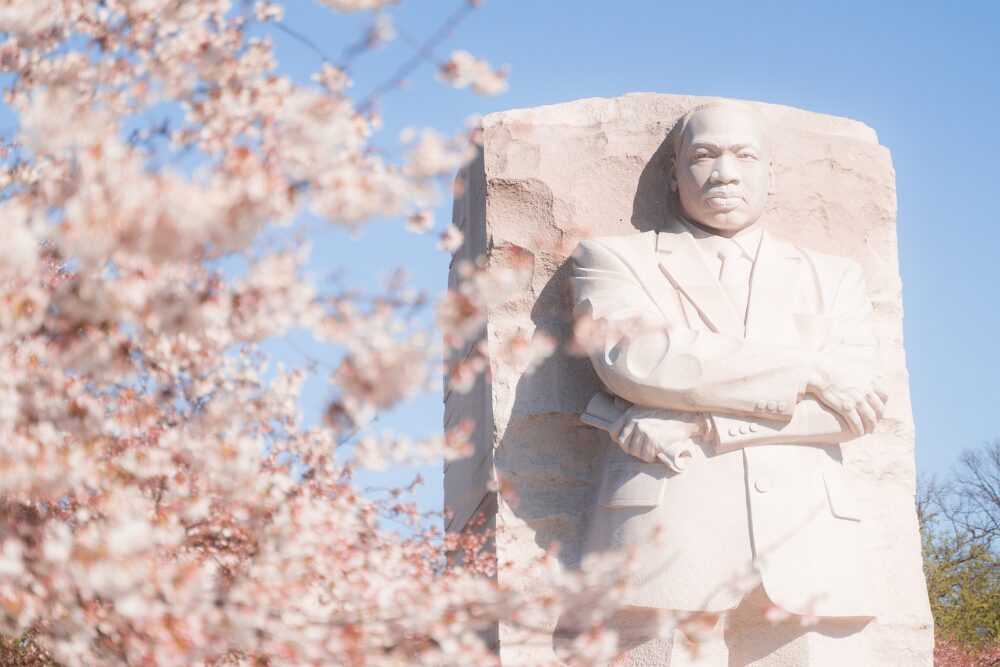
No civil rights enthusiast should be surprised to see the nation’s capital, Washington, D.C., on the list of destinations packed with stories of freedom fighters. Leaders of the movement knew they needed Washington on their side and staged many sit-ins, marches, rallies and peaceful protests. Not to mention the hoards of letters being sent to Washington politicians from supporters across the nation.
When visiting the region, plan a stop at The Martin Luther King, Jr. Memorial. The memorial honors the Civil Rights Act of 1964, the landmark legislation that changed the trajectory of Civil Rights in America. Standing 30 feet, the statue of Dr. King can be found on a four-acre greenspace along the National Mall’s Tidal Basin, beloved for its view of the cherry blossoms when in bloom.
On the night of August 27, 1963, Dr. King and his team of advisors spent several hours sitting in the lobby of the Willard InterContinental Hotel in Washington, DC, working tirelessly to write his iconic “I Have a Dream” speech. Those visiting the D.C. area today can not only book a room at this historic and luxurious space but can sit in that same lobby where Dr. King and his team rested as they examined passages from the U.S. Constitution, the Bible and other philosophies to ensure their words were more than impactful, but universally recognizable by all Americans.
The next day, August 28, 1963, Dr. King ascended the marble steps of the Lincoln Memorial with the hopes of inspiring the crowd with his dream of equality for all Americans. It had been 100 years since President Abraham Lincoln signed the Emancipation Proclamation freeing the enslaved, yet the promise of freedom still felt like a dream to many Black Americans.
Dr. King stood at the podium and shared his message with confidence and clarity, “I have a dream that one day this nation will rise up and live out the true meaning of its creed…” Those visiting the landmark can find the “I Have a Dream” historical marker at the base of the monument celebrating Dr. King’s speech. This site serves as a poignant reminder of the many leaders throughout history who were determined to fight for freedom and liberty.
Another experience not to miss while exploring civil rights stories is the impeccable collection of exhibits and period artifacts housed at the Smithsonian National Museum of African American History and Culture. This particular museum offers an easy-to-follow exhibit series that helps visitors understand the transition from slavery to freedom, highlighting many key events of the Civil Rights Movement.
Once you’ve worked up an appetite, make time for a D.C. institute. Freedom fighters were heading to that capital from every corner of the U.S. to support the protest efforts. The U Street Corridor, known as “Black Broadway,” played a significant role during this time, serving as a hub for Black culture, activism and resistance against Jim Crow laws. One such business that became a hot spot for freedom fighters was Ben’s Chili Bowl. Family-owned and operated for over 60 years, this quick-service restaurant was a favorite among many who stayed in Washington, D.C., during that time. Today, diners can still walk up and order Ben’s Famous Chili Half-Smoke and enjoy the building’s mural, which commemorates Black influencers from the movement and beyond.
The U Street neighborhood has far too many stories to share. However, those visiting the neighborhood can immerse themselves even further in these stories by booking the Black Broadway on U walking tour from author and D.C. Historian Briana A. Thomas.
Dive Deeper Into the Civil Rights Movement
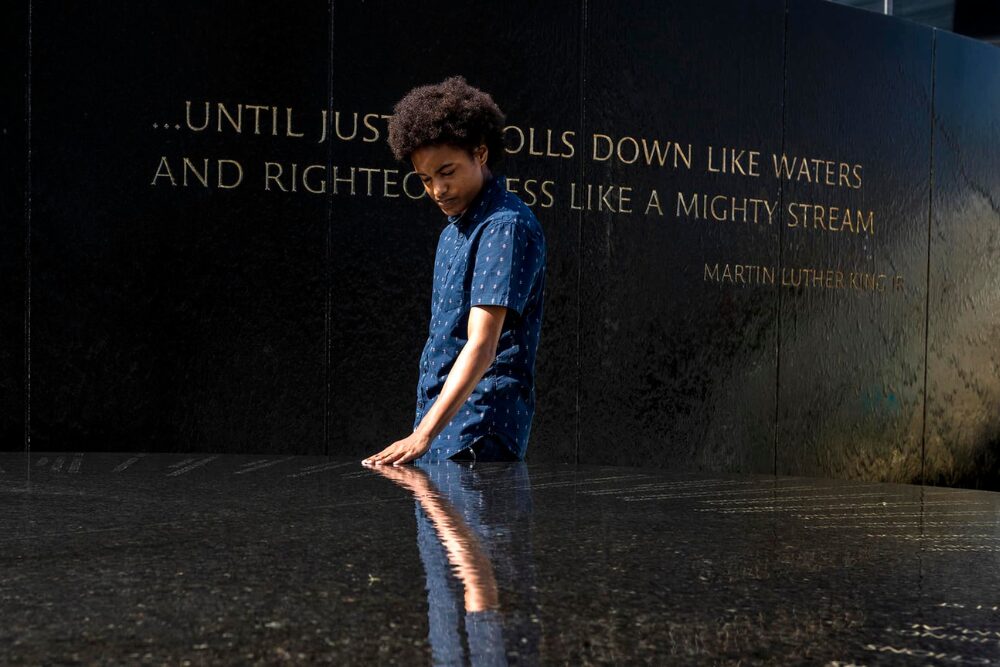
These destinations are just a small handful of options for travelers to consider; other important landmarks include Memphis, TN; Philadelphia, PA; Atlanta, GA; and Birmingham, Selma and Montgomery, AL, among others. For those interested in delving deeper into the stories and destinations that played a pivotal role in the Civil Rights Movement, visit the U.S. Civil Rights Trail website, which offers a database of prominent landmarks by state, along with travel itineraries and other resources for history enthusiasts and travelers alike.