
Get Ready to Grow in Eastern Idaho

Teresa McKnight knows a lot about Eastern Idaho. As the CEO of Regional Economic Development for Eastern Idaho (REDI) since mid-2019, she loves sharing what makes the region not just a great place to work – but to live, learn and play, too.
“Eastern Idaho is a unique area,” she says. “It has 16 diverse counties, with 31 rural and urban cities where more than 435,000 people enjoy an outstanding quality of life. We have continued to grow at a rapid pace since COVID.”
Known as a master convener for the region, McKnight is helping to redefine what people know about life in Eastern Idaho.
“Whenever you mention Idaho in general, what people think of first, Boise is the only city in Idaho,” McKnight says. “Second, we’re the potato state – but people don’t realize that Idaho, and particularly Eastern Idaho, is the biggest producer of malt barley and wheat. Eastern Idaho’s farmers are large producers of key ingredients that go into national and international malting products.”
While Eastern Idaho was historically a potato-dominated agricultural hub that later diversified into dairy and livestock, McKnight says, it has now evolved into an innovation hub fueled by technology and research-driven economic growth.
Many opportunities lie in Eastern Idaho’s industry sectors, including agriculture, advanced manufacturing, banking and finance, and health care. Energy is another growing sector, with the Idaho National Laboratory’s more than 6,000 employees working on research and production of small, modular nuclear reactors. Information technology, specifically cybersecurity, is another standout as McKnight notes.
The FBI has a large data center in Pocatello that employs more than 300 people. Along with the FBI, the region is in the unique position of housing four other federal programs.
Target Industries in Eastern Idaho
Advanced manufacturing, agriculture, banking and finance, energy, health care, information technology/cybersecurity, outdoor products, recreation
Strong Education Brings Excellent Employment Options
Having earned her undergraduate and master’s degrees in neighboring Utah, McKnight knows what she’s talking about when she touts Eastern Idaho’s four colleges and universities – Idaho State University, the University of Idaho’s satellite campus in Idaho Falls, the College of Eastern Idaho and Brigham Young University-Idaho.
“Our regional higher education institutions educate 75,000 students every semester,” she says.
Idaho State houses the William M. and Karin A. Eames Advanced Technical Education and Innovation Complex – just one of many examples of the unique educational opportunities that are offered in the region.
“Having options to gain the skill sets required is important,” McKnight says. “If you don’t want a four-year degree, you can get a two-year degree or certification in high-demand jobs open across our region. It’s a win-win for students to quickly transition into their dream jobs and for our regional employers to quickly fill open positions.”
REDI works hard to understand the specific needs and requirements of both new and existing companies.
“We are continually meeting with our regional educational institutions to relay information between what our regional employers require and what our educational institutions can accommodate,” she says.
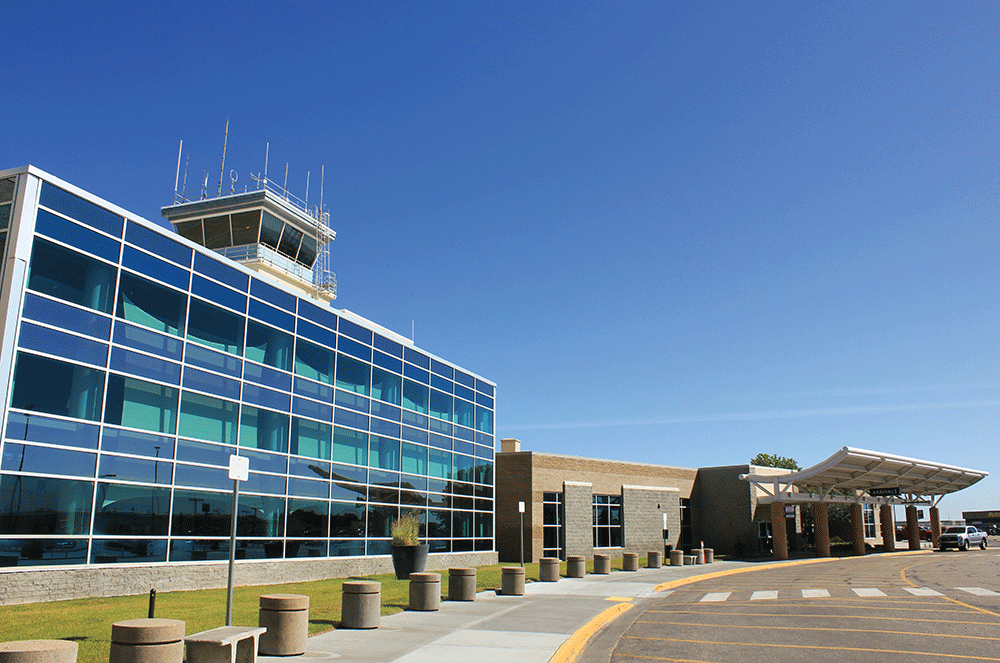
By Land or Air, It’s Easy to Get to Eastern Idaho
The colleges and universities mentioned by McKnight are situated along the Interstate 15 Tech Corridor, of which McKnight says the importance to Eastern Idaho can’t be overstated.
“It connects Utah to our south and Montana to our north,” she says. “It’s a well-developed linkage to impeccable technology companies and universities – really the spinal cord in terms of keeping our tech economic system interconnected and flowing in the right direction.”
Idaho Falls Regional Airport (IDA) is the main commercial airport in Eastern Idaho and the state’s second-biggest overall. Once a small, local airport, it’s fast becoming a regional hub. Airline passenger traffic has more than doubled in the past decade.
Since 2021, IDA has added Dallas-Fort Worth, Phoenix Sky Harbor, Chicago O’Hare, Seattle-Tacoma and Portland to the list of international airports to which it flies. Passengers boarding at IDA can choose from Delta, United, American, Alaska and Allegiant airlines.
“Idaho Falls Regional Airport has truly become a critical piece of infrastructure for Eastern Idaho, evolving from a small community airport into a major regional asset,” says IDA Director Ian Turner. “With additional airlines, expanded flight options and continued growth in passengers, we’re improving connectivity for families, businesses and visitors.”
These improvements to regional travel are making it even easier for people to discover the balanced lifestyle that defines the area.
“In Eastern Idaho, you don’t get caught in traffic for hours as you travel to and from work,” McKnight says. “People love the quality of life and natural beauty, with easy access to major national parks like Yellowstone and Grand Teton. Eastern Idaho is vibrant, welcoming and the hot spot for people to locate to.”

Landed a Job in Eastern Idaho? Group Can Help Your Spouse, Too
Starting a new career is a significant milestone, but relocating adds a layer of complexity – particularly when it involves a partner who must also secure new employment.
In Eastern Idaho, REDI is changing the relocation experience.
“Through the Trailing Spouse Program, we have developed a strong regional employer network,” McKnight says. “We connect with the trailing spouse or partner also seeking employment in Eastern Idaho and match them with a list of potential employers that have open positions, or soon to be posted positions, and forward each of their resumes to employers that best match their skillset and interest.”
The process begins with a brief 15- to 20-minute Zoom call. “During that conversation, I can usually identify at least 10 local employers that would be a great fit for their background,” McKnight explains.
This personalized approach reduces the high cost of out-of-state recruiting for our regional businesses while providing job seekers with a warm introduction to the local market.
REDI also offers the Eastern Idaho Roots program, a centralized platform that aggregates regional job openings.
“We work with our regional employer partners to post open jobs on REDI’s website, so job seekers can just go to one website and search for opportunities,” she says. “They don’t have to go to 20 different websites – just one, and they can click on any company they’re interested in and see what opportunities are available that best suit their interest and skillset. It saves them a lot of clicks and delivers real-time information.”
This streamlined approach is doing more than just saving time; it is effectively putting Eastern Idaho on the map for professionals nationwide.
“We’ve heard from a lot of people who’ve said Eastern Idaho had never been on their radar for relocation and job opportunities before,” she says. “But for those who made the move, they have come to see our area as a great place to work – and a place that offers an impeccable quality of life.”
Get to Know Eastern Idaho
Want to learn more about living and working in Idaho Falls, ID, and the region? Check out the latest edition of Livability Eastern Idaho.
