
Access Innovative Health Care in Eastern Idaho
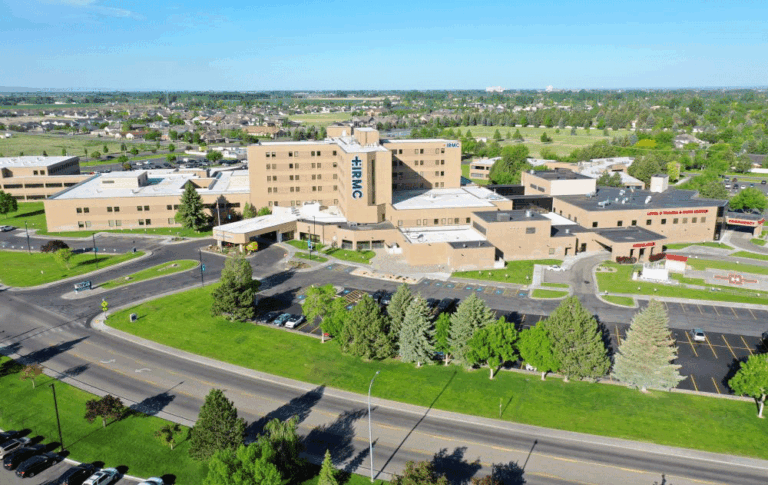
When patients in Eastern Idaho need quality medical care, they’re increasingly finding big-city technology paired with the personal touch that defines rural health care. Three regional providers – Bingham Memorial Hospital, Eastern Idaho Regional Medical Center and Portneuf Medical Center – are leading a wave of innovations reshaping care across the Eastern Idaho region.
In This Article
Precision Through Robotics
Robotic-assisted surgery is now a mainstay at Eastern Idaho hospitals, helping surgeons perform complex procedures through tiny incisions. For patients, that often means less pain, shorter hospital stays and faster recoveries.
Portneuf Medical Center in Pocatello recently acquired one of Idaho’s first da Vinci 5 surgical systems, an advanced robotic platform. The system offers force feedback that helps surgeons sense tissue resistance, 3D high-definition visualization and computing power far beyond previous generations.
“Robotics have become an integral part of multiple specialties, including general surgery, bariatrics, gynecology, orthopedics, spine, urology and more,” says Dr. Jorge de Amorim Filho, a general and trauma surgeon at Portneuf Medical Center. “These less invasive techniques reduce post-operative pain and hospital stays and help patients return to normal activity sooner – all while allowing more advanced procedures to be done locally so patients don’t have to travel far from home.”
Dr. Roger Passmore, Portneuf’s chief medical officer, adds that robotic surgery will continue to expand as AI, optical navigation and haptic tools evolve.
“Future applications could even extend to shoulder procedures and trauma fixation,” he says.
Portneuf’s investment reflects a clear focus on patient needs. “Patients ask for this technology due to lower length of stay, reduced blood loss and faster recovery times,” says John Abreu, CFO. “If the technology checks those boxes and makes sense financially, we listen.”
Bingham Memorial Hospital in Blackfoot has also been a pioneer in robotic surgery. The hospital was the first in Idaho to adopt Mako Robotic-Arm Assisted Technology for joint replacement. The system uses 3D CT-based planning and AccuStop safeguards designed to help surgeons remove only diseased tissue while protecting healthy bones.
AI: More Human Interaction, Not Less
While robots often draw more headlines, artificial intelligence is quietly reshaping daily clinical work by freeing up time for nurses and providers to spend with patients.
Portneuf has implemented Ambience Healthcare’s AI platform to streamline medical documentation in outpatient clinics, with expansion to inpatient care planned. Other tools include AI-supported virtual nursing, fall-prevention tools and wearable monitoring systems that alert nurses to patient status changes in real time.
“With the integration of robotics, we’ve seen decreased operating room times and fewer complications, even as cases grow more complex,” says de Amorim Filho. “AI will be the next step. I believe it will assist in critical portions of procedures and help standardize certain parameters that will continue to improve safety.”
Nate Carter, CEO of Portneuf Medical Center, emphasized that the goal is more, not less, human connection.
“For Portneuf, success is defined by how much more human-to-human interaction we can give,” he says. “Technology allows our clinicians to give superior care because they can spend more time face-to-face with patients and their families.”
Specialized Care Close to Home
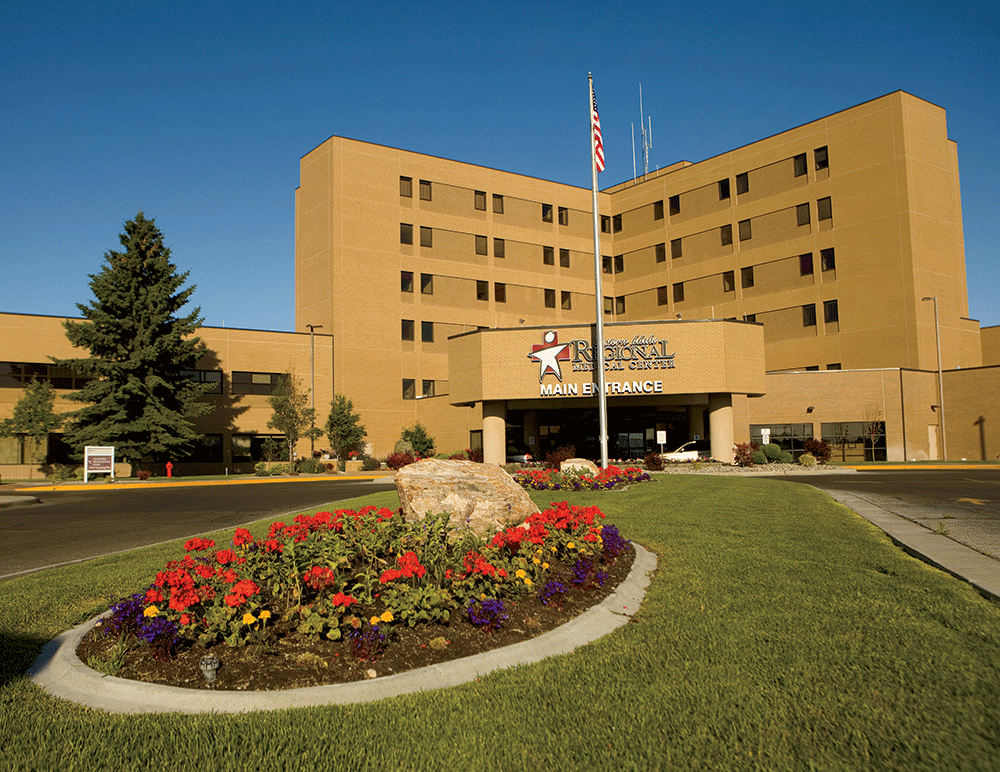
Eastern Idaho Regional Medical Center (EIRMC) in Idaho Falls has broadened access to specialized treatments once only available in large academic centers. The hospital’s transcatheter aortic valve replacement (TAVR) program provides heart valve replacement through catheter-based techniques, dramatically reducing recovery time for patients with severe aortic stenosis.
EIRMC is one of only a handful of hospitals within 190 miles approved to perform this procedure. The hospital also operates Idaho’s only burn center, serving patients across Idaho, Montana and Wyoming with cutting-edge laser technology for treating burn scars.
“As physicians, we’re lifelong learners,” de Amorim Filho says. “The integration of robotics and AI truly embodies that.”
Passmore added that virtual nurses will take on tasks typically performed by bedside nurses, giving bedside staff more time for direct patient care. But whether it’s robotic precision, AI-assisted documentation or specialized cardiac and burn treatments, the focus remains the same: to support, not replace, the human connection at the center of medicine.
And by investing in innovation while keeping community values at the forefront, Eastern Idaho’s hospitals are making world-class care available close to home.

Rural Hospitals Deliver Top-Notch Care
Across Eastern Idaho, rural hospitals are demonstrating that forward-thinking care isn’t limited to large metropolitan health systems. Facilities such as Nell J. Redfield Memorial Hospital in Malad City and Madison Memorial Hospital in Rexburg are investing in services and technology that bring high-quality care closer to home.
Nell J. Redfield Memorial Hospital, established in 1925 and serving Oneida County for nearly a century, provides essential services for its rural community. The county-owned critical access hospital offers 24/7 emergency care, outpatient and inpatient surgery, radiology, oncology support, telemedicine access, laboratory services and a swing-bed program enabling patients to recover near family.
Despite its century-long history, the hospital continues to modernize while maintaining its mission of “quality health care close to home.”
In Rexburg, Madison Memorial Hospital functions as a 69-bed acute care facility serving a five-county region. As a community-owned, nonprofit hospital, Madison has steadily expanded its specialties to include general surgery, orthopedics, women’s health, cancer care, maternity services, rehabilitation and behavioral health. The hospital’s surgical program features multiple advanced technologies, including the da Vinci XI robotic-assisted surgery system, as listed on its website, and Smith & Nephew’s CORI smart robotics for joint reconstruction – demonstrating how sophisticated surgical tools are increasingly accessible in rural settings. Madison has also invested in advanced diagnostic imaging capabilities and a dedicated behavioral health unit.
Together, these hospitals illustrate how rural health care providers can innovate while preserving strong community ties. By expanding specialty services and thoughtfully adopting modern technology, they ensure patients across Eastern Idaho receive advanced, dependable care without traveling long distances.
Get to Know Eastern Idaho
Want to learn more about living and working in Idaho Falls, ID, and the region? Check out the latest edition of Livability Eastern Idaho.